Psalms 58
De Heilige Schrift, Petrus Canisiusvertaling, 1939 · Tap a verse to see its cross-references.
1Voor muziekbegeleiding; “Verderf niet.” Een puntdicht van David. Meent gij nu werkelijk recht te spreken, En met rechtvaardigheid de mensen te richten? 2Neen, in uw hart pleegt gij onrecht, En uw handen banen de weg voor geweld in het land. 3De schurken: ze zijn ontaard van hun moederschoot af; De leugenaars: sinds hun geboorte bedorven! 4Ze zijn venijnig als giftige adders; Ze stoppen hun oren als dove slangen, 5Die niet luisteren naar de stem van bezweerders, En van bekwame belezers. 6O God, sla ze de tanden stuk in hun mond; Jahweh, ruk uit het gebit van dat broed! 7Laat ze verdwijnen als wegzinkend water, Als gras langs de weg, dat verdort, 8Als een slak, die zich oplost in slijm, Als een misdracht, die het zonlicht niet ziet; 9Voordat de doornen hun ketels verhitten: Onverbrand of verbrand, Hij vaagt ze weg. 10De rechtvaardige zal zich verheugen, Als hij die wraak mag aanschouwen, En met zijn voeten plassen in het bloed van die schurken. En de mensen zullen dan zeggen: 11“Toch heeft het zijn nut, rechtvaardig te zijn; Toch is er een God, die recht doet op aarde!”
Did you know?
Psalm 58: Judgment on Corrupt Judges
- The psalm is designated in its title as a 'Miktam of David,' set to the tune of 'Do Not Destroy,' and opens by confronting corrupt rulers who orchestrate injustice in their hearts and mete out violence.Sources: the Bible text itself
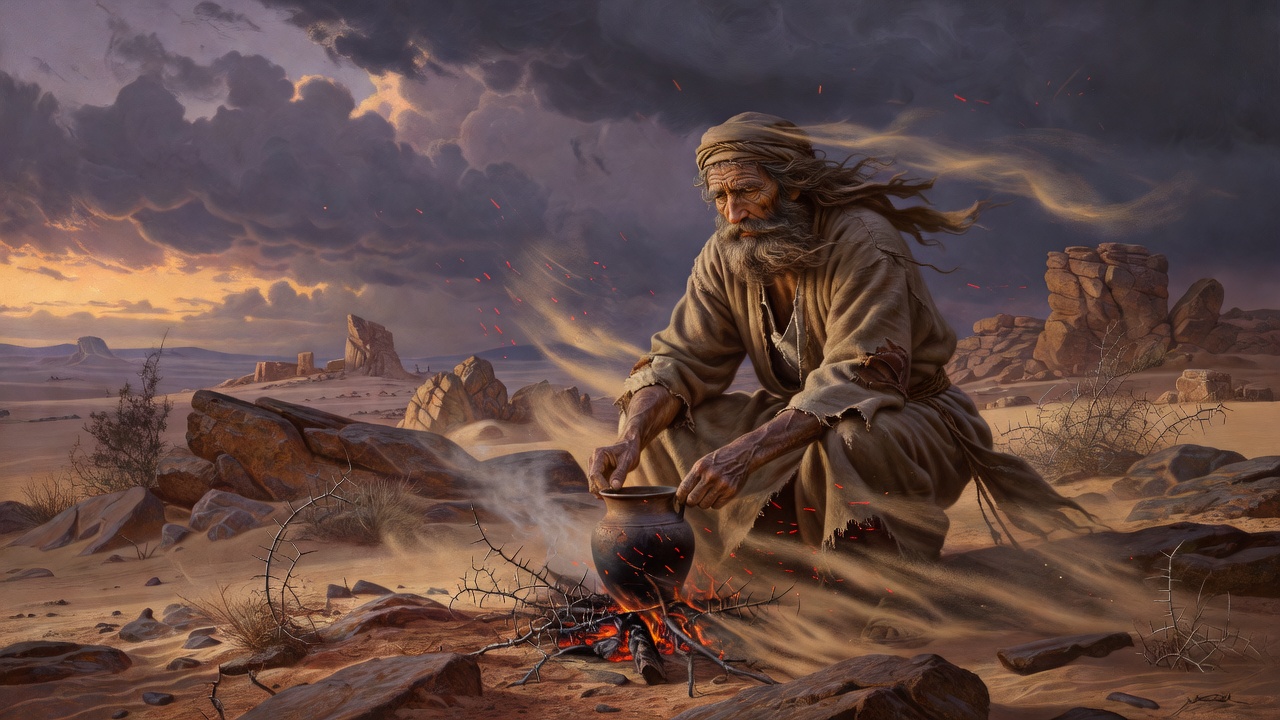
- The author illustrates the stubbornness and fleeting nature of the wicked through vivid natural metaphors, comparing them to a deaf cobra that ignores the snake charmer, a slug melting in its trail, and pots swept away before burning thorns can heat them.Sources: the Bible text itself
- The psalm concludes with the assurance that divine judgment against the unjust brings vindication to the righteous, proving to humanity that there is truly a God who judges the earth.Sources: the Bible text itself
Notes written with AI assistance from open sources (Theographic Bible Metadata, CC BY-SA 4.0; Easton’s Bible Dictionary, public domain) and reviewed before publishing.
Credits and license for this translation
De Heilige Schrift, Petrus Canisiusvertaling, 1939
The Holy Bible in Dutch, Petrus Canisius translation, 1939
Public Domain
Language: Nederlandse taal (Dutch)
Eerste uitgave: Het Spectrum, Utrecht, Brussel, 1939
De Petrus Canisiusvertaling is een Nederlandse rooms-katholieke bijbelvertaling, waarvan de eerste complete uitgave verscheen in 1939. De volledige naam luidt: "De Heilige Schrift, vertaling uit de grondtekst met aantekeningen, in opdracht van de Apologetische Vereniging 'Petrus Canisius' ondernomen met goedkeuring van de hoogwaardige bisschoppen van Nederland". De Petrus Canisiusvertaling is de eerste Nederlandse katholieke vertaling die gebaseerd is op de grondteksten in hun oorspronkelijke taal. Andere vertalingen gingen uit van de Vulgaat. Het taalgebruik van de uitgave is naar hedendaagse normen licht archaïsch te noemen, maar nog steeds vlot verstaanbaar.
Verantwoording in verband met de auteursrechten
In verband met de auteursrechten is contact opgenomen met de oorspronkelijke uitgever (1), de Katholieke Vereniging voor Oecume (2) en de Katholieke Bijbelstichting (3) en werden geen bezwaren gevonden tegen deze publicatie. Rekening houdend met de wettelijke termijnen, kan deze uitgave beschouwd worden als vrij van auteursrechten.
First publication: Het Spectrum, Utrecht, Brussel, 1939
The translation "Petrus Canisius" is a dutch roman catholic bible translation, that was first published in 1939. Its full title is "The Holy Scripture, translation of the original texts with annotations, commissioned by the Apologetical Society 'Petrus Canisius' and executed with the approval of the most reverend bishops of the Netherlands". The translation "Petrus Canisius" is the first dutch catholic translation that was based on the scripture texts in their original language. Other translations were based on the Vulgate. The language of this edition is to current standards moderately archaic, but still easily understood.
Accountability in relation to copyright
Concerning the copyright contacts have been made with the original publisher (1), the Katholieke Vereniging voor Oecumene (Catholic Society for Ecumenism) (2) and the Katholieke Bijbelstichting (Catholic Bible Foundation) (3) and no objections have been found against this publication. Taking into account the legal terms, this edition can be considered to be in the public domain.
UITGEVERIJ UNIEBOEK|HET SPECTRUM BV, HOUTEN, THE NETHERLANDS
KATHOLIEKE VERENIGING VOOR OECUMENE, 'S HERTOGENBOSCH, THE NETHERLANDS
KBS, HOEVEN, THE NETHERLANDS
2024-08-06
Source: http://ebible.org/nld1939/ · eBible.org