Psalms 39
De Heilige Schrift, Petrus Canisiusvertaling, 1939 · Tap a verse to see its cross-references.
1Voor muziekbegeleiding; voor Jedoetoen: een psalm van David. Ik had wel gezegd: “Goed wil ik op mijn woorden letten, Om niet te zondigen met mijn tong; Mijn mond beteugelen, Als de boze er bij staat.” 2Ik zweeg, bleef sprakeloos en stom, Hoe fel mijn smart ook mocht zijn. 3Maar nu kookt mijn hart in mijn boezem over, En als ik er aan denk, laait het vuur in mij op. Nu snik ik het uit: 4Jahweh, laat mij mijn einde maar zien; Ik wil weten, hoeveel tijd mij nog rest, En wanneer het met mij is gedaan! 5Zie, Gij hebt mijn dagen een paar handbreedten lengte gegeven, En de duur van mijn leven is voor U als niets; 6Iedere mens is enkel een zucht, En als een schaduwbeeld wandelt hij rond; Voor niets maakt hij zich druk en verzamelt zich schatten, Zonder te weten, wie ze zal krijgen. 7Wat zou ik dan nog verwachten, o Heer! Alleen op U kan ik nog hopen! 8Verlos mij van al mijn zonden, En maak mij niet tot spot voor den dwaas. 9Ik zwijg, en doe mijn mond niet open: Want Gij zelf deedt het mij aan. 10Ach, neem uw plaag van mij weg, Want ik bezwijk onder de druk van uw hand. Alleen om de zonde te straffen, 11Slaat Gij den mens, Verteert Gij als de motten zijn glorie, En is iedere mens maar een zucht. 12Jahweh, hoor mijn gebed en luister naar mijn smeken, Zwijg niet stil bij mijn tranen; Want ik ben toch uw gast, En bij U op bezoek als al mijn vaderen. 13Houd op; opdat ik nog vreugde mag hebben, Eer ik heenga, en er niet meer zal zijn!
Did you know?
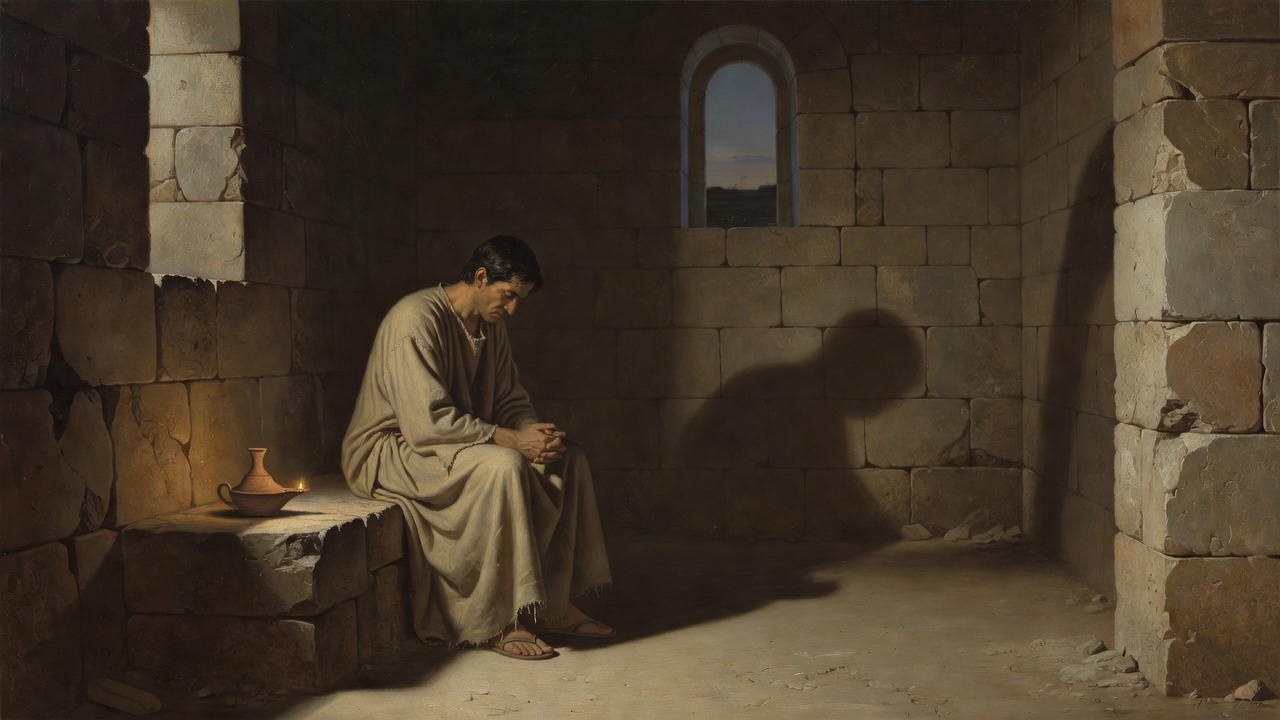
The Frailty and Fleeting Nature of Human Life
- The superscription dedicates this composition to the choirmaster and to Jeduthun, attributing the prayer to David.Sources: the Bible text itself · David
- The psalm illustrates the brevity of human existence by describing human life as merely a handbreadth—an ancient unit of measurement based on the width of the palm—and as a passing breath or shadow.Sources: the Bible text itself
- The speaker identifies as a foreigner and a temporary guest dwelling with God, reflecting an attitude of complete dependence on divine mercy and hospitality.Sources: the Bible text itself
Notes written with AI assistance from open sources (Theographic Bible Metadata, CC BY-SA 4.0; Easton’s Bible Dictionary, public domain) and reviewed before publishing.
Credits and license for this translation
De Heilige Schrift, Petrus Canisiusvertaling, 1939
The Holy Bible in Dutch, Petrus Canisius translation, 1939
Public Domain
Language: Nederlandse taal (Dutch)
Eerste uitgave: Het Spectrum, Utrecht, Brussel, 1939
De Petrus Canisiusvertaling is een Nederlandse rooms-katholieke bijbelvertaling, waarvan de eerste complete uitgave verscheen in 1939. De volledige naam luidt: "De Heilige Schrift, vertaling uit de grondtekst met aantekeningen, in opdracht van de Apologetische Vereniging 'Petrus Canisius' ondernomen met goedkeuring van de hoogwaardige bisschoppen van Nederland". De Petrus Canisiusvertaling is de eerste Nederlandse katholieke vertaling die gebaseerd is op de grondteksten in hun oorspronkelijke taal. Andere vertalingen gingen uit van de Vulgaat. Het taalgebruik van de uitgave is naar hedendaagse normen licht archaïsch te noemen, maar nog steeds vlot verstaanbaar.
Verantwoording in verband met de auteursrechten
In verband met de auteursrechten is contact opgenomen met de oorspronkelijke uitgever (1), de Katholieke Vereniging voor Oecume (2) en de Katholieke Bijbelstichting (3) en werden geen bezwaren gevonden tegen deze publicatie. Rekening houdend met de wettelijke termijnen, kan deze uitgave beschouwd worden als vrij van auteursrechten.
First publication: Het Spectrum, Utrecht, Brussel, 1939
The translation "Petrus Canisius" is a dutch roman catholic bible translation, that was first published in 1939. Its full title is "The Holy Scripture, translation of the original texts with annotations, commissioned by the Apologetical Society 'Petrus Canisius' and executed with the approval of the most reverend bishops of the Netherlands". The translation "Petrus Canisius" is the first dutch catholic translation that was based on the scripture texts in their original language. Other translations were based on the Vulgate. The language of this edition is to current standards moderately archaic, but still easily understood.
Accountability in relation to copyright
Concerning the copyright contacts have been made with the original publisher (1), the Katholieke Vereniging voor Oecumene (Catholic Society for Ecumenism) (2) and the Katholieke Bijbelstichting (Catholic Bible Foundation) (3) and no objections have been found against this publication. Taking into account the legal terms, this edition can be considered to be in the public domain.
UITGEVERIJ UNIEBOEK|HET SPECTRUM BV, HOUTEN, THE NETHERLANDS
KATHOLIEKE VERENIGING VOOR OECUMENE, 'S HERTOGENBOSCH, THE NETHERLANDS
KBS, HOEVEN, THE NETHERLANDS
2024-08-06
Source: http://ebible.org/nld1939/ · eBible.org