Psalms 27
De Heilige Schrift, Petrus Canisiusvertaling, 1939 · Tap a verse to see its cross-references.
1Van David. Jahweh is mijn licht en mijn heil: Wien zou ik vrezen? Jahweh is de schuts van mijn leven: Wien zou ik duchten? 2Al rukken de bozen tegen mij op, Om mijn vlees te verslinden Het zijn mijn verdrukkers en haters, Die struikelen en vallen! 3Al stelt zich een krijgsmacht tegen mij op: Mijn hart kent geen vrees; Al ontbrandt ook de strijd tegen mij: Toch blijf ik gerust! 4Eén ding heb ik Jahweh gevraagd, dit slechts begeerd: In het huis van Jahweh te wonen al de dagen mijns levens, Jahweh’s zoetheid te smaken, En in zijn tempel te overwegen! 5Want in zijn tabernakel laat Hij mij schuilen In tijden van nood; Hij beschut mij onder het dek van zijn tent, En plaatst mij veilig op de Rots. 6Zo hef ik fier mijn hoofd omhoog Boven mijn vijanden rondom mij heen, Breng in zijn tent de offers van jubel, Wil zingen en spelen voor Jahweh! 7Jahweh, luister naar mijn smeken, Ontferm U mijner, en wil mij verhoren. 8Gij hebt het toch zelf mij gezegd: “Ge moet mijn aangezicht zoeken!” 9Nu zoek ik uw aanschijn, o Jahweh; Verberg het mij niet. Wijs uw dienaar niet af in uw gramschap: Gij zijt toch mijn hulp! Verstoot mij niet, verlaat mij niet, O God van mijn heil! 10Neen, al verlaten mij vader en moeder, Jahweh trekt Zich mij aan. 11Wijs mij, o Jahweh, uw weg, Geleid mij op het pad der deugd; En om wille van mijn verdrukkers, o Jahweh, 12Geef mij niet prijs aan de haat van mijn vijand! Want valse getuigen staan tegen mij op, En brengen leugens tegen mij in. 13O, als ik er eens niet zeker van was, Nog in het land der levenden Jahweh’s goedheid te zien! 14Vertrouw maar op Jahweh; wees welgemoed! Sterk zij uw hart; blijf hopen op Jahweh!
Did you know?
Confidence in God's Protection and Presence
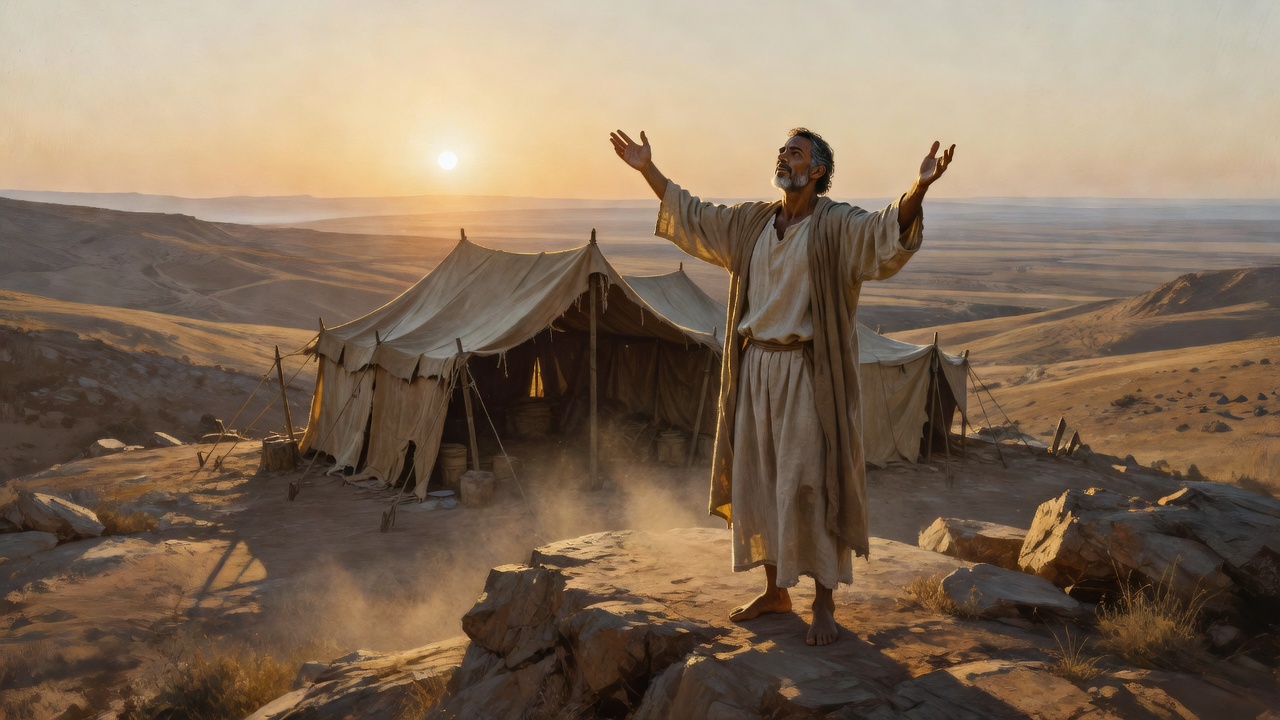
- The psalm repeatedly associates divine security with sacred space, portraying God's presence as a shelter, a tent, and a house where the worshiper can gaze upon God's beauty and offer joyful sacrifices with music.Sources: the Bible text itself
- The threats described range from besieging armies and violent warfare to personal legal peril, specifically false witnesses who rise up breathing violence against the psalmist.Sources: the Bible text itself
- The expression to seek God's face is central to the psalmist's plea, representing a desire for direct relational communion and favor rather than divine concealment or abandonment.Sources: the Bible text itself
Notes written with AI assistance from open sources (Theographic Bible Metadata, CC BY-SA 4.0; Easton’s Bible Dictionary, public domain) and reviewed before publishing.
Credits and license for this translation
De Heilige Schrift, Petrus Canisiusvertaling, 1939
The Holy Bible in Dutch, Petrus Canisius translation, 1939
Public Domain
Language: Nederlandse taal (Dutch)
Eerste uitgave: Het Spectrum, Utrecht, Brussel, 1939
De Petrus Canisiusvertaling is een Nederlandse rooms-katholieke bijbelvertaling, waarvan de eerste complete uitgave verscheen in 1939. De volledige naam luidt: "De Heilige Schrift, vertaling uit de grondtekst met aantekeningen, in opdracht van de Apologetische Vereniging 'Petrus Canisius' ondernomen met goedkeuring van de hoogwaardige bisschoppen van Nederland". De Petrus Canisiusvertaling is de eerste Nederlandse katholieke vertaling die gebaseerd is op de grondteksten in hun oorspronkelijke taal. Andere vertalingen gingen uit van de Vulgaat. Het taalgebruik van de uitgave is naar hedendaagse normen licht archaïsch te noemen, maar nog steeds vlot verstaanbaar.
Verantwoording in verband met de auteursrechten
In verband met de auteursrechten is contact opgenomen met de oorspronkelijke uitgever (1), de Katholieke Vereniging voor Oecume (2) en de Katholieke Bijbelstichting (3) en werden geen bezwaren gevonden tegen deze publicatie. Rekening houdend met de wettelijke termijnen, kan deze uitgave beschouwd worden als vrij van auteursrechten.
First publication: Het Spectrum, Utrecht, Brussel, 1939
The translation "Petrus Canisius" is a dutch roman catholic bible translation, that was first published in 1939. Its full title is "The Holy Scripture, translation of the original texts with annotations, commissioned by the Apologetical Society 'Petrus Canisius' and executed with the approval of the most reverend bishops of the Netherlands". The translation "Petrus Canisius" is the first dutch catholic translation that was based on the scripture texts in their original language. Other translations were based on the Vulgate. The language of this edition is to current standards moderately archaic, but still easily understood.
Accountability in relation to copyright
Concerning the copyright contacts have been made with the original publisher (1), the Katholieke Vereniging voor Oecumene (Catholic Society for Ecumenism) (2) and the Katholieke Bijbelstichting (Catholic Bible Foundation) (3) and no objections have been found against this publication. Taking into account the legal terms, this edition can be considered to be in the public domain.
UITGEVERIJ UNIEBOEK|HET SPECTRUM BV, HOUTEN, THE NETHERLANDS
KATHOLIEKE VERENIGING VOOR OECUMENE, 'S HERTOGENBOSCH, THE NETHERLANDS
KBS, HOEVEN, THE NETHERLANDS
2024-08-06
Source: http://ebible.org/nld1939/ · eBible.org