Psalms 148
De Heilige Schrift, Petrus Canisiusvertaling, 1939 · Tap a verse to see its cross-references.
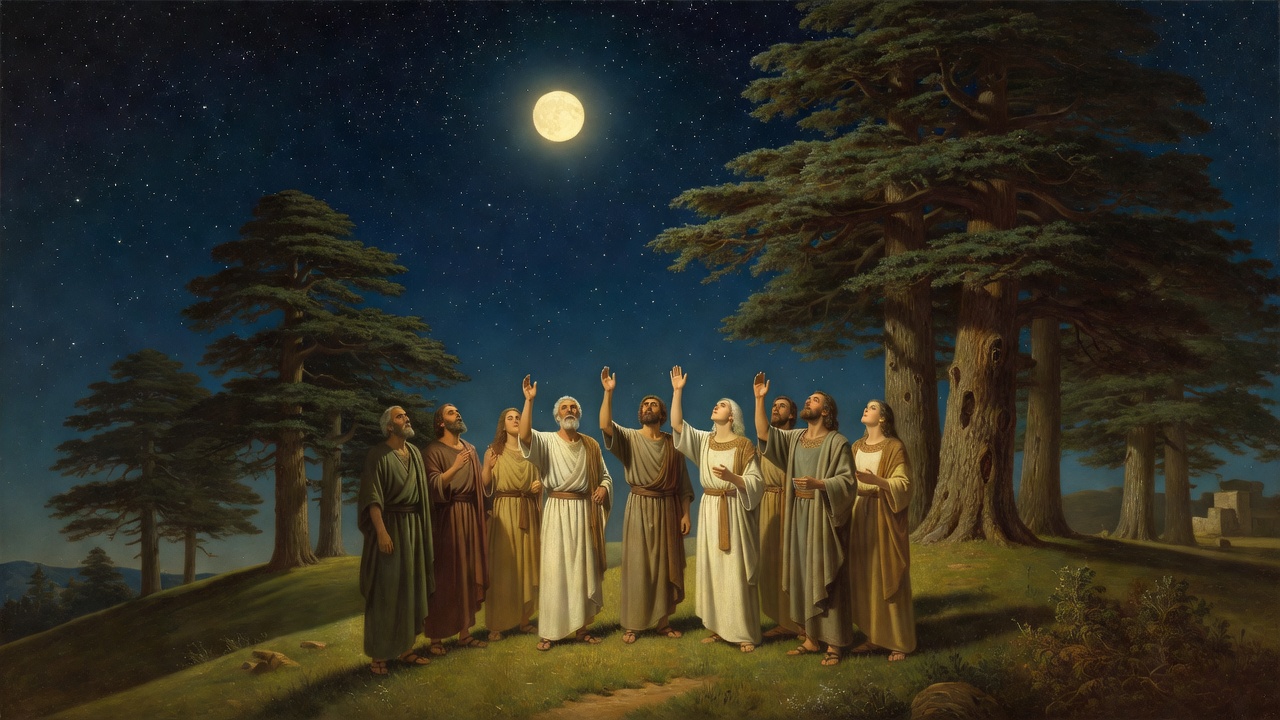
1Halleluja! Looft Jahweh in de hemel, Looft Hem in den hoge; 2Looft Hem al zijn engelen, Looft Hem heel zijn heir! 3Looft Hem, zon en maan, Looft Hem allen, flonkerende sterren; 4Looft Hem hoogste gewesten, De wateren boven de hemel! 5De Naam van Jahweh moeten ze loven, Want Hij gebood, en ze werden geschapen; 6Hij wees hun een plaats voor altijd en eeuwig, Hij gaf hun een wet, die ze niet overtreden. 7Looft Jahweh op aarde: Monsters der zee en alle oceanen, 8Vuur en hagel, sneeuw en ijzel, Stormwind, die zijn bevelen volbrengt! 9Alle bergen en heuvels, Alle vruchtbomen en ceders; 10Alle beesten, wilde en tamme, Kruipende dieren en gevleugelde vogels! 11Alle koningen en volken der aarde, Alle vorsten en wereldbestuurders; 12Jonge mannen en maagden, Grijsaards en kinderen! 13De Naam van Jahweh moeten ze loven: Want zijn Naam is verheven; Zìjn glorie alleen Gaat hemel en aarde te boven! 14Hij heeft de hoorn van zijn volk weer verhoogd, En de roem van al zijn getrouwen: Van Israëls zonen, Van het volk, van zijn vrienden! Halleluja!
Did you know?
Universal Praise from Heaven and Earth
- Psalm 148 is organized as a comprehensive cosmic inventory, calling every level of creation to praise God. It begins in the heights of the heavens with angels, heavenly hosts, sun, moon, stars, and celestial waters, before moving downward to the earth.Sources: the Bible text itself
- The terrestrial section encompasses meteorology, landscapes, flora, wild and domestic animals, and all segments of human society, ranging from monarchs and princes to young men, maidens, and the elderly.Sources: the Bible text itself
- The hymn concludes its sweeping scope by focusing on God's covenant people, noting that He has raised up a horn for His saints, specifically describing Israel as a people near to Him.Sources: the Bible text itself · Jacob (Israel)
Notes written with AI assistance from open sources (Theographic Bible Metadata, CC BY-SA 4.0; Easton’s Bible Dictionary, public domain) and reviewed before publishing.
Credits and license for this translation
De Heilige Schrift, Petrus Canisiusvertaling, 1939
The Holy Bible in Dutch, Petrus Canisius translation, 1939
Public Domain
Language: Nederlandse taal (Dutch)
Eerste uitgave: Het Spectrum, Utrecht, Brussel, 1939
De Petrus Canisiusvertaling is een Nederlandse rooms-katholieke bijbelvertaling, waarvan de eerste complete uitgave verscheen in 1939. De volledige naam luidt: "De Heilige Schrift, vertaling uit de grondtekst met aantekeningen, in opdracht van de Apologetische Vereniging 'Petrus Canisius' ondernomen met goedkeuring van de hoogwaardige bisschoppen van Nederland". De Petrus Canisiusvertaling is de eerste Nederlandse katholieke vertaling die gebaseerd is op de grondteksten in hun oorspronkelijke taal. Andere vertalingen gingen uit van de Vulgaat. Het taalgebruik van de uitgave is naar hedendaagse normen licht archaïsch te noemen, maar nog steeds vlot verstaanbaar.
Verantwoording in verband met de auteursrechten
In verband met de auteursrechten is contact opgenomen met de oorspronkelijke uitgever (1), de Katholieke Vereniging voor Oecume (2) en de Katholieke Bijbelstichting (3) en werden geen bezwaren gevonden tegen deze publicatie. Rekening houdend met de wettelijke termijnen, kan deze uitgave beschouwd worden als vrij van auteursrechten.
First publication: Het Spectrum, Utrecht, Brussel, 1939
The translation "Petrus Canisius" is a dutch roman catholic bible translation, that was first published in 1939. Its full title is "The Holy Scripture, translation of the original texts with annotations, commissioned by the Apologetical Society 'Petrus Canisius' and executed with the approval of the most reverend bishops of the Netherlands". The translation "Petrus Canisius" is the first dutch catholic translation that was based on the scripture texts in their original language. Other translations were based on the Vulgate. The language of this edition is to current standards moderately archaic, but still easily understood.
Accountability in relation to copyright
Concerning the copyright contacts have been made with the original publisher (1), the Katholieke Vereniging voor Oecumene (Catholic Society for Ecumenism) (2) and the Katholieke Bijbelstichting (Catholic Bible Foundation) (3) and no objections have been found against this publication. Taking into account the legal terms, this edition can be considered to be in the public domain.
UITGEVERIJ UNIEBOEK|HET SPECTRUM BV, HOUTEN, THE NETHERLANDS
KATHOLIEKE VERENIGING VOOR OECUMENE, 'S HERTOGENBOSCH, THE NETHERLANDS
KBS, HOEVEN, THE NETHERLANDS
2024-08-06
Source: http://ebible.org/nld1939/ · eBible.org