Psalms 135
De Heilige Schrift, Petrus Canisiusvertaling, 1939 · Tap a verse to see its cross-references.
1Halleluja! Looft Jahweh’s Naam, Looft Hem, dienaars van Jahweh: 2Gij, die in het huis van Jahweh staat, In de voorhoven van het huis van onzen God! 3Looft Jahweh: want Jahweh is goed, Verheerlijkt zijn Naam: want die is zo lieflijk; 4Want Jahweh heeft Zich Jakob verkoren, En Israël tot zijn bezit! 5Ja, ik weet het: Jahweh is groot, Onze Heer boven alle goden verheven; 6Jahweh doet wat Hij wil In hemel en aarde, in zeeën en diepten. 7Hij laat de wolken verrijzen Aan de kimmen der aarde; Smeedt de bliksem tot regen, Haalt de wind uit zijn schuren. 8Hij was het, die Egypte’s eerstgeborenen sloeg, Van mensen en vee; 9Die tekenen en wonderen deed in uw midden, Egypte, Tegen Farao en al die hem dienden; 10Die talrijke volken versloeg, En machtige koningen doodde: 11Sichon, den vorst der Amorieten, En Og, den koning van Basjan. Hij was het, die alle vorsten vernielde En alle koninkrijken van Kanaän; 12En die hun land ten erfdeel gaf, Tot bezit aan Israël, zijn volk. 13Uw Naam duurt eeuwig, o Jahweh, Uw roem, o Jahweh, van geslacht tot geslacht; 14Want Jahweh schaft recht aan zijn volk, En ontfermt Zich over zijn dienaars. 15Maar de goden der volken zijn zilver en goud, Door mensenhanden gemaakt: 16Ze hebben een mond, maar kunnen niet spreken; Ogen, maar kunnen niet zien; 17Oren, maar kunnen niet horen; Ze hebben geen adem in hun mond. 18Aan hen worden gelijk, die ze maken, En allen, die er op hopen! 19Huis van Israël, zegent dan Jahweh; Huis van Aäron, zegent dan Jahweh; 20Huis van Levi, zegent dan Jahweh; Die Jahweh vrezen, zegent dan Jahweh; 21Gezegend zij Jahweh uit Sion, Hij, die in Jerusalem woont!
Did you know?
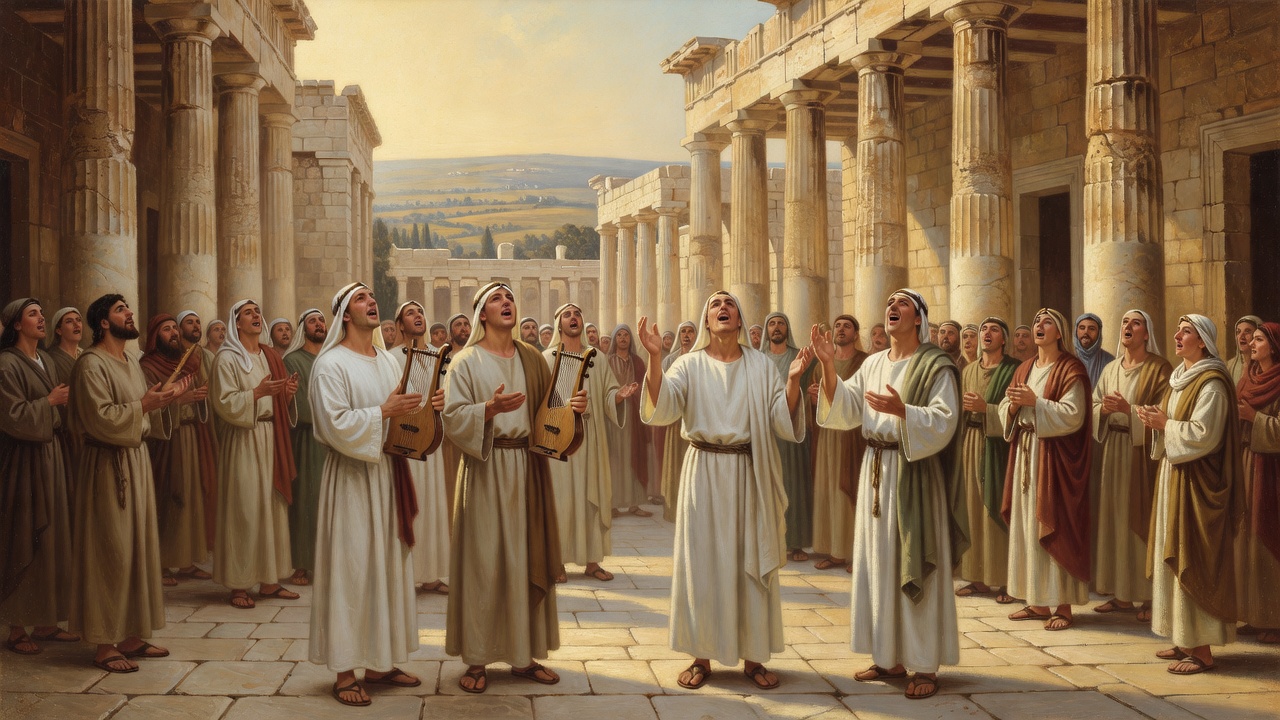
Praising the Sovereign God of Israel
- Psalm 135 singles out Sihon king of the Amorites and Og king of Bashan as prominent rulers struck down before Israel received its inheritance. Both kings ruled territories east of the Jordan River and were remembered in Israelite song for their defeat during the journey toward Canaan.Sources: the Bible text itself · Sihon · Og
- The psalm closes with a liturgy addressing distinct groups in worship: the general population ('house of Israel'), the priestly line ('house of Aaron'), and the broader temple servants ('house of Levi') serving in the courts of the house of the Lord.Sources: the Bible text itself · Aaron · Levi (patriarch)
- To highlight God's sovereign power over creation and history, the psalm contrasts Him with pagan idols of silver and gold. It describes these manufactured statues as utterly lifeless, lacking breath and unable to speak, see, or hear.Sources: the Bible text itself
Notes written with AI assistance from open sources (Theographic Bible Metadata, CC BY-SA 4.0; Easton’s Bible Dictionary, public domain) and reviewed before publishing.
Places in this chapter
- Egypt · 30.129, 31.308 · verses 8, 9
- Bashan · 32.781, 35.935 · verse 11
- Canaan · 32.767, 35.333 · verse 11
- Jerusalem · 31.777, 35.234 · verse 21
- Zion · Today: Jerusalem · 31.777, 35.234 · verse 21
Only places identified with high confidence are shown (90% or more according to the scholarly sources compiled by OpenBible). Period map: DARE (Digital Atlas of the Roman Empire), CC BY 4.0; modern map: © OpenStreetMap contributors; places: OpenBible.info (CC BY 4.0).
Credits and license for this translation
De Heilige Schrift, Petrus Canisiusvertaling, 1939
The Holy Bible in Dutch, Petrus Canisius translation, 1939
Public Domain
Language: Nederlandse taal (Dutch)
Eerste uitgave: Het Spectrum, Utrecht, Brussel, 1939
De Petrus Canisiusvertaling is een Nederlandse rooms-katholieke bijbelvertaling, waarvan de eerste complete uitgave verscheen in 1939. De volledige naam luidt: "De Heilige Schrift, vertaling uit de grondtekst met aantekeningen, in opdracht van de Apologetische Vereniging 'Petrus Canisius' ondernomen met goedkeuring van de hoogwaardige bisschoppen van Nederland". De Petrus Canisiusvertaling is de eerste Nederlandse katholieke vertaling die gebaseerd is op de grondteksten in hun oorspronkelijke taal. Andere vertalingen gingen uit van de Vulgaat. Het taalgebruik van de uitgave is naar hedendaagse normen licht archaïsch te noemen, maar nog steeds vlot verstaanbaar.
Verantwoording in verband met de auteursrechten
In verband met de auteursrechten is contact opgenomen met de oorspronkelijke uitgever (1), de Katholieke Vereniging voor Oecume (2) en de Katholieke Bijbelstichting (3) en werden geen bezwaren gevonden tegen deze publicatie. Rekening houdend met de wettelijke termijnen, kan deze uitgave beschouwd worden als vrij van auteursrechten.
First publication: Het Spectrum, Utrecht, Brussel, 1939
The translation "Petrus Canisius" is a dutch roman catholic bible translation, that was first published in 1939. Its full title is "The Holy Scripture, translation of the original texts with annotations, commissioned by the Apologetical Society 'Petrus Canisius' and executed with the approval of the most reverend bishops of the Netherlands". The translation "Petrus Canisius" is the first dutch catholic translation that was based on the scripture texts in their original language. Other translations were based on the Vulgate. The language of this edition is to current standards moderately archaic, but still easily understood.
Accountability in relation to copyright
Concerning the copyright contacts have been made with the original publisher (1), the Katholieke Vereniging voor Oecumene (Catholic Society for Ecumenism) (2) and the Katholieke Bijbelstichting (Catholic Bible Foundation) (3) and no objections have been found against this publication. Taking into account the legal terms, this edition can be considered to be in the public domain.
UITGEVERIJ UNIEBOEK|HET SPECTRUM BV, HOUTEN, THE NETHERLANDS
KATHOLIEKE VERENIGING VOOR OECUMENE, 'S HERTOGENBOSCH, THE NETHERLANDS
KBS, HOEVEN, THE NETHERLANDS
2024-08-06
Source: http://ebible.org/nld1939/ · eBible.org