Leviticus 1
De Heilige Schrift, Petrus Canisiusvertaling, 1939 · Tap a verse to see its cross-references.
About this book
About Leviticus
- Easton's Bible Dictionary (1897) presents Leviticus as the third book of the Pentateuch and as the third book of Moses. The name, used in the Vulgate following the LXX, reflects the book's chief concern: the Levitical service.Sources: Easton: Leviticus
- Easton states that every ordinance in the book was delivered within one month, the first month of the second year after the Exodus. His entry on Sinai, also called Horeb, says the Hebrews reached that mountain district in the third month after the Exodus and remained encamped for about a whole year, and that the whole of Leviticus records what occurred there.Sources: Easton: Leviticus · Mount Sinai
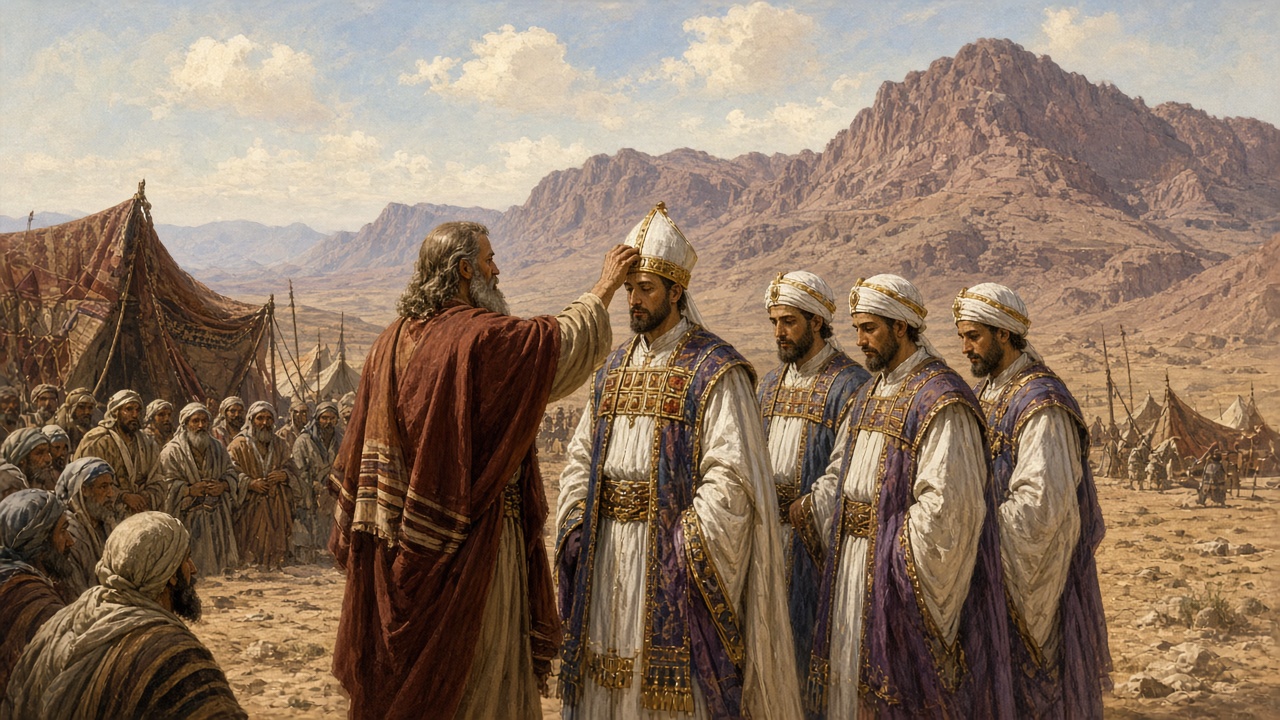
- Chapters 1–7 give laws for burnt offerings, meat offerings, and thank offerings, then for sin offerings and trespass offerings, and for the priests' duties in offering sacrifice. Chapters 8–10 recount the consecration of Aaron and his sons, Aaron's first offering for himself and the people, and the death of Nadab and Abihu, who were struck dead and buried outside the camp after offering strange, or common, fire not taken from the great brazen altar. Chapters 11–16 concern purity and the sacrifices and ordinances for putting impurity away.Sources: Easton: Leviticus · Nadab · Abihu
- Easton describes chapters 17–20 as laws marking the separation between Israel and other peoples. Further laws concern the priests' personal purity and their eating of holy things, offerings without blemish, and the due celebration of the great festivals in chapters 23 and 25. Promises and warnings about obedience follow, the book closes with a section on vows, and Easton notes that God is the direct speaker through almost the whole of it.Sources: Easton: Leviticus
- In the rites of chapter 16, one goat is associated with Azazel, which the Authorized Version renders scapegoat and the Revised Version leaves as Azazel. Easton reports that some Jewish interpreters take it as a place in the wilderness about twelve miles east of Jerusalem, while others take it as an evil spirit or even Satan, and he also notes a root meaning of separation.Sources: Azazel
Notes written with AI assistance from open sources (Theographic Bible Metadata, CC BY-SA 4.0; Easton’s Bible Dictionary, public domain) and reviewed before publishing.
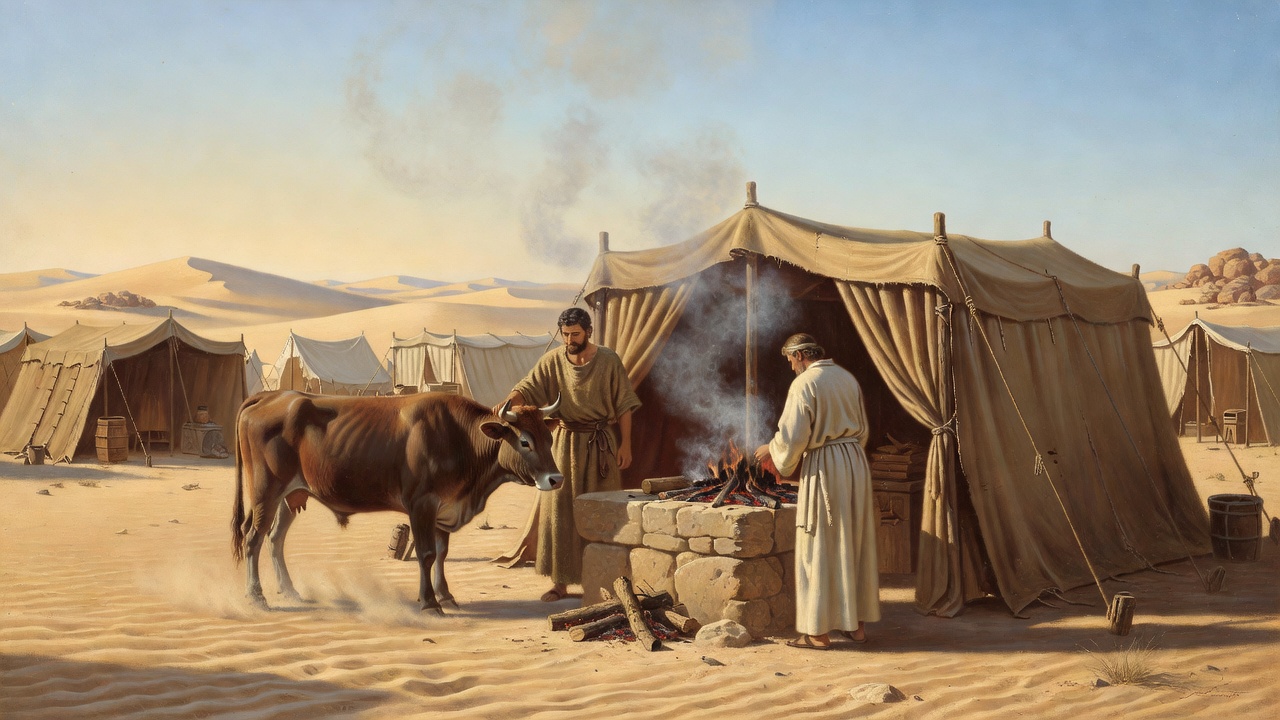
1Jahweh riep Moses, en sprak uit de openbaringstent tot hem: 2Zeg aan de Israëlieten: Wanneer iemand van u aan Jahweh een offergave wil brengen uit het vee, moet gij uw offergave kiezen uit de runderen of het kleinvee. 3Wanneer iemand een rund als brandoffer wil opdragen, moet hij een gaaf mannelijk dier offeren. Om het welgevallig aan Jahweh te maken, moet hij het naar de ingang van de openbaringstent brengen, 4en zijn hand op de kop van het brandoffer leggen; dan zal het goedgunstig worden aanvaard, en vergiffenis voor hem verkrijgen. 5Daarna moet hij het rund voor het aanschijn van Jahweh slachten; en de zonen van Aäron, de priesters, moeten het bloed opdragen, en daarmee het altaar, dat bij de ingang van de openbaringstent staat, aan alle kanten besprenkelen. 6Vervolgens moet hij het brandoffer villen, en in stukken snijden. 7De zonen van Aäron, de priesters, moeten vuur op het altaar leggen, hout op het vuur stapelen, 8en de stukken met de kop en het vet op het hout leggen, dat op het altaarvuur ligt. 9Maar de ingewanden met de poten moet hij met water afwassen; dan moet de priester alles tezamen op het altaar in rook doen opgaan. Het is een brandoffer, een welriekend vuuroffer voor Jahweh. 10Wanneer zijn gave voor het brandoffer uit kleinvee bestaat, uit een schaap of een geit, dan moet hij een gaaf mannelijk dier als offergave brengen. 11Hij moet het aan de noordzijde van het altaar voor het aanschijn van Jahweh slachten, en de zonen van Aäron, de priesters, moeten het altaar aan alle kanten met het bloed besprenkelen. 12Dan moet hij het in stukken snijden, die de priester met de kop en het vet op het hout moet leggen, dat op het altaarvuur ligt. 13De ingewanden met de poten moet hij met water afwassen; dan moet de priester alles tezamen opdragen en op het altaar in rook doen opgaan. Het is een brandoffer, een welriekend vuuroffer voor Jahweh. 14Wanneer hij gevogelte aan Jahweh als brandoffer wil opdragen, moet hij een tortel of een jonge duif als offergave brengen. 15De priester moet die naar het altaar brengen, haar de kop afknijpen en die op het altaar in rook doen opgaan. Haar bloed moet tegen de zijde van het altaar worden uitgeperst. 16Haar krop met de veren moet hij verwijderen, en naast het altaar, aan de oostkant, op de ashoop werpen. 17Hij moet de vleugels inscheuren zonder ze er helemaal af te trekken. Dan moet de priester haar op het altaar, op het hout boven het vuur, in rook doen opgaan. Het is een brandoffer, een welriekend vuuroffer voor Jahweh.
Did you know?
The Burnt Offering
- The instructions for the burnt offering accommodate different economic means by allowing offerings from the herd, the flock (sheep or goats), or birds (turtledoves or young pigeons). For livestock, the animal was required to be a male without blemish.Sources: the Bible text itself
- The ritual required a clear division of roles between the worshiper and the priests. The worshiper brought the animal, laid a hand on its head for atonement, slaughtered it, skinned it, and washed its inner parts, while the sons of Aaron sprinkled the blood and burned the entire offering on the altar.Sources: the Bible text itself · Aaron
Notes written with AI assistance from open sources (Theographic Bible Metadata, CC BY-SA 4.0; Easton’s Bible Dictionary, public domain) and reviewed before publishing.
Credits and license for this translation
De Heilige Schrift, Petrus Canisiusvertaling, 1939
The Holy Bible in Dutch, Petrus Canisius translation, 1939
Public Domain
Language: Nederlandse taal (Dutch)
Eerste uitgave: Het Spectrum, Utrecht, Brussel, 1939
De Petrus Canisiusvertaling is een Nederlandse rooms-katholieke bijbelvertaling, waarvan de eerste complete uitgave verscheen in 1939. De volledige naam luidt: "De Heilige Schrift, vertaling uit de grondtekst met aantekeningen, in opdracht van de Apologetische Vereniging 'Petrus Canisius' ondernomen met goedkeuring van de hoogwaardige bisschoppen van Nederland". De Petrus Canisiusvertaling is de eerste Nederlandse katholieke vertaling die gebaseerd is op de grondteksten in hun oorspronkelijke taal. Andere vertalingen gingen uit van de Vulgaat. Het taalgebruik van de uitgave is naar hedendaagse normen licht archaïsch te noemen, maar nog steeds vlot verstaanbaar.
Verantwoording in verband met de auteursrechten
In verband met de auteursrechten is contact opgenomen met de oorspronkelijke uitgever (1), de Katholieke Vereniging voor Oecume (2) en de Katholieke Bijbelstichting (3) en werden geen bezwaren gevonden tegen deze publicatie. Rekening houdend met de wettelijke termijnen, kan deze uitgave beschouwd worden als vrij van auteursrechten.
First publication: Het Spectrum, Utrecht, Brussel, 1939
The translation "Petrus Canisius" is a dutch roman catholic bible translation, that was first published in 1939. Its full title is "The Holy Scripture, translation of the original texts with annotations, commissioned by the Apologetical Society 'Petrus Canisius' and executed with the approval of the most reverend bishops of the Netherlands". The translation "Petrus Canisius" is the first dutch catholic translation that was based on the scripture texts in their original language. Other translations were based on the Vulgate. The language of this edition is to current standards moderately archaic, but still easily understood.
Accountability in relation to copyright
Concerning the copyright contacts have been made with the original publisher (1), the Katholieke Vereniging voor Oecumene (Catholic Society for Ecumenism) (2) and the Katholieke Bijbelstichting (Catholic Bible Foundation) (3) and no objections have been found against this publication. Taking into account the legal terms, this edition can be considered to be in the public domain.
UITGEVERIJ UNIEBOEK|HET SPECTRUM BV, HOUTEN, THE NETHERLANDS
KATHOLIEKE VERENIGING VOOR OECUMENE, 'S HERTOGENBOSCH, THE NETHERLANDS
KBS, HOEVEN, THE NETHERLANDS
2024-08-06
Source: http://ebible.org/nld1939/ · eBible.org