Jonah 4
De Heilige Schrift, Petrus Canisiusvertaling, 1939 · Tap a verse to see its cross-references.
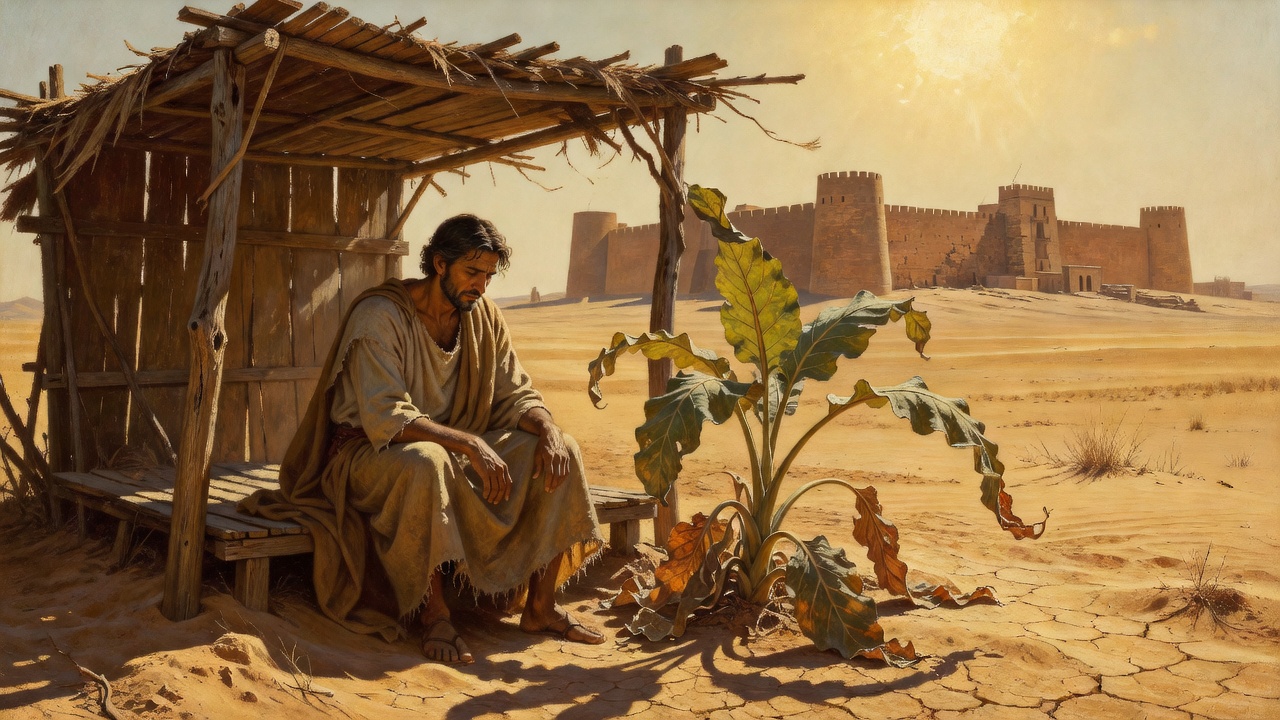
1Maar juist hierover was Jonas zeer ontstemd en vertoornd. 2Hij bad tot Jahweh, en sprak: Ach, Jahweh; heb ik het niet gezegd, toen ik nog in mijn land vertoefde, en ben ik juist daarom niet ijlings naar Tarsjisj gevlucht? Ik wist immers wel, dat Gij een genadig God zijt, barmhartig, lankmoedig en rijk aan ontferming; en dat Gij dus wel spijt zoudt krijgen over het onheil. 3Ontneem mij nu ook maar het leven; want de dood is mij liever dan het leven. 4Maar Jahweh zei hem: Hebt ge wel reden genoeg, om zo verdrietig te zijn? 5Daarop verliet Jonas de stad, en nam zijn verblijf aan de oostkant der stad; daar maakte hij zich een loofhut, en zette zich in haar schaduw neer, om af te wachten, wat er met de stad zou gebeuren. 6Nu liet God de Heer een klimop boven Jonas opschieten, om schaduw te geven voor zijn hoofd, en hem zó van zijn kwade luim te genezen. En Jonas was inderdaad uiterst verheugd over de klimop. 7Maar de volgende dag liet God in de vroege morgen een worm knagen aan de klimop, zodat hij verdorde; 8en toen de zon was opgegaan, deed Hij een verzengende oostenwind waaien. Nu brandde de zon op Jonas’ hoofd, en versmachtend zonk hij neer. Hij wenste te sterven, en sprak: De dood is mij liever dan het leven! 9Maar God zei tot Jonas: Hebt ge wel reden genoeg, om zo verdrietig te zijn over de klimop? Hij antwoordde: Ja ik heb reden genoeg, om dodelijk misnoegd te zijn. 10Nu sprak Jahweh: Gij zijt bekommerd over de klimop, waarvoor ge geen zorg hebt gehad, en die ge niet hebt gekweekt; die in één nacht is opgeschoten, en in één nacht verdord. 11En Ik zou niet bekommerd zijn over Ninive, die grote stad, waarin, behalve de vele dieren, meer dan honderd twintig duizend mensen wonen, die het onderscheid niet kennen tussen hun rechter- en linkerhand!
Did you know?
Jonah's Anger and God's Compassion
- Jonah admits that he originally attempted to flee toward Tarshish precisely because he knew God is gracious, compassionate, slow to anger, and relents from sending disaster. His distress arose when God chose to spare Nineveh rather than destroy it.Sources: the Bible text itself · Tarshish
- Nineveh, the flourishing capital of the Assyrian empire, is described at the conclusion of the book as home to more than 120,000 people who cannot discern between their right and left hand, along with many cattle. God highlights this massive population to contrast divine compassion with Jonah's concern for a single withered plant.Sources: the Bible text itself · Nineveh
Notes written with AI assistance from open sources (Theographic Bible Metadata, CC BY-SA 4.0; Easton’s Bible Dictionary, public domain) and reviewed before publishing.
Places in this chapter
- Nineveh · 36.359, 43.153 · verse 11
Only places identified with high confidence are shown (90% or more according to the scholarly sources compiled by OpenBible). Period map: DARE (Digital Atlas of the Roman Empire), CC BY 4.0; modern map: © OpenStreetMap contributors; places: OpenBible.info (CC BY 4.0).
Credits and license for this translation
De Heilige Schrift, Petrus Canisiusvertaling, 1939
The Holy Bible in Dutch, Petrus Canisius translation, 1939
Public Domain
Language: Nederlandse taal (Dutch)
Eerste uitgave: Het Spectrum, Utrecht, Brussel, 1939
De Petrus Canisiusvertaling is een Nederlandse rooms-katholieke bijbelvertaling, waarvan de eerste complete uitgave verscheen in 1939. De volledige naam luidt: "De Heilige Schrift, vertaling uit de grondtekst met aantekeningen, in opdracht van de Apologetische Vereniging 'Petrus Canisius' ondernomen met goedkeuring van de hoogwaardige bisschoppen van Nederland". De Petrus Canisiusvertaling is de eerste Nederlandse katholieke vertaling die gebaseerd is op de grondteksten in hun oorspronkelijke taal. Andere vertalingen gingen uit van de Vulgaat. Het taalgebruik van de uitgave is naar hedendaagse normen licht archaïsch te noemen, maar nog steeds vlot verstaanbaar.
Verantwoording in verband met de auteursrechten
In verband met de auteursrechten is contact opgenomen met de oorspronkelijke uitgever (1), de Katholieke Vereniging voor Oecume (2) en de Katholieke Bijbelstichting (3) en werden geen bezwaren gevonden tegen deze publicatie. Rekening houdend met de wettelijke termijnen, kan deze uitgave beschouwd worden als vrij van auteursrechten.
First publication: Het Spectrum, Utrecht, Brussel, 1939
The translation "Petrus Canisius" is a dutch roman catholic bible translation, that was first published in 1939. Its full title is "The Holy Scripture, translation of the original texts with annotations, commissioned by the Apologetical Society 'Petrus Canisius' and executed with the approval of the most reverend bishops of the Netherlands". The translation "Petrus Canisius" is the first dutch catholic translation that was based on the scripture texts in their original language. Other translations were based on the Vulgate. The language of this edition is to current standards moderately archaic, but still easily understood.
Accountability in relation to copyright
Concerning the copyright contacts have been made with the original publisher (1), the Katholieke Vereniging voor Oecumene (Catholic Society for Ecumenism) (2) and the Katholieke Bijbelstichting (Catholic Bible Foundation) (3) and no objections have been found against this publication. Taking into account the legal terms, this edition can be considered to be in the public domain.
UITGEVERIJ UNIEBOEK|HET SPECTRUM BV, HOUTEN, THE NETHERLANDS
KATHOLIEKE VERENIGING VOOR OECUMENE, 'S HERTOGENBOSCH, THE NETHERLANDS
KBS, HOEVEN, THE NETHERLANDS
2024-08-06
Source: http://ebible.org/nld1939/ · eBible.org