Job 2
De Heilige Schrift, Petrus Canisiusvertaling, 1939 · Tap a verse to see its cross-references.
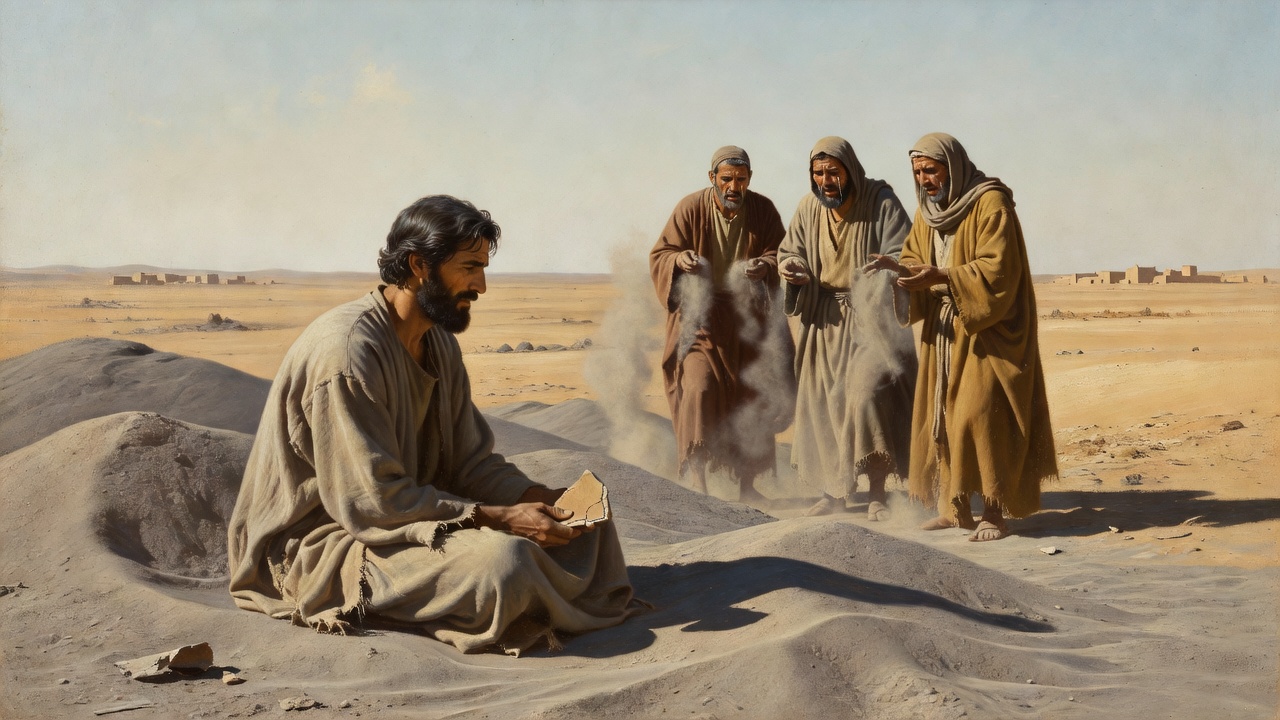
1Weer gebeurde het op zekere dag, dat de zonen Gods voor Jahweh verschenen, en dat ook de satan zich in hun midden bevond, en voor Jahweh stond. 2En Jahweh sprak tot satan: Waar komt ge vandaan? Satan gaf Jahweh ten antwoord: Van een zwerf- en speurtocht over de aarde. 3Jahweh vroeg satan: Hebt ge daarbij gelet op mijn dienaar Job, en hoe er op aarde zijns gelijke niet is: geen zo onberispelijk en rechtschapen, geen die God vreest en het kwaad schuwt, als hij. Nog blijft hij volharden in zijn deugd; tevergeefs hebt ge Mij dus tegen hem opgehitst, om hem tot de bedelstaf te brengen. 4Maar Satan gaf Jahweh ten antwoord: Huid voor huid tenslotte geeft de mens al, wat hij heeft, voor zijn leven. 5Strek uw hand eens tegen hem uit, en tast hem eens aan in zijn gebeente en vlees: dan vloekt hij U in het aangezicht! 6Daarop sprak Jahweh tot satan: Ge moogt met hem doen, wat ge wilt; maar zijn leven moet ge ontzien. 7Zo ging satan van Jahweh heen. Nu sloeg hij Job met kwaadaardige zweren van het hoofd tot de voeten; 8en deze moest een potscherf nemen, om er zich mede te krabben. En terwijl hij op de ashoop zat, 9viel zijn vrouw tegen hem uit: Volhardt ge ook nu nog in uw deugd? Blijf God dan zegenen, en sterf! 10Maar hij sprak tot haar: Ge praat als een dwaas! Zouden we wel het goede van God willen aannemen, maar het kwade niet? Dus ondanks dit alles heeft Job zelfs niet met zijn lippen gezondigd. 11Toen nu de drie vrienden van Job van al de rampen hoorden, die Job hadden getroffen, verlieten zij allen hun woonplaats. Het waren: Elifaz van Teman Bildad van Sjóeach, en Sofar van Naäma. Ze spraken met elkander af, om hem te gaan beklagen en troosten. 12Maar toen zij op enige afstand de ogen opsloegen, kenden ze hem niet meer terug. Nu begonnen ze hardop te wenen, scheurden hun kleren en strooiden zich as op het hoofd. 13En zeven dagen en zeven nachten bleven ze op de grond naast hem zitten, zonder dat iemand een woord tot hem sprak; want ze zagen, hoe vreselijk zijn smart was.
Did you know?
Job’s Affliction and the Arrival of His Friends
- In the Hebrew text of Job, the term translated as Satan appears with the definite article as the adversary or accuser. In this second heavenly council, the adversary argues that while Job endured the loss of his wealth and family, striking his physical flesh and bones would cause him to abandon his integrity.Sources: Satan · the Bible text itself
- Job’s companions—Eliphaz the Temanite, Bildad the Shuhite, and Zophar the Naamathite—came from distant regions associated with Arabia. Bildad's background is linked to Shuah, a son of Abraham by Keturah, while the ancient Greek Septuagint translation connects Zophar to the Mineans of southern Arabia.Sources: Bildad · Zophar · the Bible text itself
- Upon seeing Job's severe suffering, his three friends tore their garments, threw dust into the air over their heads, and sat with him on the ground in complete silence for seven days and seven nights. This shared vigil reflected ancient customs of deep mourning when sorrow was too profound for words.Sources: the Bible text itself
Notes written with AI assistance from open sources (Theographic Bible Metadata, CC BY-SA 4.0; Easton’s Bible Dictionary, public domain) and reviewed before publishing.
Credits and license for this translation
De Heilige Schrift, Petrus Canisiusvertaling, 1939
The Holy Bible in Dutch, Petrus Canisius translation, 1939
Public Domain
Language: Nederlandse taal (Dutch)
Eerste uitgave: Het Spectrum, Utrecht, Brussel, 1939
De Petrus Canisiusvertaling is een Nederlandse rooms-katholieke bijbelvertaling, waarvan de eerste complete uitgave verscheen in 1939. De volledige naam luidt: "De Heilige Schrift, vertaling uit de grondtekst met aantekeningen, in opdracht van de Apologetische Vereniging 'Petrus Canisius' ondernomen met goedkeuring van de hoogwaardige bisschoppen van Nederland". De Petrus Canisiusvertaling is de eerste Nederlandse katholieke vertaling die gebaseerd is op de grondteksten in hun oorspronkelijke taal. Andere vertalingen gingen uit van de Vulgaat. Het taalgebruik van de uitgave is naar hedendaagse normen licht archaïsch te noemen, maar nog steeds vlot verstaanbaar.
Verantwoording in verband met de auteursrechten
In verband met de auteursrechten is contact opgenomen met de oorspronkelijke uitgever (1), de Katholieke Vereniging voor Oecume (2) en de Katholieke Bijbelstichting (3) en werden geen bezwaren gevonden tegen deze publicatie. Rekening houdend met de wettelijke termijnen, kan deze uitgave beschouwd worden als vrij van auteursrechten.
First publication: Het Spectrum, Utrecht, Brussel, 1939
The translation "Petrus Canisius" is a dutch roman catholic bible translation, that was first published in 1939. Its full title is "The Holy Scripture, translation of the original texts with annotations, commissioned by the Apologetical Society 'Petrus Canisius' and executed with the approval of the most reverend bishops of the Netherlands". The translation "Petrus Canisius" is the first dutch catholic translation that was based on the scripture texts in their original language. Other translations were based on the Vulgate. The language of this edition is to current standards moderately archaic, but still easily understood.
Accountability in relation to copyright
Concerning the copyright contacts have been made with the original publisher (1), the Katholieke Vereniging voor Oecumene (Catholic Society for Ecumenism) (2) and the Katholieke Bijbelstichting (Catholic Bible Foundation) (3) and no objections have been found against this publication. Taking into account the legal terms, this edition can be considered to be in the public domain.
UITGEVERIJ UNIEBOEK|HET SPECTRUM BV, HOUTEN, THE NETHERLANDS
KATHOLIEKE VERENIGING VOOR OECUMENE, 'S HERTOGENBOSCH, THE NETHERLANDS
KBS, HOEVEN, THE NETHERLANDS
2024-08-06
Source: http://ebible.org/nld1939/ · eBible.org