Isaiah 56
De Heilige Schrift, Petrus Canisiusvertaling, 1939 · Tap a verse to see its cross-references.
1Zo spreekt Jahweh: Onderhoudt het recht, En beoefent de gerechtigheid: Want mijn heil is nabij, Mijn gerechtigheid wordt spoedig geopenbaard. 2Gelukkig de mens, die er naar handelt, Het mensenkind, dat er aan hecht; De sabbat houdt, en niet schendt, Zijn hand bewaart van allerlei kwaad! 3Laat dan de vreemde, die zich aansloot bij Jahweh, niet zeggen: Heel zeker snijdt Jahweh mij af van zijn volk; Laat de eunuch ook niet zeggen: Zie, ik ben maar een dorre boom! 4Want zo spreekt Jahweh tot de eunuchen: Wie mijn sabbat onderhouden, En verkiezen wat Mij behaagt, Getrouw blijven aan mijn Verbond: 5Hun geef Ik een gedenkzuil in mijn huis en binnen mijn muren, Een naam, veel beter dan zonen en dochters: Ik geef hun een eeuwige naam, Die nooit zal vergaan! 6En tot de vreemden, Die zich aansloten bij Jahweh, om Hem te dienen, Jahweh’s Naam te beminnen, En zijn dienaars te zijn: Wie de sabbat houden, niet schenden, En trouw blijven aan mijn Verbond: 7Hen zal Ik brengen naar mijn heilige berg, Ze vreugde doen smaken in mijn huis van gebed. Hun brand- en slachtoffers Zullen welkom zijn op mijn altaar; Waarachtig, mijn huis zal worden genoemd: Een huis van gebed voor àlle volken. 8Zo spreekt Jahweh, mijn Heer, Die de verstrooiden van Israël verzamelt: Bij hen, die al bijeen zijn gebracht, Voeg Ik nog anderen! 9Wilde beesten, komt allen verslinden, Met al de dieren in het woud: 10Mijn wachters zijn allemaal blind, Ze letten niet op. Het zijn allemaal stomme honden, Die niet eens kunnen blaffen; Dromerig liggen ze neer, En slapen maar liefst. 11Vratige, nooit verzadigde honden, Dat zijn de leiders, die achteloos zijn, Die hun eigen weg zoeken, allemaal, Hun eigen belang, tot den laatste toe. 12“Komt, we moeten wijn gaan halen, En ons bedrinken: Morgen is het weer als vandaag, Nog veel beter!”
Did you know?
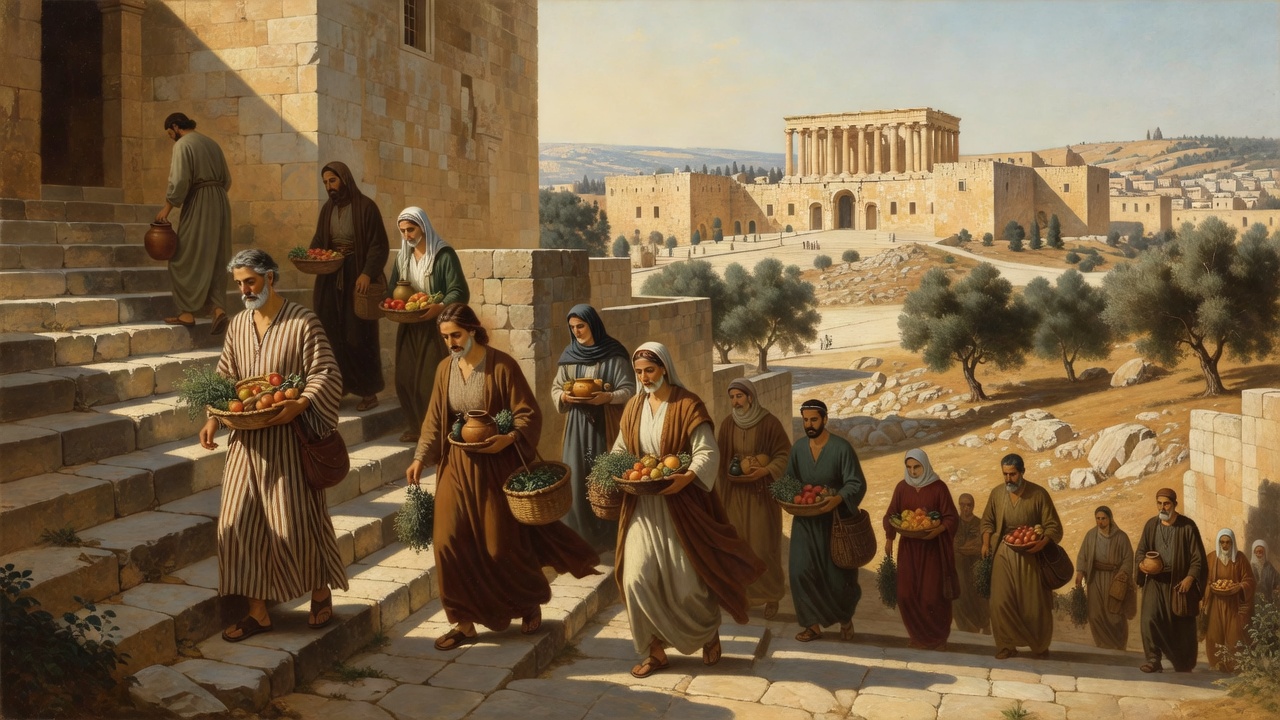
A House of Prayer for All Nations
- Isaiah 56 explicitly welcomes foreigners and eunuchs who honor the Sabbath and keep God's covenant, promising them an everlasting name and declaring that God's house will be called a house of prayer for all nations.Sources: the Bible text itself
- In sharp contrast to the faithful foreigners who join the Lord, the passage reproaches Israel's leaders and watchmen, describing them as blind, mute dogs and self-indulgent shepherds pursuing their own gain and drink.Sources: the Bible text itself
- Historical records of biblical chronology date the start of Isaiah's prophetic activity to around 758 BC, spanning a duration of approximately 62 years.Sources: Prophecies of Isaiah
Notes written with AI assistance from open sources (Theographic Bible Metadata, CC BY-SA 4.0; Easton’s Bible Dictionary, public domain) and reviewed before publishing.
Places in this chapter
- Jerusalem · 31.777, 35.234 · verse 7
Only places identified with high confidence are shown (90% or more according to the scholarly sources compiled by OpenBible). Period map: DARE (Digital Atlas of the Roman Empire), CC BY 4.0; modern map: © OpenStreetMap contributors; places: OpenBible.info (CC BY 4.0).
Credits and license for this translation
De Heilige Schrift, Petrus Canisiusvertaling, 1939
The Holy Bible in Dutch, Petrus Canisius translation, 1939
Public Domain
Language: Nederlandse taal (Dutch)
Eerste uitgave: Het Spectrum, Utrecht, Brussel, 1939
De Petrus Canisiusvertaling is een Nederlandse rooms-katholieke bijbelvertaling, waarvan de eerste complete uitgave verscheen in 1939. De volledige naam luidt: "De Heilige Schrift, vertaling uit de grondtekst met aantekeningen, in opdracht van de Apologetische Vereniging 'Petrus Canisius' ondernomen met goedkeuring van de hoogwaardige bisschoppen van Nederland". De Petrus Canisiusvertaling is de eerste Nederlandse katholieke vertaling die gebaseerd is op de grondteksten in hun oorspronkelijke taal. Andere vertalingen gingen uit van de Vulgaat. Het taalgebruik van de uitgave is naar hedendaagse normen licht archaïsch te noemen, maar nog steeds vlot verstaanbaar.
Verantwoording in verband met de auteursrechten
In verband met de auteursrechten is contact opgenomen met de oorspronkelijke uitgever (1), de Katholieke Vereniging voor Oecume (2) en de Katholieke Bijbelstichting (3) en werden geen bezwaren gevonden tegen deze publicatie. Rekening houdend met de wettelijke termijnen, kan deze uitgave beschouwd worden als vrij van auteursrechten.
First publication: Het Spectrum, Utrecht, Brussel, 1939
The translation "Petrus Canisius" is a dutch roman catholic bible translation, that was first published in 1939. Its full title is "The Holy Scripture, translation of the original texts with annotations, commissioned by the Apologetical Society 'Petrus Canisius' and executed with the approval of the most reverend bishops of the Netherlands". The translation "Petrus Canisius" is the first dutch catholic translation that was based on the scripture texts in their original language. Other translations were based on the Vulgate. The language of this edition is to current standards moderately archaic, but still easily understood.
Accountability in relation to copyright
Concerning the copyright contacts have been made with the original publisher (1), the Katholieke Vereniging voor Oecumene (Catholic Society for Ecumenism) (2) and the Katholieke Bijbelstichting (Catholic Bible Foundation) (3) and no objections have been found against this publication. Taking into account the legal terms, this edition can be considered to be in the public domain.
UITGEVERIJ UNIEBOEK|HET SPECTRUM BV, HOUTEN, THE NETHERLANDS
KATHOLIEKE VERENIGING VOOR OECUMENE, 'S HERTOGENBOSCH, THE NETHERLANDS
KBS, HOEVEN, THE NETHERLANDS
2024-08-06
Source: http://ebible.org/nld1939/ · eBible.org