Isaiah 50
De Heilige Schrift, Petrus Canisiusvertaling, 1939 · Tap a verse to see its cross-references.
1Zo spreekt Jahweh: Waar is de scheidingsbrief van uw moeder, Waarmee Ik haar zou hebben verstoten; Of aan wien van mijn schuldeisers zou Ik u hebben verkocht? Neen, om uw misdaden zijt ge verkocht, Om uw zonden is uw moeder verstoten! 2Waarom was er niemand meer, toen Ik kwam; Gaf niemand antwoord, toen Ik riep? Of was mijn hand soms te kort om te verlossen, Of miste Ik de kracht om te redden? Zie, de zee leg Ik droog door mijn dreigen, Verander de stromen in een woestijn; Hun vissen versmachten, omdat het water ontbreekt, En zij sterven van dorst; 3De hemelen sla Ik het rouwkleed om, En geef hun als mantel een zak! 4Jahweh, de Heer, heeft Mij de tong van een leerling gegeven, Om tot de ontmoedigden te kunnen spreken; 5Jahweh, de Heer, heeft Mij het oor geopend, Om als een leerling te horen. 50:4c Elke morgen wekt Hij mijn woord, Elke morgen wekt Hij mijn oor: En Ik spreek niet tegen, Keer Mij niet af. 6Mijn rug bied Ik hun, die Mij slaan, Mijn wangen, die Mij de baard uitrukken; Ik houd mijn gelaat niet verborgen Voor smaad en bespuwing. 7Want Jahweh, de Heer, staat Mij bij, Daarom schaam Ik Mij niet; Daarom heb Ik mijn gelaat als een keisteen verhard, En weet, dat Ik niet te schande zal staan. 8Mijn verdediger is nabij! Wie is mijn tegenpartij: Laten wij ons met elkander meten; Wie klaagt Mij aan: Hij trede tegen Mij op! 9Zie, Jahweh, de Heer, is mijn helper: Wie zal Mij schuldig verklaren? Neen, ze zullen allen vergaan als een kleed, En de mot vreet ze weg! 10Wie van u dan Jahweh vreest, Hij luistere naar de stem van zijn Dienaar: Wie in duisternis wandelt, En geen lichtstraal meer ziet, Laat hij op de Naam van Jahweh vertrouwen, En steun gaan zoeken bij zijn God. 11Maar gij allen, die een vuur hebt ontstoken, En fakkels doet branden: Weg met u in de gloed van uw vuur, In de fakkels, die gij ontsteekt; Door mijn eigen hand zal u dit overkomen, Op het bed van smarten zult ge liggen!
Did you know?
The Obedient Servant and Divine Vindication
- In ancient Near Eastern legal custom, a husband issued a certificate of divorce to formalize a separation, and impoverished debtors might sell their children into servitude. In Isaiah 50:1, God uses these legal metaphors to demonstrate that Israel was not abandoned due to a divine debt or permanent annulment of the covenant, but went into exile because of its own transgressions.Sources: the Bible text itself
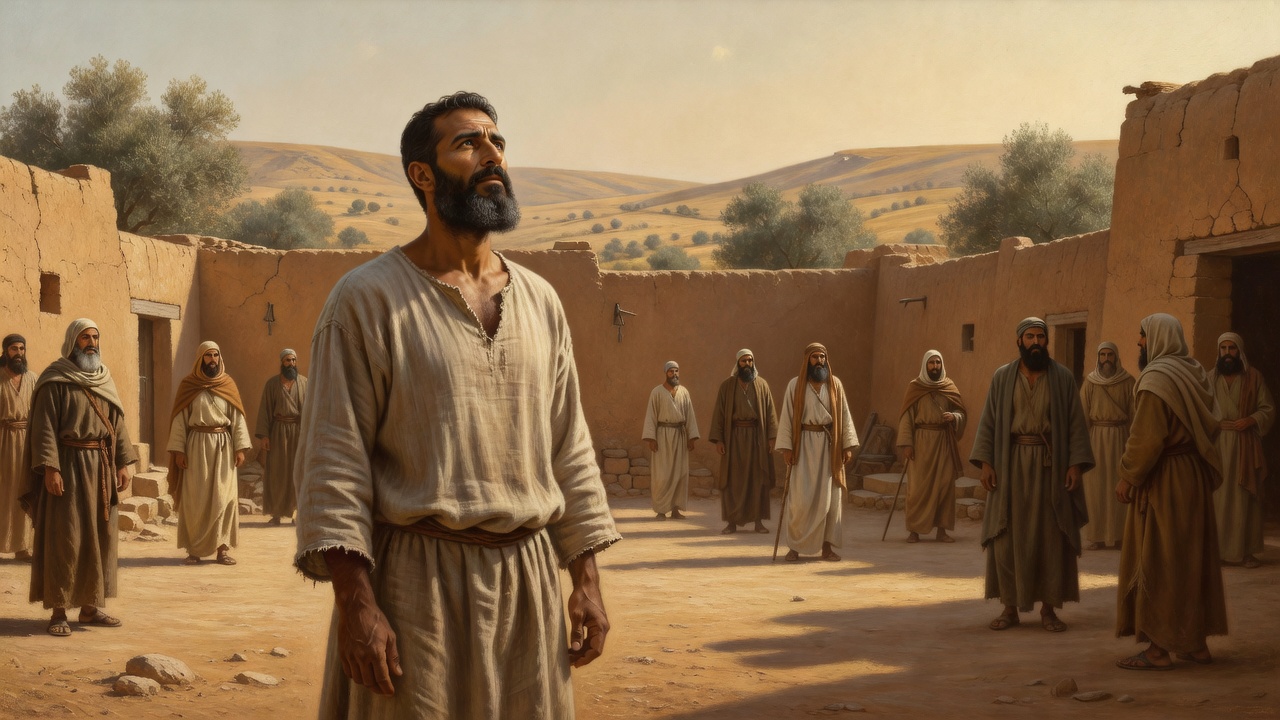
- The speaker in Isaiah 50:4–7 portrays the posture of an attentive disciple who willingly endures physical maltreatment, including beatings, the plucking of his beard, and being spat upon. Setting one's face 'like flint' is a vivid idiom signifying resolute determination and steadfast trust in God despite public shame and hostility.Sources: the Bible text itself
Notes written with AI assistance from open sources (Theographic Bible Metadata, CC BY-SA 4.0; Easton’s Bible Dictionary, public domain) and reviewed before publishing.
Credits and license for this translation
De Heilige Schrift, Petrus Canisiusvertaling, 1939
The Holy Bible in Dutch, Petrus Canisius translation, 1939
Public Domain
Language: Nederlandse taal (Dutch)
Eerste uitgave: Het Spectrum, Utrecht, Brussel, 1939
De Petrus Canisiusvertaling is een Nederlandse rooms-katholieke bijbelvertaling, waarvan de eerste complete uitgave verscheen in 1939. De volledige naam luidt: "De Heilige Schrift, vertaling uit de grondtekst met aantekeningen, in opdracht van de Apologetische Vereniging 'Petrus Canisius' ondernomen met goedkeuring van de hoogwaardige bisschoppen van Nederland". De Petrus Canisiusvertaling is de eerste Nederlandse katholieke vertaling die gebaseerd is op de grondteksten in hun oorspronkelijke taal. Andere vertalingen gingen uit van de Vulgaat. Het taalgebruik van de uitgave is naar hedendaagse normen licht archaïsch te noemen, maar nog steeds vlot verstaanbaar.
Verantwoording in verband met de auteursrechten
In verband met de auteursrechten is contact opgenomen met de oorspronkelijke uitgever (1), de Katholieke Vereniging voor Oecume (2) en de Katholieke Bijbelstichting (3) en werden geen bezwaren gevonden tegen deze publicatie. Rekening houdend met de wettelijke termijnen, kan deze uitgave beschouwd worden als vrij van auteursrechten.
First publication: Het Spectrum, Utrecht, Brussel, 1939
The translation "Petrus Canisius" is a dutch roman catholic bible translation, that was first published in 1939. Its full title is "The Holy Scripture, translation of the original texts with annotations, commissioned by the Apologetical Society 'Petrus Canisius' and executed with the approval of the most reverend bishops of the Netherlands". The translation "Petrus Canisius" is the first dutch catholic translation that was based on the scripture texts in their original language. Other translations were based on the Vulgate. The language of this edition is to current standards moderately archaic, but still easily understood.
Accountability in relation to copyright
Concerning the copyright contacts have been made with the original publisher (1), the Katholieke Vereniging voor Oecumene (Catholic Society for Ecumenism) (2) and the Katholieke Bijbelstichting (Catholic Bible Foundation) (3) and no objections have been found against this publication. Taking into account the legal terms, this edition can be considered to be in the public domain.
UITGEVERIJ UNIEBOEK|HET SPECTRUM BV, HOUTEN, THE NETHERLANDS
KATHOLIEKE VERENIGING VOOR OECUMENE, 'S HERTOGENBOSCH, THE NETHERLANDS
KBS, HOEVEN, THE NETHERLANDS
2024-08-06
Source: http://ebible.org/nld1939/ · eBible.org