Isaiah 46
De Heilige Schrift, Petrus Canisiusvertaling, 1939 · Tap a verse to see its cross-references.
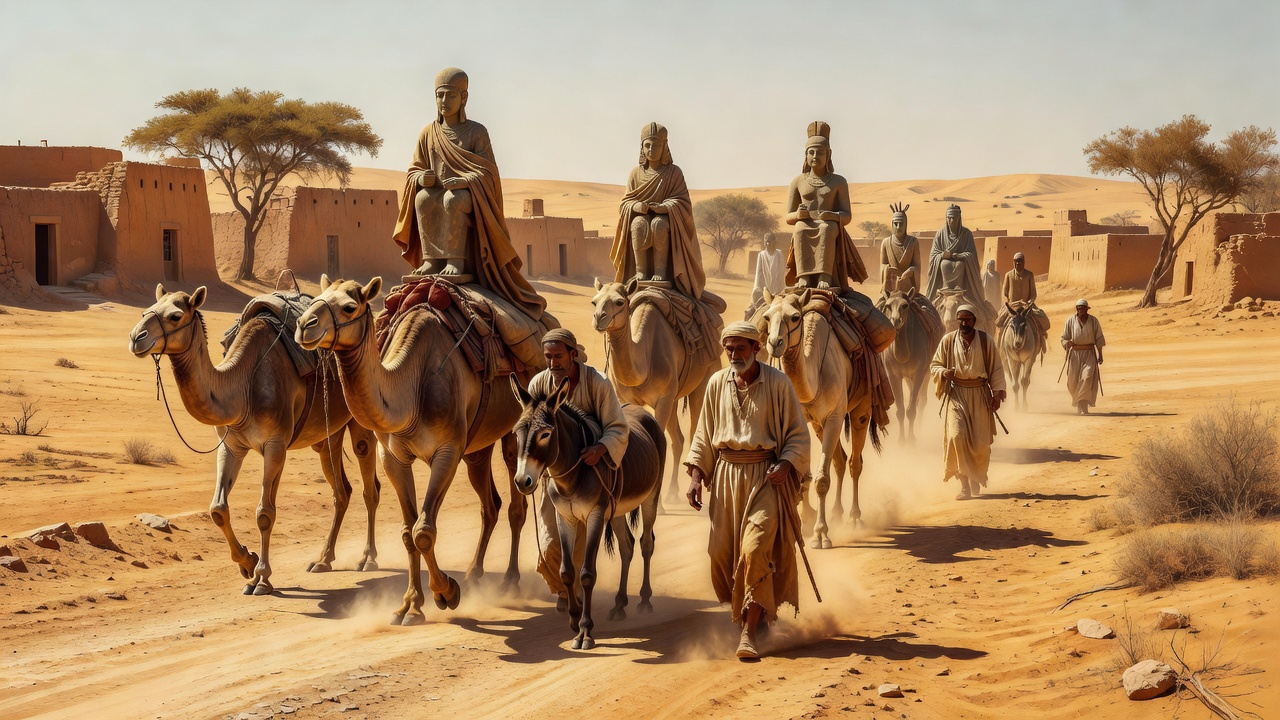
1Bel wankelt al, en Nebo valt; Hun beelden worden op beesten en ossen gelegd, Getorst en gedragen, een vermoeiende last, 2Waaronder allen zich bukken en krommen. Maar ze kunnen hun last niet in veiligheid brengen, Zelf zullen ze in ballingschap gaan! 3Huis van Jakob, luister naar Mij, Wie overbleven van Israëls huis, Die sinds hun geboorte door Mij zijn getorst, Gedragen van de moederschoot af! 4Tot uw ouderdom ben Ik dezelfde, tot uw grijsheid blijf Ik u torsen. U dragen, zoals Ik gedaan heb, u torsen en redden. 5Naast wien soms wilt gij Mij stellen en meten, Op wiens beeld Mij doen lijken? 6Ze schudden goud uit hun buidel, Wegen zilver af op de schaal, Huren een goudsmid, om er een god van te maken, En buigen aanbiddend zich neer. 7Ze tillen hem op de schouders En dragen hem rond, Zetten hem neer op een voetstuk: daar staat hij, Hij komt van zijn plaats niet meer af; Hij geeft geen antwoord, als men hem roept, Redt niemand uit zijn ellende. 8Denkt daaraan, weest verstandig, rebellen, 9Neemt het ter harte, en herinnert u wat vroeger is gebeurd. Ja, ik ben God, er is geen ander, God, die zijns gelijke niet heeft; 10Die van de beginne het einde voorzegde, Tevoren, wat nog niet was geschied. Ik spreek: Mijn raadsbesluit zal worden volbracht, Wat Ik gewild heb, breng Ik tot stand; 11Uit het oosten roep Ik den roofvogel op, Uit verre landen den man van mijn plannen! Zoals Ik gezegd heb, zal Ik het schikken, Zoals Ik besloten heb, zal Ik het doen. 12Moedelozen, luistert naar Mij, Die u nog ver van het heil meent verwijderd: 13Mijn heil doe Ik naderen, het is niet verre meer af, Mijn redding laat zich niet wachten; Aan Sion breng Ik verlossing, Aan Israël mijn glorie!
Did you know?
The God Who Carries His People
- Isaiah 46 contrasts the Babylonian gods Bel and Nebo with the God of Israel. While manufactured idols are described as dead weight that must be loaded onto weary animals and carried into captivity, God declares that He has carried and sustained the house of Jacob from birth and will continue to do so into old age.Sources: the Bible text itself
- The chapter illustrates the helplessness of idols by highlighting their human origin: people pour out gold and weigh silver to hire a goldsmith to shape a god. Once carried on human shoulders and set in place, the statue remains stationary, unable to move, answer cries, or rescue anyone from distress.Sources: the Bible text itself
- The prophecy closes with God promising to grant salvation to Zion. Zion was the south-eastern hill of Jerusalem that David captured and made into the City of David, often cited in prophetic texts as a focal point for Israel.Sources: the Bible text itself · Zion
Notes written with AI assistance from open sources (Theographic Bible Metadata, CC BY-SA 4.0; Easton’s Bible Dictionary, public domain) and reviewed before publishing.
Places in this chapter
Only places identified with high confidence are shown (90% or more according to the scholarly sources compiled by OpenBible). Period map: DARE (Digital Atlas of the Roman Empire), CC BY 4.0; modern map: © OpenStreetMap contributors; places: OpenBible.info (CC BY 4.0).
Credits and license for this translation
De Heilige Schrift, Petrus Canisiusvertaling, 1939
The Holy Bible in Dutch, Petrus Canisius translation, 1939
Public Domain
Language: Nederlandse taal (Dutch)
Eerste uitgave: Het Spectrum, Utrecht, Brussel, 1939
De Petrus Canisiusvertaling is een Nederlandse rooms-katholieke bijbelvertaling, waarvan de eerste complete uitgave verscheen in 1939. De volledige naam luidt: "De Heilige Schrift, vertaling uit de grondtekst met aantekeningen, in opdracht van de Apologetische Vereniging 'Petrus Canisius' ondernomen met goedkeuring van de hoogwaardige bisschoppen van Nederland". De Petrus Canisiusvertaling is de eerste Nederlandse katholieke vertaling die gebaseerd is op de grondteksten in hun oorspronkelijke taal. Andere vertalingen gingen uit van de Vulgaat. Het taalgebruik van de uitgave is naar hedendaagse normen licht archaïsch te noemen, maar nog steeds vlot verstaanbaar.
Verantwoording in verband met de auteursrechten
In verband met de auteursrechten is contact opgenomen met de oorspronkelijke uitgever (1), de Katholieke Vereniging voor Oecume (2) en de Katholieke Bijbelstichting (3) en werden geen bezwaren gevonden tegen deze publicatie. Rekening houdend met de wettelijke termijnen, kan deze uitgave beschouwd worden als vrij van auteursrechten.
First publication: Het Spectrum, Utrecht, Brussel, 1939
The translation "Petrus Canisius" is a dutch roman catholic bible translation, that was first published in 1939. Its full title is "The Holy Scripture, translation of the original texts with annotations, commissioned by the Apologetical Society 'Petrus Canisius' and executed with the approval of the most reverend bishops of the Netherlands". The translation "Petrus Canisius" is the first dutch catholic translation that was based on the scripture texts in their original language. Other translations were based on the Vulgate. The language of this edition is to current standards moderately archaic, but still easily understood.
Accountability in relation to copyright
Concerning the copyright contacts have been made with the original publisher (1), the Katholieke Vereniging voor Oecumene (Catholic Society for Ecumenism) (2) and the Katholieke Bijbelstichting (Catholic Bible Foundation) (3) and no objections have been found against this publication. Taking into account the legal terms, this edition can be considered to be in the public domain.
UITGEVERIJ UNIEBOEK|HET SPECTRUM BV, HOUTEN, THE NETHERLANDS
KATHOLIEKE VERENIGING VOOR OECUMENE, 'S HERTOGENBOSCH, THE NETHERLANDS
KBS, HOEVEN, THE NETHERLANDS
2024-08-06
Source: http://ebible.org/nld1939/ · eBible.org