Hosea 12
De Heilige Schrift, Petrus Canisiusvertaling, 1939 · Tap a verse to see its cross-references.
1Efraïm verlangt naar wind en jaagt de stormen na, Hij is altijd uit op valsheid en leugen: Met Assjoer sluiten zij een verbond, Naar Egypte brengen zij olie. 2Daarom zal Jahweh Israël richten, En Jakob bestraffen, Hem naar zijn gedrag En zijn werken vergelden. 3In de moederschoot heeft hij zijn broer onderkropen, In zijn mannelijke kracht met God durven worstelen; 4Met den engel gestreden en hem overwonnen, Wenend hem om genade gesmeekt. In Betel vond hij Hem terug; Daar sprak Jahweh tot hem, 5De God der heirscharen, Jahweh is zijn Naam: 6“Met de hulp van uw God keert ge terug; Houd u aan vroomheid en recht, Blijf vertrouwen op uw God In Kanaän voor altijd!” 7Maar gaarne bedroog hij met valse schalen, 8Efraïm zeide: Als ik maar rijk word, en vermogen verwerf; Maar al zijn winsten wogen niet op Tegen de misdaad, die hij beging. 9Ik ben Jahweh, uw God, Van Egypteland af: Ik zal u weer onder tenten doen wonen Als in vroegere tijd. 10Ik heb tot de profeten gesproken, En vele visioenen doen zien; Door de mond der profeten Kondig ik hun ondergang aan. 11In Gilad heerst enkel slechtheid en leugen, In Gilgal brengen ze stieren ten offer: Zo zullen hun altaren tot steenhopen worden In de voren der akkers. 12Jakob vluchtte naar de vlakte van Aram, Voor een vrouw heeft Israël gediend en de kudde gehoed: 13Maar door een profeet heeft Jahweh Israël uit Egypte geleid, Door een profeet hem gehoed. 14Maar Efraïm is bitter Zijn God blijven tarten: Nu zal de Heer zijn bloedschuld wreken, En zijn hoon hem vergelden!
Did you know?
Jacob's Heritage and Ephraim's Deceit
- Hosea condemns the northern kingdom for balancing alliances between rival world empires, noting that Ephraim made treaties with Assyria to the north while sending olive oil to Egypt along the Nile.Sources: the Bible text itself · Assyria · Egypt
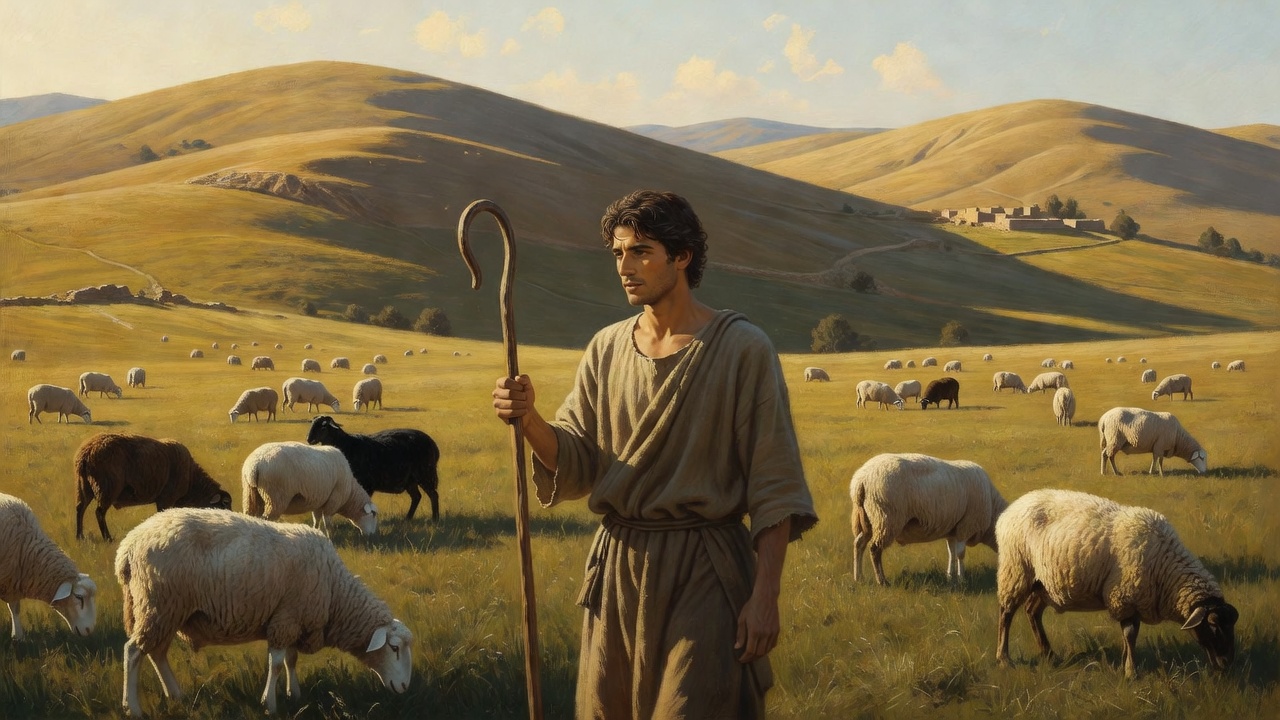
- The text recalls key episodes from the life of the patriarch Jacob: grasping his brother's heel at birth, wrestling with an angel, encountering God at Bethel, and laboring as a shepherd in the elevated region of Aram to obtain a wife.Sources: the Bible text itself · Jacob (Israel) · Bethel (of Palestine) · Aram
- The prophet highlights idolatry at historic locations such as Gilead, the mountainous territory east of the Jordan, and Gilgal, an ancient sanctuary camp, warning that their sacrificial altars would be reduced to piles of stones in plowed furrows.Sources: the Bible text itself · Gilead · Gilgal
Notes written with AI assistance from open sources (Theographic Bible Metadata, CC BY-SA 4.0; Easton’s Bible Dictionary, public domain) and reviewed before publishing.
Places in this chapter
- Assyria · 36.359, 43.153 · verse 1
- Egypt · 30.129, 31.308 · verses 1, 9, 13
- Gilead · Today: Gilead 1 · 32.187, 35.692 · verse 11
- Aram · 33.511, 36.306 · verse 12
Only places identified with high confidence are shown (90% or more according to the scholarly sources compiled by OpenBible). Period map: DARE (Digital Atlas of the Roman Empire), CC BY 4.0; modern map: © OpenStreetMap contributors; places: OpenBible.info (CC BY 4.0).
Credits and license for this translation
De Heilige Schrift, Petrus Canisiusvertaling, 1939
The Holy Bible in Dutch, Petrus Canisius translation, 1939
Public Domain
Language: Nederlandse taal (Dutch)
Eerste uitgave: Het Spectrum, Utrecht, Brussel, 1939
De Petrus Canisiusvertaling is een Nederlandse rooms-katholieke bijbelvertaling, waarvan de eerste complete uitgave verscheen in 1939. De volledige naam luidt: "De Heilige Schrift, vertaling uit de grondtekst met aantekeningen, in opdracht van de Apologetische Vereniging 'Petrus Canisius' ondernomen met goedkeuring van de hoogwaardige bisschoppen van Nederland". De Petrus Canisiusvertaling is de eerste Nederlandse katholieke vertaling die gebaseerd is op de grondteksten in hun oorspronkelijke taal. Andere vertalingen gingen uit van de Vulgaat. Het taalgebruik van de uitgave is naar hedendaagse normen licht archaïsch te noemen, maar nog steeds vlot verstaanbaar.
Verantwoording in verband met de auteursrechten
In verband met de auteursrechten is contact opgenomen met de oorspronkelijke uitgever (1), de Katholieke Vereniging voor Oecume (2) en de Katholieke Bijbelstichting (3) en werden geen bezwaren gevonden tegen deze publicatie. Rekening houdend met de wettelijke termijnen, kan deze uitgave beschouwd worden als vrij van auteursrechten.
First publication: Het Spectrum, Utrecht, Brussel, 1939
The translation "Petrus Canisius" is a dutch roman catholic bible translation, that was first published in 1939. Its full title is "The Holy Scripture, translation of the original texts with annotations, commissioned by the Apologetical Society 'Petrus Canisius' and executed with the approval of the most reverend bishops of the Netherlands". The translation "Petrus Canisius" is the first dutch catholic translation that was based on the scripture texts in their original language. Other translations were based on the Vulgate. The language of this edition is to current standards moderately archaic, but still easily understood.
Accountability in relation to copyright
Concerning the copyright contacts have been made with the original publisher (1), the Katholieke Vereniging voor Oecumene (Catholic Society for Ecumenism) (2) and the Katholieke Bijbelstichting (Catholic Bible Foundation) (3) and no objections have been found against this publication. Taking into account the legal terms, this edition can be considered to be in the public domain.
UITGEVERIJ UNIEBOEK|HET SPECTRUM BV, HOUTEN, THE NETHERLANDS
KATHOLIEKE VERENIGING VOOR OECUMENE, 'S HERTOGENBOSCH, THE NETHERLANDS
KBS, HOEVEN, THE NETHERLANDS
2024-08-06
Source: http://ebible.org/nld1939/ · eBible.org