Ezekiel 19
De Heilige Schrift, Petrus Canisiusvertaling, 1939 · Tap a verse to see its cross-references.
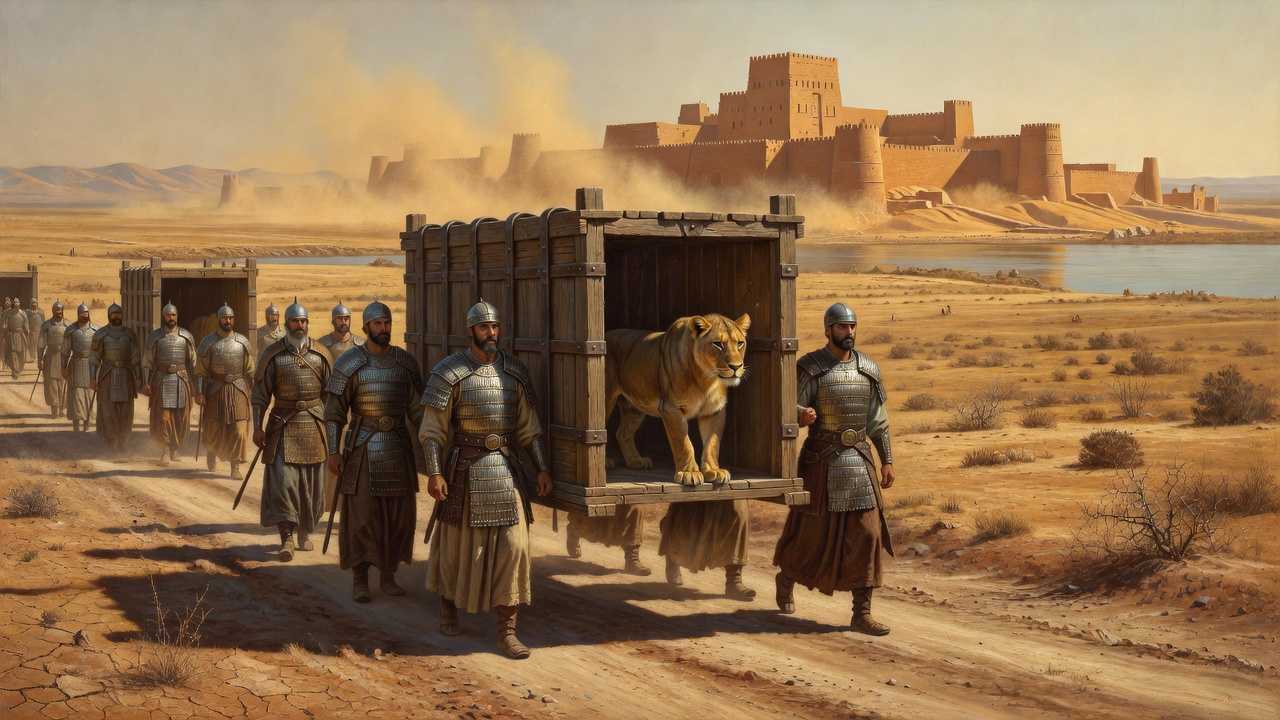
1Ge moet een klaagzang aanheffen over de vorsten van Israël, en 2zeggen: Wat een prachtleeuwin was uw moeder Onder de leeuwen; Liggend tussen haar jongen, Bracht zij haar welpen groot. 3Een van haar welpen voedde zij op: Een echte jonge leeuw! Hij leerde zijn prooi zoeken, Mensen verscheurde hij. 4Maar men riep volken tegen hem op, En in hun kuil werd hij gevangen; Ze sleurden hem met haken Naar het land van Egypte. 5Toen zij zag, dat haar wachten vergeefs, En haar hoop was vervlogen, Koos zij een van haar welpen, Bestemde hem tot jonge leeuw. 6Met leeuwen ging hij samenleven: Een echte jonge leeuw! Hij leerde zijn prooi zoeken, Mensen verscheurde hij. 7Hij maakte veel weduwen En ontvolkte hun steden; Het land en zijn bewoners stonden versteld Van zijn dreigend gebrul! 8Maar volken spanden hem strikken Aan alle kanten; Wierpen hun net over hem heen, In hun kuil werd hij gevangen. 9Ze zetten hem in een kooi, Sleurden hem met haken voor Babels koning, de burchten in, Opdat zijn gebrul niet meer zou worden gehoord Op Israëls bergen. 10Uw moeder stond als een wingerd In uw wijngaard aan het water geplant; Ze was bloeiend en vruchtbaar Door de rijkdom van water. 11Ze kreeg een krachtige tak Tot konings-schepter, Wiens top zich tot in de wolken verhief, Die opviel door zijn hoogte en talrijke twijgen. 12Maar in woede werd zij uitgerukt, Op de grond geworpen. Een oostenwind verdroogde haar: Haar vrucht viel af. Haar krachtige tak verdorde: Het vuur verslond hem. 13Nu staat ze geplant in de steppe, In een streek van dorheid en dorst; 14Er schoot een vlam uit de tak, Die haar ranken en vruchten verteerde. Nu heeft ze geen krachtige tak meer over, Geen konings-schepter meer! Dit is een klaaglied, dat men nog altijd jammert.
Did you know?
A Lament for the Princes of Israel
- Ezekiel frames this funeral song as an allegory of a mother lioness rearing her cubs. The first cub learns to tear prey but is captured with hooks and brought to Egypt, while the second cub is trapped in a net, placed in a cage, and led into captivity before the king of Babylon.Sources: the Bible text itself · Egypt · Babylon
- The second half of the lament compares the royal line to a flourishing vine planted beside abundant waters, bearing strong branches fit for rulers' scepters. It depicts the vine being uprooted in fury, scorched by the east wind, consumed by fire, and transplanted into a parched wilderness.Sources: the Bible text itself
Notes written with AI assistance from open sources (Theographic Bible Metadata, CC BY-SA 4.0; Easton’s Bible Dictionary, public domain) and reviewed before publishing.
Places in this chapter
Only places identified with high confidence are shown (90% or more according to the scholarly sources compiled by OpenBible). Period map: DARE (Digital Atlas of the Roman Empire), CC BY 4.0; modern map: © OpenStreetMap contributors; places: OpenBible.info (CC BY 4.0).
Credits and license for this translation
De Heilige Schrift, Petrus Canisiusvertaling, 1939
The Holy Bible in Dutch, Petrus Canisius translation, 1939
Public Domain
Language: Nederlandse taal (Dutch)
Eerste uitgave: Het Spectrum, Utrecht, Brussel, 1939
De Petrus Canisiusvertaling is een Nederlandse rooms-katholieke bijbelvertaling, waarvan de eerste complete uitgave verscheen in 1939. De volledige naam luidt: "De Heilige Schrift, vertaling uit de grondtekst met aantekeningen, in opdracht van de Apologetische Vereniging 'Petrus Canisius' ondernomen met goedkeuring van de hoogwaardige bisschoppen van Nederland". De Petrus Canisiusvertaling is de eerste Nederlandse katholieke vertaling die gebaseerd is op de grondteksten in hun oorspronkelijke taal. Andere vertalingen gingen uit van de Vulgaat. Het taalgebruik van de uitgave is naar hedendaagse normen licht archaïsch te noemen, maar nog steeds vlot verstaanbaar.
Verantwoording in verband met de auteursrechten
In verband met de auteursrechten is contact opgenomen met de oorspronkelijke uitgever (1), de Katholieke Vereniging voor Oecume (2) en de Katholieke Bijbelstichting (3) en werden geen bezwaren gevonden tegen deze publicatie. Rekening houdend met de wettelijke termijnen, kan deze uitgave beschouwd worden als vrij van auteursrechten.
First publication: Het Spectrum, Utrecht, Brussel, 1939
The translation "Petrus Canisius" is a dutch roman catholic bible translation, that was first published in 1939. Its full title is "The Holy Scripture, translation of the original texts with annotations, commissioned by the Apologetical Society 'Petrus Canisius' and executed with the approval of the most reverend bishops of the Netherlands". The translation "Petrus Canisius" is the first dutch catholic translation that was based on the scripture texts in their original language. Other translations were based on the Vulgate. The language of this edition is to current standards moderately archaic, but still easily understood.
Accountability in relation to copyright
Concerning the copyright contacts have been made with the original publisher (1), the Katholieke Vereniging voor Oecumene (Catholic Society for Ecumenism) (2) and the Katholieke Bijbelstichting (Catholic Bible Foundation) (3) and no objections have been found against this publication. Taking into account the legal terms, this edition can be considered to be in the public domain.
UITGEVERIJ UNIEBOEK|HET SPECTRUM BV, HOUTEN, THE NETHERLANDS
KATHOLIEKE VERENIGING VOOR OECUMENE, 'S HERTOGENBOSCH, THE NETHERLANDS
KBS, HOEVEN, THE NETHERLANDS
2024-08-06
Source: http://ebible.org/nld1939/ · eBible.org