Psalms 79
De Heilige Schrift 1917 · Tap a verse to see its cross-references.
1Een psalm van Asaf. O God! Heidenen zijn gekomen in Uw erfenis; zij hebben den tempel Uwer heiligheid verontreinigd; zij hebben Jeruzalem tot steenhopen gesteld. 2Zij hebben de dode lichamen Uwer knechten aan het gevogelte des hemels tot spijs gegeven; het vlees Uwer gunstgenoten aan het gedierte des lands. 3Zij hebben hun bloed rondom Jeruzalem als water vergoten; en er was niemand, die hen begroef. 4Wij zijn onzen naburen een smaadheid geworden; een spot en schimp dien, die rondom ons zijn. 5Hoe lang, HEERE? Zult Gij eeuwiglijk toornen? Zal Uw ijver als vuur branden? 6Stort Uw grimmigheid uit over de heidenen, die U niet kennen, en over de koninkrijken, die Uw Naam niet aanroepen. 7Want men heeft Jakob opgegeten, en zij hebben zijn liefelijke woning verwoest. 8Gedenk ons de vorige misdaden niet; haast U, laat Uw barmhartigheden ons voorkomen; want wij zijn zeer dun geworden. 9Help ons, o God onzes heils! ter oorzake van de eer Uws Naams; en red ons, en doe verzoening over onze zonden, om Uws Naams wil. 10Waarom zouden de heidenen zeggen: Waar is hun God? Laat de wraak des vergoten bloeds Uwer knechten onder de heidenen voor onze ogen bekend worden. 11Laat het gekerm der gevangenen voor Uw aanschijn komen; behoud overig de kinderen des doods, naar de grootheid Uws arms. 12En geef onze naburen zevenvoudig weder in hun schoot hun smaad, waarmede zij U, o Heere! gesmaad hebben. 13Zo zullen wij, Uw volk en de schapen Uwer weide, U loven in eeuwigheid, van geslacht tot geslacht; wij zullen Uw roem vertellen.
Did you know?
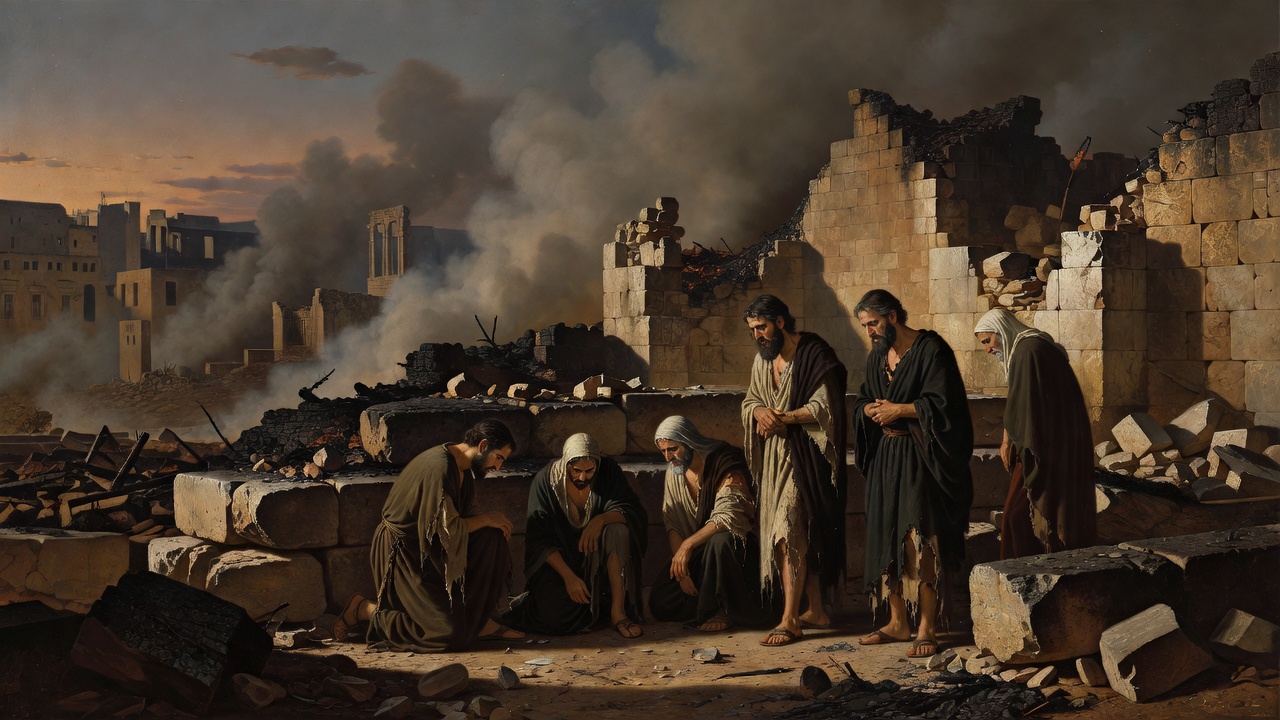
A Lament over the Destruction of Jerusalem
- Psalm 79 is titled a psalm of Asaph, placing it among a collection of psalms (Psalms 50 and 73–83) associated with the Levite musician and seer Asaph. In the biblical record, the title may also refer to the sons of Asaph, a recognized guild of temple singers and poets.Sources: Asaph (Levite) · the Bible text itself
- The psalm laments the defilement of the holy temple, the destruction of Jerusalem into rubble, and the unburied bodies left throughout the city. Jerusalem, known as the holy city and a mountain fastness, is portrayed here as having suffered devastating invasion by surrounding nations.Sources: Jerusalem · the Bible text itself
- The poem calls upon God for help because foreign nations have devoured Jacob and devastated his homeland. In biblical tradition, the name of the patriarch Jacob is frequently used as a poetic collective term for his descendants and their shared homeland.Sources: Jacob (Israel) · the Bible text itself
Notes written with AI assistance from open sources (Theographic Bible Metadata, CC BY-SA 4.0; Easton’s Bible Dictionary, public domain) and reviewed before publishing.
Places in this chapter
Only places identified with high confidence are shown (90% or more according to the scholarly sources compiled by OpenBible). Period map: DARE (Digital Atlas of the Roman Empire), CC BY 4.0; modern map: © OpenStreetMap contributors; places: OpenBible.info (CC BY 4.0).
Credits and license for this translation
De Heilige Schrift 1917
The Holy Bible in Dutch, 1917
Public Domain
Language: Nederlands (Dutch)
2023-01-23
Source: http://ebible.org/nld/ · eBible.org