Psalms 48
De Heilige Schrift 1917 · Tap a verse to see its cross-references.
1Een lied, een psalm, voor de kinderen van Korach. (48:2) De HEERE is groot en zeer te prijzen, in de stad onzes Gods, op den berg Zijner heiligheid. 2(48:3) Schoon van gelegenheid, een vreugde der ganse aarde is de berg Sion, aan de zijden van het noorden; de stad des groten Konings. 3(48:4) God is in haar paleizen; Hij is er bekend voor een Hoog Vertrek. 4(48:5) Want ziet, de koningen waren vergaderd; zij waren te zamen doorgetogen. 5(48:6) Gelijk zij het zagen, alzo waren zij verwonderd; zij werden verschrikt, zij haastten weg. 6(48:7) Beving greep hen aldaar aan, smart als van een barende vrouw. 7(48:8) Met een oostenwind verbreekt Gij de schepen van Tharsis. 8(48:9) Gelijk wij gehoord hadden, alzo hebben wij gezien in de stad des HEEREN der heirscharen, in de stad onzes Gods; God zal haar bevestigen tot in eeuwigheid. Sela. 9(48:10) O God! wij gedenken Uwer weldadigheid, in het midden Uws tempels. 10(48:11) Gelijk Uw Naam is, o God! alzo is Uw roem tot aan de einden der aarde; Uw rechterhand is vol van gerechtigheid. 11(48:12) Laat de berg Sion blijde zijn; laat de dochteren van Juda zich verheugen, om Uwer oordelen wil. 12(48:13) Gaat rondom Sion, en omringt haar; telt haar torens; 13(48:14) Zet uw hart op haar vesting; beschouwt onderscheidenlijk haar paleizen, opdat gij het aan het navolgende geslacht vertelt. 14(48:15) Want deze God is onze God eeuwiglijk en altoos; Hij zal ons geleiden tot den dood toe.
Did you know?
Zion, the City of the Great King
- Mount Zion, originally the fortified southeastern hill of Jerusalem captured by David from the Jebusites, became known as the City of David and the site of his citadel. In Psalm 48, it is celebrated as God's holy mountain, elevated and fortified against advancing enemy kings.Sources: the Bible text itself · Mount Zion · Zion
- The psalm depicts God's power shattering enemy forces like an east wind wrecking the ships of Tarshish. Many scholars identify Tarshish with a distant Phoenician trading port in southwestern Spain, while other ancient traditions proposed locations such as Carthage or ports in the east.Sources: the Bible text itself · Tarshish
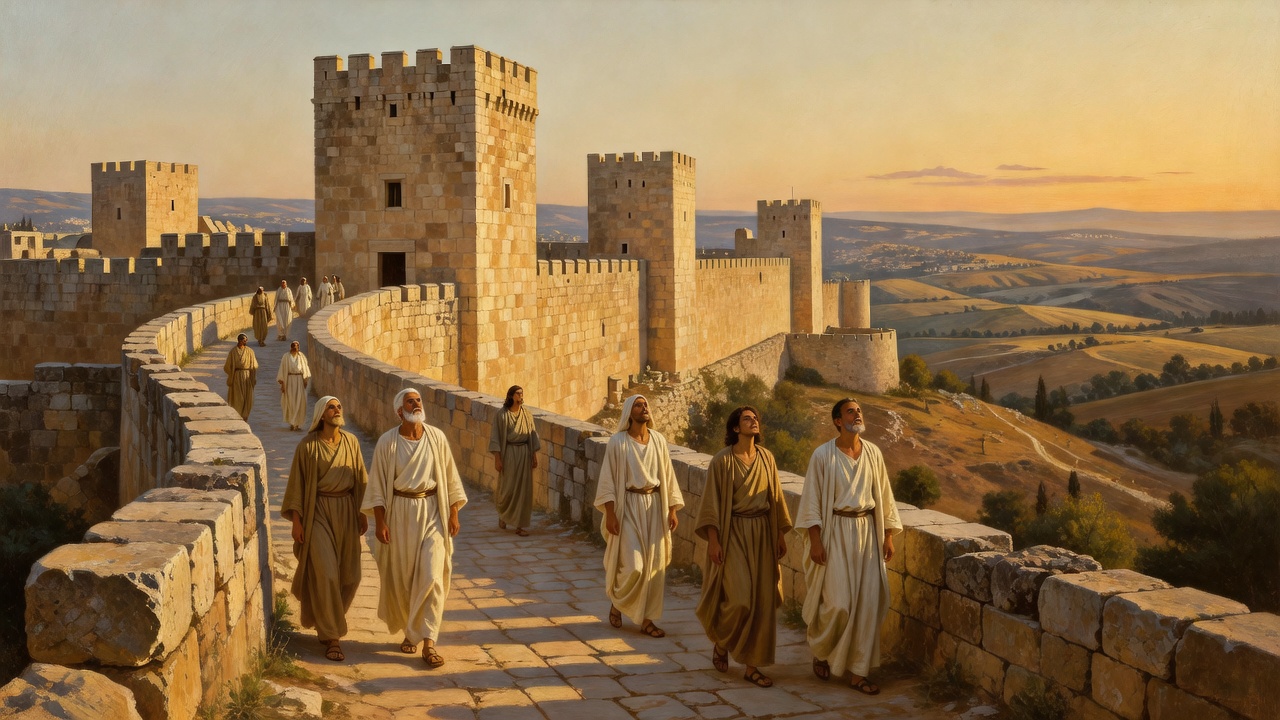
- Worshippers are invited to walk around the perimeter of Zion to inspect its ramparts, count its towers, and view its citadels. This survey of the city's defenses was meant to be recounted to future generations as a witness of God's steadfast protection.Sources: the Bible text itself
Notes written with AI assistance from open sources (Theographic Bible Metadata, CC BY-SA 4.0; Easton’s Bible Dictionary, public domain) and reviewed before publishing.
Places in this chapter
- Mount Zion · 31.772, 35.229 · verses 2, 11
- Zaphon · Today: Jebel Aqra · 35.953, 35.969 · verse 2
- Jerusalem · 31.777, 35.234 · verse 3
- Zion · Today: Jerusalem · 31.777, 35.234 · verse 12
Only places identified with high confidence are shown (90% or more according to the scholarly sources compiled by OpenBible). Period map: DARE (Digital Atlas of the Roman Empire), CC BY 4.0; modern map: © OpenStreetMap contributors; places: OpenBible.info (CC BY 4.0).
Credits and license for this translation
De Heilige Schrift 1917
The Holy Bible in Dutch, 1917
Public Domain
Language: Nederlands (Dutch)
2023-01-23
Source: http://ebible.org/nld/ · eBible.org