Malachi 1
De Heilige Schrift 1917 · Tap a verse to see its cross-references.
About this book
About Malachi
- Easton's Bible Dictionary (1897) presents Malachi, a name meaning "messenger" or "angel," as the last of the minor prophets and the writer of the last book of the Old Testament canon. Nothing is known of him beyond what is contained in his book of prophecies.Sources: Easton: Malachi · Malachi
- Some have supposed that the name is simply a title for a messenger of Jehovah, not a proper name. Easton's Bible Dictionary (1897) concludes, however, that there is reason to regard Malachi as the prophet's ordinary name.Sources: Easton: Malachi · Malachi
- Easton's Bible Dictionary (1897) dates the prophecies to about 420 B.C., after Nehemiah's second return from Persia, or possibly before that return. Because Ezra does not mention him and he does not mention the restoration of the temple, the dictionary infers that he prophesied after Haggai and Zechariah.Sources: Easton: Malachi
- Easton's Bible Dictionary (1897) treats Malachi as a contemporary of Nehemiah, comparing Malachi 2:8 with Nehemiah 13:15 and Malachi 2:10-16 with Nehemiah 13:23. It also notes that the temple services were still in existence, citing Malachi 1:10, 3:1 and 3:10.Sources: Easton: Malachi
Notes written with AI assistance from open sources (Theographic Bible Metadata, CC BY-SA 4.0; Easton’s Bible Dictionary, public domain) and reviewed before publishing.
1De last van het woord des HEEREN tot Israel, door den dienst van Maleachi. 2Ik heb u liefgehad, zegt de HEERE; maar gij zegt: Waarin hebt Gij ons liefgehad? Was niet Ezau Jakobs broeder? spreekt de HEERE; nochtans heb Ik Jakob liefgehad. 3En Ezau heb Ik gehaat; en Ik heb zijn bergen gesteld tot een verwoesting, en zijn erve voor de draken der woestijn. 4Ofschoon Edom zeide: Wij zijn verarmd, doch wij zullen de woeste plaatsen weder bouwen; alzo zegt de HEERE der heirscharen: Zullen zij bouwen, zo zal Ik afbreken; en men zal hen noemen: Landpale der goddeloosheid, en een volk, op hetwelk de HEERE vergramd is tot in eeuwigheid. 5En uw ogen zullen het zien, en gijlieden zult zeggen: De HEERE zij groot gemaakt, van de landpale Israels af! 6Een zoon zal den vader eren, en een knecht zijn heer; ben Ik dan een Vader, waar is Mijn eer? En ben Ik een Heere, waar is Mijn vreze? zegt de HEERE der heirscharen tot u, o priesters, verachters Mijns Naams! Maar gij zegt: Waarmede verachten wij Uw Naam? 7Gij brengt op Mijn altaar verontreinigd brood, en zegt: Waarmede verontreinigen wij U? Daarmede, dat gij zegt: Des HEEREN tafel is verachtelijk. 8Want als gij wat blinds aanbrengt om te offeren, het is bij u niet kwaad; en als gij wat kreupels of wat kranks aanbrengt, het is niet kwaad! Brengt dat toch uw vorst; zal hij een welgevallen aan u hebben? of zal hij uw aangezicht opnemen? zegt de HEERE der heirscharen. 9Nu dan, smeekt toch het aangezicht van God, dat Hij ons genadig zij; zulks is van uw hand geschied, zal Hij uw aangezicht opnemen? zegt de HEERE der heirscharen? 10Wie is er ook onder u, die de deuren om niet toesluit? En gij steekt het vuur niet aan op Mijn altaar om niet. Ik heb geen lust aan u, zegt de HEERE der heirscharen, en het spijsoffer is Mij van uw hand niet aangenaam. 11Maar van den opgang der zon tot haar ondergang, zal Mijn Naam groot zijn onder de heidenen; en aan alle plaats zal Mijn Naam reukwerk toegebracht worden, en een rein spijsoffer; want Mijn Naam zal groot zijn onder de heidenen, zegt de HEERE der heirscharen. 12Maar gij ontheiligt dien, als gij zegt: Des HEEREN tafel is ontreinigd, en haar inkomen, haar spijs is verachtelijk. 13Nog zegt gij: Ziet, wat een vermoeidheid! maar gij zoudt het kunnen wegblazen, zegt de HEERE der heirscharen; gij brengt ook hetgeen geroofd is, en dat kreupel en krank is; gij brengt ook spijsoffer; zou Mij zulks aangenaam zijn van uw hand? zegt de HEERE. 14Ja, vervloekt zij de bedrieger, die een mannetje in zijn kudde heeft, en den Heere belooft, en offert, dat verdorven is! want Ik ben een groot Koning, zegt de HEERE der heirscharen, en Mijn Naam is vreselijk onder de heidenen.
Did you know?
Honoring God and Defective Offerings
- The name Malachi means messenger or angel. While some have suggested it was a title rather than a proper name, scholars and traditions widely treat it as the prophet's personal name, placing his ministry during the period of Nehemiah, after Haggai and Zechariah.Sources: Malachi
- The opening dispute recalls the twin brothers Jacob and Esau, the ancestors of Israel and Edom. The text contrasts God's covenant love for Israel with the judgment and desolation coming upon the mountainous region of Edom.Sources: Esau (Edom) · Jacob (Israel) · Edom · the Bible text itself
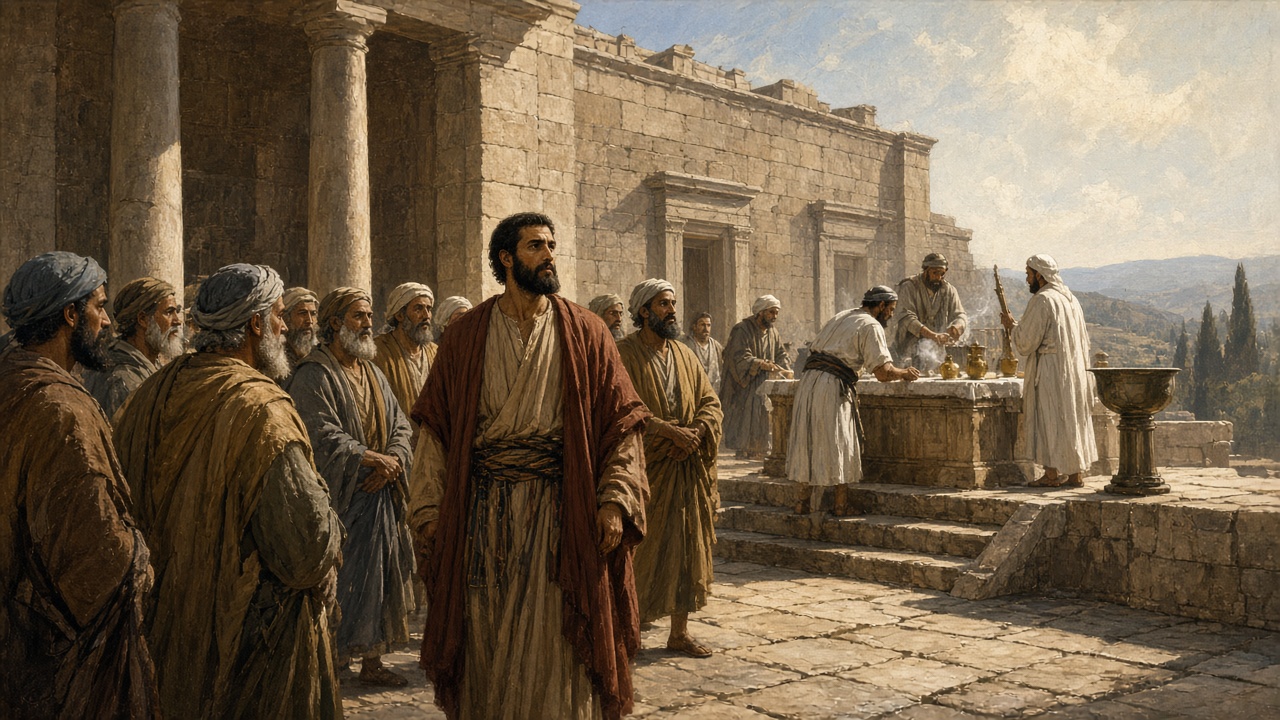
- The priests are rebuked for offering blind, lame, and diseased animals on the altar rather than unblemished livestock. Malachi exposes their disrespect by asking whether a civil governor would accept such inferior gifts.Sources: the Bible text itself
Notes written with AI assistance from open sources (Theographic Bible Metadata, CC BY-SA 4.0; Easton’s Bible Dictionary, public domain) and reviewed before publishing.
Places in this chapter
- Edom · 30.746, 35.604 · verse 4
Only places identified with high confidence are shown (90% or more according to the scholarly sources compiled by OpenBible). Period map: DARE (Digital Atlas of the Roman Empire), CC BY 4.0; modern map: © OpenStreetMap contributors; places: OpenBible.info (CC BY 4.0).
Credits and license for this translation
De Heilige Schrift 1917
The Holy Bible in Dutch, 1917
Public Domain
Language: Nederlands (Dutch)
2023-01-23
Source: http://ebible.org/nld/ · eBible.org