Jeremiah 47
De Heilige Schrift 1917 · Tap a verse to see its cross-references.
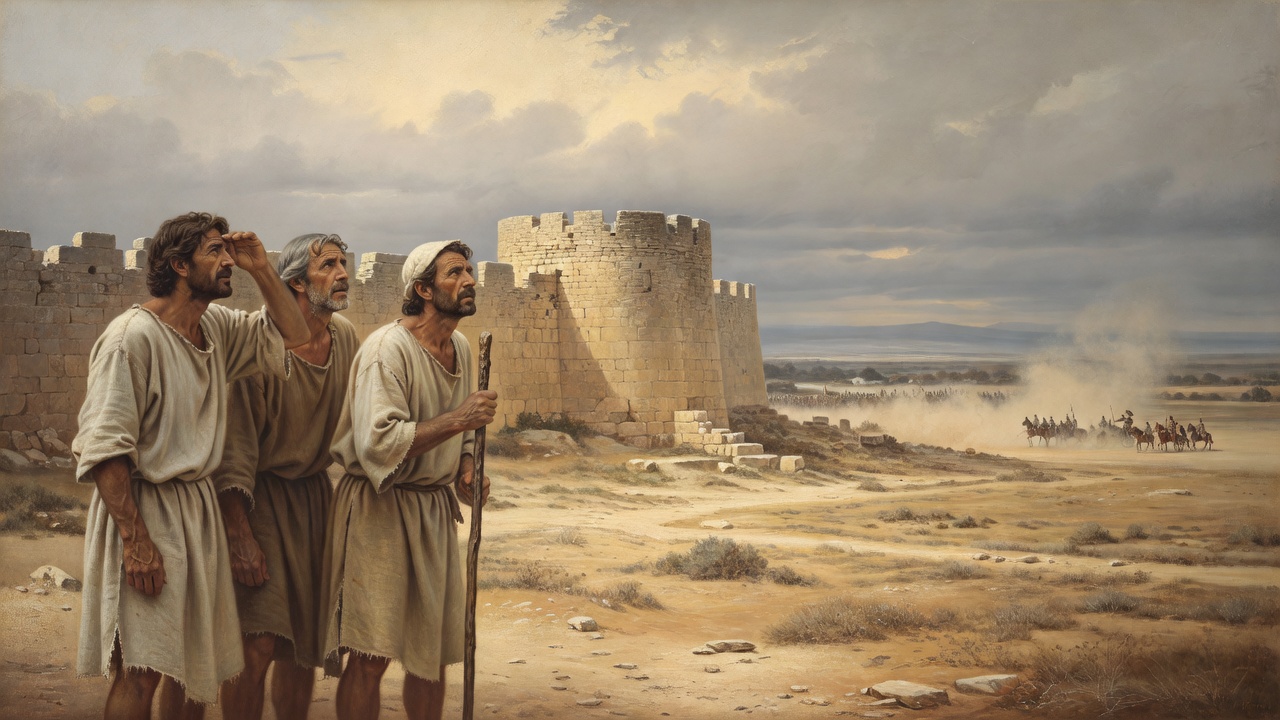
1Het woord des HEEREN, dat tot den profeet Jeremia geschiedde, tegen de Filistijnen; eer dat Farao Gaza sloeg. 2Zo zegt de HEERE: Ziet, wateren komen op van het noorden, en zullen worden tot een overlopende beek, en overlopen het land en de volheid van hetzelve, de stad en die daarin wonen; en de mensen zullen schreeuwen, en al de inwoners des lands zullen huilen; 3Vanwege het geluid van het geklater der hoeven zijner sterke paarden, vanwege het geraas zijner wagenen, en het bulderen zijner raderen; de vaders zien niet om naar de kinderen, vanwege de slappigheid der handen; 4Vanwege den dag, die er komt om alle Filistijnen te verstoren, om Tyrus en Sidon allen overgeblevenen helper af te snijden; want de HEERE zal de Filistijnen, het overblijfsel des eilands van Kafthor, verstoren. 5Kaalheid is op Gaza gekomen; Askelon is uitgeroeid, met het overblijfsel huns dals; hoe lang zult gij uzelven insnijdingen maken? 6O wee, gij zwaard des HEEREN! Hoe lang zult gij niet stil houden? Vaar in uw schede, rust en wees stil! 7Hoe zoudt gij stil houden? De HEERE heeft toch aan het zwaard bevel gegeven; tegen Askelon en tegen de zeehaven, aldaar heeft Hij het besteld.
Did you know?
Judgment on the Philistines
- Jeremiah refers to the Philistines as the remnant from the coasts of Caphtor. Biblical traditions identify Caphtor as the place of origin of the Philistines, a location widely associated by scholars with Crete or parts of the eastern Mediterranean coast.Sources: the Bible text itself · Caphtor
- The chapter directs its warnings against Gaza and Ashkelon, two of the five prominent Philistine cities along the Mediterranean coast. Both were ancient centers known for their strategic position and trade links connecting Egypt and the surrounding regions.Sources: the Bible text itself · Gaza · Ashkelon
- The prophecy notes that the coming destruction would cut off every remaining ally from Tyre and Sidon. These two major Phoenician ports to the north were key maritime centers whose interests were closely intertwined with the coastal region.Sources: the Bible text itself · Tyre · Sidon
Notes written with AI assistance from open sources (Theographic Bible Metadata, CC BY-SA 4.0; Easton’s Bible Dictionary, public domain) and reviewed before publishing.
Places in this chapter
- Gaza · Today: Tell Harube · 31.504, 34.464 · verses 1, 5
- Sidon · Today: Sandikli archaeological site in Sidon · 33.561, 35.372 · verse 4
- Tyre · 33.271, 35.196 · verse 4
- Ashkelon · Today: Tel Ashkelon · 31.664, 34.546 · verses 5, 7
- Great Sea · Today: Mediterranean Sea · 31.805, 34.170 · verse 5
- Philistia · 31.664, 34.546 · verse 5
Only places identified with high confidence are shown (90% or more according to the scholarly sources compiled by OpenBible). Period map: DARE (Digital Atlas of the Roman Empire), CC BY 4.0; modern map: © OpenStreetMap contributors; places: OpenBible.info (CC BY 4.0).
Credits and license for this translation
De Heilige Schrift 1917
The Holy Bible in Dutch, 1917
Public Domain
Language: Nederlands (Dutch)
2023-01-23
Source: http://ebible.org/nld/ · eBible.org