Genesis 8
Dhao Alkitab · Tap a verse to see its cross-references.
Rai mango noo-noo
1Masi ka sèmi èèna, Ama Lamatua bhèlu boe Noh si dènge badha-manu aaꞌi-aaꞌi dhu ètu dedha kapa. Hèia Na hia ngèlu gꞌoro, ka èi na kura ka noo-noo. 2Na katange èi madha aaꞌi-aaꞌi ètu rai-haha ne, aa Na taha èjꞌi kahèi. 3Ka èi kura noo-noo ka. Dꞌai cangasu lèmi nguru lodꞌo, èi marèma heka. 4Lèke dènge hèru ka pidhu, risi canguru pidhu lodꞌo, kapa eta ètu kolo ledhe aae èci, ngara na Ararat. 5Èi kura taruu toke lodꞌo ka èci, hèru ka canguru, ka kolo-kolo ledhe cèu noo-noo.
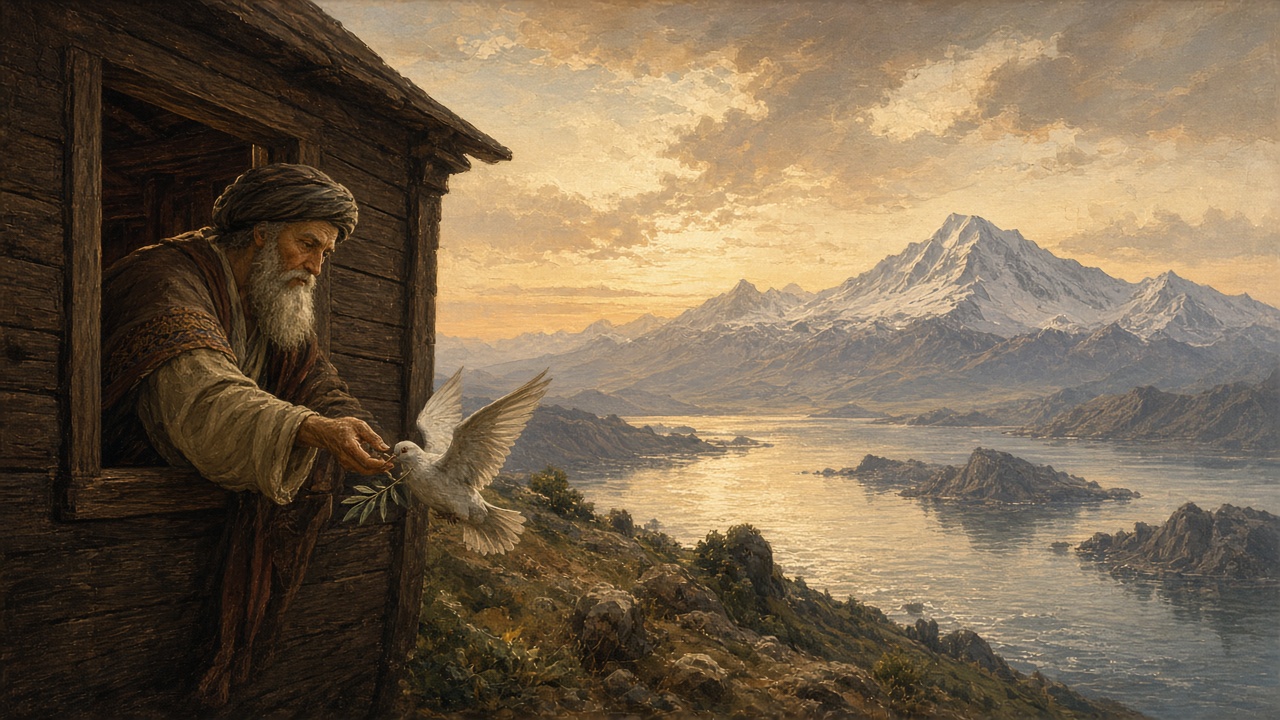
6Risi nèti èpa nguru lodꞌo, hèia Noh bhoke jendela èci. 7Ka na patalale lakaa ciꞌu. Manu-bhui ne lela laꞌe-mai, toke èi puru. Ka na lèpa heka asa kapa. 8Hèia Noh patabuli hari, koro jꞌaha ciꞌu, sèna ka neo neꞌa èi na puru le, do dhae. 9Te ngaa, lula èi hutu nare dedha-rai era, ka koro ne abhu boe era tèka. Ka lèpa hari asa kapa. Hèia Noh jꞌole ai na, kèpe nare, ka na pamaso hari asa dꞌara kapa.
10Ka Noh tatae hari dꞌai pidhu lodꞌo, hèia na patabuli hari koro jꞌaha deo na. 11Dꞌara lodꞌo nihia sa, koro ne lèpa hari laꞌe asa Noh, tutu nèti dènge rèu saitun ca rèu dhu heka tutu nare kèna. Nèti èèna ka, Noh heka neꞌa kèna, èi na dhu puru le tareꞌa di. 12Ka na mate hari dꞌai pidhu lodꞌo, hèia na patalale hari koro jꞌaha ca hari ni. Te ngaa ca tèka ne, koro ne lèpa heka.
13Lodꞌo Noh mamuri dꞌai 601 (èna ngasu ca) tèu, lèke lodꞌo ka èci hèru èci, èi mèti aaꞌi le. Hèia Noh bhoke jendela, ka na ladhe palème, nèdhi rai dhu mango le. 14Dꞌai hèru ka dua, lodꞌo ka dua nguru pidhu, dedha-rai ne dhu mango meto le.
15Ka Ama Lamatua peka dènge Noh, 16“Noh! Aaꞌi-aaꞌi mi puru ka nèti dedha kapa èèna. 17Papuru aaꞌi badha-manu sèra! Nuka: badha ani, badha hui, badha dhu rodꞌo, dènge manu-bhui aaꞌi-aaꞌi ra. Hudꞌi si, sèna ka ra bèba, papènu rai-haha ne.”
18Èle èèna ka, Noh dènge dhèu èmu na, dènge ana-ana na, aa dènge dhèu èmu ana na sèra, aaꞌi-aaꞌi ra puru nèti dedha kapa èèna. Badha se, aaꞌi-aaꞌi ra, kalua ka madhutu anga ra èci-èci.
Noh hia korban makasi mi Lamatua
20Hèia Noh pudhi hadhu, tao mei korban hia LAMATUA. Nèti badha-badha dhu bisa raꞌa sèra, Noh nare ciꞌu-ciꞌu, ka na roro, tunu ètu dedha mei deo na, ho jꞌajꞌi mi tadha makasi mi LAMATUA. 21Ropa LAMATUA sangèdꞌu nare hèu gèmu korban deo na, dꞌara Na karejꞌe. Ka Na ngee na,
“Nèti deo neꞌe ne, Jaꞌa huku heka rai-haha ne, lula bhabhelu-katubꞌa dhèu. Masi ka rèngu dhoka ngee bhabhelu di, Jaꞌa paꞌele iie heka ngaa-ngaa dhu mamuri, sèmi dhu Jaꞌa heka tao kore èèna. 22Lodꞌo rai-haha ne era, hèru dènge tèu, kako madhutu atora. Sèmi: hèru sèla dènge hèru puu-gꞌètu, hèru pacuhi dènge hèru sagoro, hèru hadhu dènge hèru èjꞌi lai, mèu dènge mèda.”
Did you know?
The Waters Recede
- The ark came to rest on the mountains of Ararat, a name meaning “sacred land” or “high land” for a country on whose mountains the ark settled after the flood. Easton's Bible Dictionary (1897) suggests those mountains were probably the Kurdish range of southern Armenia, though the name is also commonly applied to a high, almost inaccessible peak rising from the plain of the Araxes. In 2 Kings 19:37 and Isaiah 37:38 the Authorized Version renders the name “Armenia” and the Revised Version “land of Ararat,” while Jeremiah 51:27 uses it for central or southern Armenia.Sources: Ararat · the Bible text itself
- Noah’s Hebrew name means “rest,” and in this chapter the ark itself comes to rest as the waters go down. He was the son of Lamech and the grandson of Methuselah, and the father of Shem, Ham, and Japheth. Easton's Bible Dictionary describes him as the connecting link between the old world and the new, and as a second great progenitor of the human family.Sources: Noah · the Bible text itself
- Chronological notes place the Great Flood in 2347 BC, lasting one year; the subsiding of the waters in 2346 BC, over 220 days; and the leaving of the ark in 2346 BC, as a single day. In the chapter itself, the waters have gone down after 150 days and the ark rests on the seventeenth day of the seventh month; on the first day of the first month of Noah’s six hundred and first year the waters have dried up, and by the twenty-seventh day of the second month the earth is fully dry.Sources: The Great Flood · The flood subsides · Leaving the Ark · the Bible text itself
Notes written with AI assistance from open sources (Theographic Bible Metadata, CC BY-SA 4.0; Easton’s Bible Dictionary, public domain) and reviewed before publishing.
Places in this chapter
- Ararat · Today: Urartu · 39.703, 44.300 · verse 4
Only places identified with high confidence are shown (90% or more according to the scholarly sources compiled by OpenBible). Period map: DARE (Digital Atlas of the Roman Empire), CC BY 4.0; modern map: © OpenStreetMap contributors; places: OpenBible.info (CC BY 4.0).
Credits and license for this translation
Dhao Alkitab
Genesis and the New Testament in the Dhao language of Indonesia
Kejadian dan Perjanjian Baru dalam bahasa Dhao
copyright © 2012 Unit Bahasa dan Budaya
Language: Dhao
Translation by: Wycliffe Bible Translators
This translation is made available to you under the terms of the
Creative Commons Attribution-No Derivatives license 4.0.
You may share and redistribute this Bible translation or extracts from it in any format, provided that:
You include the above copyright and source information.
You do not make any derivative works that change any of the actual words or punctuation of the Scriptures.
Pictures included with Scriptures and other documents on this site are licensed just for use with those Scriptures and documents.
For other uses, please contact the respective copyright owners.
2022-03-11
Source: http://ebible.org/nfa/ · eBible.org