Genesis 46
Dhao Alkitab · Tap a verse to see its cross-references.
Yakob dènge isi èmu na paꞌèra mèdha neo pakèdꞌi asa rai Masir
1Èle èèna ka, Yakob si paꞌèra ka mèdha ra, ka ra pakèdꞌi nèti Kanaꞌan. Ropa ra dꞌai rae Barseba, ka na roro badha tao korban hia Lamatua, dhu uru na ama na Isak mangajꞌi.
2Mèda ca lodꞌo ka na nii. Ètu dꞌara nii neꞌe, na tadèngi na Ama Lamatua paroa ne, peka na, “Yakob! Yakob! Èu kèdꞌi ho nanene ku la!”
Hèia na dhaa, peka na, “Nga tao, Ama?”
3Ka Lamatua peka na, “Jaꞌa ne, Ama Lamatua dhu ama mu mangajꞌi nèti uru ka. Mage èu madhaꞌu kahèi lamu Masir. Te èèna na, Jaꞌa tao ana-èpu èu jꞌajꞌi suku kapai ètu rai nèi. 4Jaꞌa laku hèi Masir sama-sama dènge èu. Ho ladhe èèna na, Jaꞌa kahèi dhu kèti hari ana-èpu èu lèpa asa rai Kanaꞌan neꞌe. Ropa èu madhe, na, ana mu Yusuf madhèdi ètu baboa èu.”
5Èle èèna ka, Yakob dènge ana-ana na sèra, lasi taruu tèke eele rae Barseba. Ra pacaꞌe ne dènge bhèni-ana iiki na asa kareta sèra dhu dhèu aae Masir paꞌadhu hia si. 6Rèti aaꞌi mèu-mèu mèdha-panyau dènge badha-manu dhu jꞌajꞌi kakaja rèngu ètu rai Kanaꞌan. Hèia Yakob dènge ana-èpu na, bhèni-mone aaꞌi-aaꞌi ra pakèdꞌi ka lasi rai Masir.
Ana-èpu Yakob dhu madhutu lasi sa Masir
8Ana-èpu Yakob dhu madhutu lasi asa Masir, nuka seꞌe:
Ruben, ana uuru na. 9Ana-ana na ka: Henok, Palu, Hesron dènge Karmi.
10Simeon, dènge ana-ana na: Yemuel, Yamin, Ohat, Yakin, dènge Sohar. Dènge Saul kahèi, ana na nèti dhèu èmu na bhèni Kanaꞌan.
11Lewi, dènge ana-ana na: Gerson, Kehat, dènge Merari.
12Yahuda, dènge ana-ana na: Sela, Peres, dènge Sera. Ana Yahuda dhu leo, Er dènge Onan, madhe le ètu Kanaꞌan. Na nèti dènge ana-ana Peres, Hesron dènge Hamul.
13Isaskar, dènge ana-ana na: Tola, Pua, Ayub, dènge Simron.
14Sebulon, dènge ana-ana na: Seret, Elon, dènge Jahleel.
15Rèngu seꞌe, ana-ana nèti Yakob dènge dhèu èmu na Lea, lodꞌo rèngu pea ètu Mesopotamia. Ana bhèni rèngu èci, ngara na Dina. Ana-èpu nèti Yakob dènge Lea, aaꞌi-aaꞌi ra 33 (tèlu nguru tèlu) dhèu.
16Aa Yakob abhu ana-ana dènge dhèu èmu dhu leo hari. Nuka: Gad, dènge ana-ana na: Sifion, Hagi, Suni, Esbon, Eri, Arodi dènge Areli.
17Aser, dènge ana-ana na: Yimna, Yiswa, Yiswi, Beria, dènge ana hèni ra èci, ngara na Sera.
Beria, dènge ana le kahèi: Heber dènge Malkiel.
18Rèngu aaꞌi-aaꞌi ra, canguru èna dhèu. Ana-èpu nèti Yakob dènge dhèu èmu na Silpa. Silpa neꞌe ka dhu Laban hia jꞌajꞌi ènu nèti Lea, dhèu èmu uru Yakob na.
19Aa ana-ana nèti Yakob dènge dhèu èmu na bhèni leo hari, ngara na Rahel, nuka: Yusuf dènge Benyamin. 20Lodꞌo èèna, Yusuf leo le dènge Asnat ètu Masir. Ama Asnat èèna, ama agama ètu kota On. Ngara na, Potifera. Ana-ana Yusuf dènge Asnat: Efraim dènge Manase.
21Benyamin madhutu hèi lasi Masir dènge ana-ana na: Bela, Beker, Asibel, Gera, Naaman, Ehi, Ros, Mupim, Hupim dènge Aret.
22Ana-èpu Yakob dènge dhèu èmu na Rahel, canguru èpa dhèu.
23Dhèu èmu Yakob èci hari, ngara na Bilha. Ana-ana ra, Dan, dènge Naftali.
Ana Dan, ngara na Husim.
24Ana nèti Naftali: Yasel, Guni, Yeser dènge Silem.
25Yakob dènge dhèu èmu na Bilha, ana-èpu rèngu dhèu pidhu. Bilha ne, ènu nèti Rahel, dhu na abhu nèti ama na Laban.
26De ana-èpu Yakob dhu lasi Masir, aaꞌi-aaꞌi ra dhèu 66 (èna nguru èna) dhèu. Seꞌe se, ige mèka dènge dhèu èmu nèti ana-ana nèngu sèra. 27Ladhe tabha dènge ana-ana Yusuf dhu ina na nara iisi ètu Masir dhèu dua, na Yakob dènge ana-èpu aaꞌi-aaꞌi ra si, 70 (pidhu nguru) dhèu.
Yakob paraga hari dènge ana na Yusuf
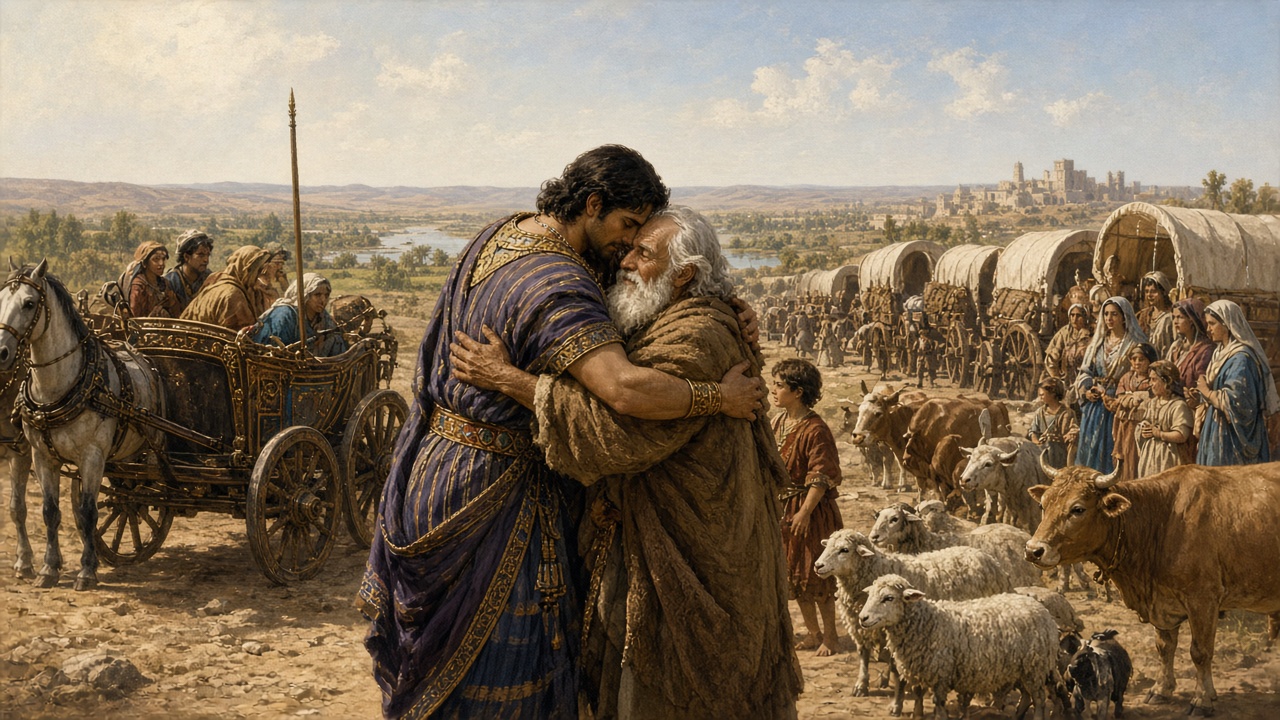
28Ropa ra dètu dènge Masir, Yakob pua Yahuda laꞌe uuru, paroa Yusuf ho mai paraga dènge ne ètu Gosen. Ropa ra dꞌai Gosen, 29Yusuf caꞌe nare kareta na, mai paraga dènge ama na. Ropa ra paraga, liku nare ama na, ka na tangi nèbhu bia.
30Hèia Yakob padhai lii dènge Yusuf, aku nèngu na, “Ana, ee! Jaꞌa unu ku kèdhi le èu. Aa jaꞌa keꞌa le èu mamuri era. De ladhe jaꞌa madhe èèna ka oo, ngaa-ngaa tao heka.”
31Ka Yusuf peka dènge aꞌari na aaꞌi-aaꞌi, peka na, “Jaꞌa laku peka ku dènge dhèu aae, sèna ka neꞌa na aꞌari jaꞌa mai le nèti Kanaꞌan. 32Aa, pe jaꞌa peka kahèi dènge ne, miu biasa ani kahibꞌi-kalèbho dènge sapi. Nèti èèna ka, miu mèti dènge badha-manu dènge mèdha-panyau miu nèti Kanaꞌan. 33De ladhe dhèu aae paroa miu, ho na karèi miu biasa sabꞌa ngaa, 34na, miu dhaa ne peka na, miu se aaꞌi-aaꞌi mi nèti ana iiki ka mai piara badha, sama sèmi bèi-baki jiꞌi. Sèna ka na pua miu pea ètu rai Gosen.” Yusuf peka sèmi èèna, lula dhèu Masir madenge pea paꞌèci dènge ana madhutu badha.
Did you know?
Israel Goes Down to Egypt
- As Israel set out for Egypt with all that he had, he stopped at Beersheba and offered sacrifices to the God of his father Isaac. Beersheba, meaning well of the oath or well of seven, was a well Abraham dug and named after a compact with Abimelech; when Isaac reopened it, he gave it the same name. It was a favorite dwelling of both patriarchs, and there that night God spoke to Jacob in a vision, telling him not to fear going down to Egypt, for he would make him a great nation there.Sources: the Bible text itself · Beersheba
- Jacob sent Judah ahead to Joseph for directions to Goshen, an Egyptian district east of the Nile, apparently near the royal residence, where the family remained until the Exodus. Easton's Bible Dictionary (1897) calls it the best of the land, now a desert, and also the land of Rameses. Joseph told his brothers to say they had raised livestock from youth, so they might settle there, because shepherds were detestable to the Egyptians; that dictionary suggests Pharaoh was probably Apopi, last of the Hyksos, who welcomed these Asiatic shepherds, while native Egyptians abhorred them, though some argue Joseph arrived later, under Thothmes III, after the Hyksos were expelled.Sources: the Bible text itself · Goshen · Pharaoh (of Joseph)
- The chapter counts sixty-six of Jacob's direct descendants who came to Egypt, not counting the wives of his sons, and seventy when Joseph's two sons already born in Egypt are included. Leah's sons and her daughter Dinah are named in that tally, although Easton's Bible Dictionary (1897) says Leah herself had died in Canaan before the journey and was buried in the cave of Machpelah; Rachel had died earlier giving birth to Benjamin and was buried on the way to Ephrath, that is, Bethlehem. Manasseh and Ephraim were born to Joseph in Egypt by Asenath, daughter of Potiphera, priest of On, a center of sun-worship that the Septuagint and Vulgate call Heliopolis.Sources: the Bible text itself · Leah · Rachel · On
Notes written with AI assistance from open sources (Theographic Bible Metadata, CC BY-SA 4.0; Easton’s Bible Dictionary, public domain) and reviewed before publishing.
Places in this chapter
- Egypt · 30.129, 31.308 · verses 1, 3, 4, 5, 6, 7, 8, 20, 26, 27
- Canaan · 32.767, 35.333 · verses 6, 12, 31
- Heliopolis · Today: Ain Shams · 30.129, 31.308 · verse 20
- Goshen · Today: Goshen 1 · 30.799, 31.834 · verses 28, 29, 34
Only places identified with high confidence are shown (90% or more according to the scholarly sources compiled by OpenBible). Period map: DARE (Digital Atlas of the Roman Empire), CC BY 4.0; modern map: © OpenStreetMap contributors; places: OpenBible.info (CC BY 4.0).
Credits and license for this translation
Dhao Alkitab
Genesis and the New Testament in the Dhao language of Indonesia
Kejadian dan Perjanjian Baru dalam bahasa Dhao
copyright © 2012 Unit Bahasa dan Budaya
Language: Dhao
Translation by: Wycliffe Bible Translators
This translation is made available to you under the terms of the
Creative Commons Attribution-No Derivatives license 4.0.
You may share and redistribute this Bible translation or extracts from it in any format, provided that:
You include the above copyright and source information.
You do not make any derivative works that change any of the actual words or punctuation of the Scriptures.
Pictures included with Scriptures and other documents on this site are licensed just for use with those Scriptures and documents.
For other uses, please contact the respective copyright owners.
2022-03-11
Source: http://ebible.org/nfa/ · eBible.org