Genesis 28
Dhao Alkitab · Tap a verse to see its cross-references.
1Hèia Isak paroa nare Yakob, ka hia ne mèngi-nale aa holo ne, peka na, “Sanèdꞌe paie! Èu mage leo ka dènge ana bhèni Kanaꞌan hèi. 2De lamu ka asa Padan Aram, asa baki mu Betuel. Lamu madhèdi dènge ana bhèni toꞌo mu Laban ca dhèu. 3Hudꞌi laa Ama Lamatua dhu Koasa Risi Eele na, hia èu mamèngi, sèna ka ana-èpu èu bèba-kacanga, ho nèti rèngu ka jꞌajꞌi suku ae-ae dhu kapai. 4Hudꞌi laa, lii pajaji Ama Lamatua dènge Abraham èèna, noto mi dedha èu ne, dènge ana-èpu èu. Sèna ka èu unu rai dhu Ama Lamatua jaji tèke le mi Abraham.” 5Padhai lii nare, ka Isak hia Yakob laꞌe asa Padan Aram, asa èmu toꞌo na Laban, dènge baki na Betuel.
Esau leo dènge ana bhèni Ismael
6Esau dhu tadèngi le kahèi, dhu peka na Isak hia Yakob mamèngi, aa kai ne sèna ka baku leo dènge bhèni Kanaꞌan. Aa na tadèngi hèi, dhu Isak hia Yakob leo dènge ana bhèni toꞌo na Laban ètu Padan Aram. 7Ka Yakob madhutu lii paredha ina dènge ama na, ka pakèdꞌi laꞌe asa Padan Aram.
8Aa Esau dhu neꞌa le kahèi, ama na dꞌèi boe dhèu èmu na, bhèni Kanaꞌan dua sèra. 9Hèia na laꞌe asa ama aae na Ismael, ka leo hari èmu dènge ana bhèni Ismael ca dhèu, ngara na Mahalat. Mahalat ne, ana mone na ka Nebayot.
Yakob nii ètu Betel
10Ka Yakob tèke eele Beer Syeba, laꞌe asa Haran. 11Ropa lodꞌo cèna, Yakob dꞌai era èci, ka na jꞌunu ètu era èèna. Na neo jꞌunu, nare hadhu cue, tao lalaka kètu na.
12Dꞌara mèda èèna, na nii. Na ladhe nèdhi langa èci dhu patitu ètu rai, suu na dꞌai dedha-liru. Ka ana pajuu Ama Lamatua nèti sorga, caꞌe-puru ètu dedha langa èèna. 13Ètu dꞌara nii na, Yakob ladhe nèdhi LAMATUA dhu titu ètu karasa nèngu, hèia na lii, aku nèngu na, “Jaꞌa ne LAMATUA, Ama Lamatua nèti baki mu Abraham, dènge ama mu Isak. Èèna na, Jaꞌa hia rai ne mi èu dènge ana-èpu èu. 14Bèli-camèdꞌa, ana-èpu èu ae-ae, sama sèmi ahu rai ne. Rèngu se, èèna na, pea palème era-era ètu rai-haha ne. Nèti ana-èpu èu ka, suku aaꞌi-aaꞌi ètu rai-haha ne, abhu mèngi-nale. 15Mage mu bhèlu! Èu ne ètu mia èèna ka, Jaꞌa bera-bera dènge èu. Ladhe èèna na, Jaꞌa lere kèti hari èu mai asa dedha-rai neꞌe. Jaꞌa bhera boe èu. Aa èèna na, Jaꞌa tao aaꞌi madhutu sèmi lii pajaji Jaꞌa dènge èu.”
16Ropa Yakob kèdꞌi nèti bhèjꞌi, na padhai lii, aku nèngu na, “Jaꞌa heka keꞌa kèna, LAMATUA dhu ètu era neꞌe kahèi.” 17Na madhaꞌu, ka na pangee, na, “Boo! Era neꞌe ne pamadhaꞌu jaꞌa, nga. Tatu Èmu Ama Lamatua ètu era neꞌe ne! Aa era neꞌe ne, jꞌajꞌi hèbꞌa babèdho sorga.”
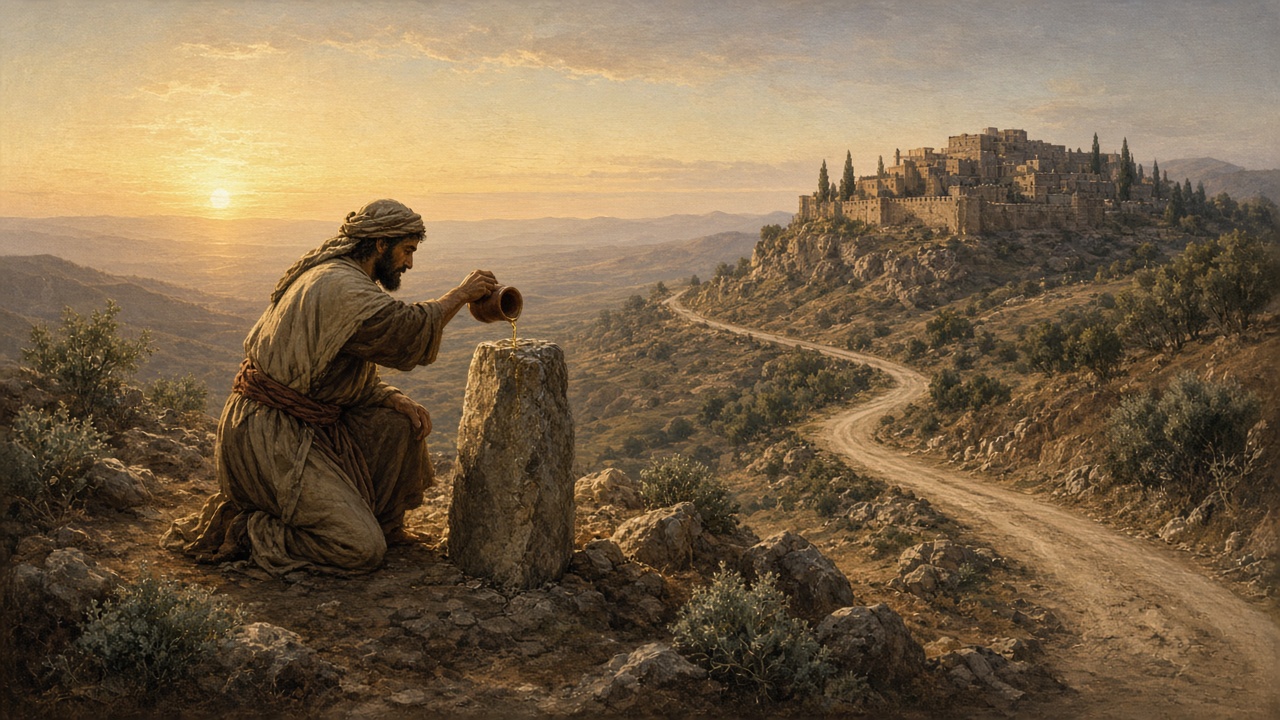
18Dꞌara madꞌae aae era, Yakob kèdꞌi le èèna. Ka nare hadhu dhu na tao lalaka deo na. Hèia na patitu jꞌajꞌi mi tadha. Ka na bhori èi mènyi asa dedha hadhu èèna, hèia na mangajꞌi mi Lamatua. 19Ka na pangare era ne Betel, dhu sasoa na ‘Èmu Lamatua’. (Uru èèna, era ne ngara na Lus.)
20Èle èèna ka, Yakob dedꞌe subha, aku nèngu na, “Ladhe Ama Lamatua dhu dènge jaꞌa, aa jꞌaga jaꞌa ètu dꞌara kakako jaꞌa ne, aa pangaꞌe dènge papake jaꞌa, 21toke jaꞌa lèpa dènge sodꞌa, èèna na LAMATUA jꞌajꞌi mi Ama Lamatua jaꞌa. 22Hadhu dhu jaꞌa patitu ne, jꞌajꞌi mi era sogo-tagu mi Ama Lamatua. Aa aaꞌi-aaꞌi dhu Lamatua pala-bagi mi jaꞌa, jaꞌa hia Na ca pala nèti canguru pala.”
Did you know?
Jacob's Journey and Dream at Bethel
- Isaac sent Jacob from Beersheba to Paddan-aram to take a wife from the daughters of Laban, his mother Rebekah's brother, rather than from the Canaanite women. Paddan-aram, called the plain of Aram, is commonly regarded as the Mesopotamian district around Haran, where Laban lived; Haran, also called the city of Nahor, was where Abraham stayed after leaving Ur until his father Terah died.Sources: the Bible text itself · Paddan-aram · Haran · Laban
- The place where Jacob dreamed, set up as a pillar the stone he had put under his head, and poured oil on it was the royal Canaanite city of Luz; he renamed it Bethel. Easton's Bible Dictionary (1897) locates Bethel in central Palestine, about ten miles north of Jerusalem, and notes that the name was at first apparently given to a sanctuary in the neighborhood of Luz, and was not given to the city itself until after the tribe of Ephraim conquered it.Sources: the Bible text itself · Luz · Bethel (of Palestine)
- When Esau learned that Isaac had blessed Jacob and ordered him not to marry a Canaanite woman, he went to Ishmael and married Mahalath, sister of Nebaioth and daughter of Abraham's son Ishmael, in addition to the wives he already had. Easton's Bible Dictionary (1897) also calls her Bashemath and notes that Esau's three wives receive different names in the Edomite genealogy of Genesis 36 from those given in the narrative of Genesis 26 and 28.Sources: the Bible text itself · Bashemath
Notes written with AI assistance from open sources (Theographic Bible Metadata, CC BY-SA 4.0; Easton’s Bible Dictionary, public domain) and reviewed before publishing.
Places in this chapter
- Canaan · 32.767, 35.333 · verses 1, 6, 8
- Haran · Today: Harran · 36.864, 39.033 · verse 10
- Luz · Today: Beitin · 31.923, 35.241 · verse 19
Only places identified with high confidence are shown (90% or more according to the scholarly sources compiled by OpenBible). Period map: DARE (Digital Atlas of the Roman Empire), CC BY 4.0; modern map: © OpenStreetMap contributors; places: OpenBible.info (CC BY 4.0).
Credits and license for this translation
Dhao Alkitab
Genesis and the New Testament in the Dhao language of Indonesia
Kejadian dan Perjanjian Baru dalam bahasa Dhao
copyright © 2012 Unit Bahasa dan Budaya
Language: Dhao
Translation by: Wycliffe Bible Translators
This translation is made available to you under the terms of the
Creative Commons Attribution-No Derivatives license 4.0.
You may share and redistribute this Bible translation or extracts from it in any format, provided that:
You include the above copyright and source information.
You do not make any derivative works that change any of the actual words or punctuation of the Scriptures.
Pictures included with Scriptures and other documents on this site are licensed just for use with those Scriptures and documents.
For other uses, please contact the respective copyright owners.
2022-03-11
Source: http://ebible.org/nfa/ · eBible.org