Genesis 10
Dhao Alkitab · Tap a verse to see its cross-references.
Ana-èpu Noh dènge ana-èpu Yafet
1Èle èi aae, ka ana-ana Noh abhu ana-èpu. Nuka ana-èpu nèti Sem, Yafet, dènge Ham.
2Ana-èpu Yafet, nuka: Gomer, Magog, Madai, Yawan, Tubal, Mesek dènge Tiras. Èci-èci ka dènge lii, suku, aa dènge rai ra.
Ana-èpu Gomer, ka: Askenas, Rifat dènge Togarma.
Ana-èpu Yawan, ka: Elisa, Tarsis, dhèu Kitim, dènge dhèu Dodanim dhu pea ètu sebhe dhasi.
Ana-èpu Ham
6Ana-èpu Ham, ka: Kus, Misraim, Put, dènge Kanaꞌan.
7Ana-èpu Kus, ka: Seba, Hawila, Sabta, Raema dènge Sabteka.
Ana-èpu Raema, ka: Syeba dènge Dedan.
8Ana mone Kus, ka, Nimrod. Nèngu ne, kapala musu dhu uru tèka, aa èra. 9Aꞌèra na mai nèti LAMATUA, aa nèngu kahèi jꞌajꞌi dhèu dhu èra bia magèla badha. Nèti èèna ka, dhèu biasa peka na, “Sèna ka èu more dhèu dhu èra bia magèla badha, sèmi Nimrod, dhu abhu aꞌèra nèti LAMATUA.” 10Era na, mulai uru nèti rae Babel, Erek Akad, toke Kalne. Rae se aaꞌi-aaꞌi ra, ètu rai Sinear. 11Nèti era sèra, na nare hari Asyur. Ka na patitu kota Niniwe, Rehobot-Ir, Kala, 12dènge Resen, ètu talora aae Niniwe dènge Kala. Aaꞌi-aaꞌi sèra, kota-kota kapai hua.
13Ana-èpu Misraim, ka: dhèu Ludim, dhèu Ananim, dhèu Lehabim, dhèu Naftuhim, 14dhèu Patrusim, dhèu Kasluhim, dènge dhèu Kaftorim. Dhèu Kasluhim nuka bèi-baki nèti dhèu Pilistin.
15Ana uuru Kanaꞌan, nuka, Sidon. Kanaꞌan jꞌajꞌi bèi-baki nèti dhèu Het, 16dhèu Yebusi, dhèu Amori, dhèu Girgasi, 17dhèu Hiwi, dhèu Arki, dhèu Sini, 18dhèu Arwadi, dhèu Semari, dènge dhèu Hamati.
Ana-èpu Kanaꞌan se, pea palème dꞌai era dhu kajꞌèu, 19toke too rai rèngu mulai nèti Sidon taruu asa Gerar, dꞌai Gasa. Nèti èèna, laꞌe dꞌai Sodom, Gomora, Adma dènge Seboim, dꞌai kota Lasa.
20Rèngu aaꞌi-aaꞌi sèra, ana-èpu Ham. Èci-èci dènge lii, suku, aa dènge rai ra.
Ana-èpu Sem
21Sem, aꞌa Yafet, nèngu ka jꞌajꞌi bèi-baki dhèu Eber.
22Ana-èpu Sem, ka: Elam, Asyur, Arpaksad, Lud dènge Aram.
23Ana-èpu Aram ka: dhèu Us, dhèu Hul, dhèu Geter, dènge dhèu Mas.
24Ana Arpaksad ka, Sela. Ana Sela ka, Eber.
25Ana Eber, mone dhèu dua. Ana uuru, ngara na Pelek (dhu sasoa na ‘palème era’), lula taa èèna dhèu pea palème ètu rai-haha ne. Ngara ari na, Yoktan.
26Ana-èpu Yoktan, ka: Almodad, Selef, Hasar-Mawet, Yera, 27Hadoram, Usal, Dikla, 28Obal, Abimael, Syeba, 29Ofir, Hawila, dènge Yobab. Rèngu aaꞌi-aaꞌi se, ana-èpu Yoktan.
30Era pea rèngu, mulai nèti Mesa, taruu dꞌai Sefar, nuka era dhu kabhuku re sebhe dhimu.
31Rèngu aaꞌi-aaꞌi se, ana-èpu Sem. Èci-èci ka dènge lii, suku, aa dènge rai ra.
32Aaꞌi-aaꞌi se, ana-èpu Noh, èci-èci ka dènge suku ra. Ropa èi aae lala èle, rèngu seꞌe ka pea papènu lème rai-haha ne.
Did you know?
The Nations after the Flood
- Genesis 10 follows the families of Noah’s three sons, Shem, Ham, and Japheth, and says that after the flood the nations of the earth spread out from them, grouped by clans, languages, lands, and nations. Japheth’s line is linked with peoples of eastern Europe and northern Asia: Gomer is generally regarded as an ancestor of the Celts and the Cimmerians, who in early times settled north of the Black Sea, and Javan became the Hebrew name that the peoples of the East used for the Greeks, especially those of Ionia.Sources: the Bible text itself · Japheth · Gomer (son of Japheth) · Javan
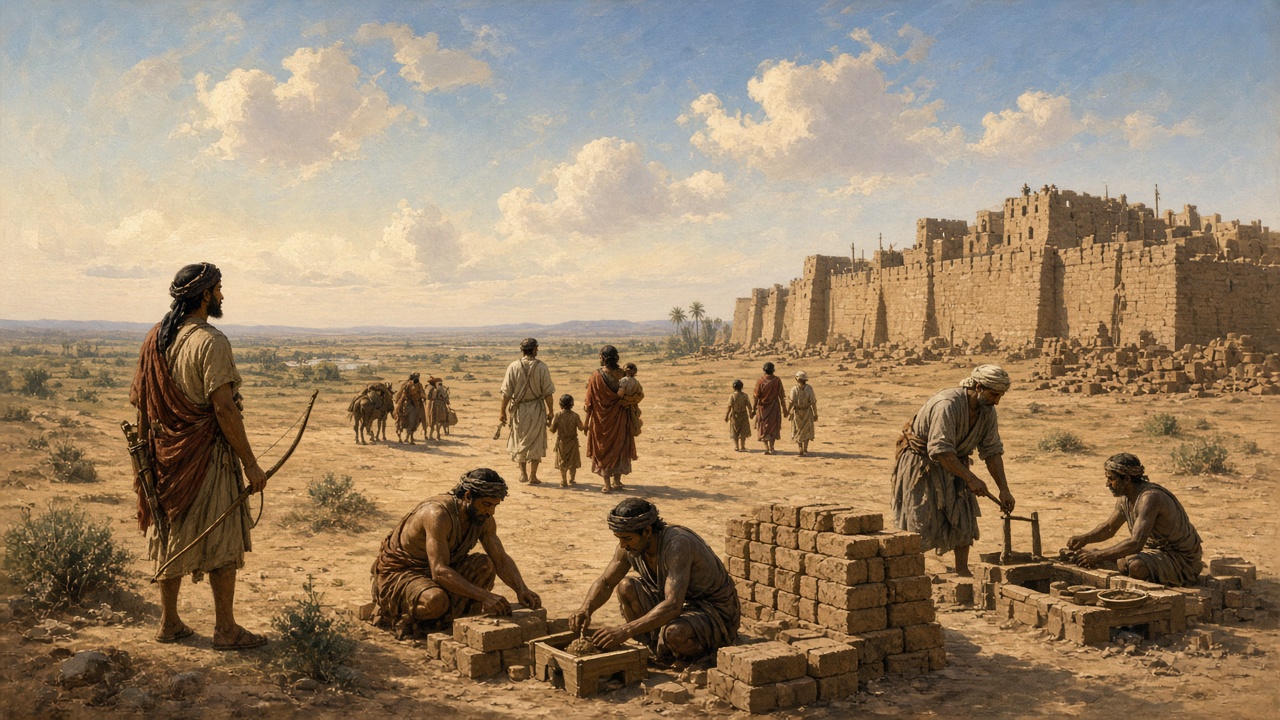
- Cush, a son of Ham, was the father of Nimrod, remembered as a mighty hunter before the Lord, whose kingdom began at Babylon, Erech, Accad, and Calneh in the land of Shinar, probably Babylonia or southern Mesopotamia. From that land he went into Assyria and built Nineveh, Rehoboth-Ir, Calah, and Resen; Calah’s site is probably the Nimrud ruins on the left bank of the Tigris.Sources: the Bible text itself · Shinar · Nineveh · Calah
- Mizraim, the dual form of a Hebrew word for a mound or fortress, may point to Upper and Lower Egypt and is the name the Hebrews usually gave that country; Arabic still calls it Muzr. Shem is called the older brother of Japheth and the forefather of all the sons of Eber, regarded as the founder of the Hebrew people, while an Arab tradition remembers Eber’s son Joktan, Kahtan in Arabic, as the ancestor of tribes of central and southern Arabia.Sources: the Bible text itself · Mizraim · Eber (Heber) · Joktan
Notes written with AI assistance from open sources (Theographic Bible Metadata, CC BY-SA 4.0; Easton’s Bible Dictionary, public domain) and reviewed before publishing.
Places in this chapter
- Erech · Today: Uruk · 31.322, 45.636 · verse 10
- Shinar · Today: Babylonia · 32.543, 44.422 · verse 10
- Assyria · 36.359, 43.153 · verse 11
- Calah · Today: Nimrud · 36.098, 43.329 · verses 11, 12
- Nineveh · 36.359, 43.153 · verses 11, 12
- Canaan · 32.767, 35.333 · verse 19
- Gaza · Today: Tell Harube · 31.504, 34.464 · verse 19
- Sidon · Today: Sandikli archaeological site in Sidon · 33.561, 35.372 · verse 19
Only places identified with high confidence are shown (90% or more according to the scholarly sources compiled by OpenBible). Period map: DARE (Digital Atlas of the Roman Empire), CC BY 4.0; modern map: © OpenStreetMap contributors; places: OpenBible.info (CC BY 4.0).
Credits and license for this translation
Dhao Alkitab
Genesis and the New Testament in the Dhao language of Indonesia
Kejadian dan Perjanjian Baru dalam bahasa Dhao
copyright © 2012 Unit Bahasa dan Budaya
Language: Dhao
Translation by: Wycliffe Bible Translators
This translation is made available to you under the terms of the
Creative Commons Attribution-No Derivatives license 4.0.
You may share and redistribute this Bible translation or extracts from it in any format, provided that:
You include the above copyright and source information.
You do not make any derivative works that change any of the actual words or punctuation of the Scriptures.
Pictures included with Scriptures and other documents on this site are licensed just for use with those Scriptures and documents.
For other uses, please contact the respective copyright owners.
2022-03-11
Source: http://ebible.org/nfa/ · eBible.org