Revelation 11
Iyo New Testament · Tap a verse to see its cross-references.
Uni irisa ŋundo mande yesowariyó
1Asa pako ka usú qembe qu re nunoro ŋande nimiraró, “Otoqoya Anutu koro Ya Surumí ŋuya wondo yakutí ŋuya rokó teya unipare yano ŋuno hu-hariri teyoteŋgo ŋu weyo yere. 2Quko hoŋgo pawa ya kimbino yote ŋu ma rokóŋowero. Dokoro Anutuko yendé ya kimbino yote ŋu uni wini meyowo yunaró. Asa wini ŋundoko yendé kembé surumí ŋu khete woŋoruruworo teyuriyate uyaro kombo 42 ŋunde kini teweya. 3Kowe nondoko neneŋo mandene yesowowero unine irisa qu asá yerewano. Irisa ŋundoko newonde surumímboro tuwi qu punuworo mandene yesowo yeyuriyate uyaro kosa naru 1,260 ŋunde kini teweya.” 4Uni irisa ŋuko te oliv irisa, suru irisa ŋundo noko soso ŋuro Uni Parámiye ŋuro toŋímo kaŋeyotiri ŋundiro. 5Asa uni kato uni irisa ŋu rowore yerewero tiqo, kewá maŋgoyari moŋgo umburo eneŋo uni saŋgiríyari ŋu yoqaweya. Ŋunde ŋuroko uni dani kato ene rowore yerewero teroqo, asa eneŋomboro murí ŋuro naŋge khumoweya. 6Uni irisa ŋundo meté sambo kusiyowero ŋuro wimbuyari tete. Asa ŋunde kusiyori mande yesoworo yeyowari quno ŋunoko sono kama umbuweya. Ko irisa ŋundo sono soso siyori sitú teweya ŋuro wimbuyari tete. Ko eneŋo iŋo-iŋoyari naŋge howero se khumo piyimi kate-kate riri nokono ŋano unipare rambaruru yereyoweya.
7Asa mande yesowowero khoyari ŋu kini tiníqo, siku qare piyimi ka meré piyimi horé ŋu noŋgo arete ŋundo uni irisa koya kuma tero taka yerero yuroní khumariyó. 8Khumori ukúyari muko yendé kembé ŋuro khe parámimo ŋuno yariyó. Yendé kembé ŋuro tapara mande ŋuro ye nekoro ŋande yeyoteto, “Sotom koya Isip koya,” yeyoteto. Yendé kembé ŋuno komo uni irisa ŋuro Uni Parámiyari re tipiririko uri khumaró ŋu. 9Asa uni koweye enesó-enesó ko miraye enesó-enesó ko mandeye enesó-enesó ko winiye enesó-enesó, asa uni soso ŋundo ukúyari ŋu yiyoro tapu yerewero soré yereyuriyate uyare kosa naru kapusa ko kosa naru sombé ŋunde kini taró. 10Ko unipare nokono yoteŋgo ŋundo uni irisa ŋu khumowari ŋuro niŋgu-niŋgu parámi tero hoho tero topo-topoyemboro o newonde metémboro yunoyaŋgurí. Dokoro, ye-ye uni irisa ŋundo unipare nokono yoteŋgo qu ŋu kowe surumí yunoyariyó.
11Asa kosa naru kapusa ko kosa naru sombé ŋu kini tiníqo, Anutuko yoto-yoto koro yuqa qu huwoní umuyarimo uní otoqo kaŋariyó. Otoqo kaŋiri uni yiyoro sasaro parámi taŋgurí. 12Otoqoro kusumbo riri uni maŋgó ka sambo koŋgo nekero ŋande yimiraró, “Koreko ŋano ariri.” Yiní uni saŋgiríyarimbo toŋetiqo koporé qurowore samboko oriyó.
13Asa ŋu naruko naŋge kunduru parámi horé raŋoní yendé ŋu rondaŋiní sombé kande irisa tiní sombé kanata kato piyo taró. Piyo tiní unipare 7,000 ŋuko khumomukaŋgurí. Ko unipare yoraŋgurí quko sasaro parámi tero sambo koro Anutu qu owí hokaŋgurí.
14Asa quhurí piyimi irisa ŋu kini tete. Quko qeno, naru tukuni ta naŋge kini tiníqo, quhurí piyimi kapusayó ŋu mahewero tete.
Sambo simó weŋa qundo uŋgu huwaró
15Asa sambo simó kande saŋiyoro irisayó ŋundo uŋgu huwaró. Huwoní uni samboko yoteŋgo qundo kondé ŋande kiwaŋgurí,
“Uni Paráminanimboya eneŋo Kristoyó ŋuyako
nokone-nokone ŋaro wiri yerete uni titiri.
Ko enendo suki-suki wiri yereyoweya.”
16Ko uni kembé-kembé 24 Anutu toŋímo wiri yerete unindoro yakutíyemo kunditeyoteŋgo, ŋundo umu-kembaye ri nokono umbuní Anutu koro potoruku te inoro 17ŋande yaŋgurí,
“Uni Parámi, keko Anutu Wimbí Soso.
Ke itaka yote, ko komo yora.
Keko komo wimbu parámi rero,
unipare wiri yerete.
Ŋunde ŋuro nore yuŋguna kereyoteto.
18Wini meyowo-meyowo ŋundo newonde saŋgirí taŋgurí,
quko keŋo newonde saŋgirí naruke tunoqa.
Itaka ŋanoko keto uni khumowí mu mande khono yorotoweya,
ko kimo meté sunará simóŋge, ye-ye unike ŋu yunoro
keŋo uni meté horé mu yunoro
owéye moré quya owéye moré kini ŋu ŋuya yunoweya.
Itaka ŋanoko uni danimbo noko rambaruruwoyoteŋgo ŋu
keto rambaruru yereweya.”
19Asa Anutu koro Ya Surumí qu samboko yote ŋu kosaró. Kosoní katapá ŋu tunomo tunoqaró. Katapá quroko ŋuno mande kondé wondo sararaŋgo nakayáŋaŋgurí ŋu tapuŋoyaŋgurí. Ŋunde tunoqiní rowá sine teyoní, niri parámi teyoní, kusiro yeyoní kunduru raŋoní koko taŋgo parámi umburó.
Did you know?
The Two Witnesses and the Great City
- Revelation 11 says that the bodies of the two witnesses will lie in the street of the great city, figuratively called Sodom and Egypt, where their Lord was also crucified. A dictionary entry explains Sodom as Burning, or the walled, a city destroyed by fire from heaven because of its inhabitants' wickedness, a destruction that Scripture frequently recalls. Egypt, the land of the Nile and the pyramids, is likewise described as holding great significance in Scripture.Sources: the Bible text itself
- The two witnesses are empowered to prophesy for 1,260 days, clothed in sackcloth. They are the two olive trees and the two lampstands that stand before the Lord of the earth, and they have power to shut the sky so that no rain falls, to turn the waters into blood, and to strike the earth with every kind of plague.Sources: the Bible text itself
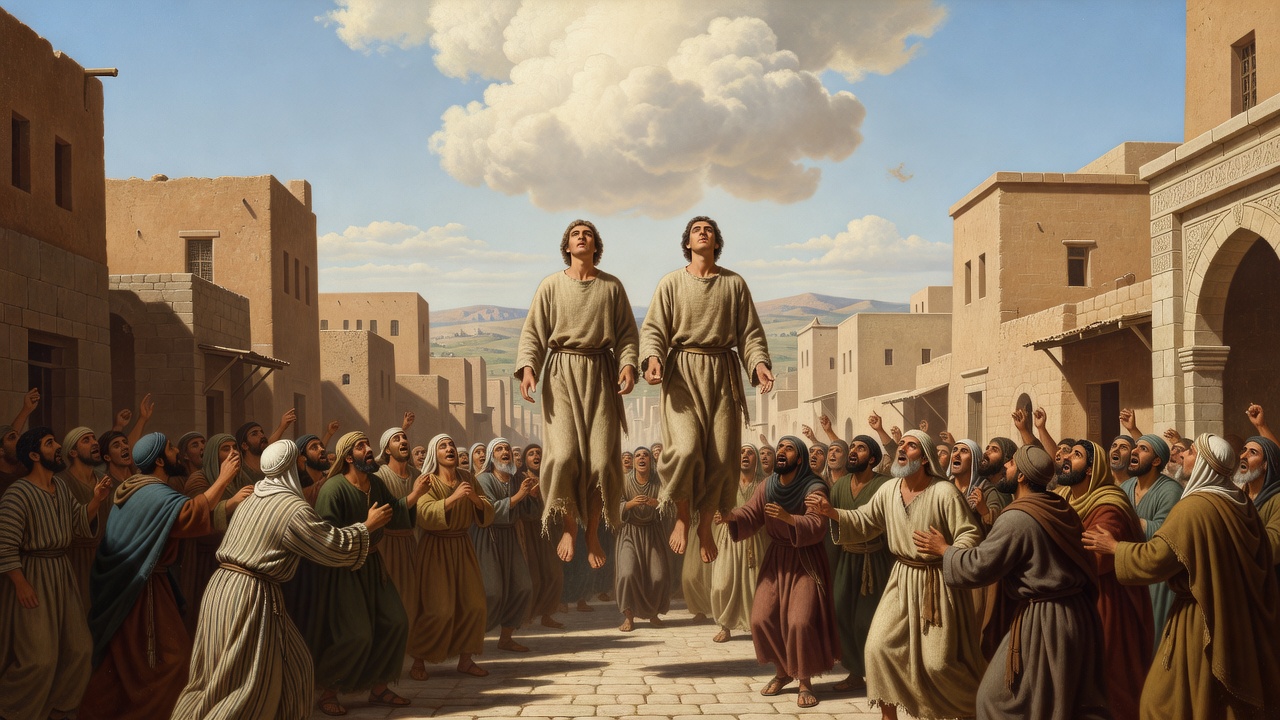
- When the two witnesses finish their testimony, the beast that comes up from the Abyss overpowers and kills them. For three and a half days, peoples, tribes, tongues, and nations view their bodies and will not permit them to be laid in a tomb, while the earth's inhabitants gloat over them, celebrate, and send one another gifts, because the two prophets had tormented them. After that, the breath of life from God enters them; they stand on their feet and go up to heaven in a cloud as their enemies watch.Sources: the Bible text itself
Notes written with AI assistance from open sources (Theographic Bible Metadata, CC BY-SA 4.0; Easton’s Bible Dictionary, public domain) and reviewed before publishing.
Places in this chapter
Only places identified with high confidence are shown (90% or more according to the scholarly sources compiled by OpenBible). Period map: DARE (Digital Atlas of the Roman Empire), CC BY 4.0; modern map: © OpenStreetMap contributors; places: OpenBible.info (CC BY 4.0).
Credits and license for this translation
Iyo New Testament
The New Testament in the Iyo Language of Papua New Guinea
Nupela Testamen long tokples Iyo long Niugini
copyright © 2009 Wycliffe Bible Translators, Inc.
Language: Iyo
Translation by: Wycliffe Bible Translators
This translation is made available to you under the terms of the
Creative Commons Attribution-Noncommercial-No Derivatives license 4.0.
You may share and redistribute this Bible translation or extracts from it in any format, provided that:
You include the above copyright and source information.
You do not sell this work for a profit.
You do not change any of the words or punctuation of the Scriptures.
Pictures included with Scriptures and other documents on this site are licensed just for use with those Scriptures and documents.
For other uses, please contact the respective copyright owners.
2025-05-15
Source: http://png.bible/nca/ · eBible.org