Matthew 7
Iyo New Testament · Tap a verse to see its cross-references.
Topo-topoye ma ronda yerewero
1“Ye unindoro muríye yiyoro ma ronda yerewero. Anutuko yeŋo muríye qene rondaŋeweya koro. 2Dokoro yendo date uni yiyoro ronda yereyoteŋgo, ŋuko ŋundiro naŋge Anutuko ye yiyo rondaŋeweya. Ko ye date uni o te yunoyoteŋgo rokóŋo ŋuwore naŋge Anutuko meté te yunoweya.
3“Ke do karo topokeporo murutó ka toŋímo yote ŋu qene iŋoyote, quko ke te puŋo ka keŋo toŋeŋgemo yote ŋu kama qene iŋoyote? 4Ko te puŋo ŋu toŋeŋgemo naŋge yoníqo, asa ke date tero topoke ŋande miroweya, ‘Topo, murutó toŋeŋgemo yote ŋu re rotowe?’ 5Ke uni maŋgoye irisa, koreteroqo te puŋo parámi keŋo toŋeŋgemo yote ŋu re rotoroqota ke meté toŋetero murutó tomó ta topoke toŋímo yote ŋu meté se rotoweya.
6“Ye Anutu koro o qu rero á sawa ma yunowero. Ko yeŋo pehe meté-meté ŋu se raŋoyi poko ma uwero. Raŋoyi, yate poto kheyembo woŋomuniŋowaŋgo koro, ko isako rohoréŋoro ye yikiwaŋgo koro.
O kumi ŋuro Anutu kirayoyi
7“Ye kirayoyikata o se yunoweya; o seqaroqota qenewaŋgo; mako uroyikata mako koso yunoweya. 8Dokoro uni soso kirayoteŋgo ŋundo o ŋu siyoyoteŋgo; uni soso o seqayoteŋgo ŋundo o ŋu qeneyoteŋgo; uni soso mako utoyoteŋgo, ŋuro mako kosoní inoweya.
9“Ko ye kato simóye kato iwí kirayoro bret ka re nuno yiníqo, iwímbo wondo ka re inoweya, peka? Kini. 10Ko simómbo iwí kirayoro sono qare nuno yiníqo, iwímbo sire piyimi ka re inoweya, peka? Ŋu ŋuya kini. 11Yeko quhurí uni naŋge quko simóye o meté yunoyoteŋgo. Ŋunde ŋuroko awaye samboko yorote ŋu kirayoyiqo, o meté-meté mu se yunoweya, hamómbe? 12Yendo unipareto otete soso yeno te yunowaŋgo ŋuro kondé iŋoyoteŋgo ŋuko ye otete ŋu naŋge eneno te yunoyi qembe. Dokoro otete ŋuko Hutuŋo Mande koya Ye-ye Unindoro mandeye ŋuro murí.
Mako kiŋiwí qurowore oyi
Mako kiŋiwí tomó ta qurowore oyi qembe.|alt="Wide and narrow ways" src="UBSc-08b" size="178Kb" copy="UBS New Reader Series (c) United Bible Societies" ref="MAT 7:13" 13“Mako kiŋiwí tomó ta qurowore oyi qembe. Piyo tewero mako ŋuko koŋó parámi, ko khe ŋuwore ŋuko parámi horé. Ko unipare qambu qundo khe ŋu howeyoteŋgo. 14Quko yoto-yoto rewero mako ŋuko kiŋiwí horé, ko khe ŋuno owero ŋuko tuŋiyowero qu. Asa ko unipare kanata-kanatako naŋge qenero khe ŋu howeyoteŋgo.
Te koro eŋgé hamó ŋu rondaŋi
15“Ye-ye uni kota-kota ŋuro sori qembe. Enendo uni ime qembe tero, sipsip ŋunde qembe teteŋgo. Quko newondeye quroko uni saŋgirí naŋge, á sawa qembe teteŋgo. 16Uni ŋuro muríyembo eŋgé teyote. Ye eŋgé ŋu qenero uni muríye ŋuro iŋomukowaŋgo. Asa uni kato utó kamí moré moŋgo wain taŋgurí siyoweya, peka? Ko uni kato utó yuyumi moré moŋgo fik taŋgurí siyoweya, peka? Ŋunde kini. 17Ŋundiro naŋge te meté ŋundo eŋgé meté naŋge teyoteŋgo. Ko te piyimi ŋundo eŋgé piyimi naŋge teyoteŋgo. 18Te meté kato eŋgé piyimi mu tewero mepémo kini. Ko te piyimi kato eŋgé meté mu tewero mepémo kini. 19Te soso eŋgé meté mu kama teyoweya ŋuko, toŋoro kewáko raŋoyi qaweya. 20Asa ko yendo ye-ye uni kota-kota ŋuro muríyemboro eŋgé qenero muríye ŋuro iŋomukowaŋgo.
21“Ye ŋande ma iŋowero, uni soso neneŋo, ‘Uni Parámi, Uni Parámi,’ ye neko nereyoteŋgo ŋundo sambo simburímbo unipareyó wiri yereyote naruyómo owaŋgo. Kini. Uni ka awane samboko yorote ŋuro iŋo-iŋoyó howeyote ŋundo naŋge ŋuno owaŋgo. 22Naru kano Anutuko unipare soso ronda yereweya. Ŋu naruko ŋuno unipare wata qundo ŋande nimirowaŋgo, ‘Uni Parámi, Uni Parámi, nore keŋo mande qu owéŋgemo yatowó. Keŋo owéŋgemo yuqa piyimi yohowato uni quro koŋgo toŋeŋgurí. Keŋo owéŋgemo o wimbí moré enesó-enesó rato tunoqaró.’ 23Ŋunde yesowoyi ŋande yewano, ‘No kama iŋo yunoteno. Ye o piyimi teyoteŋgo ŋu, toŋi.’
Yaye date rewaŋgo?
24“Ŋunde ŋuroko uni ka mandene ŋa iŋoro howeyote tiníqo, uni ŋuko iŋo-iŋoyó meté. Eneko uni kato mipu parámi wemboroŋoro yayómboro tatá ŋuno raŋaró ŋunde qembe. 25Sono umbuní, sono riru tunoqiní, matú wimbí mahiní, o soso ŋundo ya utaqiní kama umbu raŋaró. Dokoro, mipu parámi ŋundo tatá kondé towoyara. 26Asa uni kato mandene ŋa iŋoro kama howeyote tiníqo, uni ŋuko kape-kape uni naŋge. Eneko uni ka yayómboro tatá sotamano raŋaró ŋunde qembe. 27Sono umbuní, sono riru tunoqiní, matú wimbí mahiní, o soso ŋundo ya utaqiní umbu raŋoro hamó rambaruruwaró.”
28Yesuko ŋunde yiní unipare parámi ŋundo mandí iŋoro kondé yukuwaŋgurí. 29Dokoro, mandí ŋu wimbí moré, ko hutuŋo mande ŋuro iŋo-iŋo unindoro mandeye ŋunde qembe kini.
Did you know?
Judgment, the narrow way, and a firm foundation
- The event record dates the start of the Sermon on the Mount to AD 28 and its duration to one day. This chapter ends as the crowds are astonished at Jesus’ teaching, because he taught as one who had authority, and not as their scribes.Sources: Sermon on the Mount · the Bible text itself
- Jesus warns that the judgment a person pronounces, and the measure that person uses, will be turned back on them. He pictures someone who notices a speck in a brother’s eye yet misses a beam in their own, and he says the beam must be removed first.Sources: the Bible text itself
- The chapter calls doing to others as you would have them do to you the essence of the Law and the Prophets. It contrasts a wide gate and broad way that leads to destruction, which many enter, with a small gate and narrow way that leads to life, which few find, and it compares hearing these words and acting on them to a house built on rock rather than on sand.Sources: the Bible text itself
Notes written with AI assistance from open sources (Theographic Bible Metadata, CC BY-SA 4.0; Easton’s Bible Dictionary, public domain) and reviewed before publishing.
Credits and license for this translation
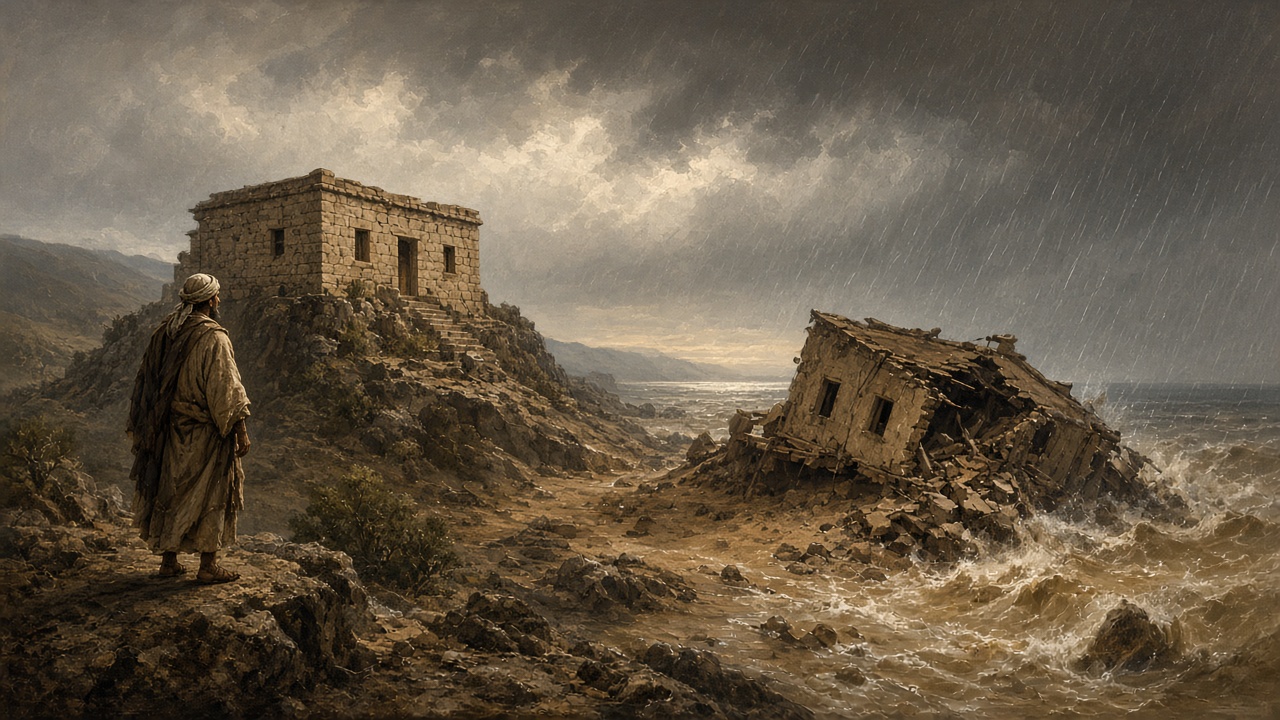
Iyo New Testament
The New Testament in the Iyo Language of Papua New Guinea
Nupela Testamen long tokples Iyo long Niugini
copyright © 2009 Wycliffe Bible Translators, Inc.
Language: Iyo
Translation by: Wycliffe Bible Translators
This translation is made available to you under the terms of the
Creative Commons Attribution-Noncommercial-No Derivatives license 4.0.
You may share and redistribute this Bible translation or extracts from it in any format, provided that:
You include the above copyright and source information.
You do not sell this work for a profit.
You do not change any of the words or punctuation of the Scriptures.
Pictures included with Scriptures and other documents on this site are licensed just for use with those Scriptures and documents.
For other uses, please contact the respective copyright owners.
2025-05-15
Source: http://png.bible/nca/ · eBible.org