Genesis 34
Minar Poelayzimayl · Tap a verse to see its cross-references.
Dinana mura rugan thudhadhin
1War goeyginu na Dina, Yakubuwom Leyom yoepkaz kazi. Na uzaraydhin kasa gurguy mab Kananaw yoepkazipa. 2Wara garkaz sey nungu nel Sekoem, nungu thathi Amor thanamun Aybaythaw mopakuyk. Kedha nanga Sekoem imadhin nan Dina. Kedha nanga Sekoem Amoran garkaz kazi. Nuy Amor mamus thanamun Abaytaw, imadhin nan Dina nanga nuydh nan yoelpadhin a mina mura rugan thudhadhin.
3Nuydh nan imadhin kedha, na mina adhapudhay thoeyaygi kapu yoepkaz. Nuydh nabepa ubi yadu pagadhin. 4Nuy nungu thathipa kedha mulaydhin, ‘Ngaw ubi nabi yoepkazipa ngayapa ipi. Ngi gar uzar nanu thathipa muli.’
5Kalanu Yakubu karngemidhin kedha, nungu yoepkaz kazipa mina kay aziral pawa aymoedhin a sethabi thonara Yakubun mura garkaz kazi adhal memayir kawaw lagoenu; nuydh Yakubu wara za aymoeyginga kurisipa nungu kazil kuniya mangemidhin. 6Sekoeman thathi Amor uzaraydhin Yakubuniya yasoegulpa.
Yakubun garkaziw ngurum koeyza
7Yakubun garkazin mi thonara karngemin nanga a thana kay kayn kedha zagethoengu mangemidhin mina madhu pamemoedhin a mina gegeyadh gasamoedhin. Thana kedha umamoeyr, ‘Sena Sekoem mina wati pawa aymoengu nuydh kasa mura Isoereylaw mabaygiya azir kuykuya angarngu nuydh na Yakubun yoepkaz kazi rugan thudhadhin.’
8Kasa kay kedha nuy Amor ngapa Yakubulpa nubepa mulaydhin kedha, ‘Ngaw garkaz kazi Sekoem nginu yoepkaz kazipa ubin mepa; ngay ngibiya yoewdhiz matha pawayar nuyn getha garwoeydhamoeypa. 9Ngoeba urapun yangukudu aympa lak bangal thana ngalpan mabaygal kidhakidhan niyaypa yoelpemipu. 10A lak bangal thana ngitha itha memayipa ngoeymun memayipa a ina lag ubipa niyaypa zagethoepa a aypa zapa yoewdhaypa a gasamoeypa ngithamulpa boeradharoepa.’
11Kalanu nuy Sekoem Dinana thathipa a babathoepa kedha mulaydhin, ‘Ngoena gar ibupupuydhaw a ngath ngithamulpa bangal ngithamun ubil mura aymoeypu ngitha mipa mulemin. 12Ngayapa mulemiw ngithamun mipa ubil midhel tharaw yoepkaziw matha gimal zagethoeginga ngithamun ubipa ngath kay poeybaypa ngithamulpa ngitha kay nanga ngoena pawoeyaypa garwoeydhamoeypa nabiya.’
Yakubun garkaz kazil ngoelkemoeydhin Sekoemaw Amoraw mulipa
13Yakubun garkaz kazil kalanu kasa ngoelkay aymoedhin Sekoemaw Amoraw mulipa thathi kazipa. Minguz kedha, Sekoem nuydh azir kuykuya angadhin thanamun babathiya. 14Thana kedha, ‘Ngoeymulpa ngoeymun babathoepa garkoeziya niyaypa yoelpaypa pawoeyaypa lawnga garkaz nanga motho poethalygig ngoeymulpa koey aziroelnga. 15Ngoey kay matha asimoeypa kedha ubiya ngi a setha garkazil ngithamuniya bangal nanga motho pathamoeyne.
16‘Wa, ngoey bangal urapun yangukudu aymoene kidhakidhan niyaypa yoelpaypa. Ngoey bangal ngithamuniya kalmel nithamoene a ngalpa bangal mura urapun. 17Kasa kay kedha ngi bangal nanga ngoeymun ubiya oesiginga ngoey bangal nan kuniya manine a ngoey bangal memayine adhapa koezi.’ 18Thanamun ubi ngoedhe balbayginga Amor a nungu garkaz kazi Sekoem palamulpa. 19Nuydh Sekoem mamu ugayginga nuy lak sin thamamun ubiya buwayl thayaydhin thana mi ubilnga wakay thoemamay nanga yakamoedhin. Minguz kedha, nungu ubi waza senabi yoepkazipa a nuy lak koey mina mabayg nungu buway.
20Amor a Sekoem palay kalanu memamoedhin ya umay lagoepa thanamun goegathoepa a palay mulemoedhin, 21‘Itha thabi mabaygal igalgal, thana bangal itha ngalpaniya ngalpan lagoenu bangal memayipa zapa yoewdhaypa a ubipa gurguy toedipu thamamun ubilmaypa. In boeradhar mina koeyza, a koey gudalnga thanamulpa a ngalpa bangal mura kidhakidhan yoepkaziya niyaypa yoelpemipa. 22Thabi mabaygal matha asimoeyne ngalpaniya kalmel maypa, urapun zapun ngalpa bangal nanga mura ngalpan garkazil motho pathamoeyne thanamun midh nanga. 23Wa, bangal thanamun tetel uruyl a mura zapul bangal midh mura ngalpan geth zapul aymoeyne a? Wa ngalpa urapun yangu kudu aympa lak thana bangal ngalpaniya kalmel niparuy.’
24Sethabi goegathaw mabaygal mura asimoeydhin Amor a Sekoem palamun yangukuduya kalanu garkazil mura motho pathamoeydhin.
25Kasa kay kedha. Thoeri goeygiw kaliya nanga mura sethabi goegathaw garkazil matha motho poethay kikirilgal Yakubun garkaz kazi ukasar Simiyon a Lebi, Daynana babath palamun kuyay thurik mamamoedhin kalanu senabi goegathoepa memamoedhin a gumi mangemoedhin, a mina mura garkazil uma mathamoeydhin, kalmel Amor a nungu kazi Sekoem. Kalanu Daynana madhin sizi Sekoeman lagoengu kuniya kalmel palamuniya.
27Senawbi kaliya Yakubun dhuray garkaz kazin mina mura zapul kusumadhin thana senawbi gegeyadh madhin kuyk palamun babath. 28Thana mina mura tetel uruyl kawal, donkil a mura zapul kusumoedhin. 29Koey zapul a yoepkazil a kazil lagoengu mura kusumoedhin thanamuniya kalmel.
30Yakubu kedha mulaydhin Simiyonaw Lebiw mulipa, ‘Ngipel aymoeynu ngayapa mina koey gudal gegeyadh Kananalgal a Perezaythalgal a mura sew mabaygal bangal ngayapa ngoenakap mapu gasamoene. A ngay mabaygoegig thana bangal nanga garwoeydhamidhe ngayapa mathamoeypa ngalpa bangal mura umamayl.’ 31Palay kuniya kedha mulemoedhin, ‘Ngalbelpa ngalben babathoepa kasa kedha wati zapa imaypa a pawoeyaypa lawnga.’
Did you know?
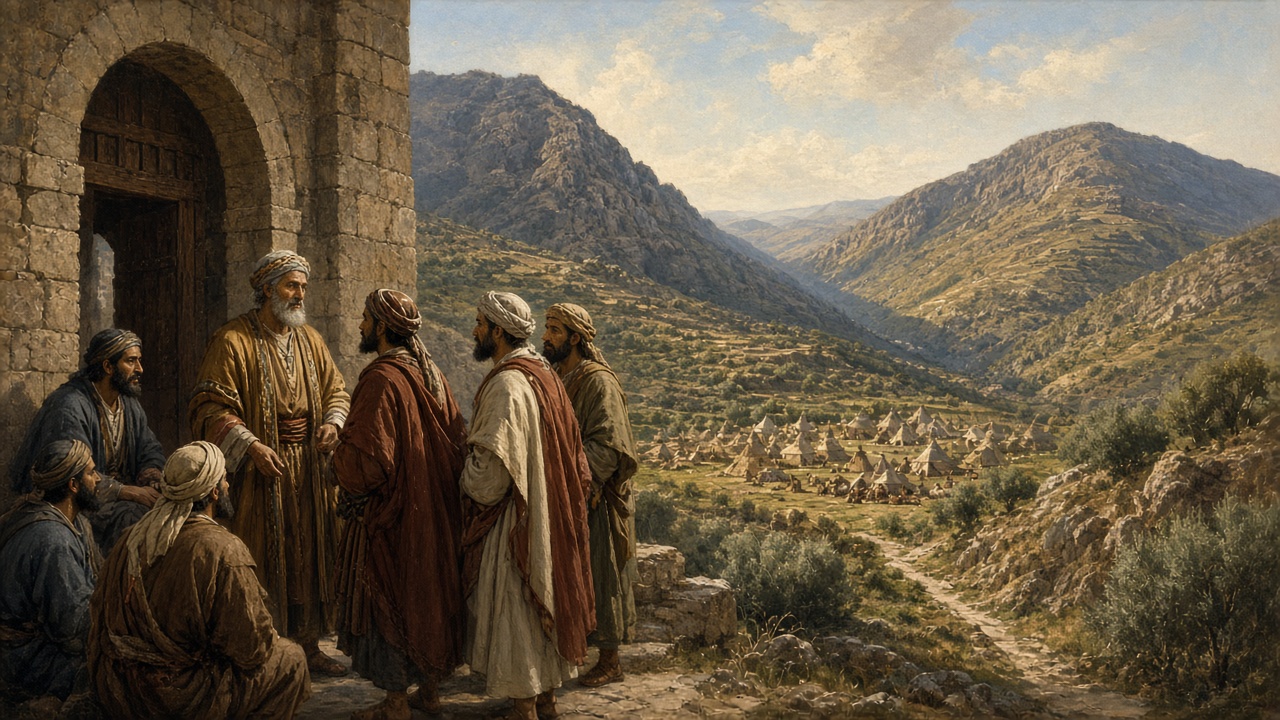
Dinah and the city of Shechem
- Dinah, daughter of Jacob and Leah and sister of Simeon and Levi, was taken by force by Shechem, son of Hamor the Hivite. Simeon and Levi then killed Hamor, Shechem, and the men of the city; Jacob said they had made him a stench to the Canaanites and Perizzites, and, when dying, he pronounced a malediction against Simeon.Sources: Dinah · Simeon · the Bible text itself
- The city of Shechem lay in a narrow, sheltered valley between Mount Ebal on the north and Mount Gerizim on the south, only some five hundred yards apart at their base. After returning from Mesopotamia, Jacob bought a parcel of a field there from the children of Hamor. Hamor's name is explained as meaning 'he-ass,' and Acts 7:16 calls him Emmor.Sources: Shechem · Hamor
- The Hivites were one of the peoples scattered from Hermon to Gibeon in the south; the name is interpreted as 'midlanders' or 'villagers,' and they were probably a branch of the Hittites. Hamor the Hivite is described as prince of the land at the time of Jacob's return, and the narrative calls his son Shechem the most respected of all his father's household.Sources: Hivite · the Bible text itself
Notes written with AI assistance from open sources (Theographic Bible Metadata, CC BY-SA 4.0; Easton’s Bible Dictionary, public domain) and reviewed before publishing.
Credits and license for this translation
Minar Poelayzimayl
Bible portions in the Kala Lagaw language of Torres Strait, Australia
copyright © 2014 Wycliffe Bible Translators
Language: Kala Lagaw (Kala Lagaw Ya)
This translation is made available to you under the terms of the
Creative Commons Attribution-Noncommercial-No Derivatives license 4.0.
You may share and redistribute this Bible translation or extracts from it in any format, provided that:
You include the above copyright and source information.
You do not sell this work for a profit.
You do not change any of the words or punctuation of the Scriptures.
Pictures included with Scriptures and other documents on this site are licensed just for use with those Scriptures and documents.
For other uses, please contact the respective copyright owners.
2021-11-12
Source: http://ebible.org/mwp/ · eBible.org