Song of Songs 4
Godɨn Eghaghanim: Akar Gavgavir Dɨkɨrɨzir Ghurim ko Igiam · Tap a verse to see its cross-references.
Gumazir igiamɨn onger akam
1O amizir kɨ ifongezim, nɨn ganganim bar dera.
Bar guizbangɨra, nɨ amizir dirim.
Nɨ uan guam mongasa nir avɨzim uan dapanim gike.
Ezɨ kɨ nɨn damazimningɨn gari, aning kuarazir bunbamɨn damazimningɨn mɨn dɨkɨravɨra gara bar dera.
Nɨn dapanir arɨzim gɨrakɨrangɨn guraghav itim, pigha ruaragha bar dera,
mati memen pɨzir okoruam bar akuegha, uari fa kura Gileatɨn Mɨghsɨamɨn ghuaghiri.
2Nɨn atariba bar ghurghuri,
mati sipsipɨn mɨkarzir ghurghuriba, me dar arɨzibagh isegha datɨrɨghɨra da rue.
Nɨn ataritam asiaghirɨzir pu,
Puvatɨ. Da bar deravɨra iti.
3Nɨn iriviba bar aghevegha, mati benir aghevim.
Nɨn akatorim bar aghungigha, bar dera.
Inim nɨn guam avara,
ezɨ kɨ nɨn koviamningɨn gari, aning dafo,
mati pomigranetɨn ovɨzir aghevir akuam.
4Nɨn fɨragharim bar ruaragha bar dera,
mati Atrivim Devitɨn tauan ruarir aghuim.
Ezɨ nɨn fɨragharimɨn itir manmaniar aghuiba,
mati mɨdorozir gumazir avɨribar oraba taghtagha tauan ruarir kamɨn guighav iti.
5Nɨn otemning mati dian asɨzir aghuarir pumuning,
akɨmaribar tongɨn graziba api.
6Aning mati mɨghsɨar mamning, mughuriar aghuiba itir biziba bar aning gizɨfa,
mam sandan anezim, ezɨ mam pauran balsamɨn temer eborimɨn ingarizim.
Kɨ mangɨ mɨghsɨar kamningɨn ikɨ mangɨtɨ
amɨnim tiraghtɨ, aruem ovɨram.
7Nan amizir kɨ bar ifongezim, nɨn ganganim bar dera.
Nɨn mɨkarzim duar kuritam an itir puvatɨ.
8Nan amuim, nɨ na ko izɨ,
egh ga Lebanonɨn Mɨghsɨaba ategh mangam.
Nɨ Amanan Mɨghsɨam ko Senirɨn Mɨghsɨam ko Hermonɨn Mɨghsɨar orazim
ategh izighirɨ.
Nɨ fo, laionba ko asɨzir atiar igharaziba mɨghsɨar kabar iti.
9Nɨ nan amuim,
egha nɨ guizɨn nan dɨghorim asi.
Nɨ dughiar vamɨran pura damazir ofɨzimningɨn nan gara,
egha nan dɨghorim asi.
Kɨ nɨn fɨrimɨn itir manmaniamɨn gara
bar nɨ gifonge.
10Nɨ nan amuim,
egha nɨ guizɨn nan dɨghorim,
nɨ bar na gifonge,
ezɨ kɨ bar akonge.
Nɨn ifongiar kam, a bar isɨngi,
egha wainɨn isɨngtɨzim gafira.
Sandan mughuriar nɨ uabɨ gazuir kam,
a pauran mabar mughuriaba bar dagh afira.
11O nan amuim,
nɨn mɨgɨrɨgɨaba, nan kuarimɨn aven bar isɨngi.
Nɨn akamɨn torir araziba, nan akamɨn bar isɨngi,
mati hani akatorimɨn isɨngi.
Nɨ nan torezɨ, kɨ bar akonge,
mati kɨ bulmakaun oter eborim ko ani api.
Nɨn korotiaba mughuriar aghuim iti,
mati Lebanonɨn Mɨghsɨabar mughuriar aghuim.
12O nan amuim, nɨ bar nan dɨghorim.
Nɨ mati azenir dɨvazim itim,
eghtɨ gumazitam an mangan kogham.
Nɨ mati mozir dɨpar mam,
egha azenir kamɨn aven iti,
eghtɨ gumazitam aven mangan kogham.
13Nɨ mati azenir aghuim,
temer bar aghuiba an iti.
Temer maba dagher aghuiba iti,
ezɨ maba mughuriar aghuim zuir boreba iti.
Maba me dar sandan aghuibar dar ingari,
egha maba, daghebagh amima, da isɨngi.
Temer kaba, dar ovɨziba bar isɨngigha, nguazir kamɨn ter ovɨziba bar dagh afira.
Dar eboriba bar isɨngigha, nguazir kamɨn ter eboriba bar dagh afira.
15Nɨ mati mozir dɨpam izɨvagha fasfagha ivemara ghua,
ikɨrɨmɨrir zurara itim anɨdim azenir kam ganɨdi.
Nɨ mati daghurir suiar dɨpaba
Lebanonɨn Mɨghsɨabar otiva ivemara izaghira azenir kamɨn izim.
Amizir igiamɨn onger akam
16O notɨn amɨnim, nɨ osegh dɨkafigh.
O sautɨn amɨnim, nɨ dɨkavigh izɨ.
Gua dɨkavigh izɨ nan azenim givang,
egh danganiba bar dar amutɨ,
da azenir kamɨn mughuriar aghuim ikiam.
Eghtɨ nan roroar gumazir kɨ bar ifongezim,
uan azenimɨn izɨva, egh an ter ovɨzir bar aghuibar amam.
Did you know?
The Bride's Beauty and the Garden of Spices
- The poem calls the bride down from the dramatic northern mountain ranges of Lebanon, including Amana, Senir, and Mount Hermon. Mount Hermon is the highest peak in the Anti-Lebanon range, and biblical sources note that Senir was the Amorite name for Hermon.Sources: the Bible text itself · Hermon · Senir · Lebanon
- The beloved's hair is compared to a flock of goats descending Mount Gilead, a fertile and mountainous region located east of the Jordan River.Sources: the Bible text itself · Gilead
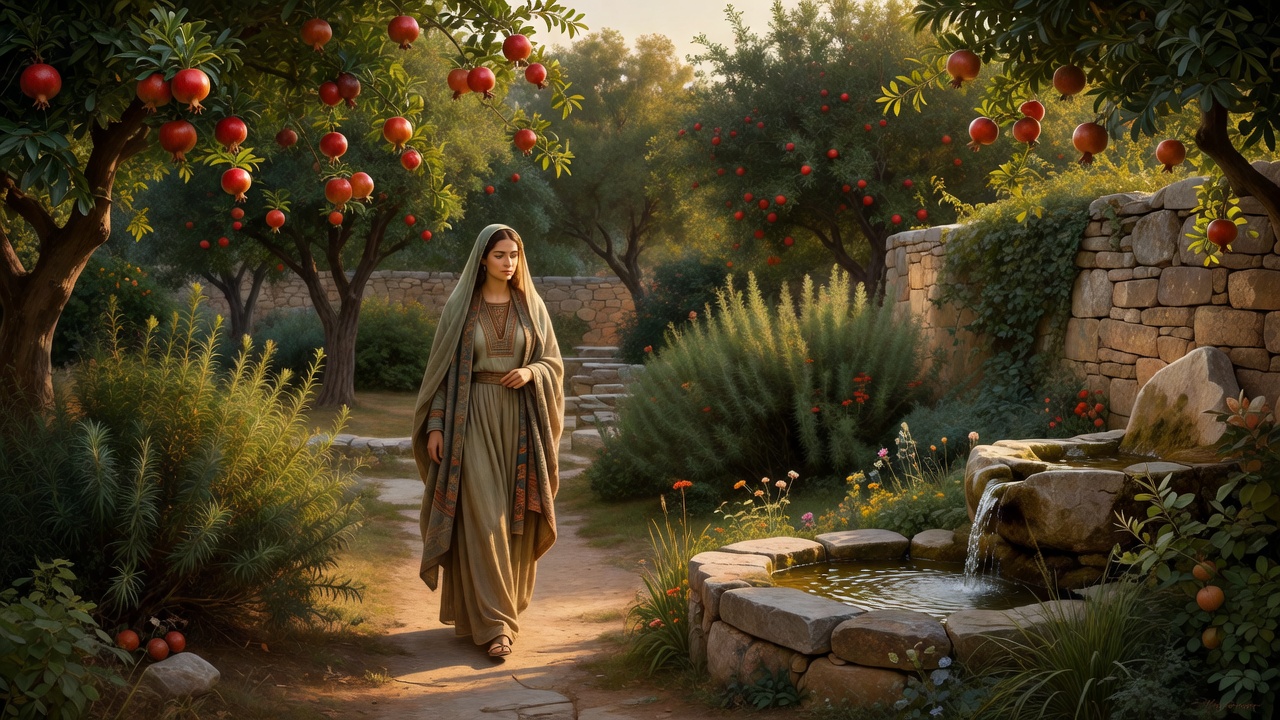
- The bride is portrayed as an enclosed garden, a sealed fountain, and an orchard laden with precious spices such as nard, saffron, cinnamon, and frankincense, evoking exclusivity, refreshment, and fragrance.Sources: the Bible text itself
Notes written with AI assistance from open sources (Theographic Bible Metadata, CC BY-SA 4.0; Easton’s Bible Dictionary, public domain) and reviewed before publishing.
Places in this chapter
- Gilead · Today: Gilead 1 · 32.187, 35.692 · verse 1
- Lebanon · 33.540, 35.584 · verses 8, 11, 15
- Mount Hermon · 33.400, 35.850 · verse 8
- Senir · Today: Mount Hermon · 33.400, 35.850 · verse 8
Only places identified with high confidence are shown (90% or more according to the scholarly sources compiled by OpenBible). Period map: DARE (Digital Atlas of the Roman Empire), CC BY 4.0; modern map: © OpenStreetMap contributors; places: OpenBible.info (CC BY 4.0).
Credits and license for this translation
Godɨn Eghaghanim: Akar Gavgavir Dɨkɨrɨzir Ghurim ko Igiam
The Holy Bible in the Aruamu language of Madang Province, Papua New Guinea, 2020 Edition
Buk Baibel long tokples Aruamu long Madang Provins long Niugini long 2020
copyright © 2020 Pioneer Bible Translators
Language: Aruamu
Translation by: Pioneer Bible Translators
Contributor: The Seed Company
GOD'S STORY in the Aruamu Language of Papua New Guinea
This translation is made available to you under the terms of the
Creative Commons Attribution Share-Alike license 4.0.
You have permission to share and redistribute this Bible translation in any format and to make reasonable revisions and adaptations of this translation, provided that:
You include the above copyright and source information.
If you make any changes to the text, you must indicate that you did so in a way that makes it clear that the original licensor is not necessarily endorsing your changes.
If you redistribute this text, you must distribute your contributions under the same license as the original.
Pictures included with Scriptures and other documents on this site are licensed just for use with those Scriptures and documents.
For other uses, please contact the respective copyright owners.
Note that in addition to the rules above, revising and adapting God's Word involves a great responsibility to be true to God's Word. See Revelation 22:18-19.
2025-05-15
Source: http://png.bible/msy2020/ · eBible.org