Song of Songs 2
Godɨn Eghaghanim: Akar Gavgavir Dɨkɨrɨzir Ghurim ko Igiam · Tap a verse to see its cross-references.
1Kɨ mati ruarimɨn akɨmarir dirim,
a pura Saronɨn danganir zarimɨn oto.
Egha kɨ mati akɨmarir aghuarim,
a mɨghsɨabar tongɨn itir danganir zarimɨn ti.
Gumazir igiamɨn onger akam
2Kɨ garima, nan dughorir amizim, an amizir igiar igharazibar tongɨn ikia
mati akɨmarir dirim dɨkoniba itir ikarɨzibar tongɨn iti.
Amizir igiamɨn onger akam
3Nan roroar gumazir kɨ bar ifongezim, a gumazir igiar igharazibar tongɨn ikia,
mati temer dagher aghuiba itim, a ruarimɨn ikia temer igharazibar tongɨn ti.
Aruer ekiamɨn dughiam kɨ an dughuazimɨn aven ikiasa bar ifonge.
Temer kamɨn ovɨziba bar deragha nan akatorimɨn bar isɨngi.
4A na inigha isar ekiam bagha uan dɨpenir ekiamɨn ghu.
A bar na gifonge, ezɨ kɨ a bagha bar akonge,
mati nir aghuir me isa gan dagher dɨpenimɨn ga avarazim, kɨ a bagha bar akonge.
5Nan roroam, kɨ bar nɨ gifonge,
ezɨ nan damaziba nan sirizɨ, nan agharapaniba bar nan amɨra.
Ga uaning, nɨ ter ovɨziba ko wainɨn ovɨzir me apuzizir taba na danightɨ,
kɨ dar amegh ua gavgavim iniam.
6Kɨ ghaze, Nan roroam uan agharir kɨriam,
nan dapanimɨn aghorogham.
Eghtɨ an agharir guvim, a nan namnam muigham.
7O Jerusalemɨn amiziba, kɨ kamaghɨn ian azai,
ia dian asɨzir atiar aghuibagh nɨghnigh,
egh na ko akam akɨrigh suam,
Ia ga uaning gifongezir arazim, an tuavim apɨran markɨ,
egh ikɨ mangɨtɨ gan ifongiam gɨvagham.
Onger akar namba 2
Amizir igiamɨn onger akam
8Kɨ oragha fo, nan roroar gumazir kɨ bar ifongezim na bagha izi!
Kɨ garima, a mɨghsɨabagh isɨn uabɨ akura ivemara izi.
9Nan roroar gumazir kɨ bar ifongezim, a pamten ivemari, mati dian asɨzir apurir gavgavir mam.
Ame! A izegha gɨvagha en dɨpenimɨn dɨvazim azenan tughav ikia winduan aven gari.
Gumazir igiamɨn onger akam
10Nan roroar gumazir kɨ bar ifongezim kamaghɨn na mɨgei:
“O nan amizir kɨ bar ifongezim,
nɨ nan amizir dirim,
nɨ dɨkavigh azenan izɨ,
egh na ko, ga arɨ mangam.
11Nɨ amozimɨn atiatingan markɨ,
amozir dughiam a gɨfa.
12Ezɨ akɨmariba nguazir kamɨn danganiba bar a da avara,
ezɨ kar onger akabar dughiam.
Aruer kuaraziba tintinimɨn ruaribar
onger akabagh ami.
13Ezɨ fighɨn temeba be.
Ezɨ ruarimɨn beniba akɨmariba otifi,
ezɨ dar akɨmariba mughuriar aghuiba zui.
O nan amizir kɨ bar ifongezim,
nan amizir dirim,
nɨ dɨkavigh azenan izɨ,
egh ga arɨ mangam.”
14Nɨ uan dɨpenimɨn aven ikia,
mati kuarazir bunbam saghon itir mɨghsɨamɨn dagɨar torir muziarimɨn modoghav iti.
Nɨ azenan izɨtɨ, kɨ nɨn guar dirimɨn ganɨva,
egh nɨn tiarir isɨngtɨzim baragham.
15Gan wainɨn ikarɨzibar, akɨmariba otifi.
E fo, afiar atiar muziariba aruava tintinibar wainɨn azenibagh asɨghasɨghasava ami.
Kamaghɨn amizɨ, nɨ afiar atiar muziarir kabar suikigh,
eghtɨ da gan azenimɨn aven izegh gan wainɨn ikarɨzibagh asɨghasighan kogham.
Amizir igiamɨn onger akam
16Nan roroar gumazir kɨ bar ifongezim, kɨ an amuim,
ezɨ a nan pam,
mati a uan memeba inigha
akɨmarir aghuibar tongɨn ghuzɨ, da graziba api moghɨn,
a na ko ikiasa bar akonge.
17A dagh eghuv dar gan mangɨtɨ
amɨnim tiraghtɨ, mɨtarmem arɨ mangɨgham.
O nan roroar gumazir kɨ bar ifongezim, nɨ zuamɨra raghɨrɨgh arɨ mangɨ,
mati asɨzir dian apurir aghuir mam ivemara mɨghsɨar ekiabagh isɨn ara zui.
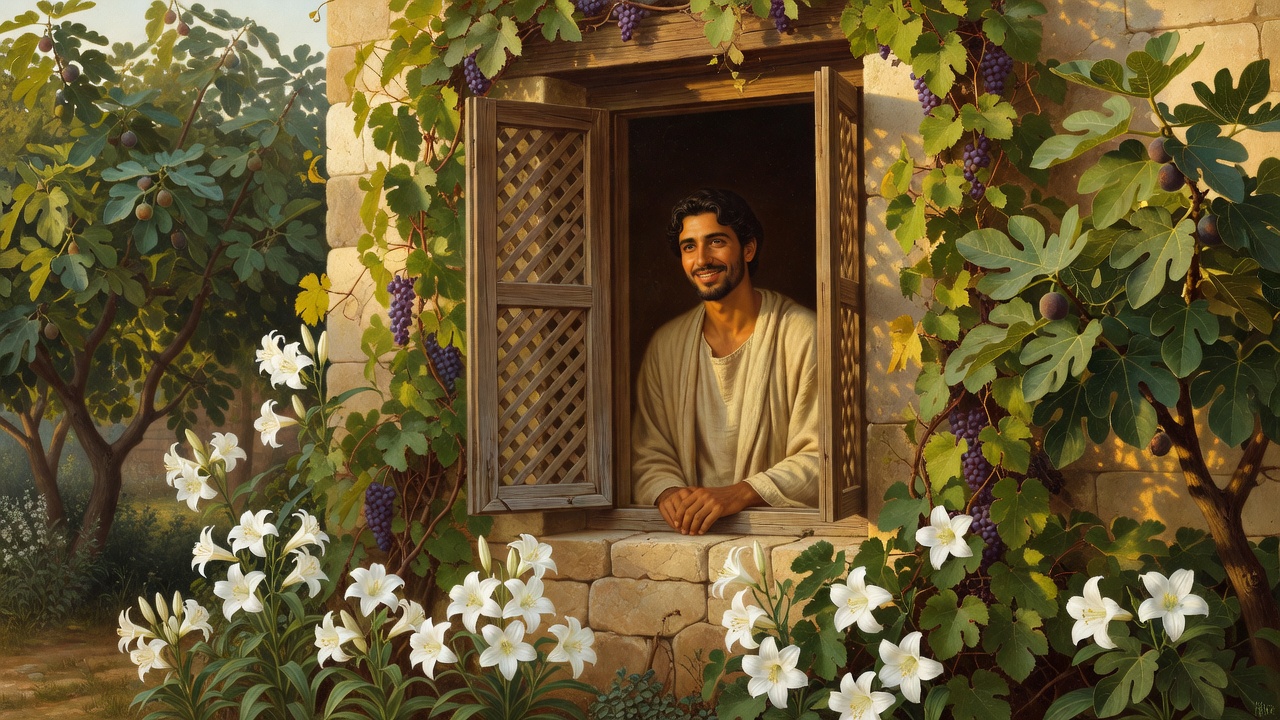
Did you know?
Springtime and Awakening Love
- Sharon was a fertile coastal plain stretching between the Mediterranean Sea and the hill country west of Jerusalem, celebrated for its beauty and vegetation, which gave rise to imagery like the rose of Sharon.Sources: Saron · the Bible text itself
- The poem marks the arrival of spring through natural changes in the countryside, such as the end of winter rains, the cooing of turtledoves, ripening fig trees, and flowering grapevines that needed protection from foraging foxes.Sources: the Bible text itself
- The speaker repeatedly appeals to the daughters of Jerusalem, framing her cautions about love around wild animals of the open hills, such as gazelles and does of the field.Sources: Jerusalem · the Bible text itself
Notes written with AI assistance from open sources (Theographic Bible Metadata, CC BY-SA 4.0; Easton’s Bible Dictionary, public domain) and reviewed before publishing.
Places in this chapter
Only places identified with high confidence are shown (90% or more according to the scholarly sources compiled by OpenBible). Period map: DARE (Digital Atlas of the Roman Empire), CC BY 4.0; modern map: © OpenStreetMap contributors; places: OpenBible.info (CC BY 4.0).
Credits and license for this translation
Godɨn Eghaghanim: Akar Gavgavir Dɨkɨrɨzir Ghurim ko Igiam
The Holy Bible in the Aruamu language of Madang Province, Papua New Guinea, 2020 Edition
Buk Baibel long tokples Aruamu long Madang Provins long Niugini long 2020
copyright © 2020 Pioneer Bible Translators
Language: Aruamu
Translation by: Pioneer Bible Translators
Contributor: The Seed Company
GOD'S STORY in the Aruamu Language of Papua New Guinea
This translation is made available to you under the terms of the
Creative Commons Attribution Share-Alike license 4.0.
You have permission to share and redistribute this Bible translation in any format and to make reasonable revisions and adaptations of this translation, provided that:
You include the above copyright and source information.
If you make any changes to the text, you must indicate that you did so in a way that makes it clear that the original licensor is not necessarily endorsing your changes.
If you redistribute this text, you must distribute your contributions under the same license as the original.
Pictures included with Scriptures and other documents on this site are licensed just for use with those Scriptures and documents.
For other uses, please contact the respective copyright owners.
Note that in addition to the rules above, revising and adapting God's Word involves a great responsibility to be true to God's Word. See Revelation 22:18-19.
2025-05-15
Source: http://png.bible/msy2020/ · eBible.org