Psalms 80
Godɨn Eghaghanim: Akar Gavgavir Dɨkɨrɨzir Ghurim ko Igiam · Tap a verse to see its cross-references.
Israelia ua tugh gavgavighasa, God ko mɨgei
Asap onger akar kam osiri.
Gumazir ighiabar faragha zuim, a gumazamizibav kɨmtɨ, me tiarir kamɨn gɨn mangɨ ighiar kam damuam, “Akar Dɨkɨrɨzir Gavgavimɨn akɨmarir aghuim.”
1O Israelia geghuvir gumazim, nɨ deravɨra e barakigh.
Nɨ sipsipbar mɨn Josepɨn ovavir boribagh eghuva, deragha men gari.
Nɨ uan atrivir dabirabim gaperaghav ikia, enselɨn bar gavgavibar pɨn iti.
Nɨ uan angazangarim e gisiragh.
2Nɨ Efraim ko, Benjamin ko, Manase, men anababar ovavir boriba, nɨ uabɨ men akagh.
Nɨ uan gavgavim akagh izɨ en akuragh.
3O God, nɨ uamategh e inigh izɨtɨ
e ua dɨkavigh tuivigh, fomɨra ikezɨ moghɨn ua ikiam.
Nɨ uan angazangarim e gisiragh,
en apangkuvigh en akuraghtɨ,
e ovengan kogham.
4O God, nɨ Ikiavɨra Itir Godɨn Gavgaviba Bar Itim.
Nɨ dughiar bar ruarimɨn uan gumazamizibar atara,
me nɨ ko mɨgeir mɨgɨrɨgɨaba nɨ da barazir puvatɨ.
5Nɨ e gamizɨ, e bretɨn mɨn uan temeriba apava,
kavɨn temerir izɨvɨrɨzim, dɨpamɨn mɨn uarir guri.
6Nɨ gumazir en boroghɨn itibar arirazɨ, me iza en nguazim iniasa uariv sosi.
En apaniba e dɨpovava en ingaravati.
7O Ikiavɨra Itir Godɨn Gavgaviba Bar Itim, nɨ uamategh e inigh izɨtɨ,
e ua dɨkavigh tuivigh, fomɨra ikezɨ moghɨn ua ikiam.
Nɨ uan angazangarim e gisiragh,
en apangkuvigh en akuraghtɨ e ovengan kogham.
8Nɨ uan gumazamiziba wainɨn ikarɨzimɨn mɨn Isipɨn me asigha me inigha ize.
Nɨ Kantrin Igharazibar Gumazamiziba batuegha,
men nguazibar uan gumazamiziba, wainɨn ikarɨzimɨn mɨn me arke.
9Nɨ wainɨn ikarɨzir kam bagha nguazim azenegha anekara.
Ezɨ an aghua an biba bar nguazim giraghuzɨ,
an aghua ghua bar uabɨ aroke.
10Wainɨn ikarɨzir kam aghua, ekɨva an dughuazim mɨghsɨaba bar ada aghuazɨ,
an aghariba sidan temer ekiaba bar ada avara.
11An aghariba aghua ghua Mediterenianɨn Ongarir Ekiamɨn tugha,
iza Yufretisɨn Fanemɨn tu.
12Nɨ datɨrɨghɨn manmaghsua wainɨn azenim avɨnizir dɨvazim bar anekaragharɨki?
Gumazamiziba datɨrɨghɨn tuavimɨn daru, an ovɨziba okɨmam.
13Dar atiaba a dɨkabɨntɨ,
asɨzir atiaba anemam.
14O Godɨn Gavgaviba Bar Itim, nɨ uam e gɨnɨghnɨgh,
uan Nguibamɨn pɨn ikɨ vangɨnan wainɨn ikarɨzir kam deraghvɨra an gan.
15Nɨ uabɨ uan agharir guvimɨn wainɨn ikarɨzir kam akara.
Nɨ wainɨn biar igiam akarazɨ an aghua gavgavigha gɨfa.
16En apaniba anetugha a isa avim mɨkɨnigha gɨfa.
Nɨ uaghan me atugh me gasɨghasightɨ deragham.
17Nɨn gumazamizir nɨ ua bagha inabaziba,
nɨ me gamizɨ me ekevegha bar gavgafi.
Nɨ men akuragh deragh men gan.
18Nɨ kamagh damightɨ e uam akɨrim ragh nɨ gasan kogham.
Nɨ en akuraghtɨ e angamɨra deravɨra ikɨ nɨn ziam fam.
19O God, nɨ Ikiavɨra Itir Godɨn Gavgaviba Bar Itim,
nɨ uamategh e inigh izɨtɨ,
e ua dɨkavigh tuivigh fomɨra ikezɨ moghɨn ua ikiam.
Nɨ en boroghɨn ikɨtɨ, nɨn angazangarim e gisiraghtɨ, nɨ deragh e damu.
Egh en apangkuvigh en akuraghtɨ e ovengan kogham.
Did you know?
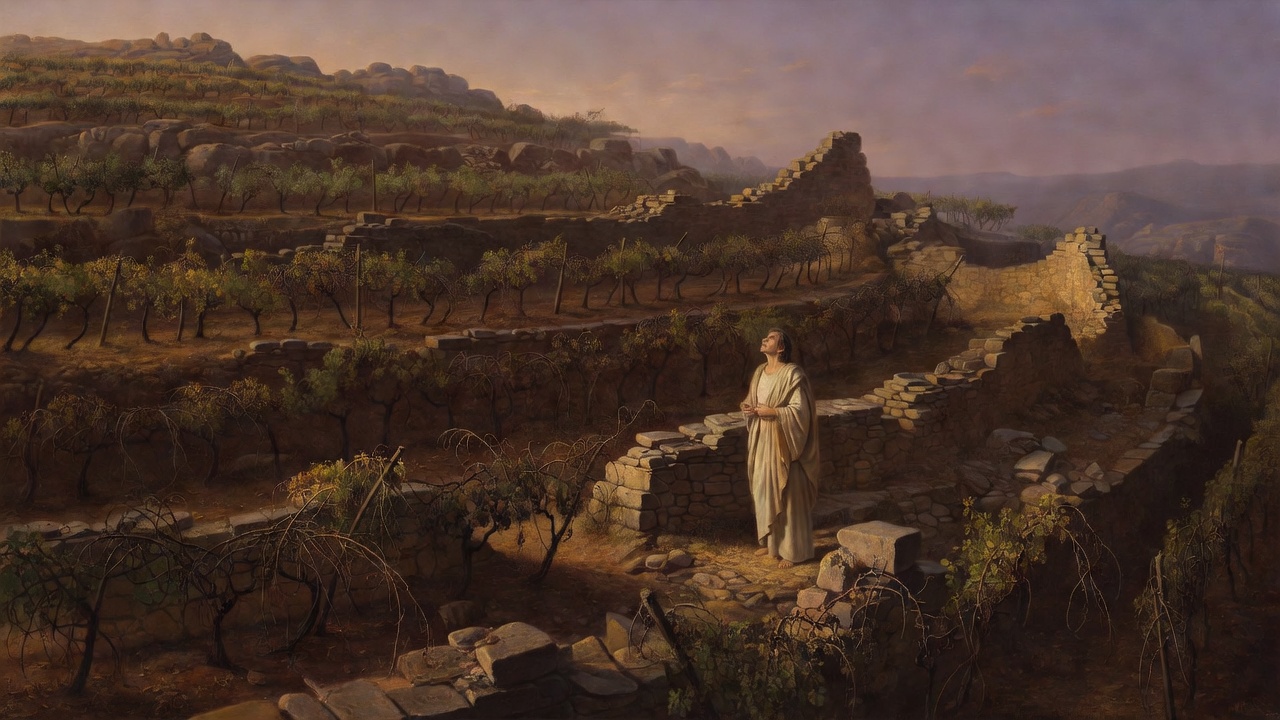
A Prayer for the Uprooted Vine
- The psalm specifically mentions Ephraim, Benjamin, and Manasseh, tribes closely linked by descent from Rachel through Joseph and Benjamin. During Israel's wilderness wanderings, these three tribes were assigned to camp and march together on the western side of the tabernacle.Sources: Benjamin (patriarch) · Manasseh (son of Joseph) · the Bible text itself
- The author uses an extended allegory comparing the nation of Israel to a grapevine brought out of Egypt and replanted in Canaan. The song laments that God had torn down the protective vineyard walls, leaving the fruitful vine exposed to wild beasts and passersby.Sources: Egypt · the Bible text itself
- This poem is part of a distinct collection spanning Psalms 73 through 83 attributed to Asaph. The biblical record describes Asaph as a leading Levite musician in the time of King David whose musical guild or descendants continued his tradition in temple worship.Sources: Asaph (Levite) · the Bible text itself
Notes written with AI assistance from open sources (Theographic Bible Metadata, CC BY-SA 4.0; Easton’s Bible Dictionary, public domain) and reviewed before publishing.
Places in this chapter
- Egypt · 30.129, 31.308 · verse 8
- Euphrates · Today: Euphrates River · 31.004, 47.442 · verse 11
- Great Sea · Today: Mediterranean Sea · 31.805, 34.170 · verse 11
Only places identified with high confidence are shown (90% or more according to the scholarly sources compiled by OpenBible). Period map: DARE (Digital Atlas of the Roman Empire), CC BY 4.0; modern map: © OpenStreetMap contributors; places: OpenBible.info (CC BY 4.0).
Credits and license for this translation
Godɨn Eghaghanim: Akar Gavgavir Dɨkɨrɨzir Ghurim ko Igiam
The Holy Bible in the Aruamu language of Madang Province, Papua New Guinea, 2020 Edition
Buk Baibel long tokples Aruamu long Madang Provins long Niugini long 2020
copyright © 2020 Pioneer Bible Translators
Language: Aruamu
Translation by: Pioneer Bible Translators
Contributor: The Seed Company
GOD'S STORY in the Aruamu Language of Papua New Guinea
This translation is made available to you under the terms of the
Creative Commons Attribution Share-Alike license 4.0.
You have permission to share and redistribute this Bible translation in any format and to make reasonable revisions and adaptations of this translation, provided that:
You include the above copyright and source information.
If you make any changes to the text, you must indicate that you did so in a way that makes it clear that the original licensor is not necessarily endorsing your changes.
If you redistribute this text, you must distribute your contributions under the same license as the original.
Pictures included with Scriptures and other documents on this site are licensed just for use with those Scriptures and documents.
For other uses, please contact the respective copyright owners.
Note that in addition to the rules above, revising and adapting God's Word involves a great responsibility to be true to God's Word. See Revelation 22:18-19.
2025-05-15
Source: http://png.bible/msy2020/ · eBible.org