Psalms 129
Godɨn Eghaghanim: Akar Gavgavir Dɨkɨrɨzir Ghurim ko Igiam · Tap a verse to see its cross-references.
Israelia uan apanibagh asɨghasɨghasa God ko mɨgei
Godɨn Dɨpenimɨn ghuavanaga an ziam fer ighiam.
1Israel, nɨ uan igiamɨn ikegha iza,
datɨrɨghɨn nɨn apaniba nɨ gamizir arazir kuraba,
nɨ dagh eghan.
2Nɨ kamaghɨn mɨkɨm suam,
“Kɨ uan igiamɨn ikia iza datɨrɨghɨn, nan apaniba arazir kurabar na gami.
Me kamaghɨn na gamua egha na abɨrazir puvatɨ.
3Me nan akɨrim ifozorozima a duar ruariba iti.
Ezɨ duar kaba mati me azenir ekiam oparasa an nguazim abɨagharɨki.
4Ezɨ Ikiavɨra Itir God an araziba dera,
a ikia kalabuziar kamɨn ua nan akurazɨ
kɨ fɨriaghɨrɨ.”
5Kɨ ghaze, Saionɨn Nguibamɨn apanimɨn itir darasi,
e men agɨntɨghtɨ
me uam arɨ uan nguibabar mangegh
6Me dɨpenir siriabagh isɨn aghuir grazibar mɨn aghungam.
Da aghung ua zuamɨra mɨsigham.
7Gumaziba grazir kabar ikɨziba ikia,
egha da atera zuir puvatɨ.
8Gumazamiziba gumazamizir kabar boroghɨn mangɨ kamaghɨn mɨkɨman markɨ,
“Ikiavɨra Itir God deragh ia damu!
Ikiavɨra Itir Godɨn ziamɨn
Did you know?
Endurance in Affliction and the Fate of Zion’s Foes
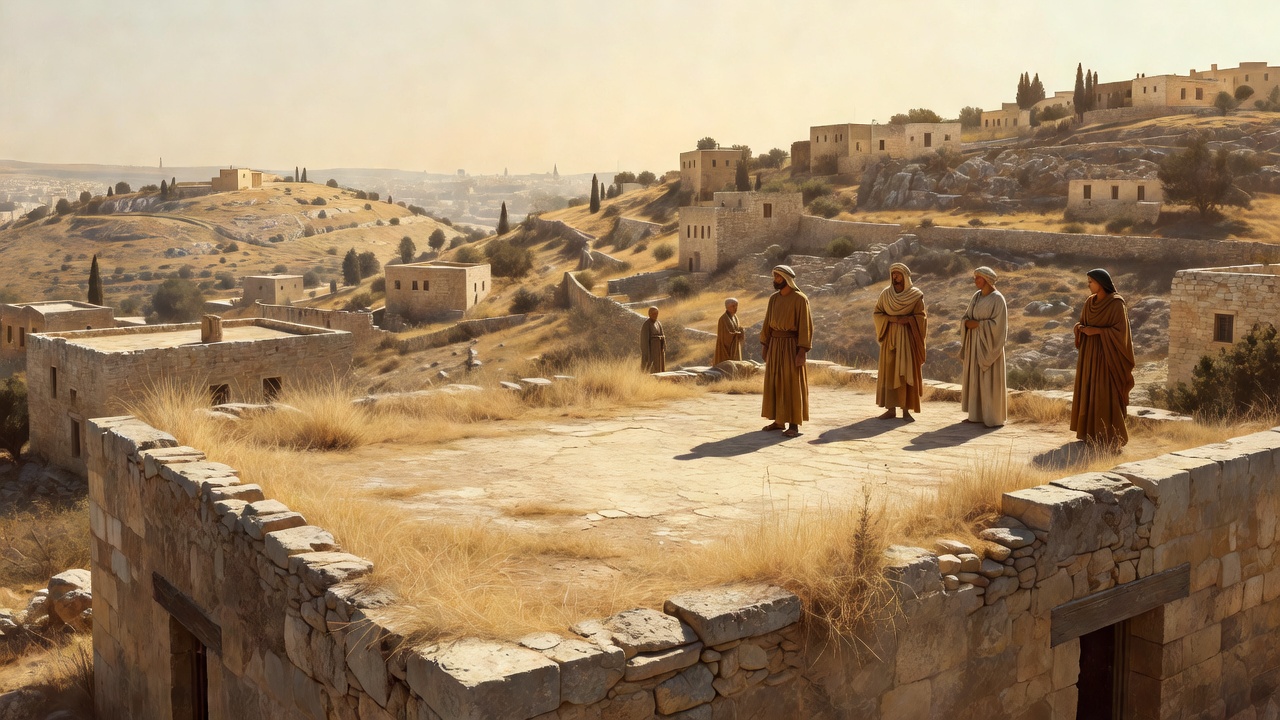
- The imagery of grass growing on rooftops reflects ancient construction, where flat roofs were often covered with packed earth. Seeds might sprout there after rains, but because the soil layer was shallow and exposed to the sun, the grass withered before it could mature or produce a harvest.Sources: the Bible text itself
- The phrase spoken by passersby in verse 8 mirrors the traditional agricultural greetings exchanged in ancient Israel, where travelers routinely blessed reapers and laborers working in the fields.Sources: the Bible text itself
- Zion was the prominent hill in Jerusalem where King David built his citadel, and in biblical poetry it often stands as a representation of God’s dwelling place and His people.Sources: the Bible text itself · Zion
Notes written with AI assistance from open sources (Theographic Bible Metadata, CC BY-SA 4.0; Easton’s Bible Dictionary, public domain) and reviewed before publishing.
Places in this chapter
Only places identified with high confidence are shown (90% or more according to the scholarly sources compiled by OpenBible). Period map: DARE (Digital Atlas of the Roman Empire), CC BY 4.0; modern map: © OpenStreetMap contributors; places: OpenBible.info (CC BY 4.0).
Credits and license for this translation
Godɨn Eghaghanim: Akar Gavgavir Dɨkɨrɨzir Ghurim ko Igiam
The Holy Bible in the Aruamu language of Madang Province, Papua New Guinea, 2020 Edition
Buk Baibel long tokples Aruamu long Madang Provins long Niugini long 2020
copyright © 2020 Pioneer Bible Translators
Language: Aruamu
Translation by: Pioneer Bible Translators
Contributor: The Seed Company
GOD'S STORY in the Aruamu Language of Papua New Guinea
This translation is made available to you under the terms of the
Creative Commons Attribution Share-Alike license 4.0.
You have permission to share and redistribute this Bible translation in any format and to make reasonable revisions and adaptations of this translation, provided that:
You include the above copyright and source information.
If you make any changes to the text, you must indicate that you did so in a way that makes it clear that the original licensor is not necessarily endorsing your changes.
If you redistribute this text, you must distribute your contributions under the same license as the original.
Pictures included with Scriptures and other documents on this site are licensed just for use with those Scriptures and documents.
For other uses, please contact the respective copyright owners.
Note that in addition to the rules above, revising and adapting God's Word involves a great responsibility to be true to God's Word. See Revelation 22:18-19.
2025-05-15
Source: http://png.bible/msy2020/ · eBible.org