Psalms 120
Godɨn Eghaghanim: Akar Gavgavir Dɨkɨrɨzir Ghurim ko Igiam · Tap a verse to see its cross-references.
Gumazim uabɨn akurvaghasa God ko mɨgei
Godɨn Dɨpenimɨn ghuavanaga an ziam fer ighiam.
1Kɨ osɨmtɨzim itir dughiamɨn,
kɨ uabɨn akurvaghasa Ikiavɨra Itir Godɨn diava araima,
a nan dɨmdiam barasi.
2Kɨ ghaze, “O Ikiavɨra Itir God, gumazir ifariba na gasɨghasɨghasava ami.
Nɨ men akar ifavaribar ua nan akuragh,
men dafaribar ua na inigh.”
3Ia gumazir ifariba, God mɨzazir manmaghɨra garim ia danɨngam?
Egh a manmaghɨra garir arazim ian arazir kuraba ikaragham?
4God ti afuzir ghumtɨzim inigh ia ginivam.
A ti avir bar puvɨra isim inigh ia dapongam.
5Maia! Kɨ uabɨn apangkufi!
Kɨ Mesekia ko Kedarian tongɨn pazava aperazɨ moghɨn,
ian tongɨn datɨrɨghɨn pazava apera.
6Gumazir igharaziba ko deragh dapian aghuaziba,
kɨ dughiar ruarimɨn ian tongɨn ikegha, bar amɨra.
7Kɨ uabɨ dabirabir aghuim baghavɨra mɨgei,
ezɨ me mɨdorozim baghavɨra mɨgei!
Did you know?
A Plea for Peace in Exile
- Psalm 120 opens the series of fifteen "songs of ascents", beginning with a personal cry for deliverance from deceitful speech and hostile surroundings.Sources: the Bible text itself
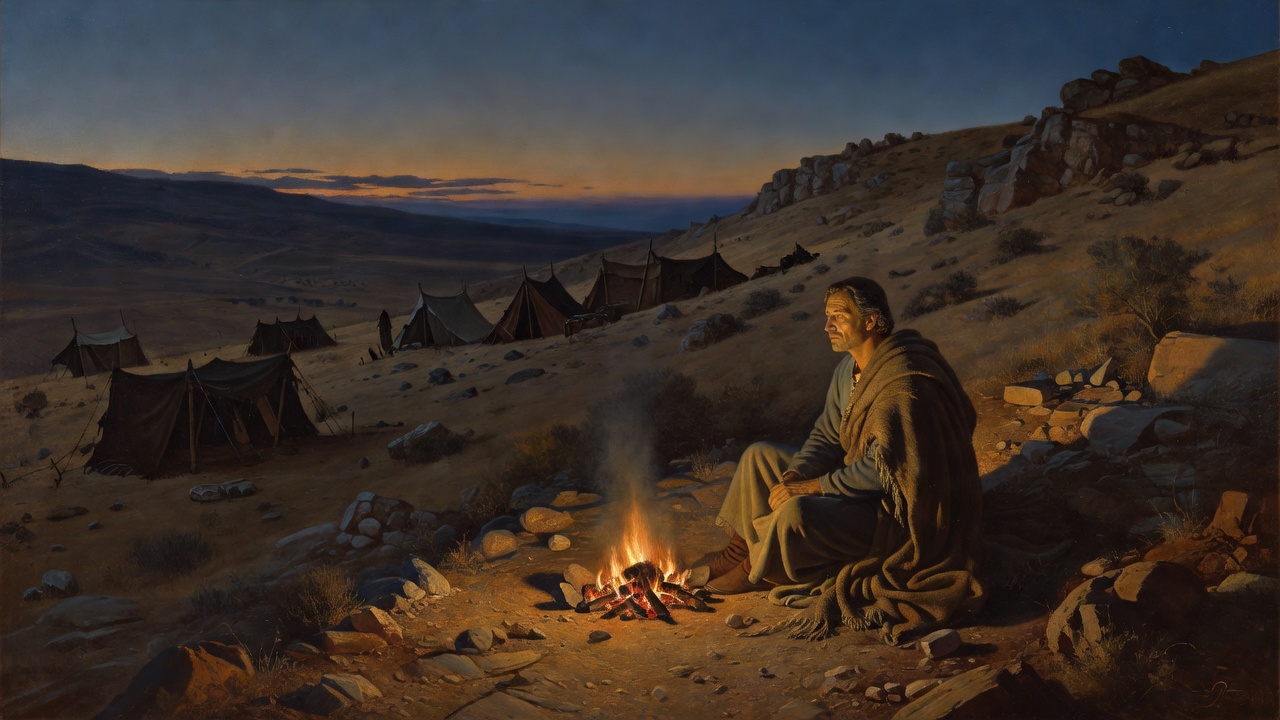
- The psalmist laments living in Meshech and among the tents of Kedar. Meshech was associated with northern peoples near the Black and Caspian Seas, while Kedar referred to nomadic tribes living in black tents in northwestern Arabia; together they symbolize distant, alien lands far from the community of worship.Sources: Meshech · Kedar · the Bible text itself
Notes written with AI assistance from open sources (Theographic Bible Metadata, CC BY-SA 4.0; Easton’s Bible Dictionary, public domain) and reviewed before publishing.
Places in this chapter
- Jerusalem · 31.777, 35.234 · verse 1
- Kedar · 29.811, 39.868 · verse 5
- Meshech · Today: about 200 km around Gordion · 39.655, 31.994 · verse 5
Only places identified with high confidence are shown (90% or more according to the scholarly sources compiled by OpenBible). Period map: DARE (Digital Atlas of the Roman Empire), CC BY 4.0; modern map: © OpenStreetMap contributors; places: OpenBible.info (CC BY 4.0).
Credits and license for this translation
Godɨn Eghaghanim: Akar Gavgavir Dɨkɨrɨzir Ghurim ko Igiam
The Holy Bible in the Aruamu language of Madang Province, Papua New Guinea, 2020 Edition
Buk Baibel long tokples Aruamu long Madang Provins long Niugini long 2020
copyright © 2020 Pioneer Bible Translators
Language: Aruamu
Translation by: Pioneer Bible Translators
Contributor: The Seed Company
GOD'S STORY in the Aruamu Language of Papua New Guinea
This translation is made available to you under the terms of the
Creative Commons Attribution Share-Alike license 4.0.
You have permission to share and redistribute this Bible translation in any format and to make reasonable revisions and adaptations of this translation, provided that:
You include the above copyright and source information.
If you make any changes to the text, you must indicate that you did so in a way that makes it clear that the original licensor is not necessarily endorsing your changes.
If you redistribute this text, you must distribute your contributions under the same license as the original.
Pictures included with Scriptures and other documents on this site are licensed just for use with those Scriptures and documents.
For other uses, please contact the respective copyright owners.
Note that in addition to the rules above, revising and adapting God's Word involves a great responsibility to be true to God's Word. See Revelation 22:18-19.
2025-05-15
Source: http://png.bible/msy2020/ · eBible.org