Numbers 1
Godɨn Eghaghanim: Akar Gavgavir Dɨkɨrɨzir Ghurim ko Igiam · Tap a verse to see its cross-references.
About this book
About Numbers
- Numbers is the fourth book of the Pentateuch. In Hebrew it is called be-midbar, “in the wilderness”; the Greek Septuagint called it Numbers, the name still usual, because it records a census in the wilderness of Sinai and a later census on the plain of Moab.Sources: Easton: Numbers, Book of
- Easton's Bible Dictionary (1897) presents Numbers, like the other books of the Pentateuch, as written by Moses. The history it contains runs from the second month of the second year after the Exodus to the beginning of the eleventh month of the fortieth year, about thirty-eight years and ten months.Sources: Easton: Numbers, Book of
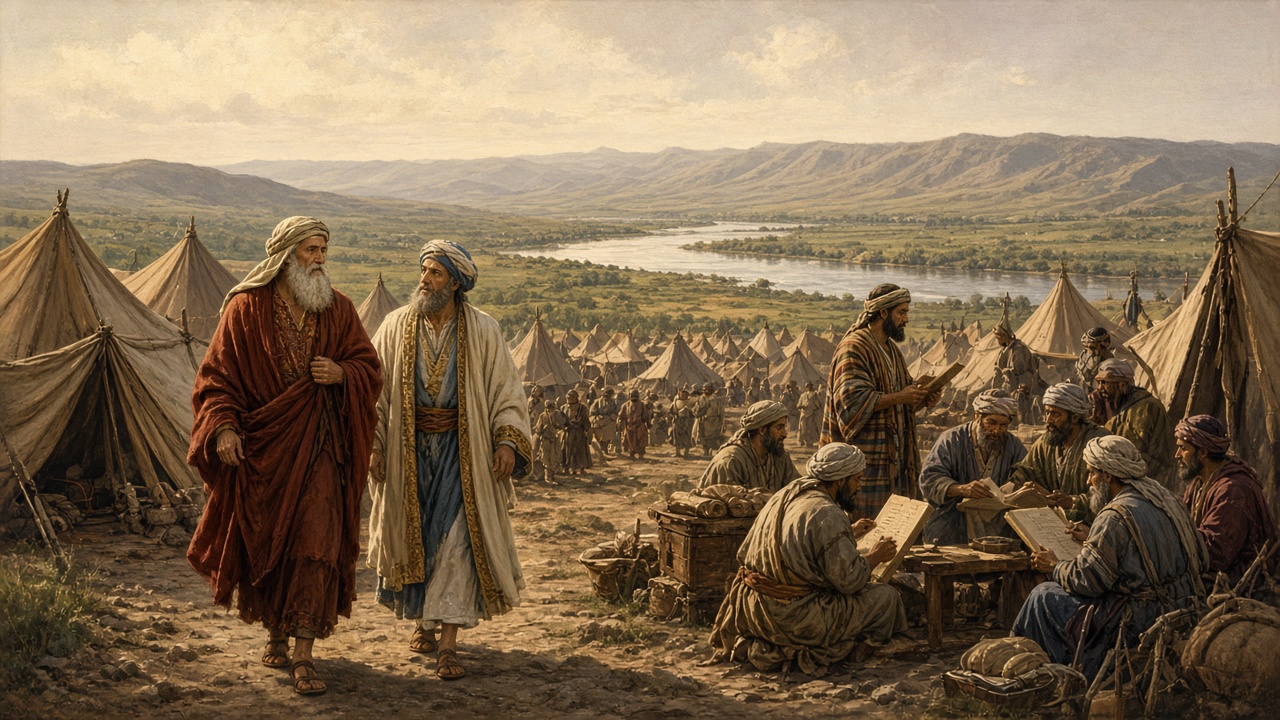
- The narrative begins at Sinai, the mountain district Israel reached in the third month after the Exodus and where they camped for about a year, and follows their route and encampments through the wilderness. It ends on the plains of Moab, east of the Jordan and the Dead Sea, opposite Jericho, their last camp before entering Canaan, the country west of the Jordan. Easton describes those years as a time of wandering in which that generation died in the wilderness, and notes that the people were fewer then than when they left Egypt.Sources: Easton: Numbers, Book of · Sinai · Moab · Canaan
- Easton divides the book into three parts: the census at Sinai and preparations to resume the march, including the Nazirite vow (1–10:10); the journey from Sinai to Moab, the sending of the spies and the report they brought back, and the people’s murmurings, eight times, at the hardships of the way (10:11–21:20); and the events on the plain of Moab before the crossing of the Jordan (21:21–36).Sources: Easton: Numbers, Book of
- While Israel was camped on the plains of Moab, Balak, son of Zippor and king of Moab, fearing them, sent to Pethor in Mesopotamia for Balaam, son of Beor, to curse them; the narrative says Balaam was unable to do so. Numbers 21:14 also cites “the book of the wars of the Lord,” a work that Easton says is uncertain, perhaps a lost writing of Israel or an Amorite record of the victories of their king Sihon.Sources: Easton: Numbers, Book of · Balaam · Balak
Notes written with AI assistance from open sources (Theographic Bible Metadata, CC BY-SA 4.0; Easton’s Bible Dictionary, public domain) and reviewed before publishing.
Israelia Sainain Mɨghsɨamɨn ikia mangasa bizibar kɨri
Gumazir dapaniba Israelia medi
1Israelia, kantri Isip ataghizɨ, azenir namba 2 otozɨ, an iakɨnir namba 2ɨn, an aruer faragha zuimɨn, Ikiavɨra Itir God, Sainain gumazamiziba puvatɨzir danganimɨn uabɨ bativamin Purirpenimɨn aven Moses ko mɨgei. 2A kamaghɨn mɨgei, “Nɨ Aron ko gua mangɨ, Israelia bar men ziaba inigh. Gua gumazibar ziaba vaghvagh dagh fogh da osirigh me mengegh. Egh Israelian anababar ikɨziba vaghvagh bar dar ziaba osirigh. 3Kar gumazir 20plan azenibar itiba, ko 20plan azenibagh afiraziba, me mɨdorozim damuamin gavgaviba iti. Gua, bar men ziaba ko men ikɨziba osirigh da mengegh. 4Egh gua uaningɨn akurvaghsɨ vaghvagh anababar aven, gua gumazir dapanir vamɨra vamɨra mɨsefegh.
5“Gumazir guan akuragh ingangarir kam damuamin mabar ziabar kara: Rubenɨn anabamɨn adarazir gumazim, Sedeurɨn otarim Elisur, gua a inigh. 6Egh Simeonɨn anabamɨn adarazir gumazim Surisadai, an otarim Selumiel, gua a inigh. 7Egh Judan anabamɨn adarazir gumazim Aminadap, an otarim Nason, gua a inigh. 8Egh Isakarɨn anabamɨn adarazir gumazim Suar, an otarim Netanel, gua a inigh. 9Egh Sebulunɨn anabamɨn adarazir gumazim Helon, an otarim Eliap, gua a inigh. 10Egh Josepɨn otarir pumuningɨn ovavir boribar tongɨn, Efraimɨn anabamɨn adarazir gumazim Amihut, an otarim Elisama, gua a inigh. Egh Manasen anabamɨn adarazir gumazim Pedasur, an otarim Gamaliel, gua a inigh. 11Egh Benjaminɨn anabamɨn adarazir gumazim Gideoni, an otarim Abidan, gua a inigh. 12Egh Danɨn anabamɨn adarazir gumazim Amisadai, an otarim Ahieser, gua a inigh. 13Egh Aserɨn anabamɨn adarazir gumazim Okran, an otarim Pagiel, gua a inigh. 14Egh Gatɨn anabamɨn adarazir gumazim Duel, an otarim Eliasap, gua a inigh. 15Egh Naptalin anabamɨn adarazir gumazim Enan, an otarim Ahira, gua a inigh.” 16Ezɨ Moses ko Aron, Israelian tongɨn men anababa vaghvagha men gumazir dapanir kaba ini. 17God men ziabar borogha me amɨsevezɨ, aning deraghavɨra me ini. 18Egha aning 12plan gumazir dapanir kaba ko, Israelia bar me akuvasa men dei. Ezɨ iakɨnir namba 2ɨn, an aruer faragha zuimɨn, Israelia bar uari akuvazɨ, me gumazamizibar ziaba ko men anababa ko men ikɨzibar ziaba ko dɨboboniba osiri. Gumazir 20plan azeniba itiba ko 20plan azenibagh afiraziba, me bar men ziaba vaghvagha da osira me medi. 19Ikiavɨra Itir God me mɨkemezɨ moghɨn, me ami. Israelia Sainain gumazamiziba puvatɨzir danganimɨn itima, Moses gumazamizibar ziaba ko men dɨboboniba osiri. 20Gumazir 20plan azeniba itiba, ko 20plan azenibagh afiraziba, me mɨdorozim damuan tughatɨ. Moses ko Aron gumazir kaba vaghvagha men ziaba ko anababa ko men ikɨzibar ziaba ko men apengan itibar ziaba osiri. Me Jekopɨn otarir ivariam Rubenɨn ikegha izaghirɨ. Ezɨ men dɨboboniba da, bar kamakɨn:
Rubenɨn anabamɨn gumazibar dɨbobonim, 46,500ɨn tu.
Ezɨ Simeonɨn anabamɨn gumazibar dɨbobonim, 59,300ɨn tu.
Ezɨ Gatɨn anabamɨn gumazibar dɨbobonim, 45,650ɨn tu.
Ezɨ Judan anabamɨn gumazibar dɨbobonim, 74,600ɨn tu.
Ezɨ Isakarɨn anabamɨn gumazibar dɨbobonim, 54,400ɨn tu.
Ezɨ Sebulunɨn anabamɨn gumazibar dɨbobonim, 57,400ɨn tu.
Ezɨ Josepɨn otarir mam Efraim, an anabamɨn gumazibar dɨbobonim, 40,500ɨn tu.
Ezɨ Josepɨn otarir igharazim Manase, an anabamɨn gumazibar dɨbobonim, 32,200ɨn tu.
Ezɨ Benjaminɨn anabamɨn gumazibar dɨbobonim, 35,400ɨn tu.
Ezɨ Danɨn anabamɨn gumazibar dɨbobonim, 62,700ɨn tu.
Ezɨ Aserɨn anabamɨn gumazibar dɨbobonim, 41,500ɨn tu.
Ezɨ Naptalin anabamɨn gumazibar dɨbobonim, 53,400ɨn tu.
Ezɨ men gumazibar dɨboboniba bar moghɨra, 603,550ɨn tu.
47Egha Livain anabamɨn gumaziba, me me mengezir puvatɨ. 48Ikiavɨra Itir God faragha Moses mɨgɨa ghaze, 49“Nɨ Israelian gumazir mɨdorozim damuamiba mengɨva, Livain anabamɨn gumaziba mengan markɨ. 50Nɨ Livaiba amɨseveghtɨ, me nan Purirpenim ko an aven itir bizibagh eghuv dar ganɨva, an ingangaribar faragh mangɨ dar amu. Purirpenir kam, me Akar Dɨkɨrɨzir Gavgavim itir dagɨar akuamning a darɨgham. Egh dughiar ia tuavimɨn zuimɨn me Purirpenim ko an itir biziba ateram. Egh nan Purirpenimɨn mɨriabar uan purirpenibar ingarɨva anekɨarugh. 51Dughiar manamɨn ia danganir igiamɨn mangɨsɨ, Livaiba nan Purirpenim angarigh mangɨ danganir igharazimɨn uam anesaragh. Eghtɨ gumazir kɨnitam Purirpenimɨn boroghɨn izɨva, an aremegham. 52Israelian gumazamizir igharaziba, ia uan anababa ko ikɨ, uan purirpeniba asɨ uan danganibara ikɨ uan ababanim itir fleghba aseghtɨ da ghuanang. 53Eghtɨ Livain anabamɨn adarazi uan purirpeniba nan Purirpenimɨn mɨriaba bar da asegh, egh deraghvɨra a geghuv an gan. Puvatɨghtɨ, gumazir kɨnitam nan Purirpenim boroghɨn izi na damightɨ kɨ bar anɨngaghegh, Israelia bar ia gasɨghasigham. Purirpenir kam, Akar Dɨkɨrɨzir Gavgavim itir dagɨar akuamning an aven ikiam.”
54Ezɨ Moses bizir kabar gun Israelia mɨkemezɨ, me Ikiavɨra Itir God Moses mɨkemezɨ moghɨn, biziba bar dagh ami.
Did you know?
The Census in the Wilderness of Sinai
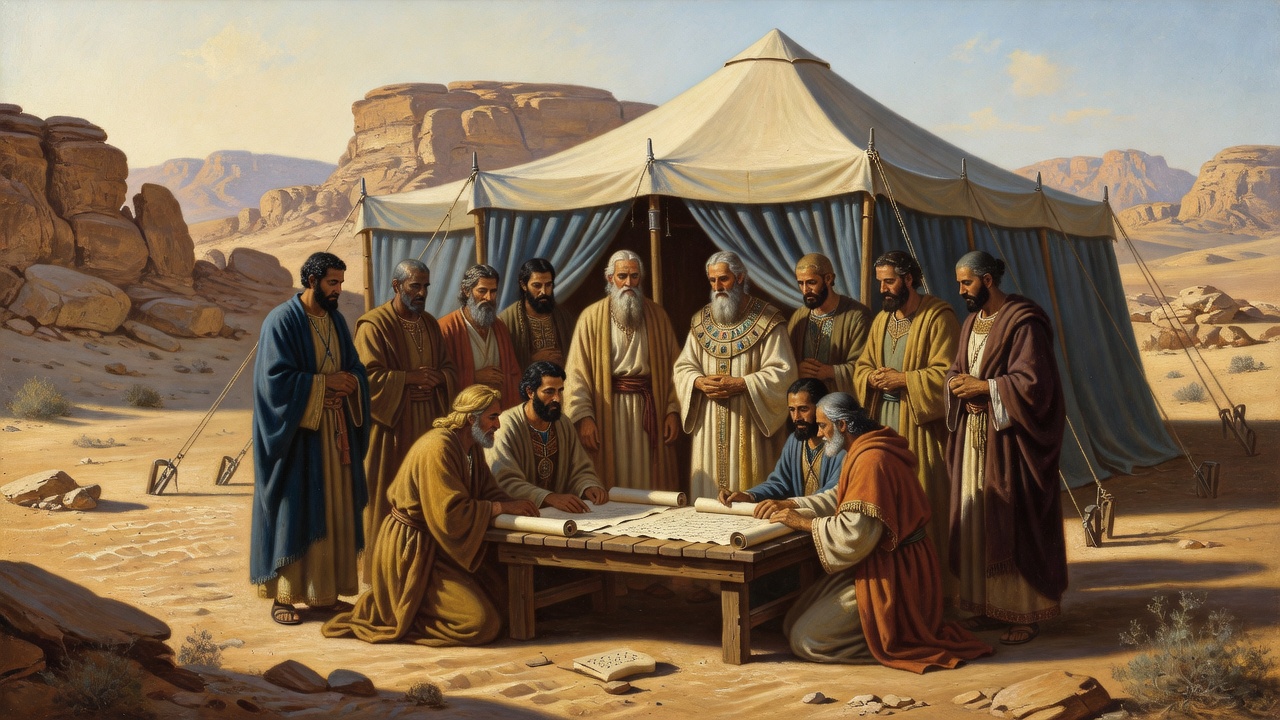
- The census was ordered in the Wilderness of Sinai on the first day of the second month in the second year after the Israelites departed Egypt. It counted every male aged twenty or older who was able to serve in the army, arriving at a total of 603,550 fighting men.Sources: the Bible text itself · Sinai
- Moses and Aaron conducted the registration alongside twelve appointed tribal leaders. Joseph was represented as two distinct tribal divisions named after his sons, Ephraim and Manasseh.Sources: the Bible text itself · Ephraim · Manasseh (son of Joseph)
- The tribe of Levi was entirely exempted from the military count. Instead, the Levites were assigned exclusively to care for, transport, assemble, and guard the tabernacle of the Testimony and its furnishings.Sources: the Bible text itself
Notes written with AI assistance from open sources (Theographic Bible Metadata, CC BY-SA 4.0; Easton’s Bible Dictionary, public domain) and reviewed before publishing.
Places in this chapter
- Egypt · 30.129, 31.308 · verse 1
- Wilderness of Sinai · Today: about 50 km around Jebel Musa · 28.540, 33.973 · verses 1, 19
Only places identified with high confidence are shown (90% or more according to the scholarly sources compiled by OpenBible). Period map: DARE (Digital Atlas of the Roman Empire), CC BY 4.0; modern map: © OpenStreetMap contributors; places: OpenBible.info (CC BY 4.0).
Credits and license for this translation
Godɨn Eghaghanim: Akar Gavgavir Dɨkɨrɨzir Ghurim ko Igiam
The Holy Bible in the Aruamu language of Madang Province, Papua New Guinea, 2020 Edition
Buk Baibel long tokples Aruamu long Madang Provins long Niugini long 2020
copyright © 2020 Pioneer Bible Translators
Language: Aruamu
Translation by: Pioneer Bible Translators
Contributor: The Seed Company
GOD'S STORY in the Aruamu Language of Papua New Guinea
This translation is made available to you under the terms of the
Creative Commons Attribution Share-Alike license 4.0.
You have permission to share and redistribute this Bible translation in any format and to make reasonable revisions and adaptations of this translation, provided that:
You include the above copyright and source information.
If you make any changes to the text, you must indicate that you did so in a way that makes it clear that the original licensor is not necessarily endorsing your changes.
If you redistribute this text, you must distribute your contributions under the same license as the original.
Pictures included with Scriptures and other documents on this site are licensed just for use with those Scriptures and documents.
For other uses, please contact the respective copyright owners.
Note that in addition to the rules above, revising and adapting God's Word involves a great responsibility to be true to God's Word. See Revelation 22:18-19.
2025-05-15
Source: http://png.bible/msy2020/ · eBible.org