Lamentations 5
Godɨn Eghaghanim: Akar Gavgavir Dɨkɨrɨzir Ghurim ko Igiam · Tap a verse to see its cross-references.
Jerusalemia uarir apangkuvighasa Ikiavɨra Itir Godɨn azai A
1Aio! Ikiavɨra Itir God, bizir e bativiziba nɨ adagh nɨghnɨgh,
en apangkufigh.
Nɨ kagh en gan.
E bar pazavɨra ikia
egha gumazamizir igharazibar damazimɨn bar aghumsɨki.
2Bar guizbangɨra, en nguazim kantrin igharazimɨn gumazamizibar dafarimɨn iti.
Ezɨ me en dɨpenibar iti.
3Dughiar e itir kam,
e mati afeziaba puvatɨgha borir asaghasazibar mɨn iti.
Egha e bar pura iti,
mati amizir odiarir paba ariaghireziba.
4E fomɨra daziba ko dɨpaba pura da isi,
ezɨ datɨrɨghɨn e dagɨar ekiabar iveza,
daziba ko dɨpaba isi.
5Faragha iza datɨrɨghɨn, apaniba bar e abɨragha mamaghɨra itima,
e bar amɨra.
Me tong e ataghizɨma, e avughsir puvatɨ.
6Gatɨrɨghɨn e dagheba puvatɨgha,
Isipia ko Asiriabar apengan ikia men azangsɨzima,
me dagheba amadima e dagh ivesi.
7Ghuezir inazir afeziar kaba arazir kuram gamigha, oveaghue.
Ezɨ e datɨrɨghɨn men osɨmtɨzimɨn ivezir kuram isi.
8Ia Babilonian ingangarir gumazir kɨniba e gativagha en gari,
ezɨ gumazir me dama e iniamba puvatɨ.
9Kar gumazir e gasɨghasɨghamiba tintinibar en kantrin iti.
E dagheba burir dughiabar,
okɨmakɨar gumazir kaba, e mɨsoghtɨ e arɨmɨghirasa
me en tuaviba asia iti.
10Mɨtiriar avir mɨzazir igharaziba en azi.
Ezɨ en mɨkarziba fei, mati avim isi.
11Nan apaniba en amuiba ko guivir igiar Saion ko Judan nguibar ekiamɨn itiba,
pura men suighava arazir kurabar me gami.
12Nguibar kamɨn gumazir dapaniba, apaniba me inigha benibar men fɨriba dafegha me gui.
Egha en gumazir aruaba, me arazir aghuitamɨn me gamir puvatɨ.
13Otarir igiaba me puvɨra me abɨrima
me pura witɨn ovɨziba mɨrmɨra,
dazir ikɨzir osɨmtɨzir bar dafaba ateragha arui.
14Puvatɨ. Gumazir aseba datɨrɨghɨn ua nguibar ekiamɨn tiar akamɨn apiav itir puvatɨ.
Ezɨ gumazir igiaba ua marvibagh ivia dɨbɨaribav sozi puvatɨ.
15Roghɨra roghɨra, en agoroger en navibar itiba gɨfa.
E ighiabagh amir arazir kam e ataghizɨ,
e datɨrɨghɨn azir akamrama amua iti.
16Saion, en ziar ekiam iraghugha gɨfa.
E uari arazir kuram gamigha,
arazir kurar kam bangɨn,
e datɨrɨghɨn bar tegha gɨfa.
Evzika!
17Tina en akuragham, e ghaze Saionɨn Mɨghsɨam bar ikuvigha gɨvagha,
afiar atiabar nguibamɨn mɨn oto.
Ezɨ e a bagha arei moghɨn uari baragha aziavɨra itima,
en damaziba e gami.
19Uaghan nɨ, Ikiavɨra Itir God,
nɨ Atrivir ikia mamaghɨra itim.
En ovavir boriba uaghan zurara nɨn apengan ikɨ,
mamaghɨra ikiam.
20Vangɨnan kagh en gan,
nɨ tizim bagha zurara e bakɨnɨghɨnigha
akɨrim ragha e gasara?
21Zurara nɨ ko ikiamin arazim,
nɨ ua e damutɨ e an gɨn mangam.
O Ikiavɨra Itir God, nɨ akɨrim ragha bar e gasaragha bar en anɨngaghe.
Nɨ ti bar e gɨn amadagham, o?
E ua nɨ bagh izasa.
E ghaze, nɨ faragha deragha e gamizɨma, e deragha ikezɨ moghɨn,
nɨ kamaghɨra ua e damu.
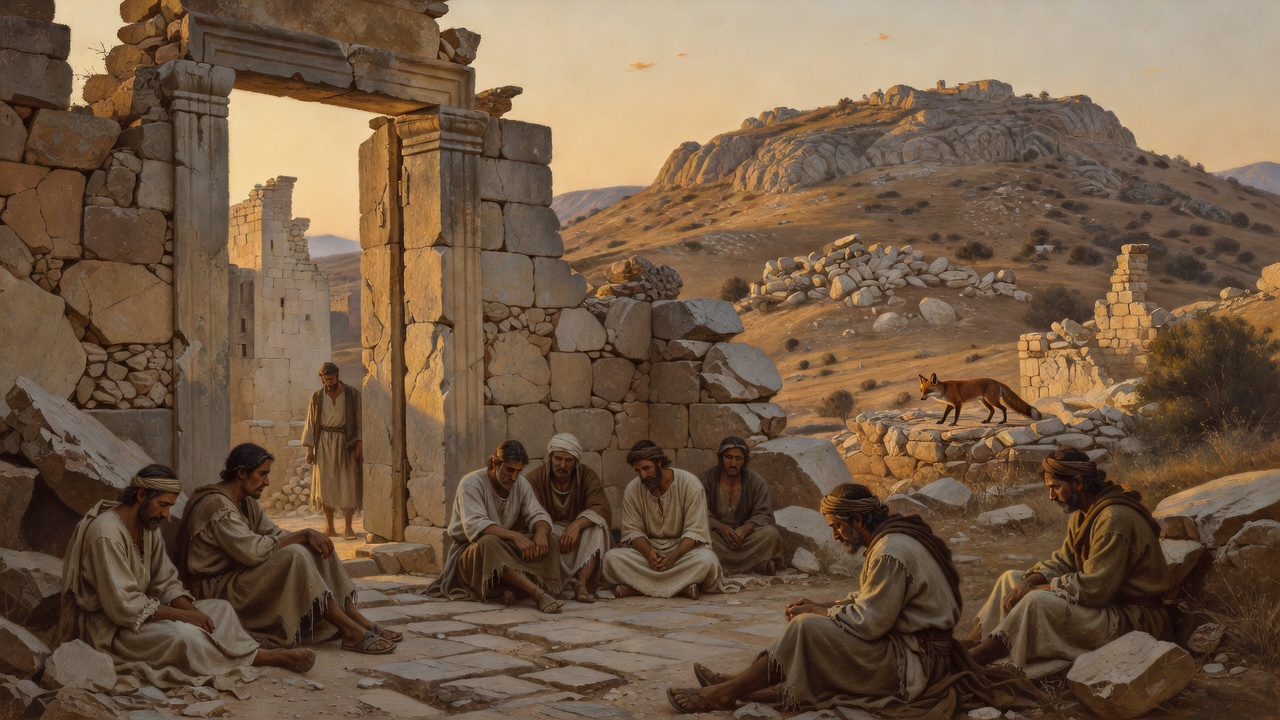
Did you know?
A Prayer for Restoration and the Desolation of Zion
- Mount Zion, one of the prominent hills of Jerusalem where King David once established his citadel, is portrayed in this chapter as lying completely desolate, left in such abandonment that wild foxes roam over it.Sources: the Bible text itself · Mount Zion
- The chapter illustrates the breakdown of everyday social and civic structures, noting that elders have abandoned the city gate, young men have ceased their music to toil at millstones, and basic necessities like water and firewood must now be purchased.Sources: the Bible text itself
Notes written with AI assistance from open sources (Theographic Bible Metadata, CC BY-SA 4.0; Easton’s Bible Dictionary, public domain) and reviewed before publishing.
Places in this chapter
- Assyria · 36.359, 43.153 · verse 6
- Egypt · 30.129, 31.308 · verse 6
- Zion · Today: Jerusalem · 31.777, 35.234 · verse 11
- Mount Zion · 31.772, 35.229 · verse 18
Only places identified with high confidence are shown (90% or more according to the scholarly sources compiled by OpenBible). Period map: DARE (Digital Atlas of the Roman Empire), CC BY 4.0; modern map: © OpenStreetMap contributors; places: OpenBible.info (CC BY 4.0).
Credits and license for this translation
Godɨn Eghaghanim: Akar Gavgavir Dɨkɨrɨzir Ghurim ko Igiam
The Holy Bible in the Aruamu language of Madang Province, Papua New Guinea, 2020 Edition
Buk Baibel long tokples Aruamu long Madang Provins long Niugini long 2020
copyright © 2020 Pioneer Bible Translators
Language: Aruamu
Translation by: Pioneer Bible Translators
Contributor: The Seed Company
GOD'S STORY in the Aruamu Language of Papua New Guinea
This translation is made available to you under the terms of the
Creative Commons Attribution Share-Alike license 4.0.
You have permission to share and redistribute this Bible translation in any format and to make reasonable revisions and adaptations of this translation, provided that:
You include the above copyright and source information.
If you make any changes to the text, you must indicate that you did so in a way that makes it clear that the original licensor is not necessarily endorsing your changes.
If you redistribute this text, you must distribute your contributions under the same license as the original.
Pictures included with Scriptures and other documents on this site are licensed just for use with those Scriptures and documents.
For other uses, please contact the respective copyright owners.
Note that in addition to the rules above, revising and adapting God's Word involves a great responsibility to be true to God's Word. See Revelation 22:18-19.
2025-05-15
Source: http://png.bible/msy2020/ · eBible.org