Joshua 1
Godɨn Eghaghanim: Akar Gavgavir Dɨkɨrɨzir Ghurim ko Igiam · Tap a verse to see its cross-references.
About this book
About Joshua
- Easton's Bible Dictionary (1897) explains Joshua's name as "Jehovah is his help" or "Jehovah the Saviour." He was the son of Nun, of the tribe of Ephraim, born in Egypt, and Moses' successor as leader of Israel; the wars of conquest he carried on are recorded in the book that bears his name. That entry does not name the book's author or give a date for its writing.Sources: Easton: Joshua · Joshua
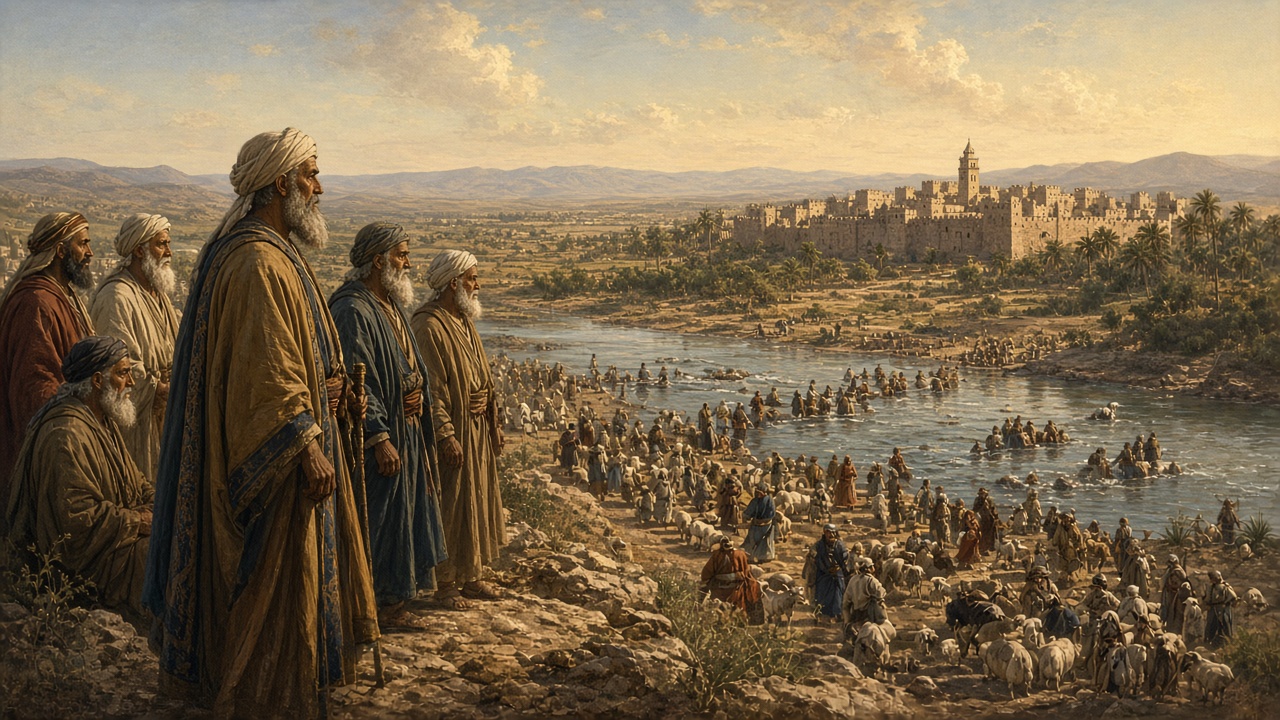
- When Joshua took command, the people were encamped at Shittim. They crossed the Jordan and camped at Gilgal, where, Easton says, he circumcised the people and kept the Passover. Jericho, a fortified city among palm trees about five miles west of the Jordan, is described as Canaan's strongest fortress and the key to western Palestine; Ai, east of Bethel, was the second Canaanite city taken, after an initial defeat.Sources: Easton: Joshua · Jericho · Ai
- Easton's Bible Dictionary (1897) says Joshua conquered six nations and thirty-one kings, then divided the land among the tribes, with Timnath-serah in Mount Ephraim assigned to himself. East of the Jordan, Gilead is described as a mountainous region held by the tribes of Gad and Reuben and the southern part of Manasseh.Sources: Easton: Joshua · Gilead
- Quoting Edersheim, the dictionary says Joshua's name was changed from Oshea, "help," to Jehoshua, "Jehovah is help," and notes that he is called Jesus in Acts 7:45 and Hebrews 4:8. It states that he died at the age of one hundred and ten, twenty-five years after crossing the Jordan, and was buried in his own city of Timnath-serah; of his father Nun, nothing more is recorded than that he was Joshua's father.Sources: Easton: Joshua · Joshua · Nun
- Before leading the conquest, Joshua commanded Israel's host against the Amalekites at Rephidim, served as Moses' minister, and was one of twelve sent to explore Canaan; only he and Caleb brought back an encouraging report. As Easton sketches the book, it runs from the crossing of the Jordan and the taking of Jericho through years of war to the division of the land and Joshua's last address.Sources: Easton: Joshua
Notes written with AI assistance from open sources (Theographic Bible Metadata, CC BY-SA 4.0; Easton’s Bible Dictionary, public domain) and reviewed before publishing.
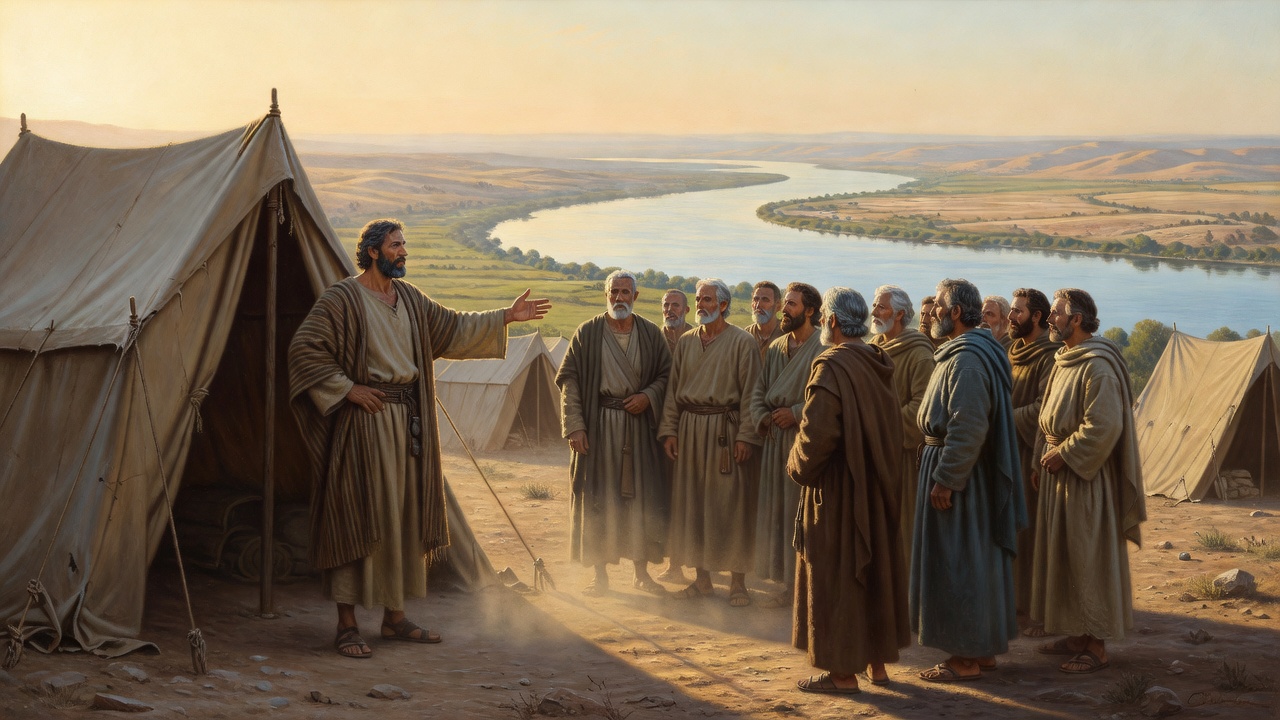
Israelia Kenanɨn nguazim Ini
Israelia Kenanɨn nguazim iniasa
1Moses Ikiavɨra Itir Godɨn ingangarir gumazim. Ezɨ gumazim Nunɨn otarim Josua, a Mosesɨn akurvasi. Ezɨ Moses aremezɨ, Ikiavɨra Itir God kamaghɨn Josua mɨgei, 2“Nan ingangarir gumazim Moses, an areme. Ezɨ nɨ Israelian gumazamiziba datɨrɨghɨn me inigh, ia Jordanɨn Fanem girɨgh vongɨn mangɨ, kɨ ia danɨngamin nguazimɨn otifigh. 3Kɨ Moses ko akam akɨrigha gɨvagha ghaze, nguazir ia datɨrɨghɨn arua zuir kaba, kɨ bar da isɨ ia danɨngam. 4Nguazir ia iniamin kamɨn mɨtaghniaba, da sautɨn amadaghan gumazamiziba puvatɨzir danganim ikegh mangɨ, notɨn amadaghan Lebanonɨn kantrin mɨghsɨabar otogham. Egh mangɨ aruem anadi naghɨn Yufretisɨn Faner ekiamɨn otogh, mangɨ Hitian nguaziba bar ada inigham. Egh mangɨ aruem ghuaghiri naghɨn Mediterenianɨn Ongarir Ekiamɨn otogham. 5Eghtɨ nɨ Josua, Kɨ Moses ko ikezɨ moghɨra, kɨ nɨ ko ikiam. Kɨ zurara nɨ ko ikɨ, egh nɨ ategh mangan kogham. Nɨ nguazimɨn angamɨra ikiamin dughiamɨn, gumazir taba nɨ mɨsogh nɨ abɨraghan kogham.
6“Nɨ mɨtɨgh gavgafigh, egh akongan markɨ. Nɨ gumazamizir kaba inigh mangɨtɨ, me nguazir kam iniam. Kɨ fomɨra nguazir kam me a iniasa, kɨ men inazir afeziaba ko akam akɨrigha gɨfa. 7Nɨ mɨtɨgh bar gavgavigh akongan markɨ. Egh bar deravɨra nan Akar Gavgaviba, dar gɨn mangɨ. Akar Gavgavir kaba, nan ingangarir gumazim Moses, faragha nɨ ganɨngi. Nɨ guizbangɨra bar adar gɨn mangɨva, egh tuavir agharir kɨriamɨn zuiba ko tuavir agharir guvimɨn zuiba dar mangan markɨ. Ia bar Akar Gavgavir kabar tamɨn tuavim ataghɨraghan markɨ. Nɨ kamaghɨn damuva, nɨ danganir manamɨn mangam, nɨ osɨmtɨzir tam batoghan kogh, deravɨra ikiam. 8Nɨ Akar Gavgavir kabar Akɨnafarim bakɨnɨghnɨghan markɨ, nɨ arueba ko dɨmagariba bar deravɨra Akar Gavgavir kabar ganɨva, dar ponɨva dagh nɨghnɨghvɨra ikɨ, egh bar dar amu. Egh nɨ kamaghɨn damutɨ, bizir igharazir nɨ gɨn damuamiba deragh kamaghɨra ikiam. 9Kɨ Ikiavɨra Itir God, nɨn God, kɨ nɨ mɨkemegha gɨfa. Kamaghɨn amizɨ, nɨ mɨtɨgh gavgavigh atiatingan markɨ. Egh nɨ managh mangam, kɨ uaghan nɨ ko mangam.”
10Ezɨ Josua kamaghɨn gumazamizibar gumazir dapanibav gei, 11“Ia danganir e itir kamɨn aven daruva, gumazamizibav kɨmtɨma me uari bagh daghetaba isamigh, biziba akɨrightɨ, da ikɨ. Aruer pumuning gɨvaghtɨ mɨkezimɨn, e Jordanɨn Fanem girɨgh vongɨn mangɨva Ikiavɨra Itir God, en God, e danɨngamin nguazim iniam. Eghtɨ nguazir kam, kar en nguazimra.”
12Ezɨ Josua kamaghɨn Rubenɨn anabam ko Gatɨn anabam ko Manasen anabar me tuirazimningɨn mam, me mɨgɨa ghaze, 13“Ia bar deravɨra Ikiavɨra Itir Godɨn ingangarir gumazim Moses, ia mɨkemezir akabagh nɨghnɨgh. A ghaze, Ikiavɨra Itir God, Jordanɨn Faner mɨriamɨn aruem anadi naghɨn itir nguazim ia danɨngam. Eghtɨ ia an ikɨ deravɨra navir amɨrizimɨn ikɨ avughsam. 14Moses, Jordanɨn Fanemɨn nguazir vuer kam, an aruem anadi naghɨn itir nguazim, a ia ganɨngi. Eghtɨ ian amuiroghboriba ko asɨziba an ikiam. Eghtɨ ian mɨdorozir gumaziba, me bar uan mɨdorozir biziba inigh Jordanɨn Fanem giregh vongɨn mangɨ uan aveghbuabar faragh mangɨ. Egh men akuragh mɨdorozim damu. 15Ia me ko kamaghɨra damu mangɨ, Ikiavɨra Itir God me ganɨdir nguazir kam, me bar moghɨram an danganiba bar a da inigh, dar apiagham. Eghtɨ ia gɨn uamategh uan nguazimɨn izam. Kar, Ikiavɨra Itir Godɨn ingangarir gumazim Moses, ia ganɨngizir nguazim, a Jordanɨn Fanemɨn aruem anadi naghɨn iti, ia a dapiam.”
16Ezɨ gumazir kaba Josuan akam baregha ghaze, “Ore, bizir nɨ e mɨkemeziba e bar moghɨra dar amuam. Ezɨ danganir nɨ e amadiba e bar dar mangam. 17E nɨ mɨgeir akaba bar moghɨra dar gɨn mangam, mati e faragha zurara Mosesɨn akabar gɨn zui. Eghtɨ Ikiavɨra Itir God, Moses ko ikezɨ moghɨra nɨ ko ikiam. 18Eghtɨ tina nɨn akam barazir puvatɨ, an aremegham. Nɨn akam batozir gumazamiziba, me arɨmɨghiram. Kamaghɨn amizɨ, nɨ tugh gavgavigh atiatingan markɨ!”
Did you know?
Joshua Assumes Leadership
- Joshua, the son of Nun from the tribe of Ephraim, served as Moses' assistant and military commander before being commissioned to succeed him as leader of Israel. His name means "Jehovah is his help" or "Jehovah the Saviour."Sources: Joshua · the Bible text itself
- The territory outlined in God's commission to Joshua stretches from the southern wilderness and the Lebanon mountain range in the north to the Euphrates (called "the great river") in the east and the Mediterranean ("the Great Sea") to the west.Sources: the Bible text itself · Lebanon · Euphrates · Great Sea
- The tribes of Reuben, Gad, and the half-tribe of Manasseh had already received territory east of the Jordan River under Moses. However, their armed warriors were required to cross over ahead of the other tribes to assist them until the entire land was secured.Sources: the Bible text itself · Manasseh (son of Joseph)
Notes written with AI assistance from open sources (Theographic Bible Metadata, CC BY-SA 4.0; Easton’s Bible Dictionary, public domain) and reviewed before publishing.
Places in this chapter
- Jordan · Today: Jordan River · 31.761, 35.558 · verses 2, 11, 14, 15
- Euphrates · Today: Euphrates River · 31.004, 47.442 · verse 4
- Great Sea · Today: Mediterranean Sea · 31.805, 34.170 · verse 4
- Lebanon · 33.540, 35.584 · verse 4
- Negeb · 31.245, 34.841 · verse 4
- Syria · Today: Aram · 33.511, 36.306 · verse 4
Only places identified with high confidence are shown (90% or more according to the scholarly sources compiled by OpenBible). Period map: DARE (Digital Atlas of the Roman Empire), CC BY 4.0; modern map: © OpenStreetMap contributors; places: OpenBible.info (CC BY 4.0).
Credits and license for this translation
Godɨn Eghaghanim: Akar Gavgavir Dɨkɨrɨzir Ghurim ko Igiam
The Holy Bible in the Aruamu language of Madang Province, Papua New Guinea, 2020 Edition
Buk Baibel long tokples Aruamu long Madang Provins long Niugini long 2020
copyright © 2020 Pioneer Bible Translators
Language: Aruamu
Translation by: Pioneer Bible Translators
Contributor: The Seed Company
GOD'S STORY in the Aruamu Language of Papua New Guinea
This translation is made available to you under the terms of the
Creative Commons Attribution Share-Alike license 4.0.
You have permission to share and redistribute this Bible translation in any format and to make reasonable revisions and adaptations of this translation, provided that:
You include the above copyright and source information.
If you make any changes to the text, you must indicate that you did so in a way that makes it clear that the original licensor is not necessarily endorsing your changes.
If you redistribute this text, you must distribute your contributions under the same license as the original.
Pictures included with Scriptures and other documents on this site are licensed just for use with those Scriptures and documents.
For other uses, please contact the respective copyright owners.
Note that in addition to the rules above, revising and adapting God's Word involves a great responsibility to be true to God's Word. See Revelation 22:18-19.
2025-05-15
Source: http://png.bible/msy2020/ · eBible.org