Job 8
Godɨn Eghaghanim: Akar Gavgavir Dɨkɨrɨzir Ghurim ko Igiam · Tap a verse to see its cross-references.
Bildatɨn mɨgɨrɨgɨar faragha zuim
Gumazir kuraba dughiar ruarimɨn ikian kogham
1Ezɨ Bildat, a Suhan kantrin gumazir mam, a kamaghɨn mɨgei:
2“Nɨn mɨgɨrɨgɨam a kamaghɨra iti, egha derazir puvatɨgha,
mati amɨnir ekiam ivai.
Nɨ dazoghɨn mɨgɨrɨgɨar kam ategham?
3Nɨ ti ghaze, Godɨn Gavgaviba Bar Itim guizɨn uan arazim gɨgha e gamir akar dɨkɨrɨzibagh nɨghnɨzir puvatɨ? Bar puvatɨ.
An arazir aghuiba, zurara kamaghɨra iti.
4Nɨn boriba ti arazir kuram Godɨn damazimɨn a gamizɨ,
a men arazir kuramra uam me ikara.
5Eghtɨ nɨ uabɨ Godɨn Gavgaviba Bar Itim ko ikɨva,
a ko mɨkɨmɨva uabɨn apangkuvsɨ an azang.
6Egh nɨ gumazir aghuir Godɨn damazimɨn derazimɨn otogh bar zueghtɨ, God izɨ nɨn akuragham.
A nɨ damightɨ nɨ fomɨra uan dɨpenimɨn ikezɨ moghɨn ikiam.
7A bar bizir avɨritaba ua nɨ danɨngtɨ,
da bizir avɨrir nɨ faragha ikezibagh afiragham.
8Nɨ inazir afeziar fomɨra ikezibar nɨghnɨzir aghuibagh fogh,
egh men fofozim deraghvɨram a tuisɨgh.
9“E dughiar bar otevimra nguazimɨn iti,
mati nedazim aruem a gamizɨ a tu, ezɨ ghuariam aruem apazazɨma a zuamɨra puvatɨ.
E boghɨmra otivigha fofozir muziarim iti.
10Fomɨra ikezir gumazamiziba fofozir aghuiba ko nɨghnɨzir aghuariba iti.
Kamaghɨn, men nɨghnɨzir aghuiba ko fofozir aghuiba nɨn sure damuam.
11“Ighuruniba ko graziba ti dɨpaba puvatɨzir nguazimɨn deragha aghui? Bar puvatɨ.
Da danganir dɨpaba itibar deravɨram aghui.
12Ezɨ dɨpam dakezɨ, ighurunir kaba ko graziba deragha aghuir puvatɨ.
Gumazamiziba tɨghar da aghoramin dughiamɨn, da suvighavɨra ikia mɨsɨngi.
Grazir maba grazir kabar mɨn zuamɨra mɨdir puvatɨ.
13Gumazamizir akɨrim ragha God gasaraziba,
me mati grazir kaba.
Me ikuvighamin tuavimɨn gɨn zui.
Me kamaghɨn nɨghnɨghan markɨ, me deraghvɨra ikiam.
Puvatɨ. Me ovengam.
14Men nɨghnɨzir gavgavim ghaze, e deravɨra ikiam.
Ezɨ puvatɨ, me bar tuavir aghuim ataki.
Me mati gumazamizir onganiba boghoborirmɨn dɨpenimɨn suiragh an ghuavanangam.
Eghtɨ boghoborir dɨpenim zuamɨra dutughtɨ me pazavɨra iregham.
16Gumazamizir kaba fomɨra mati grazir gavgavibar mɨn azenimɨn ike.
Me deravɨram aghuima men biba azenimɨn danganiba bar dar ghue.
17Egha dagɨabar suigha bar gavgafi.
18Eghtɨ gumazitam grazir kaba asightɨ, gumazamiziba foghan kogham,
fomɨra grazir gavgavir mam danganir kamɨn ike.
19Guizbangɨra, gumazamizir akɨrim ragha God gasiba, me bar akongezir arazimɨn dughiam bar otefe.
Egh me arɨghireghtɨ, igharaz darazi otivigh men danganim iniam.
20“Eghtɨ gumazim arazir aghuibar amu, egh Godɨn damazimɨn arazir kuraba puvatɨghtɨ,
God akɨrim ragh a gasan kogham.
Gumazir arazir kurabagh amim,
God an akurvaghan kogham.
21Jop nɨ oragh, God nɨn arazibar gantɨ da deraghtɨ,
a nɨ damightɨ nɨ navir aghuim ikiam,
eghtɨ nɨ dɨmɨva bar akuegham.
22Egh a nɨ gifongezir puvatɨzir gumazamiziba abɨraghtɨ, me bar aghumsigham.
Eghtɨ gumazamizir arazir kurabagh amiba, me uan biziba sara bar ovegham.”
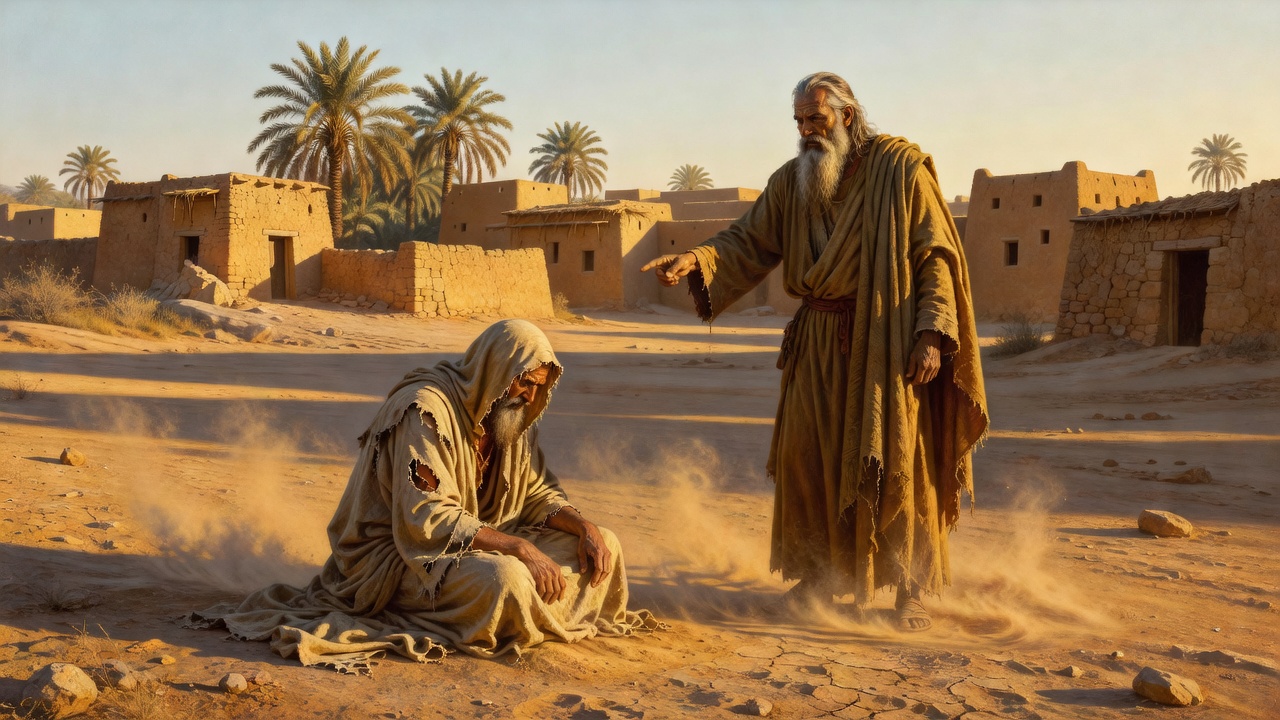
Did you know?
Bildad’s Appeal to Ancient Wisdom
- Bildad is identified as a Shuhite, which likely associates him with Shuah, an Arabian region settled by the descendants of Abraham and Keturah. In this chapter, he delivers the first of his three stern speeches to Job, maintaining that divine justice is absolute and unwavering.Sources: Bildad · the Bible text itself
- Rather than relying on personal experience, Bildad appeals to the accumulated knowledge of ancestral generations, describing human life as brief as a shadow. To argue that the wicked inevitably fall, he uses natural metaphors of marsh reeds withering without water and the fragility of a spider's web.Sources: the Bible text itself
Notes written with AI assistance from open sources (Theographic Bible Metadata, CC BY-SA 4.0; Easton’s Bible Dictionary, public domain) and reviewed before publishing.
Credits and license for this translation
Godɨn Eghaghanim: Akar Gavgavir Dɨkɨrɨzir Ghurim ko Igiam
The Holy Bible in the Aruamu language of Madang Province, Papua New Guinea, 2020 Edition
Buk Baibel long tokples Aruamu long Madang Provins long Niugini long 2020
copyright © 2020 Pioneer Bible Translators
Language: Aruamu
Translation by: Pioneer Bible Translators
Contributor: The Seed Company
GOD'S STORY in the Aruamu Language of Papua New Guinea
This translation is made available to you under the terms of the
Creative Commons Attribution Share-Alike license 4.0.
You have permission to share and redistribute this Bible translation in any format and to make reasonable revisions and adaptations of this translation, provided that:
You include the above copyright and source information.
If you make any changes to the text, you must indicate that you did so in a way that makes it clear that the original licensor is not necessarily endorsing your changes.
If you redistribute this text, you must distribute your contributions under the same license as the original.
Pictures included with Scriptures and other documents on this site are licensed just for use with those Scriptures and documents.
For other uses, please contact the respective copyright owners.
Note that in addition to the rules above, revising and adapting God's Word involves a great responsibility to be true to God's Word. See Revelation 22:18-19.
2025-05-15
Source: http://png.bible/msy2020/ · eBible.org