Job 14
Godɨn Eghaghanim: Akar Gavgavir Dɨkɨrɨzir Ghurim ko Igiam · Tap a verse to see its cross-references.
1“E gumazamiziba dughiar otevimra nguazir kamɨn iti,
egha amebam e batezir dughiamra, osɨmtɨziba e bativavɨra ikia,
iza e aremezir dughiamɨn tu.
2E mati, akɨmarim mɨzarazimɨn otogha, guaratɨzimɨn mɨsɨngi.
Egha uaghan e mati nedaziba, ghuariam aruem apazazɨ da zuamɨra puvarɨsi.
3Kamaghɨn, nɨ manmaghsua en araziba tuisɨsi?
God, kɨ pura bizim, ezɨ manmaghsua nɨ na isa kot gatɨ?
4E gumazamiziba nɨn damazimɨn bar mɨze.
Eghtɨ tina e damightɨ e nɨn damazimɨn zuegham?
Bar puvatɨ.
5Nɨ en ikɨrɨmɨrimɨn ababanim atɨgha gɨfa,
eghtɨ e manmaghɨn dughiaba ko azenibar nguazir kamɨn ikiam?
Gumazitam uan ikɨrɨmɨrim bagh ua dughiatam gisɨvaghan kogham.
6Kamaghɨn, nɨ datɨrɨghɨn na ateghtɨ, dughiar kɨ itimɨn, kɨ avughsɨ navim deragham,
mati ingangarir gumazim an ingangarim guaratɨzimɨn gɨvazɨ an navim dera.
7“Kɨ fo, gumazitam temem okeghtɨ,
a ua ghuzim anangamin tuavim iti.
8Tememɨn povim mɨsɨng magɨrɨtɨ an biba kurigham,
9eghtɨ nguazim dɨpam ikɨtɨ, ghuzir igiam temer dakar me okezimɨn otogham.
Egh an aghung aguaba asɨ mati temer igiam.
10Ezɨ e gumazamiziba kamaghɨn puvatɨ,
e ovengezir dughiam e bar gɨvagham,
eghtɨ igharaz darazi uam en ganan kogham.
11Dɨpar akareba ko dɨpar ekiaba dughiar mabar bar dakegham.
12Kamaghɨra gumazamiziba ovea ua dɨkavir puvatɨ,
egh mangɨ overiam gɨvamin dughiamɨn,
me kamaghɨra ikɨtɨ bizitam me gaghuraghan kogham.
13“Gumazamizir oveaghueziba, me ti ua ikɨrɨmɨrir igiam iniam?
O God, kamaghɨn deragham, nɨ Gumazamizir Oveaghuezibar Nguibamɨn na modogh mangɨ, nɨn anɨngagharim bar amɨraghamin dughiamɨn tugh.
Egh nɨ ua dughiatam, na gɨnɨghnɨghsɨ a ginabagh.
Eghtɨ kɨ pura nɨ mɨzuam ikɨ mangɨtɨ, dughiar nɨ na ataghɨraghasa mɨsevezim otogham.
15Egh dughiar kamɨn, nɨ uabɨra uan ingangarim gɨnɨghnɨgham, kar kɨrara nɨ nan ingari.
Egh kɨ ua nɨn boroghɨn ikɨsɨ nɨ bar ifuegham.
Kamaghɨn amizɨ, nɨ nan diaghtɨ,
kɨ nɨn akam ikaragham.
16Eghtɨ dughiabar zurara, nɨ nan daroriba bar deravɨra dagh eghuvam.
Egh nan arazir kurabagh nɨghnɨghan markɨ.
17Nan arazir kurar kɨ amiziba, nɨ bar da gɨn amadagh ua dagh nɨghnɨghan markɨ,
mati me biziba mɨtarim gaghuigha, an akam ikegha dagh nɨghnɨzir puvatɨ.
18“Ezɨ bizir kaba ti otivan kogham.
Kɨ biziba bar dar gari da ikufi.
Mɨghsɨar gavgaviba dɨpɨraghira pura nguazir kɨnimɨn oto.
Dagɨar ekiaba sɨvaghsɨvagha uan danganir ikeziba ataghɨrasi.
Dɨpamɨn gavgavim dagɨar ekiabagh ami da ghua sufi,
egha nguazim gɨkua anetera igharagha zui.
Ezɨ kamaghɨra, nɨ gari e gumazamiziba ghaze, e deravɨra ikiam,
ezɨ nɨ en nɨghnɨzir gavgavir kaba agɨvasa arazir guar avɨribagh ami.
20Nɨ uan gavgavimɨn me abɨri me ariaghiri.
Egha me ariaghirir dughiam, men guaba igharagha gari,
ezɨ nɨ me amadima me Oveaghuezibar Nguibamɨn zui.
21Eghtɨ gɨn gumazamiziba ziar ekiam men otaribar anɨngam o, me men ziaba abɨn aghumsɨzim me danɨngam,
eghtɨ gumazir ovengeziba bizir kamɨn ganan kogh, egh uaghan a gɨfoghan koghan.
22Me mati gumazir uan inivafɨzimra mɨzazim barazim,
egha osɨmtɨzir a bativiziba bagha azi.”
Did you know?
The Frailty of Life and the Hope of Renewal
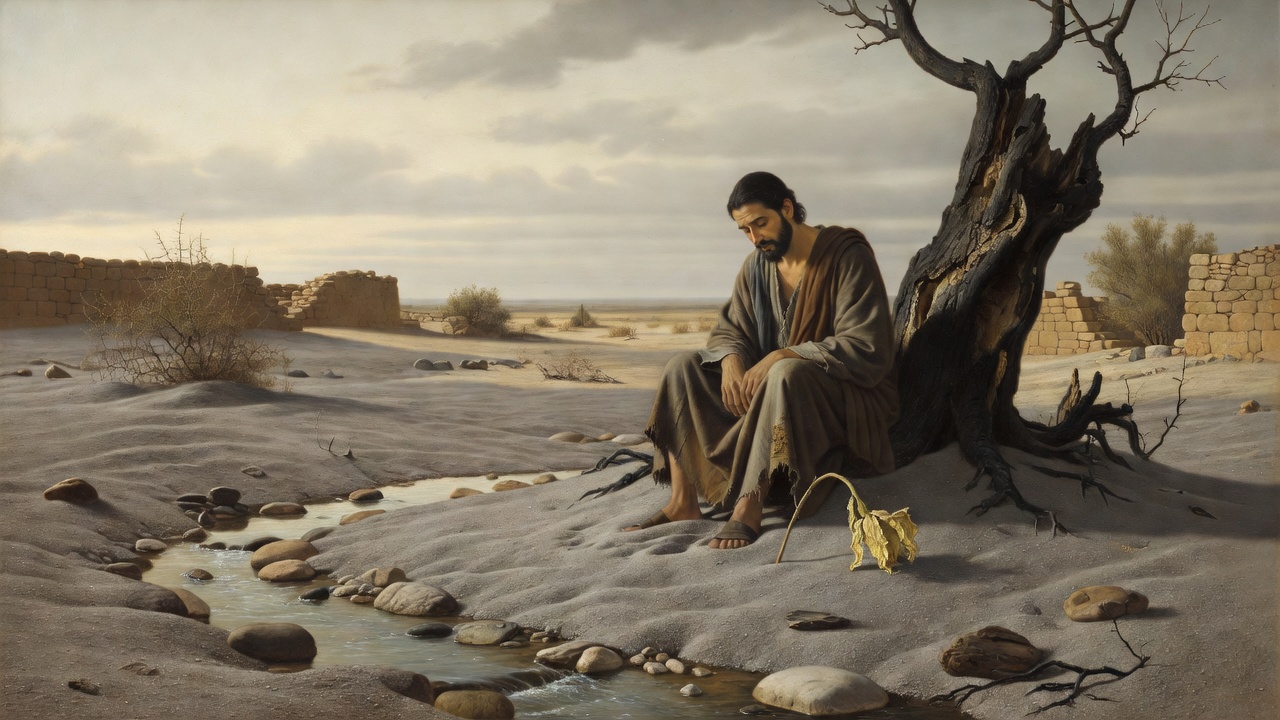
- In this speech, Job contrasts the fate of mortals with that of a tree. While a felled tree can sprout new shoots at the scent of water even after its stump seems dead, a human being dies, lies down, and does not rise again to life on earth.Sources: the Bible text itself
- Job contemplates Sheol as a potential hiding place where he might be sheltered until divine anger passes, imagining a longing in which God would seal his transgressions in a bag and call upon the work of His hands.Sources: the Bible text itself
- To capture the brevity and decay of human existence, the chapter draws upon natural metaphors of erosion and transience, comparing human life to a fleeting shadow, a withered flower, and rocks worn down by water.Sources: the Bible text itself
Notes written with AI assistance from open sources (Theographic Bible Metadata, CC BY-SA 4.0; Easton’s Bible Dictionary, public domain) and reviewed before publishing.
Credits and license for this translation
Godɨn Eghaghanim: Akar Gavgavir Dɨkɨrɨzir Ghurim ko Igiam
The Holy Bible in the Aruamu language of Madang Province, Papua New Guinea, 2020 Edition
Buk Baibel long tokples Aruamu long Madang Provins long Niugini long 2020
copyright © 2020 Pioneer Bible Translators
Language: Aruamu
Translation by: Pioneer Bible Translators
Contributor: The Seed Company
GOD'S STORY in the Aruamu Language of Papua New Guinea
This translation is made available to you under the terms of the
Creative Commons Attribution Share-Alike license 4.0.
You have permission to share and redistribute this Bible translation in any format and to make reasonable revisions and adaptations of this translation, provided that:
You include the above copyright and source information.
If you make any changes to the text, you must indicate that you did so in a way that makes it clear that the original licensor is not necessarily endorsing your changes.
If you redistribute this text, you must distribute your contributions under the same license as the original.
Pictures included with Scriptures and other documents on this site are licensed just for use with those Scriptures and documents.
For other uses, please contact the respective copyright owners.
Note that in addition to the rules above, revising and adapting God's Word involves a great responsibility to be true to God's Word. See Revelation 22:18-19.
2025-05-15
Source: http://png.bible/msy2020/ · eBible.org