Jeremiah 41
Godɨn Eghaghanim: Akar Gavgavir Dɨkɨrɨzir Ghurim ko Igiam · Tap a verse to see its cross-references.
1Ismael a Netanian otarim, egha a Elisaman igiavotarim, egha a Judan atrivimɨn ikɨzir mam. An atrivimɨn gumazir dapanir faragha zuir mamɨn ike. Babilonɨn atrivim Judan gavmanɨn faragha zuir gumazimɨn ikiasa Gedalia amɨsefe, ezɨ azenir kamɨn, an namba 7ɨn iakɨnim otozɨ, Ismael 10plan gumaziba inigha, Gedalian ganasa Mispan ize. Egha me Gedalia ko apiagha apir dughiamɨn, Ismael 10plan gumaziba ko me dɨkavigha, uan mɨdorozir sababa inigha Gedalia mɨsoghezɨ an areme. 3Ezɨ Ismael uaghan Judan Gedalia ko Mispan itiba sara mɨsuegha, Kaldiabar mɨdorozir gumazir dughiar kamɨn Mispan itiba sara mɨsoghezɨ, me ariaghire.
4Ezɨ amɨmzaraghan, gumaziba fozir puvatɨ, Gedalia aremegha gɨfa, 5ezɨ Sekemɨn nguibam ko, Silon nguibam ko, Samarian nguibamɨn gumazir 80pla arua iza Mispan boroghɨra izi. Me wit ko pauran mughuriar aghuim zuim inigha, Ikiavɨra Itir Godɨn Dɨpenim bagha Jerusalemɨn mangɨ ofa damuasa zui. Gumazir kaba uan ghuamasɨzibagh isava, uan korotiaba abɨgha, tintinibar uan mɨkarzibar ghora uan apangkuvim ko osɨmtɨzim akakaghasa. 6Dughiar kam, Netanian otarim Ismael men gari, me izima, a Mispa ategha, me gifara aziava me bagha tuavimɨn zui. A ghaze, an azirakam ti gumazibar amutɨ, me suam, a me ko apangkuvir kam iti. Egha a ghua me batogha kamaghɨn me mɨgei, “Ia izɨ, Ahikamɨn otarim Gedalia, ia an ganasa ai ifonge.” 7Me nguibar ekiamɨn aven ghuezɨ, Ismael uan adarazi ko me gumazir avɨrir kabav suegha, men kuaba akunizɨ me mozir dɨpar ekiar mam giraghue. 8Ezɨ gumazir kabar tongɨn itir 10plan gumaziba kamaghɨn mɨgei, “Nɨ en mɨsueghtɨ e aremeghan markɨ. E tuzimɨn dagher bar avɨriba mongezɨ da iti, witba ko, baliba ko, olivɨn boreba ko, haniba. E da nɨ danɨngam.” Ezɨ Ismael men akam baregha, 10plan gumazir kabav soghezɨ me ariaghirezir puvatɨ.
9Mozir dɨpar kam, Judan Atrivim Asa, fomɨra ghaze, Israelian Atrivim Basa izɨ Mispan mɨsoghɨva, nguibar ekiam avɨnightɨ, Mispan gumazamiziba dɨpamɨn oteveghan kogham. A Mispan gumazamiziba dɨpamɨn oteveghan aghuagha an a gɨkui. Mozir dɨpar kamra, datɨrɨghɨn Ismaelɨn adarazi me Gedalia mɨsoghezɨ an aremezir dughiamɨn, me gumazir kuar kaba inigha mozir kam gaghuizɨ, mozir kam izɨfa.
10Ezɨ gɨn, Ismael Mispan itir gumazamizir igharaziba inigha, Mispa ategha, men akua Amonɨn kantrin zui. Babilonɨn mɨdorozir gumazibar dapanim Nebusaradan, a faragha gumazamizir kaba, Mispan nguibamɨn me ataghizɨ me itima, a men ganasa Gedalia amɨsefe. Ezɨ Judan atrivimɨn guiviba uaghan men tongɨn iti.
11Ezɨ Karean otarim Johanan, ko Judan mɨdorozir gumazibar dapanir maba, me Netanian otarim Ismael amizir arazir kuraba bar da baraki. 12Kamaghɨn amizɨ, me dɨkavigha uan mɨdorozir gumaziba inigha, Ismael mɨsoghasa an gɨntɨgha zui. Me an gɨntɨgha ghua Gibeonɨn nguibamɨn itir dɨpar akarer ekiamɨn boroghɨram a bato. 13Ezɨ Ismael Mispan inigha a ko izezir gumazamiziba, me Karean otarim Johanan ko gumazir dapanir mabar ganigha, bar akonge. 14Egha me bar Ismael ategha, ivemara Karean otarim Johanan bagha ghue. 15Ezɨ Johanan adarazi Ismaelɨn suighasa amima, a uan gumazir 8pla ko, me ara ghua Amonɨn kantrin ghue.
16Ezɨ Karean otarim Johanan, ko gumazir dapanir an gɨn zuiba, me Ismaelɨn dafarimɨn ada ua Mispan gumazamiziba ini. Mɨdorozir gumazir igharaziba ko, men amuiroghboriba, ko atrivimɨn ingangarir gumaziba, me ikɨzir kamɨn tongɨn iti. Gumazamizir kabara, Netanian otarim Ismael faragha Gedalia mɨsuegha gɨvagha, egha kalabuziabar mɨn bar me inigha Mispa ategha Gibeonɨn ghu. Ezɨ datɨrɨghɨn me bar Gibeon ategha ghue. 17Johanan men aku Isipɨn mangasava ami. Ezɨ me fo, Ismael Gedalia mɨsoghezɨ an areme, gumazir kam Babilonɨn atrivim Judan nguazim gativagh an ganasa anemɨsefe. Egha me atiatia nɨghnɨsi, Kaldiaba ti men otivizir biziba baregham, egh izɨ me gasɨghasigham. Kamaghɨn amizɨ, me Isipɨn mangasa ifonge. Egha me Betlehemɨn nguibamɨn boroghɨra, Gerut Kimhamɨn nguibamɨn otivigha iti.
Did you know?
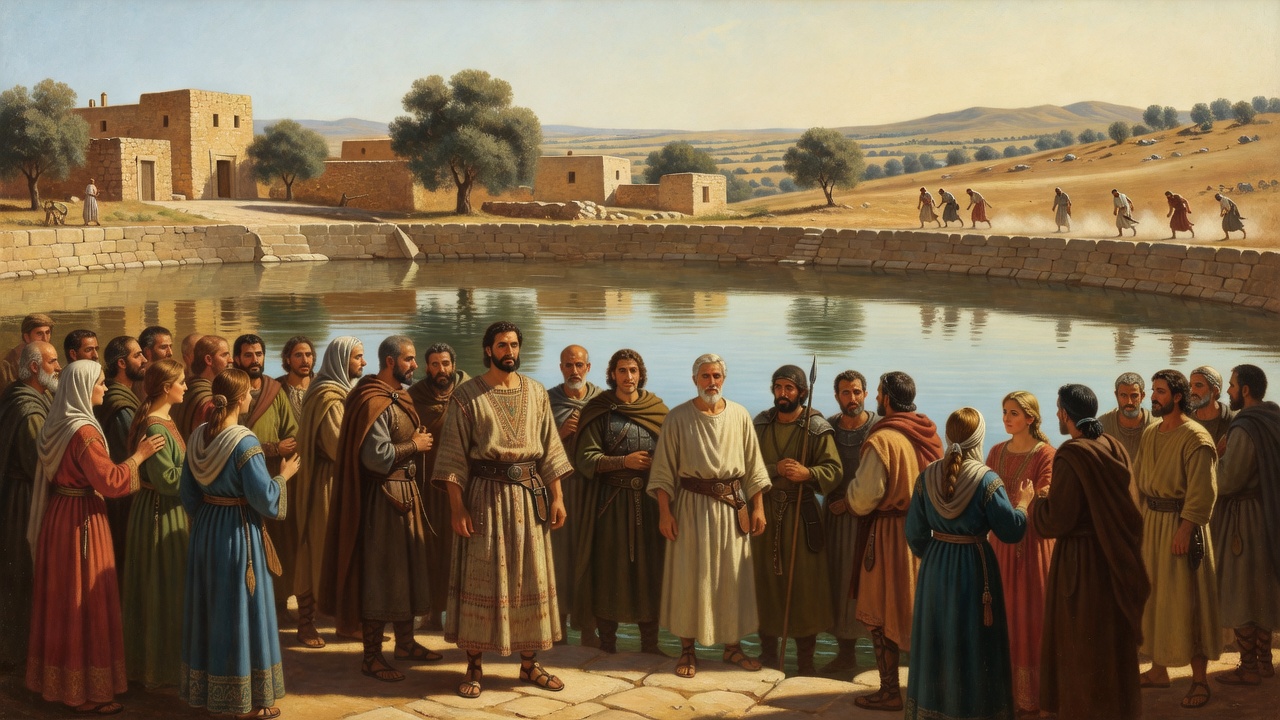
The Assassination of Gedaliah and Flight from Mizpah
- Ishmael son of Nethaniah was a member of the royal family who opposed Babylonian rule. He came with ten men to Mizpah under the guise of sharing a meal, where he assassinated Gedaliah, the governor appointed by the king of Babylon, along with his Judean and Chaldean associates.Sources: Ishmael · Gedaliah · the Bible text itself
- The cistern where Ishmael dumped the bodies of the murdered pilgrims from Shechem, Shiloh, and Samaria had historical military origins. It had been constructed centuries earlier by King Asa of Judah for defense against King Baasha of Israel.Sources: Asa · Baasha · the Bible text itself
- After Ishmael seized the survivors at Mizpah to take them to Ammon, Johanan son of Kareah intercepted him at the great pool in Gibeon and freed the captives. Fearing Babylonian retaliation for the murder of the governor, Johanan and the remaining Judeans prepared to flee to Egypt.Sources: Johanan · Gibeon · the Bible text itself
Notes written with AI assistance from open sources (Theographic Bible Metadata, CC BY-SA 4.0; Easton’s Bible Dictionary, public domain) and reviewed before publishing.
Places in this chapter
- Babylon · 32.543, 44.422 · verses 2, 18
- Jerusalem · 31.777, 35.234 · verse 5
- Samaria · 32.276, 35.195 · verse 5
- Shechem · Today: Tell Balatah · 32.214, 35.282 · verse 5
- Shiloh · Today: Khirbet Seilun · 32.056, 35.290 · verse 5
- Ammon · 31.955, 35.934 · verses 10, 15
- Gibeon · Today: El Jib · 31.847, 35.183 · verses 12, 16
- Bethlehem · 31.704, 35.208 · verse 17
- Egypt · 30.129, 31.308 · verse 17
- Geruth Chimham · Today: within 5 km of Bethlehem · 31.704, 35.208 · verse 17
- Chaldea · 30.962, 46.104 · verse 18
Only places identified with high confidence are shown (90% or more according to the scholarly sources compiled by OpenBible). Period map: DARE (Digital Atlas of the Roman Empire), CC BY 4.0; modern map: © OpenStreetMap contributors; places: OpenBible.info (CC BY 4.0).
Credits and license for this translation
Godɨn Eghaghanim: Akar Gavgavir Dɨkɨrɨzir Ghurim ko Igiam
The Holy Bible in the Aruamu language of Madang Province, Papua New Guinea, 2020 Edition
Buk Baibel long tokples Aruamu long Madang Provins long Niugini long 2020
copyright © 2020 Pioneer Bible Translators
Language: Aruamu
Translation by: Pioneer Bible Translators
Contributor: The Seed Company
GOD'S STORY in the Aruamu Language of Papua New Guinea
This translation is made available to you under the terms of the
Creative Commons Attribution Share-Alike license 4.0.
You have permission to share and redistribute this Bible translation in any format and to make reasonable revisions and adaptations of this translation, provided that:
You include the above copyright and source information.
If you make any changes to the text, you must indicate that you did so in a way that makes it clear that the original licensor is not necessarily endorsing your changes.
If you redistribute this text, you must distribute your contributions under the same license as the original.
Pictures included with Scriptures and other documents on this site are licensed just for use with those Scriptures and documents.
For other uses, please contact the respective copyright owners.
Note that in addition to the rules above, revising and adapting God's Word involves a great responsibility to be true to God's Word. See Revelation 22:18-19.
2025-05-15
Source: http://png.bible/msy2020/ · eBible.org