Jeremiah 24
Godɨn Eghaghanim: Akar Gavgavir Dɨkɨrɨzir Ghurim ko Igiam · Tap a verse to see its cross-references.
Kɨ Jeremaia, kɨ fighɨn temebar ovɨzibar gani
1Babilonɨn Atrivim Nebukatnesar, Jerusalem abɨragha gɨvagha, Judaba inigha ua Babilonɨn ghu. A uaghan Atrivim Jehoiakimɨn otarim ini, otarir kamɨn ziar mam Jehoiakin, an ziar igharazim Jekonia. Egha a uaghan Judan gumazir ekiaba ko fofozir gumazir, bizir aghuibar ingariba ko ainɨn bizibar ingarir gumaziba sara inigha Jerusalem ataki. Ezɨ bizir kabar gɨn, Ikiavɨra Itir God bizir mam irebamɨn mɨn garir bizimɨn aven nan aka, ezɨ an aven kɨ akɨrar pumuningɨn garima, fighɨn ovɨziba akɨrar kamningɨn iti. Akɨrar kamning, Ikiavɨra Itir Godɨn Dɨpenimɨn tiar akamɨn boroghɨn iti. 2Fighɨn ovɨzir faragha azenibar ania iti moghɨn, akɨrar mam fighɨn ovɨzir bar aghuiba an iti. Ezɨ akɨrar igharazim fighɨn ovɨzir bar kuraba an iti, ezɨ gumazamiziba dar aman iburagham. 3Ezɨ Ikiavɨra Itir God kamaghɨn na mɨgei, “Jeremaia, nɨ bizir tizimɨn gari?” Ezɨ kɨ kamaghɨn a ikaragha ghaze, “Kɨ fighɨn ovɨzibar gari. Fighɨn aghuiba da bar dera, ezɨ fighɨn kuraba, da bar ikufi, gumaziba dar aman iburagham.”
4Ezɨ Ikiavɨra Itir God akar mam na ganɨngi. Akar kam kamakɨn: 5“Kɨ Ikiavɨra Itir God, Israelian God, kɨ ghaze, Judan gumazamizir kɨ me batoghezɨ, me ghua Kaldian nguazimɨn ghueziba, kɨ men garima, me mati fighɨn ovɨzir aghuiba. 6Ezɨ kɨ bar deraghvɨra men ganɨva, deraghvɨra me geghuvam. Egh ua me inigh nguazir kamɨn izam. Kɨ gavgavim me danɨng me abɨnan kogham. Kɨ me akaragh me asian kogham. 7Egh kɨ men navir averiabar aven nɨghnɨzir aghuiba me danɨngtɨ, me kamaghɨn fogh suam, Kɨ uabɨ, kɨ Ikiavɨra Itir God. Eghtɨ me ua na bagha izɨva, na ko navir vamɨran ikiam. Egh nan gumazamizibar otivightɨ, kɨ men Godɨn ikiam.
8“Kɨ, Ikiavɨra Itir God, kɨ kamaghɨn mɨgei: Kɨ Atrivim Sedekaia uan gumazir dapaniba ko, Jerusalemian gumazamizir uan nguazimɨn ikiavɨra itir varazira, ko gumazamizir Isipɨn ghueziba, kɨ gumazamizir kaba pazɨ me damigham, mati gumazim paza fighɨn ovɨzir kurar gumaziba daman iburazibagh ami. 9Eghtɨ Kantrin Igharazibar Gumazamiziba, kɨ Judan amizir biziba baregh, dɨgavir kuram damigh, egh bar atiatigham. Guizbangɨra, kɨ apaniba ameghtɨ me izɨ Judan gumazamizir ikiavɨra itibav sueghtɨ me arɨghiregham, eghtɨ tarazi dagheba puvatɨgh arɨghiram, eghtɨ arɨmariar kuram tarazigh asɨghasightɨ me arɨmɨghiram. Kɨ me batueghtɨ me tintinibar mangegham. Eghtɨ arazir kamɨn, kɨ nguazir ia ko ian ovavibagh anɨngizir kamɨn aven, kɨ bar ia agɨvagham. Eghtɨ kantrin igharazir kabar gumazamiziba, kɨ Judaba batoghezɨ me dar ghueziba, me pazɨvɨra me damuva me dɨpovam. Egh gumazamizir kaba uan apanibar atar akar kurabar me mɨkɨm suam, ‘Ia Judaba ikuvizɨ moghɨn, ia ikuvigham.’ ”
Did you know?
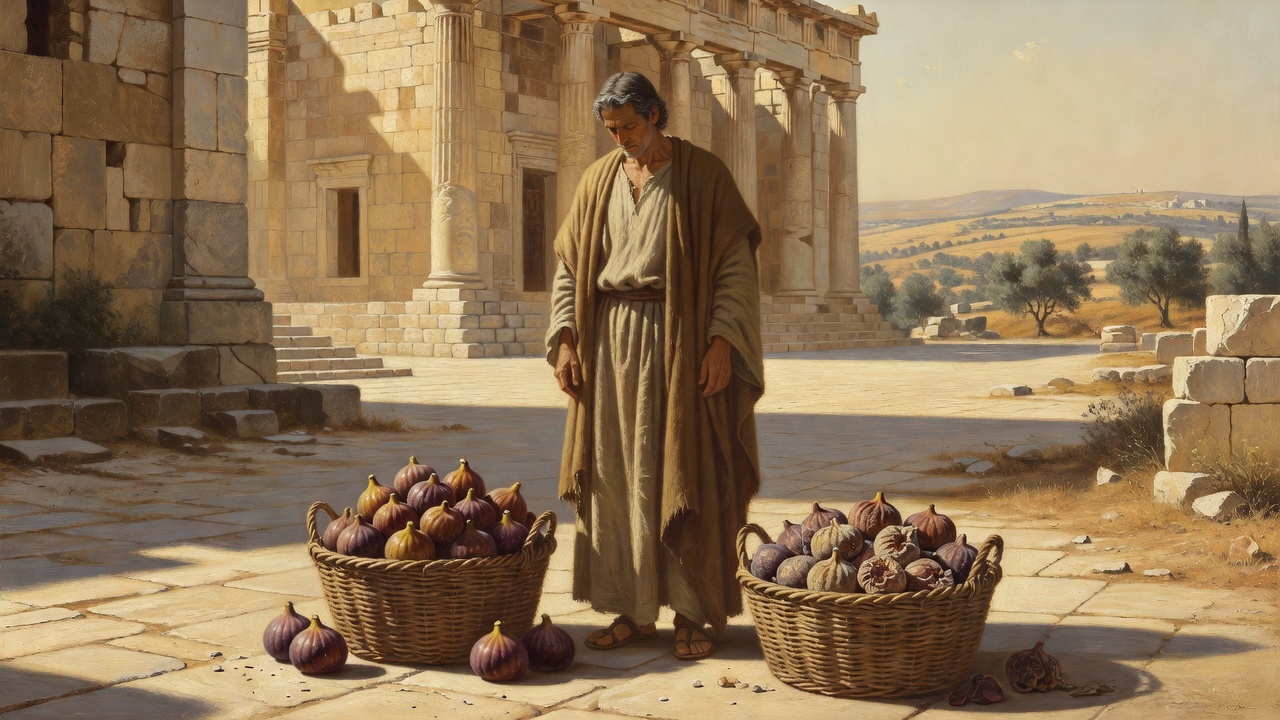
The Two Baskets of Figs
- Jeremiah received this vision after King Nebuchadnezzar of Babylon deported King Jeconiah (also called Jehoiachin), along with the officials, craftsmen, and metalsmiths of Jerusalem. Nebuchadnezzar subsequently installed Zedekiah as king over the remaining population in Judah.Sources: the Bible text itself · Jehoiachin · Zedekiah · Nebuchadnezzar
- In the vision set before the temple, the basket of prime, early-ripening figs symbolizes the exiles carried off to Babylon. The Lord promises to preserve them, give them a heart to know him, and restore them to their land.Sources: the Bible text itself
- In contrast, the basket of rotten, inedible figs symbolizes King Zedekiah, his leaders, and the remnant staying in Judah or fleeing to Egypt. Instead of finding security, they are warned of disaster, famine, disease, and derision among the nations.Sources: the Bible text itself · Zedekiah · Egypt
Notes written with AI assistance from open sources (Theographic Bible Metadata, CC BY-SA 4.0; Easton’s Bible Dictionary, public domain) and reviewed before publishing.
Places in this chapter
- Babylon · 32.543, 44.422 · verse 1
- Jerusalem · 31.777, 35.234 · verses 1, 8
- Chaldea · 30.962, 46.104 · verse 5
- Egypt · 30.129, 31.308 · verse 8
Only places identified with high confidence are shown (90% or more according to the scholarly sources compiled by OpenBible). Period map: DARE (Digital Atlas of the Roman Empire), CC BY 4.0; modern map: © OpenStreetMap contributors; places: OpenBible.info (CC BY 4.0).
Credits and license for this translation
Godɨn Eghaghanim: Akar Gavgavir Dɨkɨrɨzir Ghurim ko Igiam
The Holy Bible in the Aruamu language of Madang Province, Papua New Guinea, 2020 Edition
Buk Baibel long tokples Aruamu long Madang Provins long Niugini long 2020
copyright © 2020 Pioneer Bible Translators
Language: Aruamu
Translation by: Pioneer Bible Translators
Contributor: The Seed Company
GOD'S STORY in the Aruamu Language of Papua New Guinea
This translation is made available to you under the terms of the
Creative Commons Attribution Share-Alike license 4.0.
You have permission to share and redistribute this Bible translation in any format and to make reasonable revisions and adaptations of this translation, provided that:
You include the above copyright and source information.
If you make any changes to the text, you must indicate that you did so in a way that makes it clear that the original licensor is not necessarily endorsing your changes.
If you redistribute this text, you must distribute your contributions under the same license as the original.
Pictures included with Scriptures and other documents on this site are licensed just for use with those Scriptures and documents.
For other uses, please contact the respective copyright owners.
Note that in addition to the rules above, revising and adapting God's Word involves a great responsibility to be true to God's Word. See Revelation 22:18-19.
2025-05-15
Source: http://png.bible/msy2020/ · eBible.org