Isaiah 35
Godɨn Eghaghanim: Akar Gavgavir Dɨkɨrɨzir Ghurim ko Igiam · Tap a verse to see its cross-references.
God ua bizibagh amizɨ da deragha otifi
1Gumazamiziba puvatɨzir danganiba, ko nguazir mɨsɨngiziba, da bar akuegham.
Akɨmarir aghuiba otivigh gumazamiziba puvatɨzir danganiba avaraghtɨ,
da bar akongegham.
2Egh nguazir mɨdiarir kam, akɨmarir avɨriba an otogh oneghtɨ, an ganganim bar deraghtɨ,
a bar akuegh pamten dɨmɨva arangam.
Ikiavɨra Itir God dirir aghuim isɨ nguazir mɨdiarir kam danɨngtɨ, an ganganim bar deragham,
egh Lebanonɨn ruarir ekiam ko, Karmelɨn Mɨghsɨam ko,
Saronɨn Danganir Zarimɨn ganganir aghuimɨn mɨrara ganam.
Eghtɨ gumazamiziba Ikiavɨra Itir Godɨn angazangarim ko gavgavimɨn ganɨva, egh uaghan en Godɨn ziar ekiamɨn gantɨ,
an atrivimɨn kurkazir aghuimɨn mɨn ikiam.
3Ia atiatim itir gumazamizibar amutɨ,
me atiatingan kogh tuivigh gavgavigh ikɨ.
Egh gavgaviba puvatɨzir gumazamiziba gavgavim me danɨng.
4Ia gumazamizir atiatiba me mɨkɨm suam,
“Ia tuivigh gavgavigh, egh atiatingan markɨ.
Ian God izɨ ian akuragh,
egh ivezir kuram isɨ ian apanibar anɨngɨva bar me gasɨghasigham.”
5Dughiar kamɨn, gumazir damazir okavɨrɨziba ua gantɨ,
gumazir biziba barazir puvatɨziba, uam oragham.
6Eghtɨ gumazir suer kuraba, uari akun mavanang izighiram,
mati ruarimɨn itir asɨzir mam, me dia a garɨsi.
Eghtɨ gumazir mɨgeir puvatɨziba,
me pamten dɨm, egh bar akuegham.
Eghtɨ dɨpaba otiv gumazamiziba puvatɨzir danganibar mangɨ,
egh nguazir mɨsɨngizibar itir fanebar ivemar magɨram.
7Egh gigir mɨsɨngizim, dɨpar akaremɨn mɨn otogham.
Nguazir dɨpaba faragha puvatɨziba, nguazimɨn aven ivemarir dɨpar atuiba,
dar otivigh ivemar izighiram.
Afiar atiabara ikezir danganir mɨsɨngizir kam, dadar avɨriba ko ighuruniba an otivam.
8Eghtɨ tuavir ekiam kagh ikɨtɨ, me kamaghɨn a dɨpon suam,
kar “God Ua Baghavɨra Inabazir Tuavim.”
Eghtɨ Godɨn damazimɨn arazir kurabagh amir gumazitam an daruan kogham,
kar Godɨn gumazamizibar tuavimra.
Eghtɨ gumazamizir nɨghnɨzir aghuiba itiba ko gumazamizir nɨghnɨzir aghuiba oteveziba,
me an atam akuighan kogham, me a gɨfogh an mangam.
9Laionɨn tam ko, asɨzir kurar mɨsozitam tuavir kamɨn mangan kogham.
Asɨzir anɨngazir taba tuavir ekiar kam daruan kogham.
Gumazamizir Ikiavɨra Itir God akuragha ua inizibara,
tuavir kamɨn daruam.
10Gumazamizir Ikiavɨra Itir God men akuragha ua iniziba, me ua izɨ,
Saionɨn Mɨghsɨamɨn bagh izɨva, bar akongegh ongɨ, tiariba akarɨva tuavir kamɨn izam.
Egh me dabirabir bar aghuim ikɨtɨ,
bar akongezir arazir kam a men ikɨ me gizɨvagh kamaghɨra ikiam.
Eghtɨ mɨzaziba ko osɨmtɨziba me ategh, ua men ikian kogham.
Did you know?
The Transformation of the Desert and the Way of Holiness
- The prophetic poetry of this chapter contrasts barren wilderness with regions celebrated in the ancient Levant for lush vegetation and majesty: the lofty, forested mountains of Lebanon and the fertile coastal plain of Sharon. The prophecy envisions the desert blooming with the splendor and fertility traditionally associated with these flourishing landscapes.Sources: Lebanon · Saron · the Bible text itself
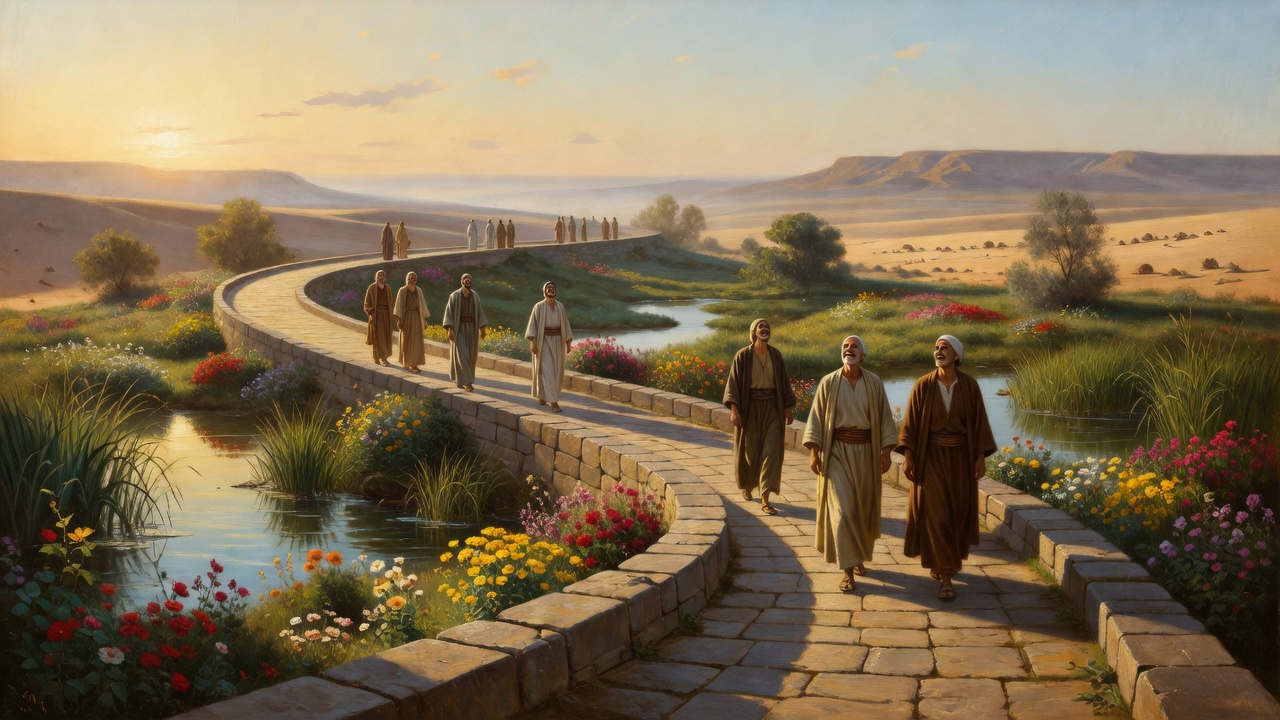
- The chapter culminates in a depiction of the redeemed journeying along a dedicated highway called the Way of Holiness toward Mount Zion, the fortified southeastern hill of Jerusalem where King David had established his citadel. This road is portrayed as completely safe from predatory beasts, allowing travelers to return home with singing and joy.Sources: Zion · the Bible text itself
Notes written with AI assistance from open sources (Theographic Bible Metadata, CC BY-SA 4.0; Easton’s Bible Dictionary, public domain) and reviewed before publishing.
Places in this chapter
- Lebanon · 33.540, 35.584 · verse 2
- Mount Carmel · 32.672, 35.023 · verse 2
- Sharon · Today: Sharon Plain · 32.400, 34.883 · verse 2
- Way of Holiness · Today: within 10 km of Jerusalem · 31.777, 35.234 · verse 8
- Zion · Today: Jerusalem · 31.777, 35.234 · verse 10
Only places identified with high confidence are shown (90% or more according to the scholarly sources compiled by OpenBible). Period map: DARE (Digital Atlas of the Roman Empire), CC BY 4.0; modern map: © OpenStreetMap contributors; places: OpenBible.info (CC BY 4.0).
Credits and license for this translation
Godɨn Eghaghanim: Akar Gavgavir Dɨkɨrɨzir Ghurim ko Igiam
The Holy Bible in the Aruamu language of Madang Province, Papua New Guinea, 2020 Edition
Buk Baibel long tokples Aruamu long Madang Provins long Niugini long 2020
copyright © 2020 Pioneer Bible Translators
Language: Aruamu
Translation by: Pioneer Bible Translators
Contributor: The Seed Company
GOD'S STORY in the Aruamu Language of Papua New Guinea
This translation is made available to you under the terms of the
Creative Commons Attribution Share-Alike license 4.0.
You have permission to share and redistribute this Bible translation in any format and to make reasonable revisions and adaptations of this translation, provided that:
You include the above copyright and source information.
If you make any changes to the text, you must indicate that you did so in a way that makes it clear that the original licensor is not necessarily endorsing your changes.
If you redistribute this text, you must distribute your contributions under the same license as the original.
Pictures included with Scriptures and other documents on this site are licensed just for use with those Scriptures and documents.
For other uses, please contact the respective copyright owners.
Note that in addition to the rules above, revising and adapting God's Word involves a great responsibility to be true to God's Word. See Revelation 22:18-19.
2025-05-15
Source: http://png.bible/msy2020/ · eBible.org