1 Kings 5
Godɨn Eghaghanim: Akar Gavgavir Dɨkɨrɨzir Ghurim ko Igiam · Tap a verse to see its cross-references.
Solomon Ikiavɨra Itir God bagha Dɨpenimɨn ingarasa bizibar kɨri
1Fomɨra Hiram Tairɨn atrivimɨn ike, a fomɨra Atrivim Devitɨn namakar aghuim. Egha Hiram kamaghɨn oraki, Solomon, Devitɨn danganim inigha atrivimɨn oto, ezɨ a uan ingangarir gumazir dapaniba Solomonɨn ganasa me amada. 2Ezɨ Solomon, Hiram bagha akam amaga ghaze, 3“Nɨ fo, nan afeziam Devit atrivimɨn itir dughiamɨn, apaniba zurara izava a ko mɨsosi. Kamaghɨn a Ikiavɨra Itir God, uan Godɨn ziam famin Dɨpenimɨn ingaramin dughiaba puvatɨ. A kamaghɨn nɨghnɨsi, Ikiavɨra Itir God apanir kaba abɨnightɨ, kɨ uan Ikiavɨra Itir Godɨn Dɨpenimɨn ingaram. 4Ezɨ datɨrɨghɨn, Ikiavɨra Itir God, nan God, kantrin igharazibagh amizɨma, me e ko deraghavɨram apia. Kantrin kaba datɨrɨghɨn uam en apanim gamir puvatɨzɨ, arazir kuratam e batozir puvatɨ. 5Kamaghɨn amizɨ, kɨ datɨrɨghɨn Ikiavɨra Itir God, nan God, an ziam famin Dɨpenimɨn ingarasa ifonge. Ikiavɨra Itir God fomɨra nan afeziam ko akar kam akɨrigha ghaze, ‘Kɨ nɨn otaritam amɨseveghtɨ, a nɨn danganim inigh atrivimɨn ikiam. Egh a na bagh Dɨpenimɨn ingaram, eghtɨ gumazamiziba Dɨpenir kamɨn na bagh roghɨra izɨ nan ziam fam.’ Kamaghɨn amizɨ, kɨ datɨrɨghɨn a bagh Dɨpenimɨn ingaram. 6Kamaghɨn amizɨ, nɨ uan ingangarir gumaziba, amadaghtɨma me sidan temeba okɨsɨ, Lebanonɨn Mɨghsɨabar mangɨ, eghtɨ kɨ dar Dɨpenir kamɨn ingaram. Nɨ fo, Saidonia temeba oka bar fo, ezɨ nan ingangarir gumaziba fozir puvatɨ. Kamaghɨn amizɨ, kɨ uan ingangarir gumaziba amadaghtɨma, me puram men akurvaghsɨ izam. Eghtɨ nɨ manmaghɨn dagɨaba, uan ingangarir gumazibagh ivesɨ ifueghtɨ, kɨ pura nɨ danɨngam.”
7Ezɨ Hiram, Solomonɨn akar kam baregha, an navim bar dera, ezɨ a kamaghɨn mɨgei, “E datɨrɨghɨn Ikiavɨra Itir Godɨn ziam fam. Guizbangɨra, an otarir aghuim isa Devit ganɨngizɨma, an an danganim inigha, atrivimɨn otogha kantrin gavgavir kamɨn gari. Devitɨn otarir kam, a bar nɨghnɨzir aghuiba ko fofoziba iti.” 8Egha Hiram kamaghɨn Solomon bagha akam amaga ghaze, “Kɨ nɨn akam baregha gɨvagha, an amamangatɨ. Kɨ nɨ bagh temer sidaba ko painɨn temeba amangam. 9Nan ingangarir gumaziba Lebanonɨn temeba okegh, da inigh ongarir dadarimɨn mangam. Me da akuvagh, pamtemɨn da ikegh, dar ikɨziba inigh ongarimɨn izɨ, ongarir dadarir nɨ mɨsevezimɨn dar arɨgham. Danganir kamɨn, nan ingangarir gumaziba dar beniba fɨrightɨ, nɨn ingangarir gumaziba da iniam. Bizir vamɨra nɨ na bagh a damuasa kɨ ifonge, nɨ na ko nan dɨpenimɨn iti darazi bagh dagheba amang.”
10Kamaghɨn amizɨ. Hiram Solomon bagha temer sidaba ko painɨn temer avɨriba oke, ezɨ da Solomon dɨborozir dɨbobonimɨn tu. 11Ezɨ zurara azeniba vaghvagha Solomon 2,000 tan witba ko, 4,000 litan olivɨn borer aghuiba isa, Hiram uan adarazi ko damasa me bagha da amadi.
12Ikiavɨra Itir God, akar dɨkɨrɨzir amizimɨn gɨrara ghua fofozim ko nɨghnɨzir aghuiba Solomon ganɨngi. Ezɨ Hiram ko Solomon, namakar aghuimningɨn oto. Aning deraghavɨra ikiasa, akar dɨkɨrɨzir gavgavir mam gami.
13Atrivim Solomon 30,000plan gumaziba, Israelian danganibar bar me inigha uan ingangarir kam damuasa me mɨgei. 14Egha an okoruar 3plan me abɨki, ezɨ okoruaba vaghvagha 10,000plan gumaziba iti. Eghtɨ iakɨniba vaghvagh, gumazir okoruar tam mangɨ Lebanon kantrin ingangaribar amu ua izam. Eghtɨ iakɨnir igharazimɨn okoruar igharazim mangɨ ingaram. Ezɨ okoruar 3plan kaba kamaghɨn ami, tam mangɨ Lebanonɨn kantrin iakɨnir vamɨran ingarigh, egh ua izɨ iakɨnir pumuningɨn nguibamɨn ikɨtɨ, igharazim mangam. Me kamaghɨn uarigh itavragha ingari. Ezɨ Adoniram a ingangarir gumazir kabar gari. 15Ezɨ Solomon uaghan 80,000plan dagɨaba aghorir gumaziba ini, ezɨ me mɨghsɨabar dagɨabar ghori. Egha dagɨaba aterasa 70,000plan gumaziba ini. 16Egha a uaghan ingangarir gumazir kabar ganasa gumazir dapanir 3,300plan maba amɨsefe. 17Ezɨ ingangarir gumazir kaba Solomonɨn akamɨn gɨn ghua, danganir dagɨar bar aghuiba iti naghɨn dagɨabar ghora, dagɨar dafar bar dirir pɨn koziba aghora, egha deravɨra dar kɨri. Egha me da atera Jerusalemɨn ghua da arɨsi, eghtɨ gɨn me Godɨn Dɨpenimɨn ingarsɨ, dagh isɨn Dɨpenim asam. 18Ezɨ dɨpenimɨn ingarir fofozir gumaziba uaghan Solomon ko Hiramɨn ingangarir gumazibar tongɨn iti. Egha me Gebalɨn nguibar ekiamɨn ingangarir gumaziba ko ingara, Godɨn Dɨpenimɨn ingaramin dagɨaba akɨra temeba abɨsi.
Did you know?
Preparations for the Temple
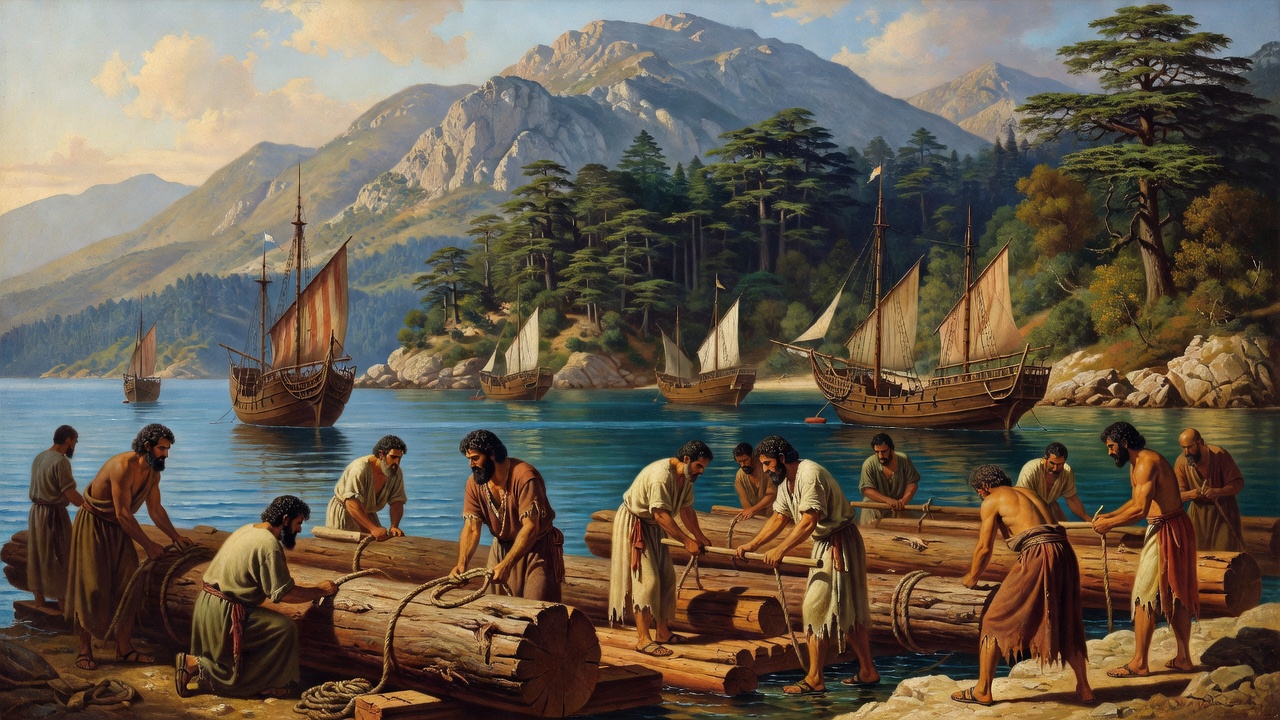
- King Hiram of Tyre, a major Phoenician maritime city, maintained friendly relations with David and entered into a formal treaty with Solomon. In exchange for cedar and cypress timber from Lebanon floated down the coast as rafts, Solomon supplied Hiram's household with annual provisions of wheat and pure olive oil.Sources: Hiram · Tyre · the Bible text itself
- To prepare materials for the temple, Solomon relied on Phoenician craftsmanship, noting the logging skills of the Sidonians. Builders from Tyre and Gebal—an ancient Phoenician coastal city known to the Greeks as Byblos—worked alongside Israelites to quarry large, dressed foundation stones and prepare the timber.Sources: Gebal · the Bible text itself
- Solomon organized a massive labor force for the project, conscripting 30,000 Israelites who served in Lebanon in rotating shifts of 10,000 per month under the supervisor Adoniram. An additional 70,000 transporters and 80,000 stonecutters labored in the mountains, directed by 3,300 foremen.Sources: Adoniram · the Bible text itself
Notes written with AI assistance from open sources (Theographic Bible Metadata, CC BY-SA 4.0; Easton’s Bible Dictionary, public domain) and reviewed before publishing.
Places in this chapter
- Tyre · 33.271, 35.196 · verse 1
- Lebanon · 33.540, 35.584 · verses 6, 9, 14
- Great Sea · Today: Mediterranean Sea · 31.805, 34.170 · verse 9
- Gebal · Today: Byblos · 34.119, 35.646 · verse 18
Only places identified with high confidence are shown (90% or more according to the scholarly sources compiled by OpenBible). Period map: DARE (Digital Atlas of the Roman Empire), CC BY 4.0; modern map: © OpenStreetMap contributors; places: OpenBible.info (CC BY 4.0).
Credits and license for this translation
Godɨn Eghaghanim: Akar Gavgavir Dɨkɨrɨzir Ghurim ko Igiam
The Holy Bible in the Aruamu language of Madang Province, Papua New Guinea, 2020 Edition
Buk Baibel long tokples Aruamu long Madang Provins long Niugini long 2020
copyright © 2020 Pioneer Bible Translators
Language: Aruamu
Translation by: Pioneer Bible Translators
Contributor: The Seed Company
GOD'S STORY in the Aruamu Language of Papua New Guinea
This translation is made available to you under the terms of the
Creative Commons Attribution Share-Alike license 4.0.
You have permission to share and redistribute this Bible translation in any format and to make reasonable revisions and adaptations of this translation, provided that:
You include the above copyright and source information.
If you make any changes to the text, you must indicate that you did so in a way that makes it clear that the original licensor is not necessarily endorsing your changes.
If you redistribute this text, you must distribute your contributions under the same license as the original.
Pictures included with Scriptures and other documents on this site are licensed just for use with those Scriptures and documents.
For other uses, please contact the respective copyright owners.
Note that in addition to the rules above, revising and adapting God's Word involves a great responsibility to be true to God's Word. See Revelation 22:18-19.
2025-05-15
Source: http://png.bible/msy2020/ · eBible.org