1 Chronicles 14
Godɨn Eghaghanim: Akar Gavgavir Dɨkɨrɨzir Ghurim ko Igiam · Tap a verse to see its cross-references.
Devit Jerusalemɨn ikia atrivimɨn iti
1Tairɨn nguibar ekiamɨn Atrivim Hiram, a uan gavmanɨn ingangarir gumazir dapaniba Devit bagha me amada. A uaghan Atrivim Devitɨn dɨpenimɨn ingarasa, temer sidaba ko, dɨpenibar ingarir gumaziba ko dagɨabar bizibar ingarir gumaziba, a me amangi. Ezɨ me Devit bagha atrivimɨn dɨpenimɨn ingari. 2Devit bizir kabar gari, da a bagha izima a kamaghɨn fo, Ikiavɨra Itir God guizbangɨra Israelian atrivimɨn ikiasa a ginaba. A uaghan kamaghɨn fo, Ikiavɨra Itir God uan gumazamiziba bar men akurvaghasa, kamagh amizɨ, a kantri Israel gamima, a bar dera.
3Ezɨ Devit Jerusalemɨn ikia ua amuir igharazir maba inigha dar iti. Ezɨ an amuir kaba, otariba ko guivir maba bate. 4A Jerusalemɨn ikiava otarir maba ini. Men ziabar kara: Simea, Sobap, Natan, Solomon, 5Iphar, Elisua, Elpelet, 6Noga, Nefek, Jafia, 7Elisama, Beliada ko Elifelet.
Devit Filistiaba ko mɨsogha me abɨra
8Filistiaba kamaghɨn oraki, Israelia Devit amɨsevezɨma a men atrivimɨn oto. Ezɨ Filistiaba mangɨ me mɨsuegh Devitɨn suighasa zui. Me bizir kam damuasa amima Devit fogha, uan danganir mogomer gavgavimɨn uaghirɨ. 9Filistiaba iza Refaimɨn danganir zarimɨn otogha gumazamizibav sogha men biziba okei. 10Ezɨ Devit kamaghɨn Godɨn azara, “Kɨ mangɨva Filistian kabav sogham, o? Kɨ mangɨ me ko mɨsoghtɨ, nɨ me isɨ na dafarim darɨgham o?”
Ezɨ Ikiavɨra Itir God kamaghɨn a ikaragha ghaze, “Are, nɨ mangɨ. Kɨ me isɨ nɨn dafarim datɨghtɨ, nɨ mɨdorozimɨn me abɨragham.”
11Ezɨ Devit ghua Filistiabav sogha me abɨragha kamaghɨn mɨgei, “Ikiavɨra Itir God mati aperiam otogha, pamtemɨn ivemara nan dafarimɨn nan apaniba abɨagharigha me gasɨghasɨki.”
Kamaghɨn amizɨ, me danganir kam dɨbora ghaze, “Ekiam Aperiamɨn Mɨn Pamten Ivemara Apaniba Abɨagharɨsi.”
12Ezɨ Filistiaba uan marvir guaba ategha are. Ezɨ Devit uan mɨdorozir gumazibav kemezɨ, me men marvir guabagh apongezɨ da isi.
13Ezɨ Filistiaba gɨn ua danganir zarir kamɨn izegha gumazamizibav sogha men biziba okei. 14Ezɨ Devit kamaghɨn Godɨn azara, “Kɨ manmaghɨn damuam?”
Ezɨ Ikiavɨra Itir God kamaghɨn a ikaragha ghaze, “Ia me mɨsoghsɨ mangɨva, men guaba moghɨn mangan markɨ. Ia modogh men gɨrakɨrangɨn moghɨn mangɨ, egh temer balsamba tuivighav iti naghɨn mɨsoghsɨvɨra gan ikɨ. 15Ia oraghtɨma nɨgɨnim otogham, mati gumaziba temer kabar ghuabagh isɨn daruam. Eghtɨ ia fogh suam, kɨ uabɨ Filistiabav soghsɨ ian faragh mangam. Ia nɨgɨnir kam baraghamin dughiamɨn, ia maghɨra ivemar mangɨ me mɨsogh.” 16Ezɨ Devit Ikiavɨra Itir God a mɨkemezɨ moghɨram amigha, Filistiabar agɨragha bar me mɨsuagharɨki. Me me mɨsogha Gibeonɨn nguibar ekiamɨn ikegha ghua Geserɨn nguibar ekiamɨn tu. 17Devit amizɨ bizir kam, kantribar gumazamiziba bar moghɨra a baregha ziar ekiam Devit ganɨdi. Ezɨ Ikiavɨra Itir God me gamizɨma, me bar Devitɨn atiatingi.
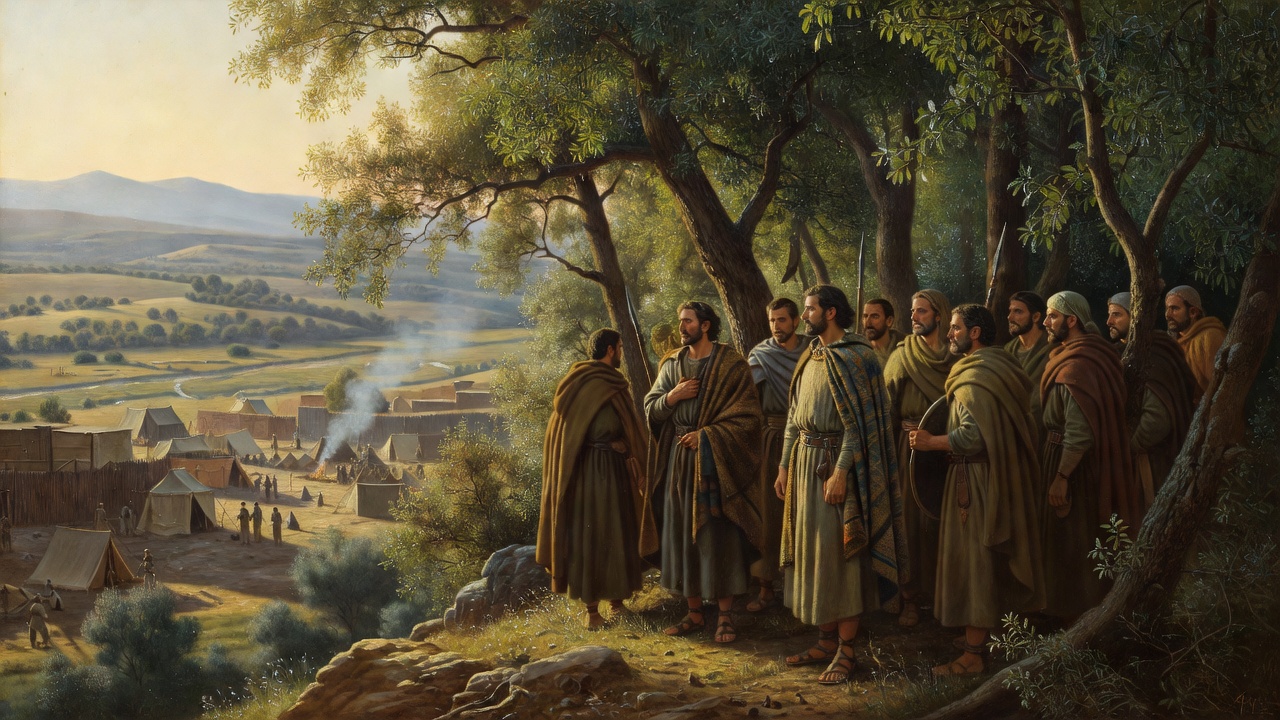
Did you know?
David's Palace and Victories over the Philistines
- The Phoenician coastal city of Tyre was renowned for its maritime commerce and skilled craftsmen. King Hiram provided David with Lebanese cedar logs, stonemasons, and carpenters to build a royal palace in Jerusalem.Sources: Hiram · Tyre · the Bible text itself
- The Valley of Rephaim lay southwest of Jerusalem, providing invaders a natural corridor toward the city. David named the site of his victory Baal-perazim, meaning a bursting through, comparing God breaking through his enemies to a raging flood.Sources: Valley of Rephaim · Baal-perazim · the Bible text itself
- In their second confrontation, David ambushed the Philistine army near a grove of balsam trees and pursued the retreating forces from Gibeon all the way to Gezer on the coastal plain.Sources: Gibeon · Gezer · the Bible text itself
Notes written with AI assistance from open sources (Theographic Bible Metadata, CC BY-SA 4.0; Easton’s Bible Dictionary, public domain) and reviewed before publishing.
Places in this chapter
- Tyre · 33.271, 35.196 · verse 1
- Jerusalem · 31.777, 35.234 · verses 3, 4
- Valley of Rephaim · 31.763, 35.219 · verse 9
- Gezer · Today: Tel Gezer · 31.859, 34.919 · verse 16
- Gibeon · Today: El Jib · 31.847, 35.183 · verse 16
Only places identified with high confidence are shown (90% or more according to the scholarly sources compiled by OpenBible). Period map: DARE (Digital Atlas of the Roman Empire), CC BY 4.0; modern map: © OpenStreetMap contributors; places: OpenBible.info (CC BY 4.0).
Credits and license for this translation
Godɨn Eghaghanim: Akar Gavgavir Dɨkɨrɨzir Ghurim ko Igiam
The Holy Bible in the Aruamu language of Madang Province, Papua New Guinea, 2020 Edition
Buk Baibel long tokples Aruamu long Madang Provins long Niugini long 2020
copyright © 2020 Pioneer Bible Translators
Language: Aruamu
Translation by: Pioneer Bible Translators
Contributor: The Seed Company
GOD'S STORY in the Aruamu Language of Papua New Guinea
This translation is made available to you under the terms of the
Creative Commons Attribution Share-Alike license 4.0.
You have permission to share and redistribute this Bible translation in any format and to make reasonable revisions and adaptations of this translation, provided that:
You include the above copyright and source information.
If you make any changes to the text, you must indicate that you did so in a way that makes it clear that the original licensor is not necessarily endorsing your changes.
If you redistribute this text, you must distribute your contributions under the same license as the original.
Pictures included with Scriptures and other documents on this site are licensed just for use with those Scriptures and documents.
For other uses, please contact the respective copyright owners.
Note that in addition to the rules above, revising and adapting God's Word involves a great responsibility to be true to God's Word. See Revelation 22:18-19.
2025-05-15
Source: http://png.bible/msy2020/ · eBible.org