1 Chronicles 10
Godɨn Eghaghanim: Akar Gavgavir Dɨkɨrɨzir Ghurim ko Igiam · Tap a verse to see its cross-references.
Atrivim Sol uan otariba ko ariaghire
1Dughiar mamɨn, Filistiaba ghua Israelia ko mɨsogha, Gilboan mɨghsɨamɨn Israelian gumazir avɨribav soghezɨma me ariaghire. Ezɨ men marazi mɨdorozim ategha are. 2Ezɨ Sol uan otariba ko, me uaghan are, ezɨ Filistiaba men agɨragha ghua Solɨn otarir 3pla mɨsoghezɨ me ariaghire. Solɨn otaribar ziabar kara: Jonatan, Abinadap ko Malkisua. 3Ezɨ mɨdorozim bar ekevezɨma gumaziba Solɨn agɨra. Filistian maba an apigha barir pibar a gasima, barir maba a mɨtivizɨ, a bar amughamuki. 4Kamaghɨn amizɨ, Sol uan gumazir igiar an mɨdorozir biziba aterimɨn diagha ghaze, “Nɨ uan mɨdorozir sabam inigh izɨ na bɨraghtɨma kɨ aremeka. Puvatɨghtɨ, Filistian mɨkarzir mogomebar iniba aghorezir puvatɨzir kaba, izɨ na dɨpov mɨzazim na danɨngɨva na mɨsueghtɨ kɨ aremegham.”
Ezɨ gumazir igiar kam bar atiatigha Sol ginivan bar aghua. Kamaghɨn amizɨ, Sol uabɨ uan mɨdorozir sabam asaragha a gaverazɨ, sabam a mɨtɨzɨ an areme. 5Ezɨ gumazir igiar kam gari, Sol aremezɨ, a uaghan uan mɨdorozir sabam asaragha a gaverazɨ, sabam a mɨtɨzɨ a uaghan Sol ko areme. 6Dughiar kamra, Sol uan otarir 3pla ko an adarasi, me bar moghɨra ariaghire.
7Ezɨ Israelian danganir zarimɨn itiba kamaghɨn oraki, Israelian mɨdorozir gumaziba are. Me uaghan kamaghɨn oraki, Sol uan otariba ko, me bar ariaghire, ezɨ me uan nguibar ekiaba ategha are. Ezɨ gɨn Filistiaba iza nguibar ekiar kaba inigha dar iti.
8Mɨdorozim gɨvazɨ, amɨmzaraghan Filistiaba uamategha iza, Israelian ariaghirezibar kuabar korotiaba suva, men biziba iniasa izi. Egha me garima, Sol uan otariba ko, men kuaba Gilboan mɨghsɨamɨn ireghav iti. 9Ezɨ me Solɨn kuamɨn fɨrim atugha, an dapanim ko mɨdorozir korotiaba ini. Egha me gumazir maba amadazɨma, me akar aghuim inigha ghua Filistiabar nguazimɨn tintinibar arua uan asebar dɨpenibar aven ghua an gun gumazamiziba ko men asebav gei. 10Egha me Solɨn mɨdorozir korotiaba isa uan asebar ziaba fer dɨpenimɨn da arɨki. Egha an dapanim inigha ghua asem Dagonɨn ziam fer dɨpenir bɨrimɨn anegura. 11Ezɨ Israelian Jabesɨn nguibar ekiamɨn iti darasi, me Gileatɨn nguazimɨn aven iti, me Filistiaba Sol gamizir arazimɨn eghaghanim baraki. 12Kamaghɨn amizɨ, mɨdorozir gumazir gavgaviba dɨkavigha ghua Sol ko an otaribar kuaba inigha Jabesɨn ize. Egha Solɨn kuam ko an otaribar kuaba inigha ghua Jabesɨn nguibar ekiamɨn temer Okɨn povimɨn me isa mozim gatɨ. Egha me bar moghɨra me bagha aziava osemegha 7plan dughiabar me bagha dagheba ataki.
13Sol Ikiavɨra Itir Godɨn akam baraghizir puvatɨ. A Ikiavɨra Itir Godɨn Akar Gavgavim batoke. An oveaghuezibar duabar dia, nɨghnɨzim uabɨ danɨng tuavim uabɨn akakaghasa, dar azai. Kamaghɨn amizɨ, an areme. 14A Ikiavɨra Itir Godɨn nɨghnɨzim inian aghua. Kamaghɨn amizɨ, Ikiavɨra Itir God a mɨsoghezɨ an areme. Ezɨ God Jesin otarim Devit gamizɨ, an atrivimɨn oto.
Did you know?
The Fall of Saul and Transition to David
- The Philistines defeated Israel on Mount Gilboa, killing King Saul's sons Jonathan, Abinadab, and Malchi-shua. After Saul took his own life, the Philistines stripped his armor to place it in the temple of their gods and fastened his head in the temple of Dagon, their national deity.Sources: the Bible text itself · Dagon · Mount Gilboa · Jonathan
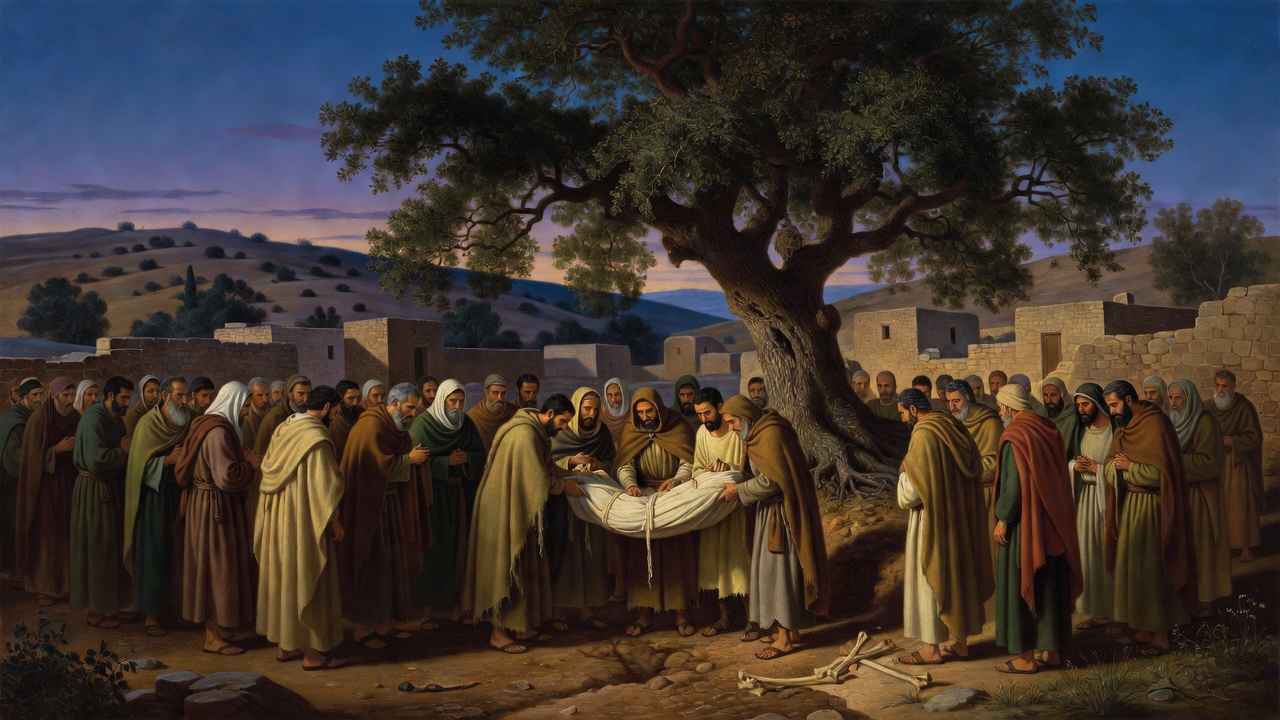
- Upon hearing how the Philistines treated Saul, valiant men from Jabesh-gilead traveled to retrieve the bodies of Saul and his sons. They carried them back to Jabesh, buried their bones under a large oak tree, and observed a seven-day fast.Sources: the Bible text itself · Jabesh-gilead
- The Chronicler summarizes Saul's downfall as a consequence of unfaithfulness to the LORD, including his failure to inquire of God and his consultation of a medium. This tragic end sets the stage for the kingdom to be transferred to David, the son of Jesse.Sources: the Bible text itself · David · Jesse
Notes written with AI assistance from open sources (Theographic Bible Metadata, CC BY-SA 4.0; Easton’s Bible Dictionary, public domain) and reviewed before publishing.
Places in this chapter
- Mount Gilboa · 32.434, 35.414 · verses 1, 8
- Valley of Jezreel · Today: Jezreel Valley · 32.596, 35.242 · verse 7
- Philistia · 31.664, 34.546 · verse 9
Only places identified with high confidence are shown (90% or more according to the scholarly sources compiled by OpenBible). Period map: DARE (Digital Atlas of the Roman Empire), CC BY 4.0; modern map: © OpenStreetMap contributors; places: OpenBible.info (CC BY 4.0).
Credits and license for this translation
Godɨn Eghaghanim: Akar Gavgavir Dɨkɨrɨzir Ghurim ko Igiam
The Holy Bible in the Aruamu language of Madang Province, Papua New Guinea, 2020 Edition
Buk Baibel long tokples Aruamu long Madang Provins long Niugini long 2020
copyright © 2020 Pioneer Bible Translators
Language: Aruamu
Translation by: Pioneer Bible Translators
Contributor: The Seed Company
GOD'S STORY in the Aruamu Language of Papua New Guinea
This translation is made available to you under the terms of the
Creative Commons Attribution Share-Alike license 4.0.
You have permission to share and redistribute this Bible translation in any format and to make reasonable revisions and adaptations of this translation, provided that:
You include the above copyright and source information.
If you make any changes to the text, you must indicate that you did so in a way that makes it clear that the original licensor is not necessarily endorsing your changes.
If you redistribute this text, you must distribute your contributions under the same license as the original.
Pictures included with Scriptures and other documents on this site are licensed just for use with those Scriptures and documents.
For other uses, please contact the respective copyright owners.
Note that in addition to the rules above, revising and adapting God's Word involves a great responsibility to be true to God's Word. See Revelation 22:18-19.
2025-05-15
Source: http://png.bible/msy2020/ · eBible.org