Matthew 11
Godɨn Akar Aghuim; Akar Dɨkɨrɨzir Gavgavir Igiam · Tap a verse to see its cross-references.
Iesus bar tinara
Jon Gumaziba Ruer Gumazim, uan suren gumaziba amadazɨ me Iesus bagha ghue
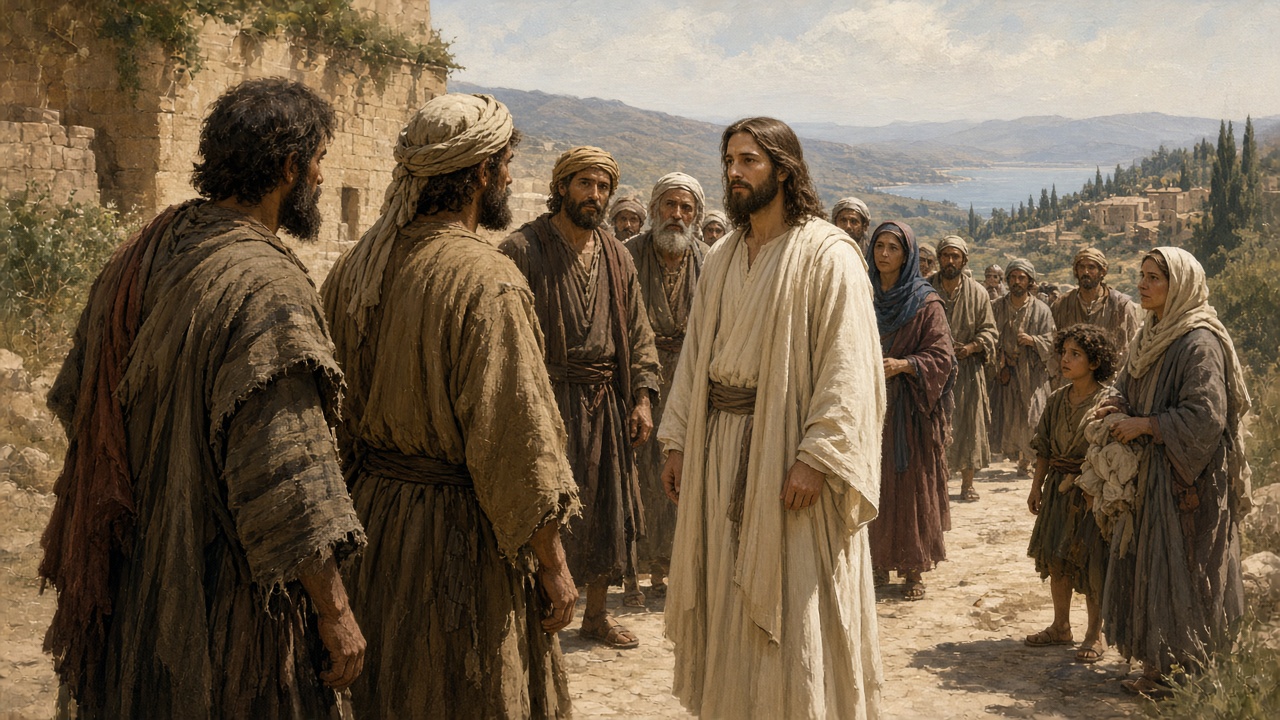
1Ezɨ Iesus akar kaba uan 12 plan suren gumazibagh ganiga, egha danganir kam ategha nguibar igharazibar ghua men sure gamua Godɨn akam me mɨkɨri.
2Jon kalabusɨn ikia kamaghɨn God Ua Gumazamiziba Iniasa Mɨsevezir Gumazimɨn ingangariba baregha uan suren gumaziba a bagha me amada. 3Egha me mɨgɨa ghaze, ia mangɨ kamaghɨn Iesusɨn azang, “Ti nɨrara, gumazir God faragha amangasa mɨkemezim? O, e ti ua gumazir igharazitam mɨzuamam?”
4Ezɨ Iesus men azangsɨziba ikaragha ghaze, “Ia mangɨ, bizir ia garava orazibar gun Jon mɨkɨm suam, 5‘Gumazir damazir okavɨrɨziba ua gari, ezɨ gumazir suer amɨrɨziba uam arui. Ezɨ gumazir lepa itiba ua zuegha dera, ezɨ gumazir kuarir orazir puvatɨziba uam orasi. Ezɨ ovengezir gumaziba ua dɨkavima, ezɨ gumazir onganarazibagh amiba akar aghuim barasi.’ 6Gumazir nan ganigha nɨghnɨzir gavgavim nan itim, an nɨghnɨzir gavgavim ikɨvɨra ikɨ, eghtɨ an navir averiam deraghtɨ a bar akuegham!”
7Ezɨ Jonɨn suren gumaziba an ategha ghuezɨma, Iesus an gun gumazamizibav gei, “Ia gumaziba itir puvatɨzir danganimɨn ghua tizimɨn ganasa ghue? Ia ti ghurunir amɨnim vaimɨn ganasa ghue? Puvatɨ. 8Ia tizimra ganasa ghue? Ia ti gumazir korotiar aghuiba aghuizɨtamɨn ganasa ghue? Puvatɨ. Gumazir korotiar aghuiba azuiba, atrivibar dɨpenibar iti. 9Ezɨ ia tizimɨn ganasa ghue? Ia Godɨn akam inigha izir gumazitamɨn ganasa ghue? Bar guizbangɨra! Ki ia mɨgei, Godɨn akam inigha izir gumazir kam, a Godɨn akam inigha izir gumazir igharaziba, bar me gafira. 10Gumazir kam baghavɨra Godɨn Akɨnafarim mɨgɨa ghaze, ‘Ia oragh. Kɨ uan abuir gumazim amadaghtɨma, a faragh mangɨva nɨ bagh tuavim akɨram.’ 11Kɨ guizbangɨra ia mɨgei, Jon Gumazibar Ruer Gumazim, gumazir nguazimɨn itiba, bar me gafira. Ezɨ gumazir God Bizibagh Ativamin Dughiamɨn aven ikia ziaba bar puvatɨzim, a bar Jon gafira.
12“Jon Gumaziba Ruer Gumazimɨn dughiamɨn ikegha iza datɨrɨghɨn, gumazir kuraba God Bizibagh Ativamin Arazim iniasa puv ingara mɨsosi. Egha me mɨdorozir arazir anabar igharazibagh amua, egha osɨmtɨzir avɨriba a ganɨdi. 13Godɨn akam inigha izir gumazibar osiziriba ko Moses Osirizir Araziba, da Godɨn akam akura iza Jon otozir dughiamɨn tu. 14Kamaghɨn amizɨ, ia dar akam baraghsɨ ifuegh, a baragh, ‘Godɨn akam inigha izir gumazim Elaiza izam,’ kar a Jon baghavɨra mɨgei. 15Tina kuarimning iti, an oragh.
16“Eghtɨ kɨ datɨrɨghɨn itir gumazamizibar arazibar gun mɨkɨmsɨva akar isɨn zuir manam mɨkɨmam? Me boribar mɨn biziba amadir danganimɨn apiaghav ikia uarir dei,
17‘E ia bagha marvibagh ivima,
ia ighian aghua.
Ezɨ e ongerakar amɨrɨzibagh amima,
ia azir puvatɨ.’
18Datɨrɨghɨn itir gumaziba, borir kabar mɨn ami. Jon izava pamten apir puvatɨghava wainɨn dɨpaba apir puvatɨzɨma, me ghaze, ‘Duar kuraba a gapasa.’ 19Ezɨ Gumazibar Otarim izava dagheba ko wainɨn dɨpaba api. Ezɨ me ghaze, ‘Ia gan, a gumazir puv daghem ko wainɨn dɨpam apim. Egha a dagɨaba isir gumaziba ko gumazir arazir kurabagh amiba, a men roroabagh amua me ko iti.’ Me kamaghɨn mɨgeima, gumazamiziba men gara fo, Godɨn fofozim a guizbangɨra bizim.”
Navibagh irazir puvatɨzir gumazamiziba, me bar ikuvigham
20Iesus nguibar ekiar mabar mirakelɨn avɨribagh amizɨ me uan navibagh irazir puvatɨ. Ezɨ Iesus dughiar kamɨn nguibar kabar gumazamizibar atara ghaze, 21“Ia Korasinɨn nguibamɨn itir gumazamiziba, Iavzika! Ia kuram iniam. Ia Betsaidan nguibamɨn itir adarazi, Iavzika! Ia bar ikuvigham. Gumazitam Tairɨn nguibam ko Saidonɨn nguibamɨn ghua, mirakelɨn kɨ amiziba men tongɨn dagh amighai, Tair ko Saidonɨn itir darazi ti fomɨra navibagh iragha, egha azir adiariba aghuigha, averenim gapiava aguruava, egha uan arazir kamɨn uari akakagha ghaze, me uan arazir kuraba ataki. 22Ezɨ kɨ ia mɨgei, Godɨn Kotɨn Dughiamɨn, osɨmtɨzir ia iniamim, an osɨmtɨzir Tair ko Saidon iniamim gafiragham. 23Ezɨ ia Kaperneamɨn nguibamɨn itir darazi, ia ghaze, ia uari fegh Godɨn Nguibamɨn ikiam, a? Bar puvatɨ, God ia akunightɨ ia Helɨn avim magɨram. Ezɨ gumazitam ti Sodomɨn nguibamɨn ghua mirakelɨn kɨ ian tongɨn amizibagh amizɨ, kamaghɨn Sodom ti ikiavɨra ikiai. 24Ezɨ kɨ ia mɨgei, Godɨn Kotɨn Dughiamɨn, osɨmtɨzir ia iniamim, an osɨmtɨzir Sodom inizim gafiragham.”
Ia na bagh izɨva aghuvsazim iniam
25Egha dughiar kamɨn Iesus kamaghɨn mɨgei, “Afeziam, nɨ nguazim ko overiam gativazir Ekiam! Nɨ fofozim ko nɨghnɨzir aghuiba itir gumaziba bizir kaba men modo, egha boribar mɨn itir gumazibar aka. Kamaghɨn kɨ nɨ mɨnabi. 26Guizbangɨra Afeziam, nɨ uan ifongiamɨn kamaghɨn ami.”
27Egha Iesus ua kamagh mɨgei, “Nan Afeziam biziba bar ada isa nan dafarim gatɨ. Ezɨ gumazitam Otarim gɨfozir puvatɨ. Afeziam uabɨra a gɨfo. Egha tav Afeziam gɨfozir puvatɨ. Otarim uabɨra, koma gumazir Otarim ifuegha Afeziam isava men akaziba, merara Afeziam gɨfo. 28Ia, gumazir ingangarir ekiabagh amua osɨmtɨzir avɨriba ateriba, ia bar moghɨra na bagh izɨ. Eghtɨ kɨ aghuvsazim ia danɨngam. 29Ia na da fofozim iniva nan mɨgɨrɨgɨabar apengan ikɨ, egha mati temer ruarir me bulmakauningɨn tuemning gatɨzɨma aning uaning inigha ingangarim gami moghɨn, ia nan apengan ikɨ. Ia na gɨfo, kɨ uan navir averiamɨn aven uabɨ dɨkabɨragha, egha kɨ gumazibar asughasusi. Egh kɨ ia damutɨ ia aghuvsazim iniam. 30Ter ruarir kɨ ian tuebagh arɨzim, ia a gumuam, ezɨ bizir kɨ aterim an osemezir puvatɨ.”
Did you know?
John's question and the cities that did not repent
- From prison, John sent his disciples to ask whether Jesus was the one who was to come. Jesus told the crowds that John was more than a prophet—the messenger sent ahead to prepare the way—and, if they were willing to accept it, the Elijah who was to come. A Bible dictionary calls John the forerunner and says his mission was already the subject of prophecy, citing Isaiah 40:3 and Malachi 3:1; it also introduces Elijah as the Elias of the New Testament.Sources: the Bible text itself · John the Baptist · Elijah
- Jesus then denounced Chorazin, Bethsaida, and Capernaum, where most of his miracles had been performed, because they did not repent. A dictionary identifies Chorazin with modern Kerazeh, about two and a half miles up the Wady Kerazeh from Capernaum, and says that Capernaum, absent from the Old Testament, became Jesus' own city after he left Nazareth. It places Bethsaida on the east side of the lake, two miles up the Jordan in Gaulonitis, enlarged by Philip the tetrarch and named Julias after the emperor's daughter, though some have supposed there was only one Bethsaida, near where the Jordan enters the lake.Sources: the Bible text itself · Chorazin · Capernaum · Bethsaida
- He set those cities against Tyre and Sidon, which he said would have repented long ago in sackcloth and ashes, and against Sodom, which he said would have remained to this day. Sidon, on the Mediterranean coast about twenty-five miles north of Tyre, was the oldest Phoenician city there and the mother city of Tyre. A dictionary says the commerce of the whole world was gathered into Tyre's warehouses, and that Sodom, in the vale of Siddim, was destroyed by fire from heaven so completely that no trace of it has been found.Sources: the Bible text itself · Sidon · Tyre · Sodom
Notes written with AI assistance from open sources (Theographic Bible Metadata, CC BY-SA 4.0; Easton’s Bible Dictionary, public domain) and reviewed before publishing.
Places in this chapter
- Galilee · 32.760, 35.527 · verse 1
- Sidon · Today: Sandikli archaeological site in Sidon · 33.561, 35.372 · verses 21, 22
- Tyre · 33.271, 35.196 · verses 21, 22
Only places identified with high confidence are shown (90% or more according to the scholarly sources compiled by OpenBible). Period map: DARE (Digital Atlas of the Roman Empire), CC BY 4.0; modern map: © OpenStreetMap contributors; places: OpenBible.info (CC BY 4.0).
Credits and license for this translation
Godɨn Akar Aghuim; Akar Dɨkɨrɨzir Gavgavir Igiam
The New Testament in the Aruamu language of Madang Province, Papua New Guinea, 2004 Edition
Nupela Testamen long tokples Aruamu long Madang Provins long Niugini long 2004
copyright © 2004 Pioneer Bible Translators and the Bible Society of Papua New Guinea
℗ Faith Comes by Hearing
Language: Aruamu
Translation by: Pioneer Bible Translators
Godɨn Akar Aghuim in the Aruamu Language
This translation was produced by Pioneer Bible Translators, and was published in 2004 by the Bible Society of Papua New Guinea.
If you are interested in obtaining a printed copy, please contact the Pioneer Bible Translators at www.pioneerbible.org
This translation is made available to you under the terms of the
Creative Commons Attribution-Noncommercial-No Derivatives license 4.0.
You may share and redistribute this Bible translation or extracts from it in any format, provided that:
You include the above copyright and source information.
You do not sell this work for a profit.
You do not change any of the words or punctuation of the Scriptures.
Pictures included with Scriptures and other documents on this site are licensed just for use with those Scriptures and documents.
For other uses, please contact the respective copyright owners.
2025-05-15
Source: http://png.bible/msy/ · eBible.org