Psalms 42
Godigo dwagi yai po buku · Tap a verse to see its cross-references.
Buku 2
Polobadu mu te dago megi wabo Tib 42 dali, Tib 43 dali te balia po me deli naga elaluali. Tiali goli, nosali augwaligo te balia po pedama, tama megi dago te balia po si badu elalubao. Tama te balia side elalubo po page te deli page dao, te bidi aga page bulude homu dene mu eyu, tama Genuai Bidi Godibolo aga gedu haluasa po obao. Te Kora hani dabego asęani balia po me deli dao.
Te aga bulu digibulu bidibo bidigo gedu haluasa po wali
1Uni hasa te węde nogene eyu,
tama te tubo dwasianu węba
udua pabo dao.
Tama te tiwai naga, God, eno homu wei eyu,
te nage pąde bidabo homu ebao.
2God, nage te bidibo ula elalubo God da,
tama eno nage wei homu mu ebao,
te bidi aga dogoni wa pobaso,
te wę tuainu ebo tiwai yaibao.
God, mena sogo te ena nageba aselama,
tama te moni lotu be tempelde
nageba lotu wagowe?
3Sesemane sogo te bidi dabego enaba te tama po wali,
“Te nago God mena bidibawe?”
Tama tibaso, ena sesemane sogo gela udubo sę yali.
Te eno gedu ąį te eno siade me hulide
nai tubo tiwai gilama yali.
4Eno te polobadu wiegi yai homu elaluali sogo
homu kone palama,
tama eno haliga sęgę mu yali.
Polobadu ena te hauwa we bidi dali bilali,
tama ena poligi pelama,
tama augwali te Godigo beba odasa pai.
Da pelayu, tama wiegi yai pemene ebo i me wali,
tama Godiba usu da wabo tęąbi po wali.
Te sogo da tigidali te olo bidibo side sisinani.
5Magi baso ena sesemane sogo
te haliga sęgę ebawe?
Magi baso eno haliga midigi ebawe?
Eno konealubo homu te Godiba dąų olama,
tama agai ena tau sabo tonalueibao.
Aga te eno God da, tama ena tau sabo da.
Tama tiyu, eno aga nogi ugwaba ma saibao.
6Te boi bidi dabego ena te augwa
buluba odasa asobaso,
tama megi eno page bulu te digibulu mu elalubao.
Tama tibaso, eno haliga sęgę mu ebao.
Tama tiyu, God, eno homu kone nageba ebao.
Nago te enaba te haniani genuai sęgę menama,
tama augwaligo ena mesegelali,
te moni soabo ąį tiwai dao.
Tama te masigi yai madi soabo wę
te aiyaba sabo duluyu,
te węgo kulukulu umabo mu wabo dao.
Te tiwai me te enaba pedelali sęgę dabego
te eno homu kone tųą pali.
Nago te biksi peda pomainu elama,
tama pepeda pomainu yali,
tama te nambisde tǫ mesegebo dao.
Tama te tiwai naga nago enaba
te muani sęgę tigidaligo te ena mesegelibo dao.
8Tiali goli, eno homugo te Genuai Bidigo enabolo
te olo tau sabo kolesaga te giligade emainu yali.
Tama te hulide eno te agaba usu da weyu,
gedu haluasa po wabo tęąbi po waibao,
tama te ena bidabo ula mabo Godiba te usu da po
wabo gedu haluasa po waibao.
9God da, te ena seselalubo bidi mu dao,
tama eno agaba te tama po obao,
“Magi baso nago enaba homu kone ebo tagalubawe?
Magi baso nago ena te boi bidi dabego elalumainu eyu,
tama ena te haliga sęgę emainu ebawe?”
10Te sesemane sogo te boi bidi dabego
enaba te tiwai kęnę po weyu,
“Te naga God mena bidibawe?” po wabo.
Te pogo te ena tigide te ene enama,
tama ena isainu ebo tiwai yai.
11Magi baso ena haliga sęgę sesemane sogo ebawe?
Magi baso eno haliga midigi ebawe?
Ena te Godiba konealubo homu dąų olama,
tama agai ena tau sabo tonalueibao.
Aga te eno God da, tama ena tau sabo dao.
Tama tiyu, eno aga nogi ugwaba ma saibao.
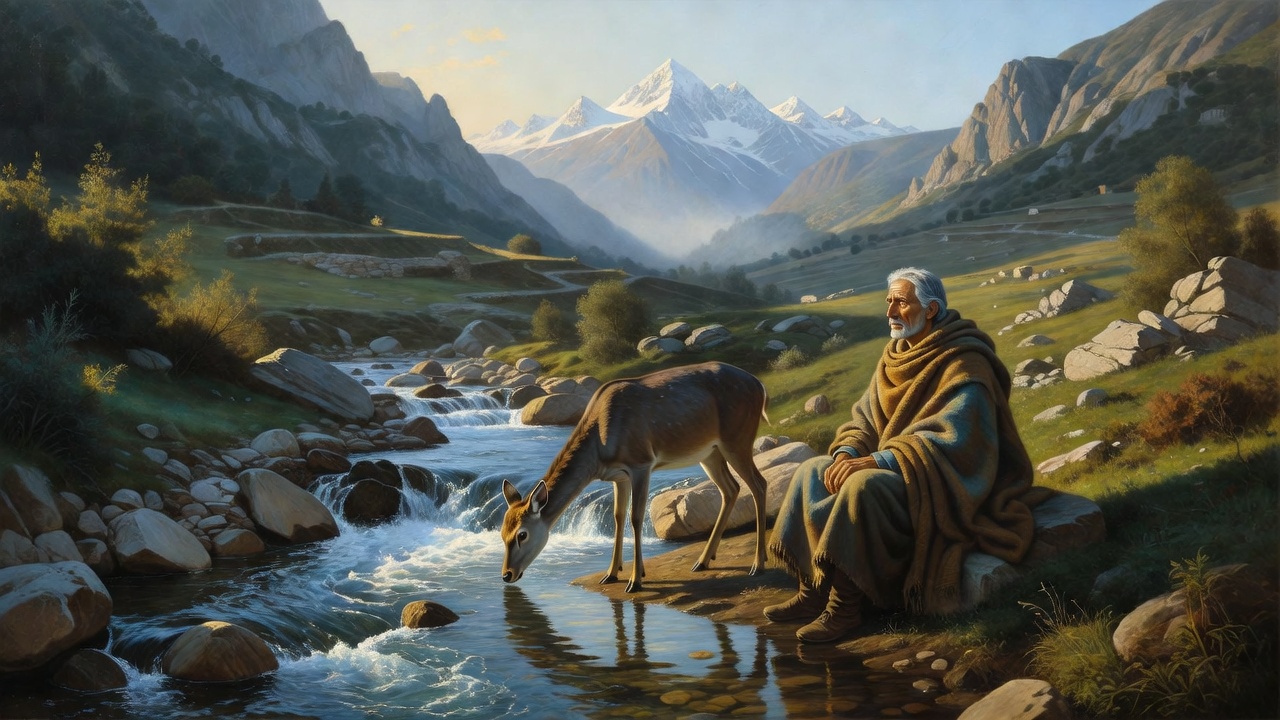
Did you know?
Thirsting for God Far from Home
- The psalm is introduced as a song of the sons of Korah, a Levitical family descended from the Levite Korah who took part in temple music and worship.Sources: the Bible text itself · Korah (Levite)
- The speaker longs for God from the northern borderlands, mentioning the Jordan, Mount Hermon, and Mount Mizar. Hermon is a towering range with multiple peaks reaching over 9,000 feet, while Mizar (meaning 'smallness') represents a lesser neighboring summit.Sources: the Bible text itself · Hermon · Hill Mizar
- The poem uses vivid water metaphors, moving from a thirsty deer longing for mountain streams to roaring waterfalls and crashing waves that symbolize overwhelming emotional distress.Sources: the Bible text itself
Notes written with AI assistance from open sources (Theographic Bible Metadata, CC BY-SA 4.0; Easton’s Bible Dictionary, public domain) and reviewed before publishing.
Places in this chapter
Only places identified with high confidence are shown (90% or more according to the scholarly sources compiled by OpenBible). Period map: DARE (Digital Atlas of the Roman Empire), CC BY 4.0; modern map: © OpenStreetMap contributors; places: OpenBible.info (CC BY 4.0).
Credits and license for this translation
Godigo dwagi yai po buku
The Holy Bible in the Dadibi Language of Papua New Guinea
Buk Baibel long tok ples Dadibi long Niugini
copyright © 1987, 2001 Wycliffe Bible Translators, Inc.
Language: Dadibi
Translation by: Wycliffe Bible Translators
This translation is made available to you under the terms of the
Creative Commons Attribution-No Derivatives license 4.0.
You may share and redistribute this Bible translation or extracts from it in any format, provided that:
You include the above copyright and source information.
You do not make any derivative works that change any of the actual words or punctuation of the Scriptures.
Pictures included with Scriptures and other documents on this site are licensed just for use with those Scriptures and documents.
For other uses, please contact the respective copyright owners.
2019-08-22
Source: http://png.bible/mps/ · eBible.org