Psalms 129
Godigo dwagi yai po buku · Tap a verse to see its cross-references.
Te Israel dabego Godiba gedu haluasa po olama, te augwa boi bidi dabe dolomainu yali
1Israel, nago dabolo te boi bidi dabego
nage dwai mu ilibo sę ebo po pusali,
te nage gesi bidide gagalasa,
megiba te usu nagasobao.
2Nago te tiwai po wali, “Te boi bidi dabego enaba
dwai sę mu yali,
te ena gesi ogwa bidide gagalasa,
megiba usu nagasobao.
Tiali goli, augwaligo ena aiyaba me elalubeo,” po wai.
3“Augwaligo ena dodolagia mu elama,
tama elali bįgo ena tigiwali tudi badu togwali.
Augwaligo te bobobage keni hauwa
te gide wę gamia tiwai pedalumainu ilali.
4Tiali goli, Genuai Bidi te doloba pai mu da,
tama agai ena tau selama,
tama ena te dwai bidi dabego nogode tagalama,
tama ena te olo sę ebo bidi ma bidibeo,” wali.
5Eno homugo dago te Saionba boi bidi
ebo bidi aiyaba elalumainu homu yai,
tama augwali pobeasa te augwa buluba ma pao.
6Te tialima, augwali te be daide
ugwadu pedalubo nosa tiwai ebao.
Augwaligo te nosa togosiąbadi, tama polo sasia pabo dao.
7Te bidi me deligo te nosa me sisinama,
tama dunama, tama me tolasa pabeo.
8Tama te we bidi dabe augwali pąba pobaso,
te augwaligo te tama po me wagobeo,
“Te dago homugo Genuai Bidigo nage wiegi yai sę yaibao.
Te Genuai Bidigo nogide, dago dagebolo
te tobage wiegi yai po mobao,”
augwaligo te tobage po wagobeo.
Did you know?
Endurance in Affliction and the Fate of Zion’s Foes
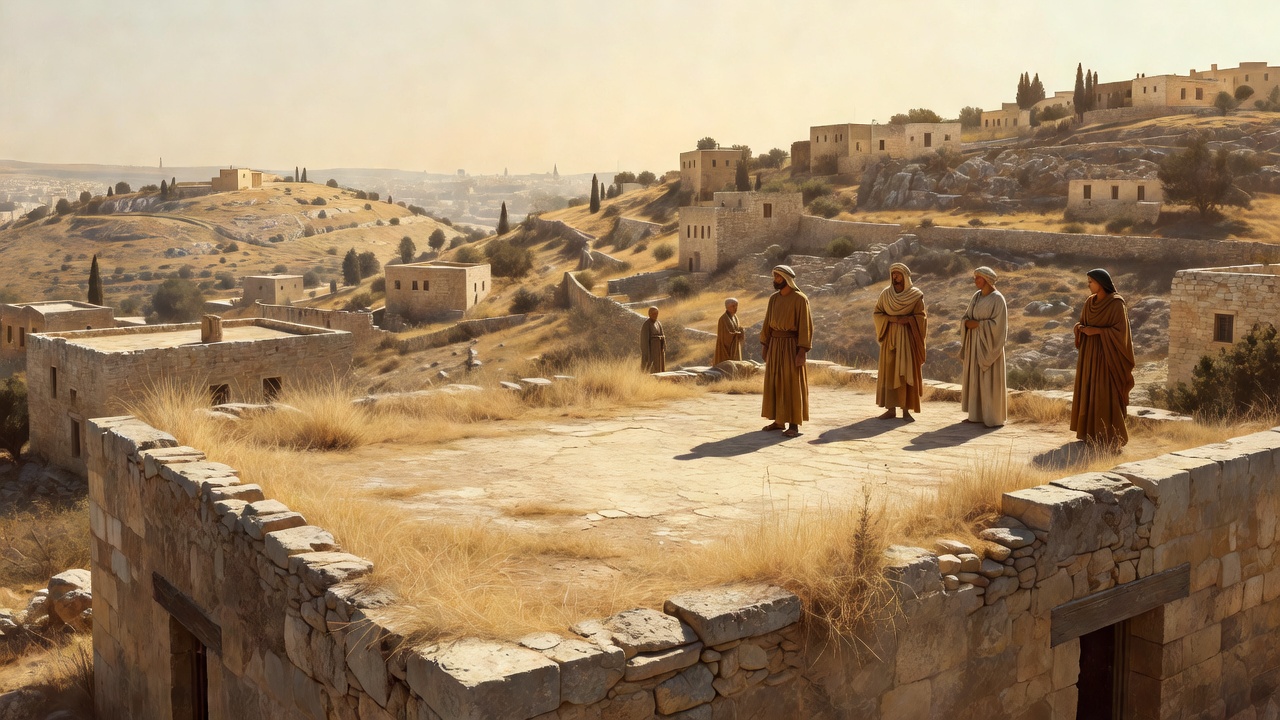
- The imagery of grass growing on rooftops reflects ancient construction, where flat roofs were often covered with packed earth. Seeds might sprout there after rains, but because the soil layer was shallow and exposed to the sun, the grass withered before it could mature or produce a harvest.Sources: the Bible text itself
- The phrase spoken by passersby in verse 8 mirrors the traditional agricultural greetings exchanged in ancient Israel, where travelers routinely blessed reapers and laborers working in the fields.Sources: the Bible text itself
- Zion was the prominent hill in Jerusalem where King David built his citadel, and in biblical poetry it often stands as a representation of God’s dwelling place and His people.Sources: the Bible text itself · Zion
Notes written with AI assistance from open sources (Theographic Bible Metadata, CC BY-SA 4.0; Easton’s Bible Dictionary, public domain) and reviewed before publishing.
Places in this chapter
Only places identified with high confidence are shown (90% or more according to the scholarly sources compiled by OpenBible). Period map: DARE (Digital Atlas of the Roman Empire), CC BY 4.0; modern map: © OpenStreetMap contributors; places: OpenBible.info (CC BY 4.0).
Credits and license for this translation
Godigo dwagi yai po buku
The Holy Bible in the Dadibi Language of Papua New Guinea
Buk Baibel long tok ples Dadibi long Niugini
copyright © 1987, 2001 Wycliffe Bible Translators, Inc.
Language: Dadibi
Translation by: Wycliffe Bible Translators
This translation is made available to you under the terms of the
Creative Commons Attribution-No Derivatives license 4.0.
You may share and redistribute this Bible translation or extracts from it in any format, provided that:
You include the above copyright and source information.
You do not make any derivative works that change any of the actual words or punctuation of the Scriptures.
Pictures included with Scriptures and other documents on this site are licensed just for use with those Scriptures and documents.
For other uses, please contact the respective copyright owners.
2019-08-22
Source: http://png.bible/mps/ · eBible.org