Numbers 1
Godigo dwagi yai po buku · Tap a verse to see its cross-references.
About this book
About Numbers
- Numbers is the fourth book of the Pentateuch. In Hebrew it is called be-midbar, “in the wilderness”; the Greek Septuagint called it Numbers, the name still usual, because it records a census in the wilderness of Sinai and a later census on the plain of Moab.Sources: Easton: Numbers, Book of
- Easton's Bible Dictionary (1897) presents Numbers, like the other books of the Pentateuch, as written by Moses. The history it contains runs from the second month of the second year after the Exodus to the beginning of the eleventh month of the fortieth year, about thirty-eight years and ten months.Sources: Easton: Numbers, Book of
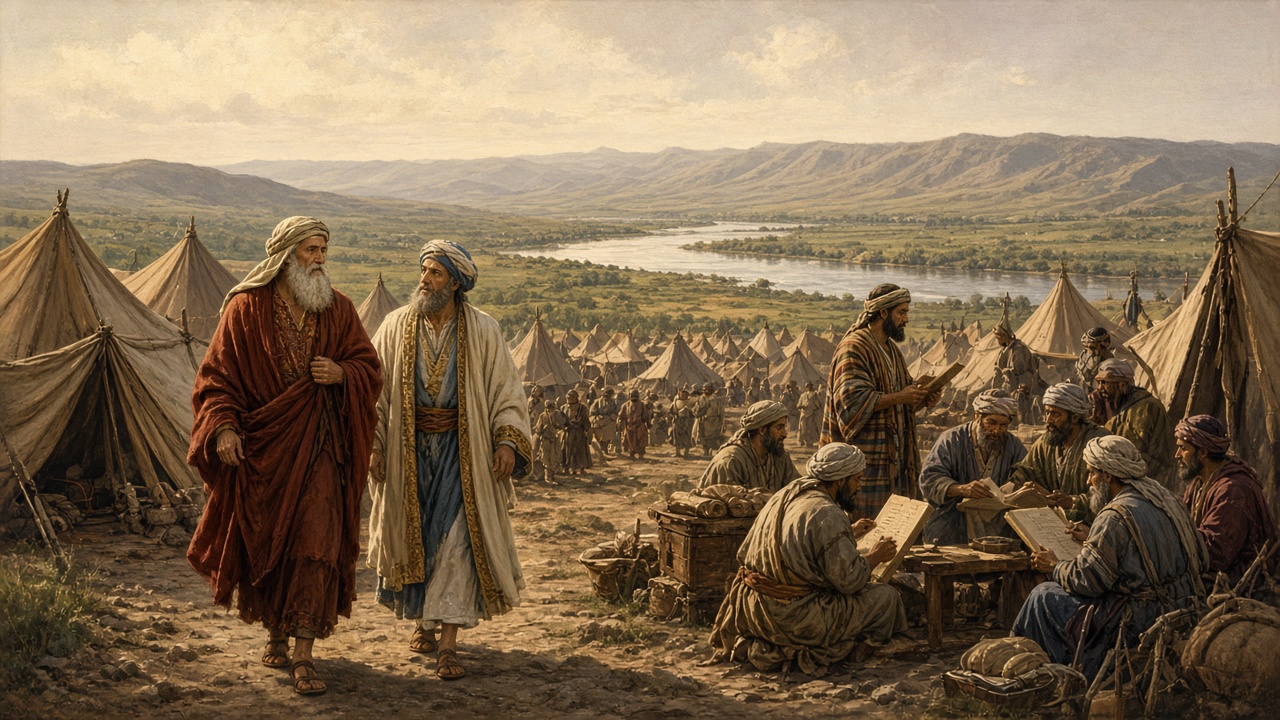
- The narrative begins at Sinai, the mountain district Israel reached in the third month after the Exodus and where they camped for about a year, and follows their route and encampments through the wilderness. It ends on the plains of Moab, east of the Jordan and the Dead Sea, opposite Jericho, their last camp before entering Canaan, the country west of the Jordan. Easton describes those years as a time of wandering in which that generation died in the wilderness, and notes that the people were fewer then than when they left Egypt.Sources: Easton: Numbers, Book of · Sinai · Moab · Canaan
- Easton divides the book into three parts: the census at Sinai and preparations to resume the march, including the Nazirite vow (1–10:10); the journey from Sinai to Moab, the sending of the spies and the report they brought back, and the people’s murmurings, eight times, at the hardships of the way (10:11–21:20); and the events on the plain of Moab before the crossing of the Jordan (21:21–36).Sources: Easton: Numbers, Book of
- While Israel was camped on the plains of Moab, Balak, son of Zippor and king of Moab, fearing them, sent to Pethor in Mesopotamia for Balaam, son of Beor, to curse them; the narrative says Balaam was unable to do so. Numbers 21:14 also cites “the book of the wars of the Lord,” a work that Easton says is uncertain, perhaps a lost writing of Israel or an Amorite record of the victories of their king Sihon.Sources: Easton: Numbers, Book of · Balaam · Balak
Notes written with AI assistance from open sources (Theographic Bible Metadata, CC BY-SA 4.0; Easton’s Bible Dictionary, public domain) and reviewed before publishing.
Te Israel dabe augwali Sainai bulu dude bidiyu, augwali painogo kegaluali
Te tobolu bidi dabego Israel dabe nedali
1Te si wabo kibu bede te Israel dabe te Isip bulu taga soali tudi badu nosali, te namba 2 poluago namba 1 dei, tede te Genuai Bidigo Moses dali te nai meni yai bulude te Godigo ugwa bede po miani. 2Genuai Bidigo te e tama po wali, “Nage dali Aron dage sigo te Israel dabego nogi tigidali siąo,” po wali. “Dage sigo tigidali bidi dabe sese tama nedama, tama augwa wąį hani tali tali asęyu yao. 3Te tigidali kibu be 20 yai bidi dabe dali, te kibu be 20 edelai bidi dabe dali, augwali te ami bidi nigabo usu yai bidi dabe dao, tama augwaligo nogi me asęyao. 4Tama dage sigo deli deli bidi wąįde deli deli tobolu bidi sa muyu ela pao, te dage si tau sabo bidi dabe. 5Tama dage si te sę ebo tau sabo bidi dabego nogi e tama dao.
Te Ruben hanide da, nago te Sedeurgo ogwa Elisur
sagameo.
6Te Simeon hanide da, nago te Surisadaigo ogwa
Selumiel sagameo.
7Te Juda hanide da, nago te Aminadapgo ogwa
Nason sagameo.
8Te Isakar hanide da, nago Suargo ogwa Netanel
sao.
9Te Sebulun hanide da, nago Helongo ogwa Eliap
sagameo.
10Tama te Josepgo wąį hanide da, te Efraim
hanide da, nago
te Amihutgo ogwa Elisama sagameo. Tama te
Manase hanide da, nago te Pedasurgo ogwa
Gamaliel sagameo.
11Te Benjamin hanide da, nago
te Gideongo ogwa Abidan sagameo.
12Te Dan hanide da, nago te Amisadaigo ogwa
Ahieser sagameo.
13Te Aser hanide da, nago te Okrango ogwa
Pagiel sagameo.
14Te Gat hanide da, nago te Duelgo ogwa Eliasap
sagameo.
15Te Naptali hanide da, nago te Enango ogwa
Ahira sagameo,” te po wai.
16Tama te Mosesgo te Israel we bidi hani tomode te tobolu bidi dabe sa muna silali. Augwali da, te augwa wąį hani polalubo bidi dabe dao. 18Tama te Moses de Aron si me te 20 tobolu bidi dabe, augwaligo te tigidali we bidi sisinagasao po wali, tama te si wabo poluago hasia wabo dei, tede augwali polo sisinagasali. Tama te tobolu bidi dabego te tigidali we bidi dabego nogi, me augwa hani tali tali me nogi asęyu yali. Augwaligo te 20 kibu be yai bidi dabe dali, te 20 kibu be edelai bidi dabe me nedali. 19Te Genuai Bidigo Mosesbolo wali po dolo tama wali pelama tama tiali. Te we bidi te nai meni yai bulu Sainaide bidibadi, Mosesgo augwaligo nogi selama, tama augwaligo nogi lista nigali. 20Augwaligo te bidi dabe te kibu be nogo si sągą si eyu yai bidi dabe me nogi asęyu, me kibu be bidi sese edelai bidi dabego nogi me asęyu yali. Te bage te ami bidi dabe nigabo usu yai bidi dabe dao. Augwaligo te bidi dabego nogi selama, tama augwaligo augwa hani bidi we wai nanide nogi lista nigilama tagalali. Te Rubengo hanide gagalali, te Jekopgo gomunai ogwade gagalali. Te bidi dabego namba e tama dao.
Te Rubengo hani bidi namba
te 46,500 bidi tama bidali.
Te Simeongo hani bidi namba
te 59,300 bidi tama bidali.
Te Gat hani bidi namba
te 45,650 bidi tama bidali.
Te Juda hani bidi namba
te 74,600 bidi tama bidali.
Te Isakar hani bidi namba
te 54,400 bidi tama bidali.
Te Sebulun hani bidi namba
te 57,400 bidi tama bidali.
Te Efraim hani bidi namba
te 40,500 bidi tama bidali.
Te Manase hani bidi namba
te 32,200 bidi tama bidali.
Te Benjamin hani bidi namba
te 35,400 bidi tama bidali.
Te Dan hani bidi namba
te 62,700 bidi tama bidali.
Te Aser hani bidi namba
te 41,500 bidi tama bidali.
Te Naptali hani bidi namba
te 53,400 bidi tama bidali.
Te tigidali te ami bidi nigabo usu yai bidi dabe namba te 603,550 bidi tama bidali.
47Te augwaligo te bidi dabego nogi asębo sogo, augwaligo te Livai hani bidi dabego nogi te nogi listade asębeo. 48Te magi baso meni, Genuai Bidigo Mosesbolo e tama po wali, 49“Nago te bidi dabego nogi sabo sogo, nago te Livai hani dabego nogi asęnamuo,” po wali. 50“Te menio. Nago te Livai dabebolo nago sę menama, tama augwali eno name ugwago nigali lotu be tonalubo sę eyu, me augwaligo eno be tomode munalubo nai tonalubo sę emainao, tama augwali tede sę eyu emainao. Tama dage gasaba bidigi pabo sogo augwaligo te name ugwago nigali lotu be dali, te be tomode munalubo nai sese dali tolasa pabo sę eyu emainao. Tama augwaligo augwa ugwa be eno ugwa be bagulama sę emainao. 51Te dagego te pesage nigilama, tama gasaba gudasa painogo, te ugwa be hųgiasa painogo da, teda te Livai dabego naga te ugwa be hųginama, tama te bede mubo nai dabe dali augwaligo naga sela pomainao. Tama dagego gesi noma pesage nigibo sogo da, te Livai dabego naga te eno ugwa lotu be sę emainao. Tama gasa olo bidi dabe teba pąba me asobo si da, dagego augwali ela muao. 52Te gasa Israel we bidi augwaligo augwa hani bagego plak ugwa dodolali madi augwaligo be tede naga sese peyu emainao, te augwa hani mu naga sisinibo madi. 53Tiali goli, te Livai dabego te ugwa be te eno ugwa be sę yalubo bagulama naga sę emainao, te augwaligo eno be tonaluyu emainogo. Tiyu, bidi me deli te be pąba asai madi ena sębę ilama ebode, eno dage Israel dabe sese dolidali weyu,” Genuai Bidigo te po wai.
54Tama te Mosesgo te Israel dabebolo Godigo te Moses agabolo wali po sese pusali, tama augwaligo wali pali.
Did you know?
The Census in the Wilderness of Sinai
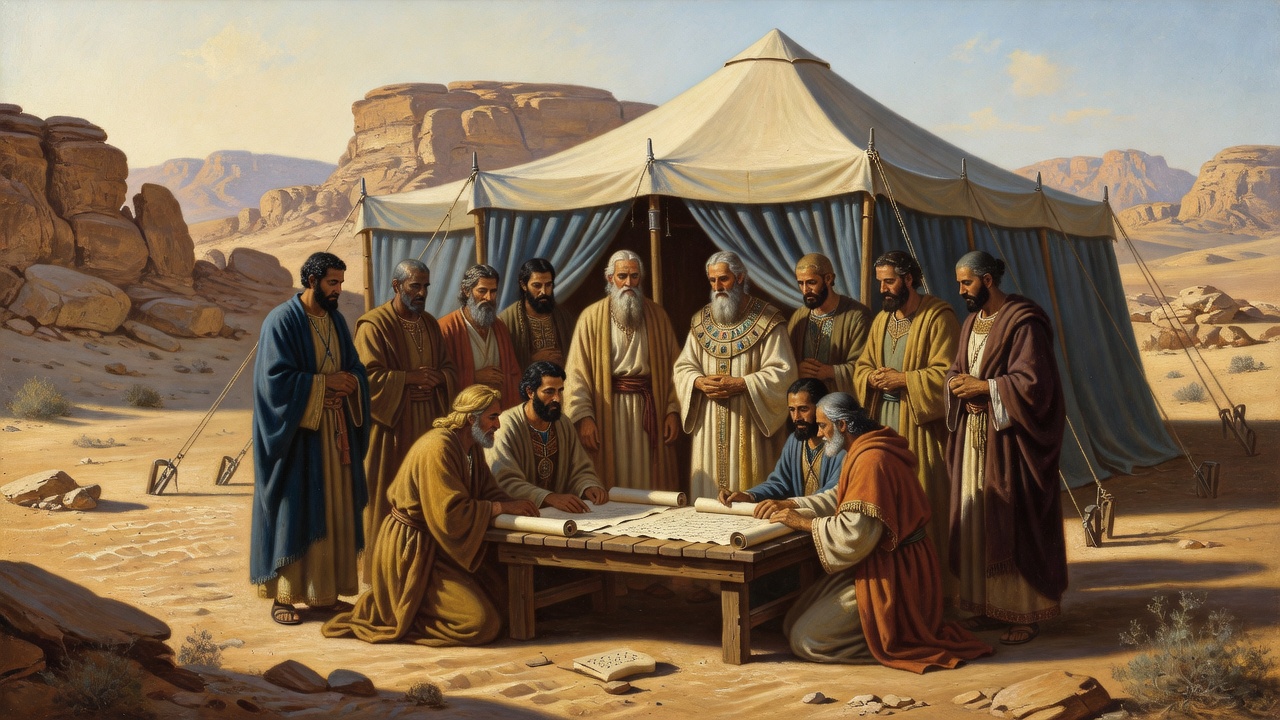
- The census was ordered in the Wilderness of Sinai on the first day of the second month in the second year after the Israelites departed Egypt. It counted every male aged twenty or older who was able to serve in the army, arriving at a total of 603,550 fighting men.Sources: the Bible text itself · Sinai
- Moses and Aaron conducted the registration alongside twelve appointed tribal leaders. Joseph was represented as two distinct tribal divisions named after his sons, Ephraim and Manasseh.Sources: the Bible text itself · Ephraim · Manasseh (son of Joseph)
- The tribe of Levi was entirely exempted from the military count. Instead, the Levites were assigned exclusively to care for, transport, assemble, and guard the tabernacle of the Testimony and its furnishings.Sources: the Bible text itself
Notes written with AI assistance from open sources (Theographic Bible Metadata, CC BY-SA 4.0; Easton’s Bible Dictionary, public domain) and reviewed before publishing.
Places in this chapter
- Egypt · 30.129, 31.308 · verse 1
- Wilderness of Sinai · Today: about 50 km around Jebel Musa · 28.540, 33.973 · verses 1, 19
Only places identified with high confidence are shown (90% or more according to the scholarly sources compiled by OpenBible). Period map: DARE (Digital Atlas of the Roman Empire), CC BY 4.0; modern map: © OpenStreetMap contributors; places: OpenBible.info (CC BY 4.0).
Credits and license for this translation
Godigo dwagi yai po buku
The Holy Bible in the Dadibi Language of Papua New Guinea
Buk Baibel long tok ples Dadibi long Niugini
copyright © 1987, 2001 Wycliffe Bible Translators, Inc.
Language: Dadibi
Translation by: Wycliffe Bible Translators
This translation is made available to you under the terms of the
Creative Commons Attribution-No Derivatives license 4.0.
You may share and redistribute this Bible translation or extracts from it in any format, provided that:
You include the above copyright and source information.
You do not make any derivative works that change any of the actual words or punctuation of the Scriptures.
Pictures included with Scriptures and other documents on this site are licensed just for use with those Scriptures and documents.
For other uses, please contact the respective copyright owners.
2019-08-22
Source: http://png.bible/mps/ · eBible.org