Joshua 1
Godigo dwagi yai po buku · Tap a verse to see its cross-references.
About this book
About Joshua
- Easton's Bible Dictionary (1897) explains Joshua's name as "Jehovah is his help" or "Jehovah the Saviour." He was the son of Nun, of the tribe of Ephraim, born in Egypt, and Moses' successor as leader of Israel; the wars of conquest he carried on are recorded in the book that bears his name. That entry does not name the book's author or give a date for its writing.Sources: Easton: Joshua · Joshua
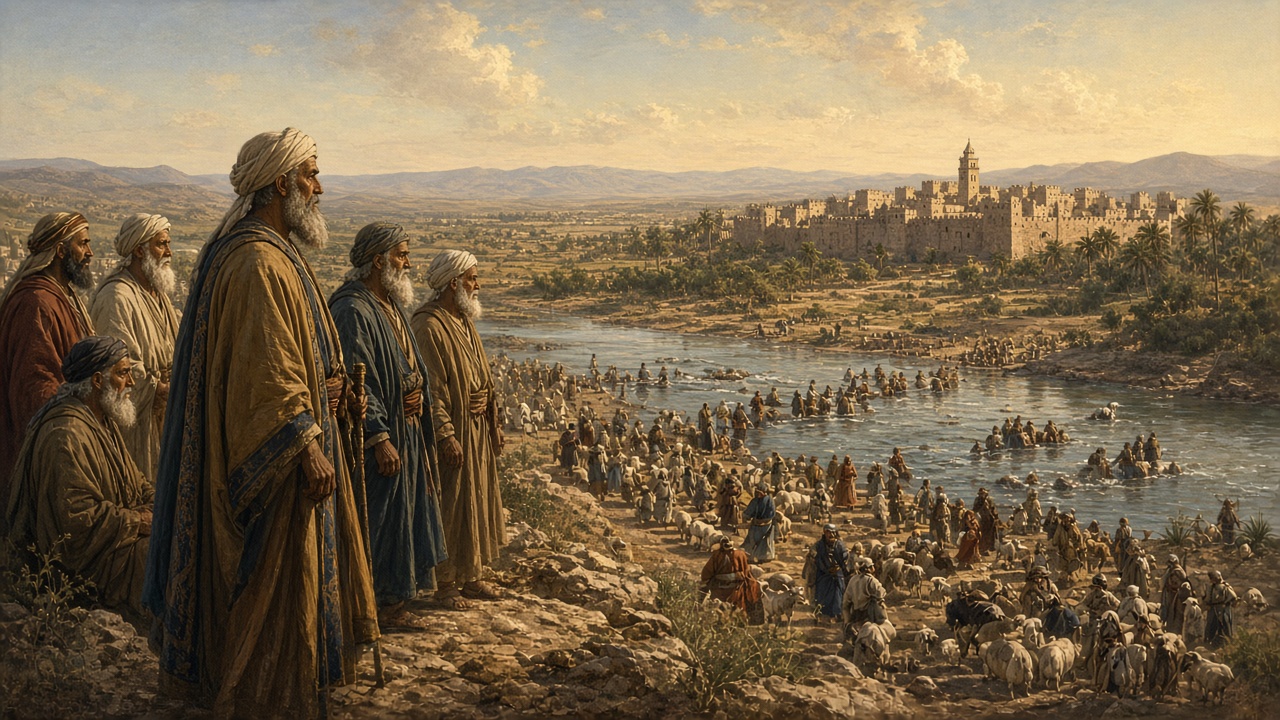
- When Joshua took command, the people were encamped at Shittim. They crossed the Jordan and camped at Gilgal, where, Easton says, he circumcised the people and kept the Passover. Jericho, a fortified city among palm trees about five miles west of the Jordan, is described as Canaan's strongest fortress and the key to western Palestine; Ai, east of Bethel, was the second Canaanite city taken, after an initial defeat.Sources: Easton: Joshua · Jericho · Ai
- Easton's Bible Dictionary (1897) says Joshua conquered six nations and thirty-one kings, then divided the land among the tribes, with Timnath-serah in Mount Ephraim assigned to himself. East of the Jordan, Gilead is described as a mountainous region held by the tribes of Gad and Reuben and the southern part of Manasseh.Sources: Easton: Joshua · Gilead
- Quoting Edersheim, the dictionary says Joshua's name was changed from Oshea, "help," to Jehoshua, "Jehovah is help," and notes that he is called Jesus in Acts 7:45 and Hebrews 4:8. It states that he died at the age of one hundred and ten, twenty-five years after crossing the Jordan, and was buried in his own city of Timnath-serah; of his father Nun, nothing more is recorded than that he was Joshua's father.Sources: Easton: Joshua · Joshua · Nun
- Before leading the conquest, Joshua commanded Israel's host against the Amalekites at Rephidim, served as Moses' minister, and was one of twelve sent to explore Canaan; only he and Caleb brought back an encouraging report. As Easton sketches the book, it runs from the crossing of the Jordan and the taking of Jericho through years of war to the division of the land and Joshua's last address.Sources: Easton: Joshua
Notes written with AI assistance from open sources (Theographic Bible Metadata, CC BY-SA 4.0; Easton’s Bible Dictionary, public domain) and reviewed before publishing.
Te Israel dabe augwaligo te Kenan tǫ sainu sisi elaluali
1Te Moses aga te Godigo sę bidi dao. Tama Josua te Nungo ogwa te Moses tau sali bidi dao. Moses isai madi, tama Godigo Josuabolo te tiwai po wai, 2“Eno sę bidi Moses isalio. Tialima, nage megi da, sisi yao. Nage dali te Israel we bidi tigidali dage e Jordan wę nogelama, tama eno dage mawainogo ebo te tǫba sabolao. 3Eno Mosesbolo te tiwai po dąų walali, te dage soabo tǫ tigidali badu, te eno dagebolo mawaibao wai dao. 4Te dagego tǫ sesege badu gagalama, te tiwai elaluaibao. Te olo masigi kemi tǫ elalubo te olo page badu gagalasa, u bulu du Lebanon te olo page meba, teba usu nigi pelama, tama te giliga pedalubo badu te genuai wę Yufretis te badu usu nigi peyu, tama te Hit we bidi hanigo tigidali tǫ pedai badu dąį igi pelama, tama te giliga dega sigi pabo badu te genuai tamu ąį, te badu dąį igi paibao. 5Te bidi me deligo te dage aiyaba elalumainu elama, te nage isimainu ebo, te usu me egobeo. Te ena nage dali bidiyu, te ena Moses dali bidali tiwai gilama yaibao. Eno homugo nage me gegeda palogobeo, eno nage munu me taga pogobeo. 6Nage bomo elama dolaluyu, tama nage wi me elamuo. Magi baso meni. Te nago te we bidi dabe augwali te eno augwalibolo mawaibao wali te tǫ pedaiba odasa pomainu yaibao, te tiwai eno te po augwa wąįbolo dąų wai dao. 7Tama tibaso, nage bomo mu elama dolaluyu, tama nage wi me isiąyu, tama habu bulu me pelamuo. Nago bugagia tonaluyu, tama eno sę bidi Mosesgo nagebolo mani bomai po tigidali mu wali pao. Nago te bomai po me badu dwasianu munu me tagalamuo. Nago te bomo yai po dabe tigidali bugagia wali peyu da, teda te nage mena badu pabo te nage munu me dolomainu me egobe, te nage bugagia naga bidaibao. 8Nago te bomai po elalubo bukugo po munu me homugo gegeda pelamuo. Te nago bugagia tonaluyu, tama te bomai pode elalubo tigidali po mu wali pomainogo eyu, nago te giligade me, hulide me, nago te bomai pode bugagia skul elama, konea sao. Te nago tama tiyu da, te nago gasa sę tigidali ebo te wiegi yai naga ilaibao. 9Eno nagebolo wai dao. Tama nage bomo elama dolaluyu, tama nage wi munu me isiąyu, tama nage magi nai me delide habu bulu me pelamuo. Magi baso meni, ena God, te nago Genuai Bidi, te ena nage dali te nage pabo tigidali buluba paibao,” te po wali.
10Tialima, Josuago te we bidi augwali tonalubo tobolu bidi dabebolo te po wai, 11“Dage te we bidi bidibo pesage tomode bagula biliyu, te we bidi augwalibolo te po waiąo, ‘Te duga nai dabe sisinao,’ po wao. ‘Sela sogo naga digi elalubao, tama dagego e Jordan wę nogelama, tama God, duga Genuai Bidigo, dagebolo te mawaibao wali te tǫ dagego saibao,’ tama po wao,” Josuago te po wai.
12Tama Josuago te po te Rubengo hanibolo, me Gatgo hanibolo, me te Manasego hani me badubolo me te tiwai po wai, 13“Dagego te po bugagia homu kone palao, te tigidali po Mosesgo dagebolo wai dao, aga te Genuai Bidigo sę ebo bidi bidali. Agai te po wali, ‘God, duga Genuai Bidigo, e tǫ dagebolo menama, tama dage tede bidiyu, toma tuabo madi elaluaibao,’ te po wai. 14Tialima, dagego e tǫ habu badu dagego selama da, tama duga we wai puluba me, te kibu dabe badi, augwali ede te wę Jordan e badu te Mosesgo mani tǫde tonaluyu bidagameo. Tiali goli, dagego ami bidi dabe da, augwa hwįabo nai dabe dodolama, tama e wę nogelama, te abagi dabe dali augwali polasa pelama, tama augwali tudi badu tonaluyu, te wąbi hwįbo tau somainao. 15Te duga Genuai Bidi Godigo e tǫ dagebolo mawai dao. Tama dagego te gasa Israel hani bage duga abagi dede tau siyu, tama agai augwalibolo mabo tǫ sabo sogoba usu nagasu yao. Tama elama, te boi pilama wiegi yai pemene ebo sogo elaluyu, tama augwali me te toma tueibao, te dage megi ebo tiwai gilama yaibao. Tama tiliama, tama nosali dage duga e tǫba ma asomainogo, polobadu te tǫ Mosesgo dagebolo mawai dao, e tǫ te Jordan ąį badu, te giliga pedalubo badu dao,” Josuago te po wai.
16Tama tigidaligo Josuabolo po wei ponoyu, te po wai, “Awe,” wali. “Te dago nago dabolo wali po tiwai gilama, te tama tigidali sę dago yaibao. Tama tigidaliba nago da tagala palobaso da, teda da teba paibao. 17Te dago nago po tigidali wali peyu, te dago Mosesgo po sesemane sogo wali pali tiwai gilama yaibao. Tama dena homugo te God, naga Genuai Bidi, te nage dali bidiyu, te polobadu Moses dali bidali tiwai gilama bidimainao. 18Te bidi me deligo hagoma eyu, nago po sela sąbaso da, te aga isimainu yaibao. Tiali goli, nage da, nage te bomo elama bidiyu, tama nage wi munu me elamu dao!” wali, te we bidi dabego.
Did you know?
Joshua Assumes Leadership
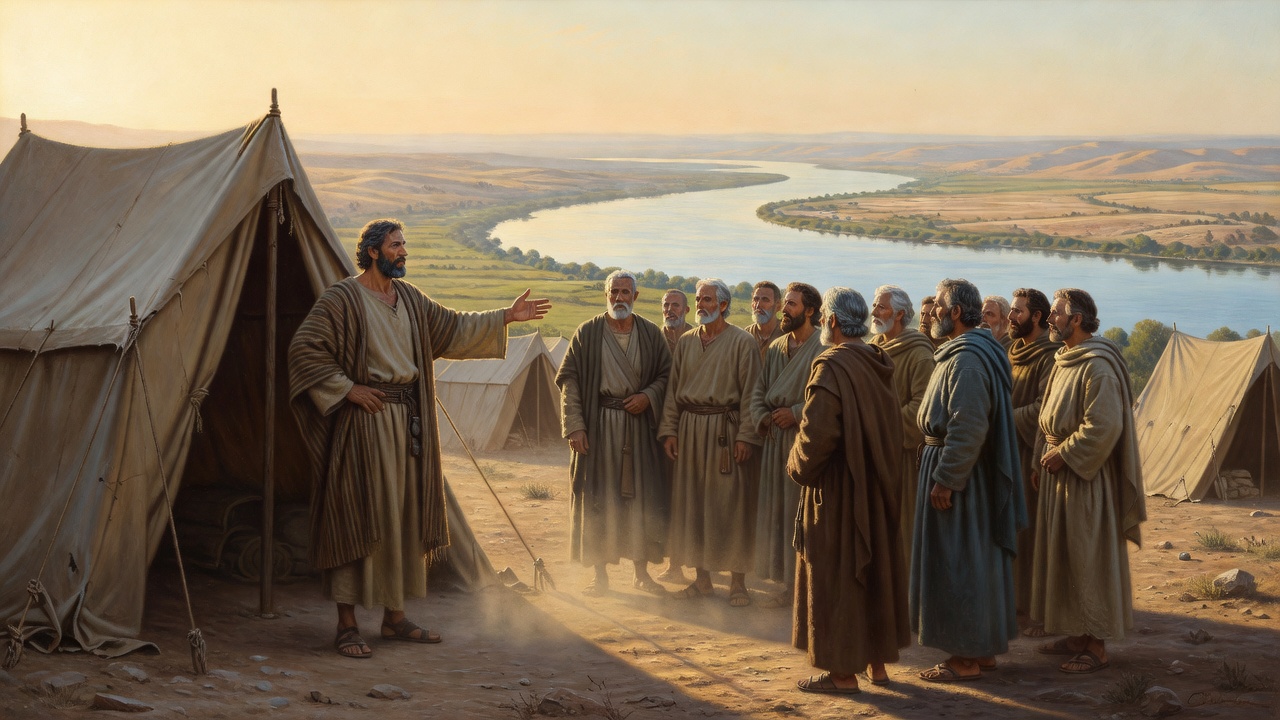
- Joshua, the son of Nun from the tribe of Ephraim, served as Moses' assistant and military commander before being commissioned to succeed him as leader of Israel. His name means "Jehovah is his help" or "Jehovah the Saviour."Sources: Joshua · the Bible text itself
- The territory outlined in God's commission to Joshua stretches from the southern wilderness and the Lebanon mountain range in the north to the Euphrates (called "the great river") in the east and the Mediterranean ("the Great Sea") to the west.Sources: the Bible text itself · Lebanon · Euphrates · Great Sea
- The tribes of Reuben, Gad, and the half-tribe of Manasseh had already received territory east of the Jordan River under Moses. However, their armed warriors were required to cross over ahead of the other tribes to assist them until the entire land was secured.Sources: the Bible text itself · Manasseh (son of Joseph)
Notes written with AI assistance from open sources (Theographic Bible Metadata, CC BY-SA 4.0; Easton’s Bible Dictionary, public domain) and reviewed before publishing.
Places in this chapter
- Jordan · Today: Jordan River · 31.761, 35.558 · verses 2, 11, 14, 15
- Euphrates · Today: Euphrates River · 31.004, 47.442 · verse 4
- Great Sea · Today: Mediterranean Sea · 31.805, 34.170 · verse 4
- Lebanon · 33.540, 35.584 · verse 4
- Negeb · 31.245, 34.841 · verse 4
- Syria · Today: Aram · 33.511, 36.306 · verse 4
Only places identified with high confidence are shown (90% or more according to the scholarly sources compiled by OpenBible). Period map: DARE (Digital Atlas of the Roman Empire), CC BY 4.0; modern map: © OpenStreetMap contributors; places: OpenBible.info (CC BY 4.0).
Credits and license for this translation
Godigo dwagi yai po buku
The Holy Bible in the Dadibi Language of Papua New Guinea
Buk Baibel long tok ples Dadibi long Niugini
copyright © 1987, 2001 Wycliffe Bible Translators, Inc.
Language: Dadibi
Translation by: Wycliffe Bible Translators
This translation is made available to you under the terms of the
Creative Commons Attribution-No Derivatives license 4.0.
You may share and redistribute this Bible translation or extracts from it in any format, provided that:
You include the above copyright and source information.
You do not make any derivative works that change any of the actual words or punctuation of the Scriptures.
Pictures included with Scriptures and other documents on this site are licensed just for use with those Scriptures and documents.
For other uses, please contact the respective copyright owners.
2019-08-22
Source: http://png.bible/mps/ · eBible.org