Jeremiah 47
Godigo dwagi yai po buku · Tap a verse to see its cross-references.
Genuai Bidigo po te Filistia dabede elaluai
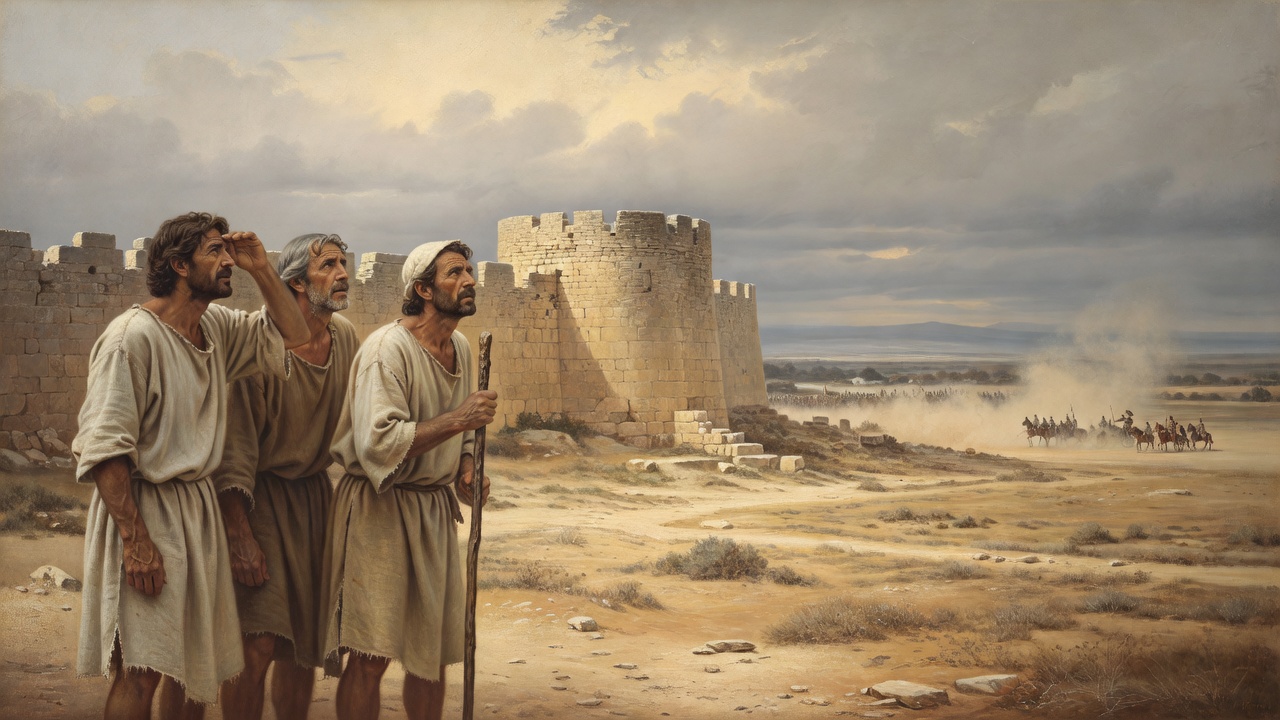
1Genuai Bidigo te kantri Filistia dali po elaluai, tama agai te po te Jeremaiabolo mawai, te Isip kingo te Gasa buluba boi hwįsiąbadi, te Filistia dabego genuai taun me deli dao. 2Genuai Bidigo te tiwai po wali,
“Suao. Te not badu ąį genuai pedalubao.
Te augwali bomonama udayu, te boma pai mu dao.
Te wę asobo bomo tiwaigo te tǫde elalubo nai dali
tigidali mesegelaibao.
Tama agai taun dali, te taunde bidali we bidi dabe dali,
mesega saibao.
Te tǫ kantri we bidi tigidali wi ebaso,
bomonama i weyu, dwai gela mu waibao.
3Augwaligo te hos dabe udayu,
sągą pidi bu wabo odaibao.
Te augwaligo karis dabe bomonama kekeyu,
te wil dabego kidagalo wabo odaibao.
Tibaso, te we bidi dabe wi umabo ebaso, wi paibao.
Te ayago te augwa wai puluba dabede homu kone
palama,
te augwali tau siyu, me tonalugobeo.
Augwa nogo bomo kimi mu isiyu bidaibao.”
4“Magi baso meni, te Filistia tigidali dolabo sogo,
te pedelalio.
Eno augwali sunumi paliama,
te augwaligo Tair me Saidon dabe tau me sogobeo.
Polobadu mu te Filistia dabe augwa wąį nǫų dabego
te ailan Krit tagalama, te genuai buluba bidagasali.
Tialima, megi da, Genuai Bidi eno te dwasianu bidalubo
Filistia hani dabe dolainogo homu ebo dao.
5Te Gasa hanude bidibo bidi dabe augwa haliga sęgę
dwai mu elama,
augwa tobolu nisi pola sąwaibao.
Tama te taun Askelon mu dolaibao.
Dage te odo malu bulude bidalubo dwasianu hani,
nisu sogo dagego homu dene ebo silama,
te dagego duga tigiwali togobo kolesaga
tagalaibawe?
6Dagego e tama tiwai i wali,
‘Genuai Bidigo bainat hwą,
nisu sogo nago te da dolobo sę silaibawe?
Bainat, te naga bulubo be tomoba ma bula sao.
Nago te sę tagalama, toma nao,’ dagego te po wali.
7Tialima, ena, Genuai Bidi,
eno te sę ena bainatba mawai.
Tama tibaso, bainatgo te sę ebo me tagalogobeo.
Eno te hwą bainatgo te bulu Askelonba boi hwįgi
pomainogo,
me te nambisba te gasa we bidiba boi hwįgi
pomainogo tagala palai dao,” wali
Did you know?
Judgment on the Philistines
- Jeremiah refers to the Philistines as the remnant from the coasts of Caphtor. Biblical traditions identify Caphtor as the place of origin of the Philistines, a location widely associated by scholars with Crete or parts of the eastern Mediterranean coast.Sources: the Bible text itself · Caphtor
- The chapter directs its warnings against Gaza and Ashkelon, two of the five prominent Philistine cities along the Mediterranean coast. Both were ancient centers known for their strategic position and trade links connecting Egypt and the surrounding regions.Sources: the Bible text itself · Gaza · Ashkelon
- The prophecy notes that the coming destruction would cut off every remaining ally from Tyre and Sidon. These two major Phoenician ports to the north were key maritime centers whose interests were closely intertwined with the coastal region.Sources: the Bible text itself · Tyre · Sidon
Notes written with AI assistance from open sources (Theographic Bible Metadata, CC BY-SA 4.0; Easton’s Bible Dictionary, public domain) and reviewed before publishing.
Places in this chapter
- Gaza · Today: Tell Harube · 31.504, 34.464 · verses 1, 5
- Sidon · Today: Sandikli archaeological site in Sidon · 33.561, 35.372 · verse 4
- Tyre · 33.271, 35.196 · verse 4
- Ashkelon · Today: Tel Ashkelon · 31.664, 34.546 · verses 5, 7
- Great Sea · Today: Mediterranean Sea · 31.805, 34.170 · verse 5
- Philistia · 31.664, 34.546 · verse 5
Only places identified with high confidence are shown (90% or more according to the scholarly sources compiled by OpenBible). Period map: DARE (Digital Atlas of the Roman Empire), CC BY 4.0; modern map: © OpenStreetMap contributors; places: OpenBible.info (CC BY 4.0).
Credits and license for this translation
Godigo dwagi yai po buku
The Holy Bible in the Dadibi Language of Papua New Guinea
Buk Baibel long tok ples Dadibi long Niugini
copyright © 1987, 2001 Wycliffe Bible Translators, Inc.
Language: Dadibi
Translation by: Wycliffe Bible Translators
This translation is made available to you under the terms of the
Creative Commons Attribution-No Derivatives license 4.0.
You may share and redistribute this Bible translation or extracts from it in any format, provided that:
You include the above copyright and source information.
You do not make any derivative works that change any of the actual words or punctuation of the Scriptures.
Pictures included with Scriptures and other documents on this site are licensed just for use with those Scriptures and documents.
For other uses, please contact the respective copyright owners.
2019-08-22
Source: http://png.bible/mps/ · eBible.org