Isaiah 64
Godigo dwagi yai po buku · Tap a verse to see its cross-references.
1O Genuai Bidi, dago homugo nage te dagalu
buga sąnama, dulao homu ebao,
te bulu du dabe nage asobo sogo dwai midigi mu
saibao.
2Augwali te siade ulalubo sene sospende tomode
te posolo ąį punuguna tagalobo tiwai yaibao.
Nage te naga genuai bomo dali asobaso,
te boi bidi dabego nago nogi konemainao,
te nage augwaliba pedalubo sogo
te tigidali tǫ kantri we bidi dabe
wi elama, noma saibao.
3Polobadu nage asobode, te gasagi yai
nai tedali mu pedelali,
tama dago te suyu, dwai noma mu sali.
Te bulu du dabe nage asali sogo,
te dwai midigi mu sai dao.
4Polobadu te bidi mego te god me deli
tobage bomai sę yali po odobeo,
te we bidi tau siyu, te konealu tonaluabo sę.
Ma, bidigo aga gedugo te god me deligo
te tobage bomai sę ebo subeo. Menio.
Genuai Bidi, nago naga te tiwai bomai sę ebo dao.
5Nago pemene eyu, te doloba pai kolesaga mu elama,
nago te godolo homu ebo kolesaga
wali pabo bidi dabe tau sagasobo dao.
Tiali goli, nago daba wado po wai goli,
te dago kolesaga me hasegelebeo.
Dago te dwai sę yabo bomo iduai dao.
6Da tigidaligo dwai sę eyu,
te da nago gedude meda yai mu elalubao.
Te kolesaga dabe dago homugo
doloba pai kolesaga da olama,
te kolesaga dabe te dago gawea pai nai tiwai dao,
tiali goli dago te ebo, augwali nago
gedude dwai mu eyu,
te ugwa meda dwai mu tiwai ebao.
Te dena ebo dwai sęgo te pąde da mu haga yabo homu
yai,
te wa pai ni yabe te waligo sela pabo
tiwai yaibao wali.
7Te nageba gedu haluasa po weyu,
te nage nogi wabo bidi meni yai,
te nage pąba asu,
nageba homu kolesaga kęą pabo bidi meni,
magi baso meni,
nago naga gesabidi daba geme dula selama elalu,
te nago dena sęgęgo da dodolomainu ilama,
te da dwai mu bidibao.
8Tialima, Genuai Bidi, nage dago aya dao.
Nage te sospen sene tǫgo nigibo bidi tiwai,
tama da nago te sene nigainu sabo
tǫ tiwai elalubao.
Te nago nogogo digi da tigidali nigibo dao.
9O Genuai Bidi, nago dade haliga sębę mu idu,
te sesemane sogo dago ebo
dwai sęde homu kone paludigio.
Menio.
Da tigidali te naga we bidi da homu elama,
te nago daba olo mu tau sabo wiegi yai kolesaga
yao.
10Te nago tedali gasagi yai taun dabe te olo bulu dwai
tǫ pesage tiwai elalubao,
te Jerusalem me mu dolama, tede bidi me bidibeo.
11Tama nago tempel be da, nago te po weyu,
da teba pelama, nageba lotu waibao wali,
te me siago delama, tigidali dolali.
Polobadu te be te gasa sawi yai mu elalu,
te da bulali wąį dabe teba pelama,
te nago nogi ugwaba sali.
Tiali, megi da, te dolali,
te dago godolo homu yali gasa wiegi yai pesage
dabe,
augwali me te dolama elalubao wai dao.
12Genuai Bidi, nago te sę dabe sulama,
nago haliga hogodiyu,
te magi sę me deli yabo homu ebo meni da, agawe?
Te nago homugo dago te sęgę hauwa
tolodumaina homu elama,
tama nago dago gedu haluasa
po wabo wei ponisąma eba, agawe?
Did you know?
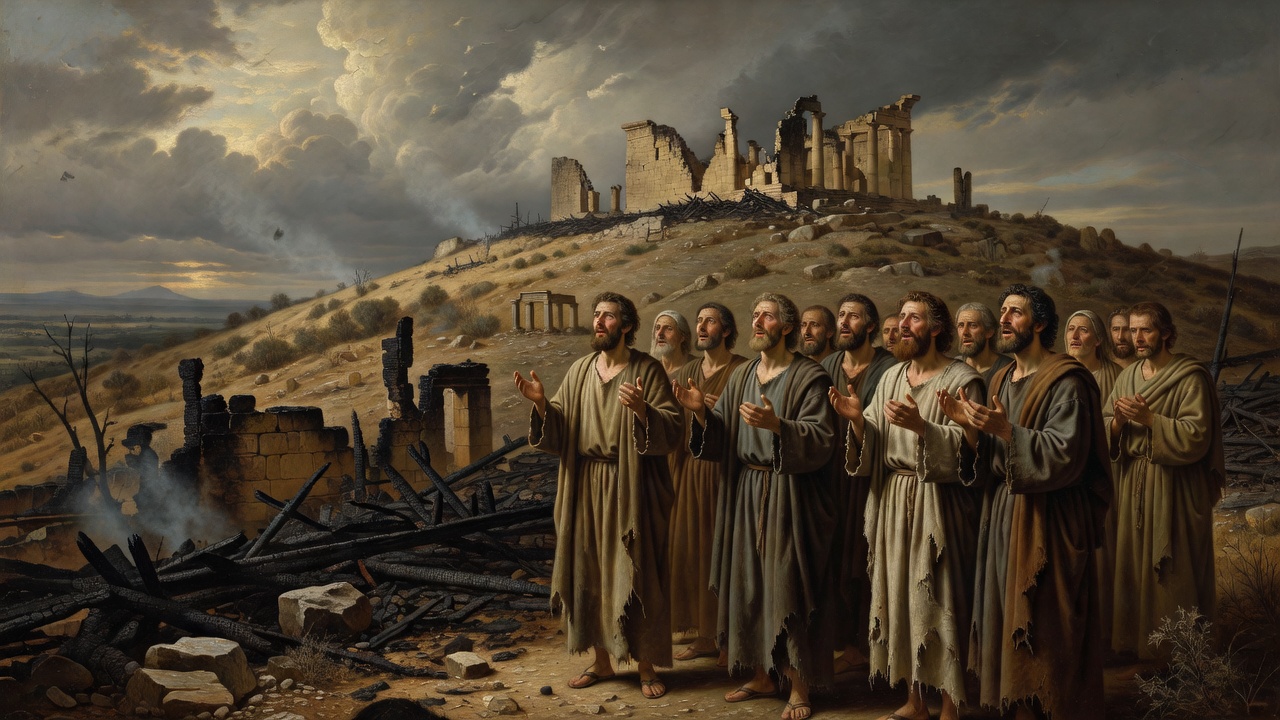
A Prayer for Mercy Amid Ruin
- The passage opens with a plea for God to rend the heavens and descend with world-shaking power, like fire that kindles brushwood. Yet it contrasts this desire for divine presence with a confession of human unworthiness, comparing people to withering leaves swept away by their own iniquities.Sources: the Bible text itself
- In Isaiah 64, the community appeals to God as a Father and craftsman, declaring, "we are the clay, and You are the potter." This imagery emphasizes human frailty and total dependence on God, pleading for divine mercy despite their acknowledged guilt.Sources: the Bible text itself
- The chapter laments the destruction of sacred spaces, describing Zion and Jerusalem as desolate wastelands. It specifically mourns the burning and ruin of the holy temple where past generations had offered praise.Sources: the Bible text itself · Zion · Jerusalem
Notes written with AI assistance from open sources (Theographic Bible Metadata, CC BY-SA 4.0; Easton’s Bible Dictionary, public domain) and reviewed before publishing.
Places in this chapter
Only places identified with high confidence are shown (90% or more according to the scholarly sources compiled by OpenBible). Period map: DARE (Digital Atlas of the Roman Empire), CC BY 4.0; modern map: © OpenStreetMap contributors; places: OpenBible.info (CC BY 4.0).
Credits and license for this translation
Godigo dwagi yai po buku
The Holy Bible in the Dadibi Language of Papua New Guinea
Buk Baibel long tok ples Dadibi long Niugini
copyright © 1987, 2001 Wycliffe Bible Translators, Inc.
Language: Dadibi
Translation by: Wycliffe Bible Translators
This translation is made available to you under the terms of the
Creative Commons Attribution-No Derivatives license 4.0.
You may share and redistribute this Bible translation or extracts from it in any format, provided that:
You include the above copyright and source information.
You do not make any derivative works that change any of the actual words or punctuation of the Scriptures.
Pictures included with Scriptures and other documents on this site are licensed just for use with those Scriptures and documents.
For other uses, please contact the respective copyright owners.
2019-08-22
Source: http://png.bible/mps/ · eBible.org