Ezekiel 25
Godigo dwagi yai po buku · Tap a verse to see its cross-references.
Esekielgo te gasa tǫ kantri dabe dolabo po pusali
Godigo te Amon dabe dolaibao
1Genuai Bidigo enabolo te tama po wali, 2“Tǫde bidio, nago te Amon dabego tǫba tonao, te augwali dolabo po wao. 3Augwaliba te tama po walao, ‘Dage Amon dabego ena God Genuai Bidigo poba bugagia olo muao. Dagego eno be dolali, me te boi bidi dabego te Israel dabego tǫ dolali me, dagego suali, te Juda dabe selama, te digibulu buluba kalabus igi pali. Tama dagego te sę dabe ebo sulama, tega weyu, wiegi yai homu pemene eyu, dili elebo kolesaga yai dao. 4Tialima, eno te bidi hani me deli te giliga asobo badu asomainu ilama, te augwaligo dage dali boi hwįagaselama, te dagego tǫ saibao. Te augwaligo sel ugwa be dabe te dagego tǫde sę elama, tede bidaibao. Te augwaligo nai dagego tǫde sela tuyu, te dagego bulmakau ame pę dabe sela tuyu yaibao. 5Te eno taun Raba, te dagego genuai taun, te dolama, te kibu kamel dabego nosai tubo pesage pedelaibao. Te tǫ kantri Amon te kibu sipsip dabego obo dabe nigibo pesage pedelaibao. Tama dagego te tiwai koneyu, ena digi ena Genuai Bidi mu da po wagameo,’ te po te Amon bagebolo wao,” te po wali.
6“‘Te eno te sę dage dali magi baso yaibawe? Te ena God Genuai Bidigo te tama po obao. Eno koneani, dagego te Israel dabe godolo homu meni isąwani, te Israel tǫ kantri dolali sogo, dage wiegi yai pemene elama, nogo bada eliyu, wele siyu, kęnę wai dao. 7Dagego te tama kolesaga yali, tibaso te eno dageba dwai dene momainogo te gasa hanigo dage sagasomainu elama, te dageba dwai dene momainu yali. Te eno dage dolobo sę mu elama, tama dage te tǫ kantri me deli bidibo tiwai me egobeo. Te tiwai dagego bugagia koneyu, ena digi ena Genuai Bidi da po waiagameo,’ te po te Amon we bidiba pusao,” Genuai Bidigo enabolo te po wai dao.
Godigo po weyu, te Moap kantri dolaibao wali
8Genuai Bidigo po ma weyu, te tama po wai, “Ena God Genuai Bidi, eno po obao, te Moap dabe me Seir dabe, augwaligo te homu yali, te Juda dabe te gasa hani bidi dabe tiwai si da homu yai dao. 9Tialima, eno te boi bidi dabe aselama, te tǫ kantri dąį pąde elalubo te Moap dabego bomai taunba hwįagasomainu yaibao. Te augwaligo te wiegi yai taun dabe dolaibao, te taun Bet Jesimot, me taun Balmeon, me taun Kiriataim dao. 10Te boi bidi dabe te giliga asobo badu asama, te Moap dabeba me, Amon dabeba dali siba boi hwįnama, te augwali aiyaba elaluama, te augwaligo tǫ saibao. Tama te Amon dabe te tǫ kantri pedai tiwai me deli ma bidigobeo. 11Awe, eno te dwai dene mabo sę te Moap dabeba ebaso, tama augwa te tiwai bugagia koneama, ena digi ena Genuai Bidi mu da po omainu yaibao,” wali.
Godigo po weyu, Idom tǫ kantri dolaiba wali
12Genuai Bidigo te tama po wali, “Ena God Genuai Bidi, eno po obao, Idom dabego dwai kolesaga mu te Juda dabeba wei ponani, tialima te Idom dabego yali dwai sę te genuai mu igi pai dao. 13Te eno megi te po obao, eno te Idom dabeba dwai dene umabo mu menama, te tigidali we bidi ela munama, te augwa kibu sibi dabe tigidali me elaibao, te not badu te distrik Temande gagalama peyu, te saut badu te taun Dedanba usu naibao. Te tǫ kantri Idom olo mu elaluaibao. 14Eno te Idom dabego dwai kolesaga wei ponabo homu yali, tibaso te eno ena we bidi augwali te Israel dabe, te augwali elali boi hwįgi pomainu tagala palaibao. Te kolesagade te Idom dabego eno haliga sębę genuai ebo koneaibao. Tialima, te Idom dabego te tiwai bugagia koneaibao, ena digi eno augwaligo dwai sę yali wei ponobao homu yaibao. Ena God Genuai Bidi eno te po wai dao.”
Godigo po weyu, te Filistia dabe dolaibao wali
15Genuai Bidigo po ma weyu, te tama po wali, “Ena God Genuai Bidi, eno te po obao, te bobobage sogo te Filistia dabego te Israel dabe godolo homu me isiąma, te augwaliba boi bidi ebo sę yalio. Te Filistia dabe augwaligo dwai sę wei ponobo sę umabo mu eyu, te augwali mu dolai dao. 16Tibaso, megi da, eno te po obao, eno te Filistia dabe augwaliba dwai dene mabo sę mu elama, tama eno te nambisde bidibo we bidi tigidali mu silabo sę yaibao.
17Eno haliga sębę dwai mu augwalide elama, tama augwaligo yali dwai kolesaga tigidali dolo wei ponaibao. Tama augwaligo te tiwai bugagia koneama, ena digi ena Genuai Bidi dao,” te po wai dao.
Did you know?
Judgments on Surrounding Nations
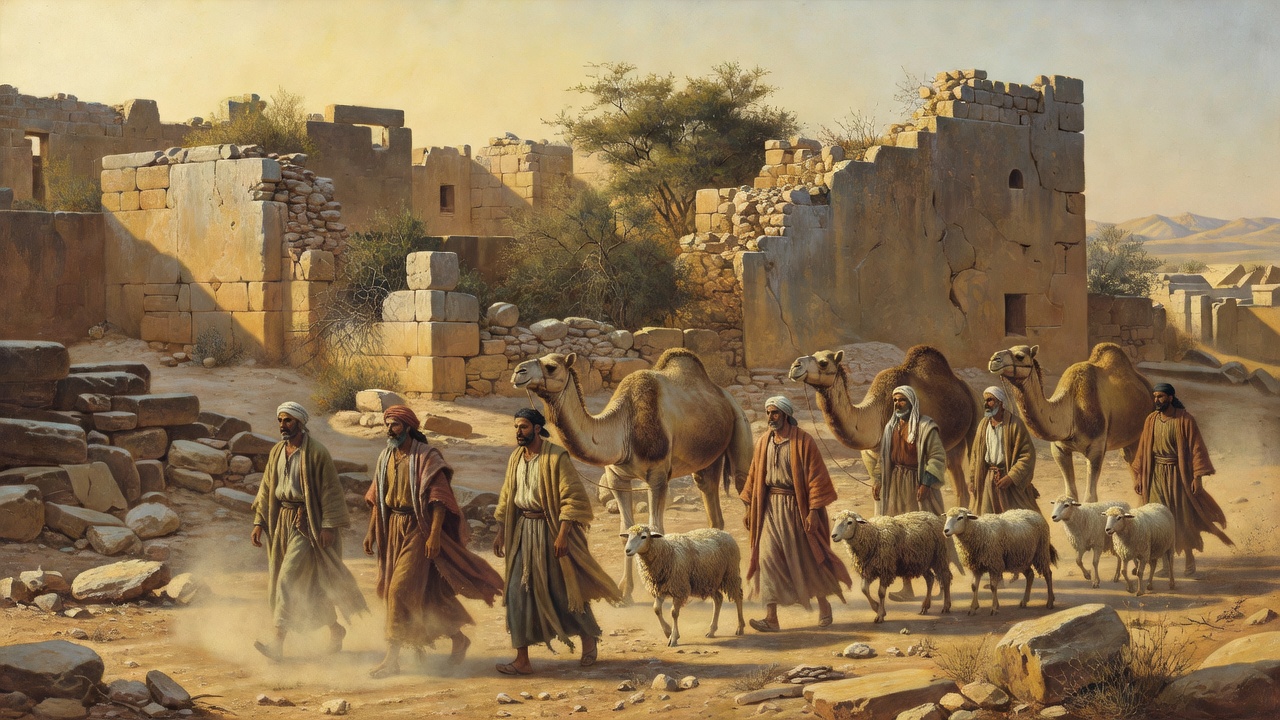
- Ammon lay east of the Jordan River with Rabbah as its chief city. Ezekiel prophesied that because Ammon gloated over the fall of Jerusalem and the profanation of the sanctuary, its territory and capital would be handed over to nomadic tribes from the East as pastures for camels and sheep.Sources: the Bible text itself · Ammon · Rabbah · East
- The neighboring regions of Moab and Mount Seir—the rugged hill country inhabited by the descendants of Esau—were rebuked for claiming Judah was just like all the other nations. Ezekiel warned that their frontier cities would be left exposed and given as a possession to peoples from the East.Sources: the Bible text itself · Moab · Seir · Esau (Edom)
- The chapter concludes with divine judgments against Edom and the Philistines, condemning both peoples for acting out of ancient hostility and taking malicious vengeance against Judah during its time of calamity.Sources: the Bible text itself · Edom
Notes written with AI assistance from open sources (Theographic Bible Metadata, CC BY-SA 4.0; Easton’s Bible Dictionary, public domain) and reviewed before publishing.
Places in this chapter
- Ammon · 31.955, 35.934 · verses 2, 3, 5, 10
- East · Today: region around Amman · 31.955, 35.934 · verses 4, 10
- Rabbah · Today: Amman · 31.955, 35.934 · verse 5
- Moab · Today: Moab 1 · 31.181, 35.701 · verses 8, 9, 10, 11
- Edom · 30.746, 35.604 · verses 12, 13, 14
- Philistia · 31.664, 34.546 · verse 15
Only places identified with high confidence are shown (90% or more according to the scholarly sources compiled by OpenBible). Period map: DARE (Digital Atlas of the Roman Empire), CC BY 4.0; modern map: © OpenStreetMap contributors; places: OpenBible.info (CC BY 4.0).
Credits and license for this translation
Godigo dwagi yai po buku
The Holy Bible in the Dadibi Language of Papua New Guinea
Buk Baibel long tok ples Dadibi long Niugini
copyright © 1987, 2001 Wycliffe Bible Translators, Inc.
Language: Dadibi
Translation by: Wycliffe Bible Translators
This translation is made available to you under the terms of the
Creative Commons Attribution-No Derivatives license 4.0.
You may share and redistribute this Bible translation or extracts from it in any format, provided that:
You include the above copyright and source information.
You do not make any derivative works that change any of the actual words or punctuation of the Scriptures.
Pictures included with Scriptures and other documents on this site are licensed just for use with those Scriptures and documents.
For other uses, please contact the respective copyright owners.
2019-08-22
Source: http://png.bible/mps/ · eBible.org