Matthew 13
Abureni NT Portions · Tap a verse to see its cross-references.
A̠sidogh Ogbebh ma̠ Ed̠ia̠n bho̠
1D̠a̠ onin a̠d̠a̠ma̠ obha̠, sa̠ A̠zizo̠s a̠mite d̠a̠ otu bho̠ agi̠ ka̠ aro̠ ma̠ a̠dila̠de d̠a̠ aka abadi̠ bho̠. 2Sa̠ obom o̠lo̠gh a̠nwunom iko i̠na ikiton ma̠ ola̠ i̠na agi̠ ka̠ a̠pel a̠d̠igh d̠a̠ oghugh aro̠ ma̠ a̠dila̠de, sa̠ o̠lo̠gh a̠nwunom bho̠ i̠mara d̠a̠ egbolom. 3Sa̠ agba ma̠ a̠d̠izo i̠di̠ar a̠nigha̠ awa d̠a̠ ra̠sidogh ma̠a̠: “I̠nagha o! Ogbebh ma̠ ed̠ia̠n agi̠ d̠a̠ o̠si̠ d̠o̠yo̠ ka̠ ogbebh ed̠ia̠n. 4Sa̠ igiel bho̠ i̠na a̠kpo ikpo ed̠ia̠n bho̠ asar bho̠, sa̠ idi imel d̠a̠ eten, sa̠ i̠nu̠r bho̠ iru ra̠ ikpokpoiny id̠e i̠mado̠n. 5Ya̠a̠ idi sa̠ imel d̠a̠ a̠de o̠gbe̠o̠ma, esi ola̠ o̠do̠gho̠l bho̠ okud̠um d̠o̠. Sa̠ i̠rabh epa̠ ma̠ o̠su̠ ma̠ agu̠o̠ o̠do̠gho̠l bho̠ okud̠um d̠o̠ bho̠. 6Ya̠a̠ igiel bho̠ ogogo a̠mite bho̠, sa̠ i̠nyu̠n i̠ghaghara d̠a̠ ebula̠ agu̠o̠ i̠ki̠ka o̠ro̠ d̠o̠ bho̠. 7Sa̠ idi imel d̠a̠ e̠ku̠ko̠ ib̠ub̠ulom, sa̠ e̠ku̠ko̠ ib̠ub̠ulom bho̠ i̠su̠ ikpegiom ed̠ia̠n bho̠ i̠bhu̠ghu̠d̠i̠ i̠ze̠gi̠. 8Sa̠ idi imel d̠a̠ ob̠eb̠i a̠de, sa̠ imum imuma̠ ya̠ i̠wal e̠wala na̠ a̠d̠usubh (100) a̠bin, idi e̠rabharabh (60) a̠bin, sa̠ idi imum a̠d̠usubh na̠ d̠iobh (30) a̠bin i̠se̠. 9Wa̠ a̠nwuna̠ ma̠ a̠to, anagha o!”
Ezin A̠sidogh bho̠
10Sa̠ ogbo atu̠ghan bho̠ iru ra̠ ipura̠n i̠na ma̠a̠, “Ezin ka̠ ere ka̠ anwa na̠ a̠rogha̠n a̠sidogh na̠ a̠nigha̠ awa bho̠?”
11Sa̠ i̠na awo̠ran awa a̠fugh ma̠a̠, “D̠a̠ inyin bha̠ na̠ onigha̠ ma̠ ologhom i̠di̠ar e̠wo̠gi̠na irileghom ote̠nai̠ny; ya̠a̠ unigha̠ ani̠ d̠o̠ awa. 12I̠na o̠ni̠ wa̠ a̠nwuna̠ bho̠ ta̠ o̠lo̠gho̠m o̠gbam, ma̠ agu̠o̠ ola̠ i̠na ta̠ a̠nwuna̠ ma̠ a̠b̠utu, ya̠a̠ i̠na o̠ni̠ wa̠ onwuna̠ d̠o̠ bho̠, ta̠ o̠wo̠r nyen ya̠ i̠na a̠nwuna̠ bho̠. 13Ami̠ idin o̠ku̠a na̠ a̠bhin a̠sidogh na̠ a̠fugha̠n awa:
“Ezin bho̠ ta̠ ekpon, ya̠a̠ ko o̠bi̠gh d̠o̠.
Awa ta̠ e̠nagha, ya̠a̠ awa ko o̠mu̠gho̠n d̠o̠ e̠mu̠gho̠nyan nyen.”
14Sa̠ ta̠ omuzoghod̠iom onigha̠ awa ma̠ iwowa̠ ta̠ Azaya ma̠a̠:
“ ‘D̠a̠ o̠mu̠gho̠n bha̠ ta̠ e̠mu̠gho̠n sa̠ ko o̠mu̠gho̠nya̠n d̠o̠;
d̠a̠ o̠bi̠gh bha̠ ta̠ e̠bi̠gh, ya̠a̠ ko olelegi d̠o̠.
15Na̠ o̠kparame̠ni̠ ma̠ rologi a̠nwunom i̠nye̠n;
sa̠ na̠ ob̠ulugi ma̠ ra̠to d̠awa,
sa̠ na̠ okpegi ma̠ a̠rid̠ien d̠awa,
ma̠ ola̠ awa ibhin d̠o̠ ma̠ a̠rid̠ien d̠awa e̠bi̠gh abar,
sa̠ i̠mu̠gho̠n d̠o̠ na̠ ra̠to d̠awa,
ma̠ agu̠o̠ ola̠ awa ka̠ o̠mu̠gho̠nyan d̠o̠ eloghoma̠n eten.’
16Ya̠a̠, na̠ otutumeni inyin ogbo ya̠ a̠rid̠ien bho̠ na̠ e̠bi̠gh esi bho̠, sa̠ ra̠to bho̠ na̠ e̠mu̠gho̠n bho̠. 17Ya̠gia̠ga̠i, ami̠ na̠ akparame̠ni̠ na̠ agba na̠ a̠nigha̠ inyin ma̠a̠, a̠d̠izo a̠riwil na̠ ib̠eb̠i a̠nwunom e̠mar e̠bho̠ro̠ghan o̠bi̠gh i̠di̠ar ya̠ inyin na̠ o̠bi̠gh bho̠, ya̠a̠ i̠bi̠gh d̠o̠, na̠ o̠mu̠gho̠n i̠di̠ar ya̠ inyin na̠ o̠mu̠gho̠n bho̠, ya̠a̠ i̠mu̠gho̠n d̠o̠.
A̠zizo̠s agba ma̠ ezin A̠sidogh // Ogbebh ma̠ Ed̠ia̠n bho̠ O̠si̠si̠ghe̠ni̠
18“Ebula̠ o̠ku̠a, i̠mare̠ ma̠ e̠nagha ma̠ ezin a̠sidogh ogbebh ma̠ ed̠ia̠n bho̠. 19Ko̠ni̠ko̠ni̠ ola̠ amu̠gho̠n a̠duom irileghom bho̠, sa̠ i̠na o̠mu̠gho̠nyan d̠o̠, bha̠ o̠karabh o̠ni̠ bho̠ a̠ru ra̠ asi̠ghe̠ ma̠ ikpo ed̠ia̠n ya̠ ugbebh d̠a̠ ologi o̠ni̠ bho̠. I̠nye̠n bha̠ ikpo ed̠ia̠n ya̠ imel d̠a̠ eten bho̠. 20Ya̠a̠ ikpo ed̠ia̠n ya̠ imel d̠a̠ a̠de o̠gbe̠o̠ma bho̠, bha̠ a̠nwunom ya̠ i̠mu̠gho̠n asu̠gbagba bho̠, sa̠ i̠da epa̠ ibhin d̠a̠ a̠libhon ologi. 21Ya̠a̠ isi d̠o̠ ma̠ i̠ki̠ka iya̠ awa, kpe̠le̠me̠ni̠ ima̠ra̠ ma̠ ekud̠i obhel, sa̠ imel i̠d̠u̠a ma̠ igiel ali̠gam a̠ruzu bo̠d̠o̠ ka̠ uponoma̠ awa d̠a̠ ebula̠ asu̠gbagba bho̠. 22Sa̠ iya̠ imel d̠a̠ ed̠um ib̠ub̠ulom bho̠, bha̠ ogbo ya̠ i̠mu̠gho̠n asu̠gbagba bho̠, sa̠ i̠nyo̠gho̠nyo̠gh e̠mara̠nwunom na̠ e̠ralma ogbo e̠li̠la i̠vi̠mo̠m asu̠gbagba bho̠, sa̠ awa orue d̠o̠ ma̠ omum itu. 23Ya̠a̠, ikpo ed̠ia̠n ya̠ imel d̠a̠ ob̠eb̠i a̠de bho̠, bha̠ ogbo ya̠ i̠mu̠gho̠n asu̠gbagba bho̠ sa̠ i̠mu̠gho̠nyan bho̠, sa̠ imum itu ga̠i, idi i̠wal e̠wala na̠ a̠d̠usubh (100), sa̠ idi e̠rabharabh (60), sa̠ idi a̠d̠usubh na̠ d̠iobh (30) a̠bin i̠se̠, d̠a̠ ikpo ya̠ ubhin ugbebh bho̠.”
A̠sidogh Ib̠utula d̠a̠ O̠si̠ bho̠
24Sa̠ i̠na a̠rogh opa̠n a̠sidogh a̠fugh ma̠a̠: “Irileghom ote̠nai̠ny agu̠b̠an o̠ni̠ ola̠ a̠gbebh ib̠eb̠i ikpo ed̠ia̠n d̠a̠ o̠si̠ d̠o̠yo̠. 25Ya̠a̠ igiel bho̠ a̠nwunom bho̠ na̠ ekod̠u bho̠, sa̠ o̠ni̠ o̠lo̠gi̠an a̠d̠ien d̠o̠yo̠ agi̠ ka̠ alo̠gi̠o̠gho̠m ib̠utula d̠a̠ esa̠d̠io i̠bu̠kpa bho̠ sa̠ a̠ten ad̠u̠a. 26Sa̠ igiel i̠mu̠nu̠mu̠n i̠bu̠kpa bho̠ i̠rabh imite bho̠, sa̠ ib̠utula bho̠ eka̠ i̠rabh imite.
27“Sa̠ aru̠bana bho̠ i̠gi̠ ka̠ i̠te̠i̠ wa̠nwuna̠ ma̠ o̠si̠ bho̠ ifugh ma̠a̠, ‘We̠mu̠, wokuma̠ ugbebh ib̠eb̠i ikpo i̠bu̠kpa d̠a̠ o̠si̠ d̠oyom? O̠ku̠a ka̠ ib̠utula i̠wo̠l d̠a̠ a̠ken emite?’
28“Sa̠ i̠na awo̠ran awa ma̠a̠, ‘O̠ni̠ o̠lo̠gi̠an a̠d̠ien a̠gir o̠ku̠a.’
“Sa̠ aru̠bana bho̠ ipura̠n i̠na ma̠a̠, ‘I̠yar o̠gi̠ ka̠ ob̠ugion o̠si̠ghe̠gi̠ ke̠re̠?’
29“Sa̠ i̠na awo̠ran ma̠a̠, ‘E̠e̠nyi̠, bo̠ka̠ inyin u̠b̠aram na̠ i̠bu̠kpa bho̠ ob̠ugion na̠ ib̠utula bho̠. 30Ima̠ra̠ i̠wal a̠yi e̠su̠ emum itu. Sa̠ d̠a̠ igiel ob̠u ed̠ia̠n bho̠, ami̠ ta̠ a̠ruom ogbo ob̠u ed̠ia̠n bho̠, ma̠ ed̠ia̠ eb̠ugion ib̠utula bho̠ ma̠ agu̠o̠ ola̠ to okokod̠i o̠gho̠ro̠gi̠ o̠bhu̠gi̠ orobh. Ya̠a̠ ta̠ okokod̠i ma̠ i̠bu̠kpa bho̠ okpol d̠a̠ esi eko d̠ami̠.’ ”
A̠sidogh Ekpo Amu̠stad bho̠
31Sa̠ i̠na a̠rogh opa̠n a̠sidogh a̠nigha̠ awa ma̠a̠, “Irileghom ote̠nai̠ny agu̠b̠an ekpo amu̠stad ola̠ o̠ni̠ a̠bhin a̠gbebh d̠a̠ o̠si̠ d̠o̠yo̠. 32Eb̠la̠ agu̠o̠ i̠na aki̠r a̠pu d̠a̠ eb̠la̠ ikpo ya̠ na̠ ogbebh bho̠ eka̠, igiel na̠ asu̠ abu̠gh, bha̠ abu̠gh a̠pu ma̠ agu̠o̠ i̠gho̠gho̠ a̠mobobh na̠ e̠su̠ na̠ e̠te̠i̠ bho̠, sa̠ na̠ a̠ten oriren, ma̠ ola̠ i̠nu̠r anyu̠ bho̠ na̠ e̠gi̠ ka̠ elo ma̠ a̠rutu d̠a̠ i̠gha bho̠.”
A̠sidogh A̠yist bho̠
33Sa̠ i̠na a̠rogh opa̠n a̠sidogh ma̠a̠, “Irileghom ote̠nai̠ny agu̠b̠an o̠nyi̠ki̠kara a̠yist ya̠ ani̠ebhom a̠bhin alo̠gh d̠a̠ o̠to̠ma̠ i̠sar-abafu̠ ed̠ia̠n ibhugh, sa̠ iwubhmeni ma̠ eb̠la̠ ed̠ia̠n bho̠.”
Ezin wa̠ A̠zizo̠s A̠rughom Ra̠sid̠ogh bho̠
34A̠zizo̠s a̠bhin d̠a̠ a̠sidogh a̠fugh eb̠la̠ i̠di̠ar i̠nye̠n a̠nigha̠ ma̠ o̠lo̠gh a̠nwunom bho̠. Sa̠ bebina̠ abar ola̠ i̠na a̠fugh a̠nigha̠ awa ola̠ i̠na obhin d̠o̠ ma̠ a̠sidogh a̠fugh na̠ o̠ro̠ d̠o̠. 35O̠ku̠a bho̠ i̠nye̠n imuzoghod̠iom abar wa̠ owil bho̠ a̠wa̠ bho̠ ma̠a̠:
“Ami̠ ta̠ akpato̠n o̠nu̠ d̠ami̠ a̠rogh ra̠sidogh,
sa̠ ami̠ ta̠ agba ma̠ i̠di̠ar ya̠ od̠i d̠a̠ e̠wo̠gi̠na a̠mutiom, ka̠ d̠a̠ o̠pu̠r ob̠eton e̠mara̠nwunom bho̠.”
Ezin A̠sidogh Ib̠utula bho̠
36Sa̠ A̠zizo̠s a̠gbogion a̠kokod̠ia̠n bho̠ agi̠ ka̠ a̠d̠igh d̠a̠ otu, sa̠ ogbo atu̠ghan d̠o̠yo̠ iru ra̠ i̠te̠i̠ i̠na ifugh ma̠a̠, “Gba ma̠ ezin a̠sidogh ib̠utula ya̠ d̠a̠ o̠si̠ bho̠ ma̠ a̠nigha̠ i̠yar.”
37Sa̠ i̠na awo̠ran a̠fugh ma̠a̠, “O̠ni̠ wa̠ a̠gbebh ib̠eb̠i ikpo ed̠ia̠n bho̠ bha̠ O̠nyi̠ ta̠ O̠ni̠. 38O̠si̠ bho̠ bha̠ e̠mara̠nwunom bho̠, ib̠eb̠i ikpo bho̠ bha̠ anwi̠i̠ny irileghom bho̠, ya̠a̠ ib̠utula bho̠ bha̠ anwi̠i̠ny ta̠ o̠karabh o̠ni̠ bho̠. 39Sa̠ o̠ni̠ o̠lo̠gi̠an a̠d̠ien wa̠ a̠gbebh ib̠utula̠ bho̠ bha̠ eru bho̠. Ib̠ua̠ bho̠ bha̠ ekunuguma̠ e̠mara̠nwunom bho̠, sa̠ ogbo ob̠u bho̠ bha̠ itileduom ta̠ A̠zib̠a̠.
40“O̠ku̠a a̠d̠ighi be̠le̠ni̠, agu̠o̠ ta̠ ob̠ugion ib̠utula bho̠ okokod̠i o̠bhu̠gi̠ bho̠, obha̠ bha̠ agu̠o̠ ta̠ aro̠ d̠a̠ ekunuguma̠ e̠mara̠nwunom. 41O̠nyi̠ ta̠ O̠ni̠ ta̠ a̠ruom itileduom d̠o̠yo̠, sa̠ ta̠ e̠si̠ghe̠gi̠ d̠a̠ irileghom d̠o̠yo̠ ma̠ o̠kpo̠ ya̠ na̠ e̠le̠ge̠ ma̠ a̠nwunom ma̠ ogir i̠karabh bho̠, na̠ eb̠la̠ idighi ma̠ i̠karabh bho̠. 42Sa̠ ta̠ erobhod̠i awa e̠lo̠gh d̠a̠ e̠ba anya bho̠, d̠a̠ esi wa̠ ed̠i na̠ o̠ghi̠r ib̠ub̠ura̠ od̠i bho̠. 43Igiel obha̠, ib̠eb̠i a̠nwunom bho̠ ta̠ e̠war agu̠o̠ ogogo bho̠ d̠a̠ irileghom ta̠ O̠we̠de̠ d̠awa. Wa̠ a̠nwuna̠ ma̠ ra̠to, amar anagha o!
A̠sidogh E̠wo̠gi̠na I̠di̠ar Edim
44“Irileghom ote̠nai̠ny agu̠b̠an i̠di̠ar edim ya̠ od̠i d̠a̠ e̠wo̠gi̠na d̠a̠ o̠si̠ ma̠ ola̠ o̠ni̠ agi̠ ka̠ abi̠gh, sa̠ a̠puta̠ awo̠gi̠. Sa̠ d̠a̠ ebula̠ ibo bho̠, sa̠ ad̠u̠a ka̠ a̠wol eb̠la̠ i̠di̠ar ya̠ i̠na a̠nwuna̠ bho̠, sa̠ a̠bhin a̠gho ma̠ egbolom o̠si̠ bho̠.
45“O̠lo̠gho̠m i̠se̠, irileghom ote̠nai̠ny agu̠b̠an o̠ni̠ a̠b̠ua̠ ola̠ na̠ ad̠u̠a ma̠ esi na̠ a̠ten esi na̠ abho̠ro̠ghan ib̠eb̠i i̠b̠o̠lo̠. 46Sa̠ ka̠ abi̠gh odi o̠b̠o̠lo̠ obom a̠b̠ua̠, sa̠ agi̠ ka̠ a̠wol eb̠la̠ i̠di̠ar ya̠ i̠na a̠nwuna̠ bho̠, sa̠ a̠bhin a̠gho ma̠ o̠b̠o̠lo̠ bho̠.
A̠sidogh O̠gbo̠ bho̠
47“O̠lo̠gho̠m i̠se̠, irileghom ote̠nai̠ny agu̠b̠an o̠gbo̠ ola̠ usoroni d̠a̠ abadi̠ sa̠ a̠d̠ien kere kere ina̠ i̠gi̠ ka̠ isin. 48Igiel bho̠ ina̠ bho̠ isin o̠gbo̠ bho̠ imuzo bho̠, sa̠ i̠ku̠mi̠ku̠ bho̠ ikpor o̠gbo̠ bho̠ ibhuneni d̠a̠ egbolom, sa̠ i̠ro̠ ma̠ a̠dila̠de i̠so̠n ib̠eb̠i i̠na bho̠ i̠lo̠gi̠ d̠a̠ egunu, ya̠a̠ i̠karabh bho̠, sa̠ awa irobhod̠i. 49Obha̠ agu̠o̠ ta̠ aro̠ d̠a̠ ekunuguma̠ e̠mara̠nwunom bho̠. Itileduom ta̠ A̠zib̠a̠ ta̠ e̠gi̠ ka̠ e̠so̠n id̠ighi ma̠ i̠karabh bho̠ d̠a̠ esa̠d̠io ib̠eb̠i bho̠, 50sa̠ ta̠ erobhodi awa e̠lo̠gh d̠a̠ e̠ba anya bho̠, d̠a̠ esi wa̠ ed̠i na̠ o̠ghi̠r ib̠ub̠ura̠ od̠i bho̠.
51“Inyin o̠mu̠gho̠nyan eb̠la̠ i̠di̠ar i̠nye̠n ke̠re̠?”
Sa̠ awa i̠wo̠ran i̠na ma̠a̠, “Yii.”
52Sa̠ i̠na awo̠ran awa ma̠a̠, “Ebula̠ o̠ku̠a, ko̠ni̠ko̠ni̠ atu̠ghu̠me̠ni̠ oloko bho̠ ola̠ ada ma̠ atu̠ghan irileghom ote̠nai̠ny bho̠ a̠bhin, bha̠ agu̠b̠an o̠ni̠ wa̠ a̠nwuna̠ ma̠ otu bho̠, sa̠ a̠mutioghom imom na̠ igba̠iny i̠di̠ar ya̠ i̠na alo̠gi̠ a̠guri d̠a̠ igba̠ i̠d̠i̠ar edim d̠o̠yo̠ bho̠.”
Owil Ogboe̠ma na̠ Olei d̠o̠ ma̠ Abar
53Sa̠ A̠zizo̠s ad̠u̠a ma̠ i̠se̠ ma̠ igiel bho̠ i̠na na̠ a̠rogh a̠sidogh i̠nye̠n awe̠le̠ bho̠. 54Sa̠ i̠na agi̠ d̠a̠ e̠ma d̠o̠yo̠ ka̠ atu̠ghu̠me̠ni̠ awa d̠a̠ u̠gala d̠awa, ma̠ ola̠ awa ib̠a̠gha̠gha̠. Sa̠ awa na̠ epupura̠n ma̠a̠, “Eloghom abar onon na̠ a̠d̠ien ilologia̠n i̠nye̠n ka̠ ad̠u̠a d̠a̠ a̠ken eru?” 55“Onon O̠nyi̠ ta̠ o̠du̠gi̠ ma̠ i̠di̠ar bho̠ d̠o̠ ke̠re̠? Oweni d̠o̠yo̠ ubhelegi d̠o̠ ma̠ A̠meri ke̠re̠? Sa̠ a̠rumor d̠o̠yo̠ bha̠ A̠zemsi na̠ A̠zose̠fu̠ na̠ Asai̠mo̠n na̠ A̠zud d̠o̠ ke̠re̠? 56Eb̠la̠ aru̠marani̠ d̠o̠yo̠ bo̠ na̠ i̠yar i̠se̠n ke̠re̠? O̠ku̠a ka̠ eb̠la̠ i̠nye̠n i̠d̠u̠a d̠a̠ a̠ken eru?” 57Sa̠ rologi d̠awa igurom d̠a̠ ebula̠ o̠yo̠.
Ya̠a̠ A̠zizo̠s a̠fugh a̠nigha̠ awa ma̠a̠, “Ubhin d̠o̠ ma̠ owil o̠tu̠o̠m abar d̠a̠ e̠ma d̠o̠yo̠ na̠ eghun otu wa̠ i̠na a̠mite bho̠.”
58Ebula̠ agu̠o̠ awa od̠umom d̠o̠ bho̠, sa̠ i̠na ogir d̠o̠ ma̠ a̠d̠izo ilologia̠n i̠se̠.
Did you know?
Parables of the Kingdom of Heaven
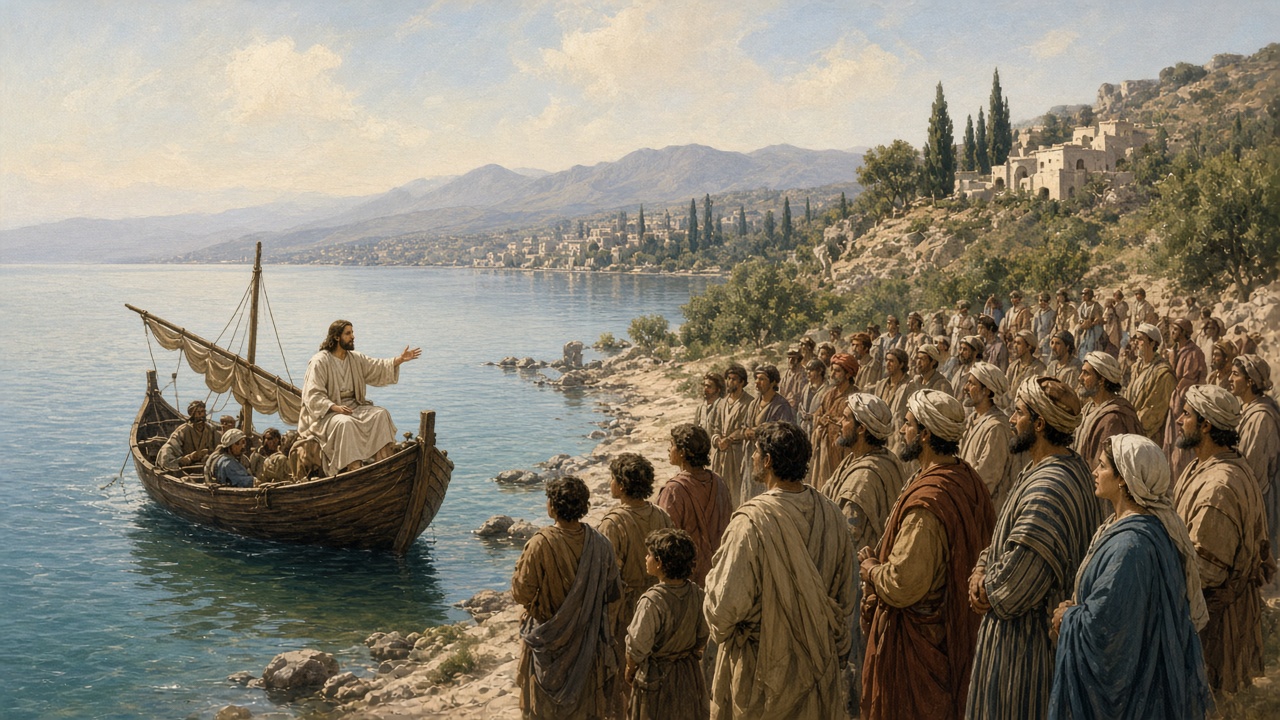
- On the day this chapter describes, Jesus left the house and sat by the sea. The crowd grew so large that he got into a boat and taught from there, while the people stood on the shore, and he told them nothing except in parables. One timeline dates these seaside parables to AD 28.Sources: the Bible text itself · Seaside Parables and Miracle
- When the disciples asked why he spoke to the people in parables, Jesus answered that the knowledge of the mysteries of the kingdom of heaven had been given to them, but not to the crowds. He said Isaiah’s prophecy was fulfilled in the crowds: they would keep hearing and seeing, yet never understand or perceive, because their heart had grown callous. Easton’s Bible Dictionary (1897) describes Isaiah as the son of Amoz, who prophesied during the reigns of Uzziah, Jotham, Ahaz, and Hezekiah.Sources: the Bible text itself · Isaiah
- Jesus later came to his hometown, taught in the synagogue, and the people took offense at him. They asked whether he was the carpenter’s son, named his mother Mary and his brothers James, Joseph, Simon, and Judas, and noted that his sisters were living among them; because of their unbelief he did not do many miracles there. Mary is identified as the wife of Joseph and the mother of Jesus, Simon as one of the Lord’s brothers, and one timeline dates this second rejection at Nazareth to AD 29.Sources: the Bible text itself · Mary (Mother of Jesus) · Simon · 2nd Rejection at Nazareth
Notes written with AI assistance from open sources (Theographic Bible Metadata, CC BY-SA 4.0; Easton’s Bible Dictionary, public domain) and reviewed before publishing.
Places in this chapter
- Nazareth · 32.702, 35.298 · verse 54
Only places identified with high confidence are shown (90% or more according to the scholarly sources compiled by OpenBible). Period map: DARE (Digital Atlas of the Roman Empire), CC BY 4.0; modern map: © OpenStreetMap contributors; places: OpenBible.info (CC BY 4.0).
Credits and license for this translation
Abureni NT Portions
Abureni: Abureni NT Portions (New Testament)
copyright © 2022 Luke Initiative for Scripture Translationand The Seed Company
Language: (Abureni)
Contributor: The Seed Company
This translation is made available to you under the terms of the
Creative Commons Attribution Share-Alike license 4.0.
You have permission to share and redistribute this Bible translation in any format and to make reasonable revisions and adaptations of this translation, provided that:
You include the above copyright and source information.
If you make any changes to the text, you must indicate that you did so in a way that makes it clear that the original licensor is not necessarily endorsing your changes.
If you redistribute this text, you must distribute your contributions under the same license as the original.
Pictures included with Scriptures and other documents on this site are licensed just for use with those Scriptures and documents.
For other uses, please contact the respective copyright owners.
Note that in addition to the rules above, revising and adapting God's Word involves a great responsibility to be true to God's Word. See Revelation 22:18-19.
2025-07-02
Source: http://ebible.org/mgj/ · eBible.org