Luke 6
Abureni NT Portions · Tap a verse to see its cross-references.
Ipura̠n ya̠ igboloma̠ ma̠ A̠d̠a̠ma̠ osira̠-epobh a̠nwunom A̠zu bho̠
1Odi a̠d̠a̠ma̠ osira̠-epobh a̠nwunom A̠zu, A̠zizo̠s na̠ a̠ten d̠a̠ ari̠si̠ i̠bu̠kpa, sa̠ ogbo atu̠ghan d̠o̠yo̠ i̠ku̠ ma̠ idi itu bho̠, sa̠ i̠kpi̠r ikpo bho̠ i̠lo̠gi̠ d̠a̠ aru̠gu̠o̠ d̠awa id̠e. 2Sa̠ idi Afarisi bho̠ ipura̠n i̠na ma̠a̠, “Ezin ka̠ ere ka̠ anwa na̠ a̠gir abar ola̠ oloko bho̠ oma̠ra̠ d̠o̠ ma̠ o̠ni̠ ma̠ ogir d̠a̠ a̠d̠a̠ma̠ osira̠-epobh a̠nwunom A̠zu?” 3Sa̠ A̠zizo̠s awo̠ran awa ma̠a̠, “Inyin ta̠ osen d̠o̠ ma̠ a̠d̠ire e̠tu̠tu̠ bho̠ o̠bi̠gh agu̠o̠ A̠devidi a̠gir igiel bho̠ o̠ko̠i̠ a̠d̠ighi i̠na sekina̠ a̠nwunom ya̠ i̠ro̠ na̠ i̠na bho̠, ke̠re̠? 4I̠na a̠d̠igh d̠a̠ otu akpu̠ru̠ ta̠ A̠zib̠a̠, sa̠ a̠bhin abe̠re̠di̠ e̠tu̠tu̠, ya̠ uguri usisa̠n rokur ta̠ A̠zib̠a̠ ku̠ku̠m ma̠ od̠e bho̠, a̠d̠e. Sa̠ i̠na a̠b̠eton idi abe̠re̠di̠ bho̠ a̠nigha̠ ma̠ a̠nwunom ya̠ i̠ro̠ na̠ i̠na bho̠ nyen.” 5Sa̠ A̠zizo̠s a̠fugh a̠nigha̠ awa ma̠a̠, “O̠nyi̠ ta̠ O̠ni̠ bha̠ Wa̠nwuna̠ ma̠ a̠d̠a̠ma̠ osira̠-epobh a̠nwunom A̠zu bho̠.”
A̠zizo̠s a̠koko ma̠ o̠ni̠ ma̠ a̠d̠a̠ma̠ osira̠-epobh a̠nwunom A̠zu
6Opa̠n a̠d̠a̠ma̠ osira̠-epobh a̠nwunom A̠zu aro̠, ma̠ ola̠ i̠na a̠d̠igh d̠a̠ otu u̠gala A̠zu bho̠ atu̠ghu̠me̠ni̠. Odi o̠ni̠ ola̠ od̠iom agu̠o̠ bho̠ na̠ akpari̠an aro̠ ani̠ ma̠ i̠se̠. 7Idi ogbo atu̠ghu̠me̠ni̠ oloko bho̠, na̠ idi Afarisi e̠ro̠ na̠ e̠bho̠ro̠ghan e̠kal abar ola̠ odin ob̠ologiom A̠zizo̠s. Sa̠ awa ikimeni na̠ egon o̠bi̠gh ka̠ i̠na ta̠ a̠koko ma̠ a̠likoko ma̠ a̠d̠a̠ma̠ osira̠-epobh a̠nwunom A̠zu bho̠. 8Ya̠a̠ A̠zizo̠s a̠loghom i̠ru̠ru̠an d̠awa, sa̠ i̠na a̠fugh a̠nigha̠ ma̠ o̠ni̠ wa̠ agu̠o̠ na̠ akpari̠an bho̠ ma̠a̠, “B̠etina̠ ma̠ a̠ru, ra̠ amara d̠a̠ ed̠ia̠.” Sa̠ o̠ni̠ bho̠ a̠b̠etina̠ ka̠ amara d̠a̠ esa̠d̠io bho̠. 9Sa̠ A̠zizo̠s a̠fugh a̠nigha̠ awa ma̠a̠, “Ami̠ na̠ a̠pura̠n inyin, oken abar wa̠ oloko bho̠ a̠ma̠ra̠ i̠yar ogir d̠a̠ a̠d̠a̠ma̠ osira̠-epobh a̠nwunom A̠zu bho̠: ogir ib̠eb̠i bo̠d̠o̠ ogir i̠karabh, otenemeni o̠ni̠ onigha̠ a̠ghud̠um bo̠d̠o̠ ka̠ o̠pi̠e̠gi̠?” 10Sa̠ i̠na a̠kpon eb̠la̠ awa a̠kitineni̠, sa̠ a̠fugh a̠nigha̠ ma̠ o̠ni̠ bho̠ ma̠a̠, “Selegheni ma̠ agu̠o̠ d̠oyom.” I̠na a̠gir o̠ku̠a, sa̠ agu̠o̠ d̠o̠yo̠ a̠selegha̠n. 11Sa̠ a̠likoko bho̠ agamame̠ni̠ ma̠ rologi ogbo Afarisi bho̠ na̠ ogbo atu̠ghu̠me̠ni̠ oloko bho̠. Sa̠ awa i̠ke̠ ma̠ o̠b̠e̠re̠gi̠an d̠a̠ esa̠d̠io d̠awa, oma̠ra̠nua̠n abar awa ta̠ ed̠ighi ma̠ A̠zizo̠s.
A̠zizo̠s aso̠n d̠iobh na̠ i̠wal ogbo-ogir
12Odi a̠d̠a̠ma̠ d̠a̠ ra̠d̠a̠ma̠ i̠nye̠ sa̠ A̠zizo̠s asi̠n d̠a̠ anyu̠ igu bho̠ ma̠ osiseiny; sa̠ i̠na a̠bhin eb̠la̠ a̠d̠uga̠la̠n bho̠ a̠siseiny A̠zib̠a̠. 13A̠d̠io ra̠ ab̠al sa̠ i̠na a̠bhelegi ma̠ ogbo atu̠ghan d̠o̠yo̠ a̠kokod̠i, sa̠ aso̠n d̠iobh na̠ i̠wal a̠mutiom, sa̠ a̠doni awa a̠guri ma̠ ogbo ogir d̠o̠yo̠. 14I̠nye̠n a̠rid̠ien d̠awa: Asai̠mo̠n, wa̠ i̠na a̠ghol A̠pita̠ bho̠, na̠ umor d̠o̠yo̠ Anduru, A̠zemsi̠ na̠ Azo̠n, A̠filip na̠ Abatolomio, 15Amatiu na̠ Ato̠mo̠si̠, A̠zemsi̠ o̠nyi̠ ta̠ Ali̠fi̠o̠s na̠ Asai̠mo̠n, wa̠ ubhelegi ma̠ A̠zilo̠t bho̠, 16A̠zuda̠s o̠nyi̠ ta̠ A̠zemsi̠ na̠ A̠zuda̠s I̠skari̠o̠t, wa̠ a̠wol i̠na ma̠ o̠gu̠man bho̠.
Itutumeni na̠ Isugi
17Sa̠ I̠na na̠ awa isor ka̠ i̠mara d̠a̠ otutula̠n a̠de. O̠lo̠gh ogbo atu̠ghan d̠o̠yo̠, na̠ obom o̠lo̠gh a̠nwunom ya̠ i̠d̠u̠a d̠a̠ eb̠la̠ ebhugh A̠zudia̠ na̠ A̠zeruse̠le̠m, na̠ d̠a̠ rakagara Ataya na̠ Asi̠do̠n e̠ro̠ ma̠ i̠se̠. 18Awa iru ra̠ o̠nagha o̠yo̠ na̠ okokua̠n d̠a̠ rasu̠nwe̠r d̠awa. Ogbo ya̠ i̠karabh aru̠mu̠gh na̠ enyegi eka̠ eru ra̠ ekokua̠n. 19Sa̠ eb̠la̠ a̠nwunom bho̠ iwia̠n okula̠n o̠yo̠, ezin bho̠ a̠limon na̠ emite d̠a̠ ozu d̠o̠yo̠ na̠ ekoko ko̠ni̠ko̠ni̠.
Ibo na̠ i̠ku̠nu̠
20Sa̠ A̠zizo̠s a̠tiba̠ra̠ a̠kpon ogbo atu̠ghan d̠o̠yo̠ sa̠ a̠fugh ma̠a̠,
“Itutumeni e̠ro̠ enigha̠ inyin ronyigoiny bho̠,
irileghom ta̠ A̠zib̠a̠ ola̠ inyin.
21Itutumeni e̠ro̠ enigha̠ inyin ogbo ya̠ od̠i ma̠ o̠ko̠i̠ i̠se̠n bho̠,
inyin ta̠ od̠e olegha̠n.
Itutumeni e̠ro̠ enigha̠ inyin ogbo ya̠ na̠ esorogi ma̠ izin i̠se̠n bho̠,
inyin ta̠ o̠mo̠lo̠gh adi̠e̠l.
22Itutumeni e̠ro̠ enigha̠ inyin d̠a̠ obhel ola̠ a̠nwunom na̠ e̠su̠a inyin,
na̠ obhel ola̠ awa na̠ eghirom inyin, sa̠ na̠ eduom inyin,
sa̠ ighel a̠d̠ien d̠a̠ inyin ma̠a̠ i̠nyin i̠karabh,
d̠a̠ ebula̠ O̠nyi̠ ta̠ O̠ni̠.
23“Ya̠a̠, ibo ma̠ epeleghu na̠ a̠libhon ologi, ezin bho̠ asu̠o̠ ya̠ i̠mar i̠bu̠gh na̠ eb̠a̠ra̠ inyin d̠a̠ ote̠nai̠ny; ya̠a̠ iloghome ma̠ igba̠iny ro̠we̠de̠ d̠awa igir o̠ku̠a egboloma̠ ma̠ a̠riwil bho̠.
24“Ya̠a̠ olo a̠leghe inyin ogbo ya̠ od̠i d̠a̠ e̠li̠la ma̠ i̠se̠n bho̠,
ezin bho̠ inyin na̠ o̠te̠i̠ e̠no̠gho̠man d̠inyin.
25Olo a̠leghe inyin ogbo ya̠ na̠ ed̠e na̠ elegha̠n i̠se̠n bho̠,
ezin bho̠ inyin ta̠ o̠ri̠la ma̠ o̠ko̠i̠ d̠a̠ ed̠ia̠.
Olo a̠leghe inyin ogbo ya̠ na̠ e̠mo̠lo̠gh adi̠e̠l i̠se̠n bho̠,
ezin bho̠ inyin ta̠ od̠igh i̠ku̠nu̠ o̠gba ma̠ igbir.
26Olo a̠leghe inyin ka̠ eb̠la̠ a̠nwunom na̠ esen inyin ib̠eb̠i,
obha̠ agu̠o̠ igba̠iny ro̠we̠de̠ d̠awa igir igboloma̠ ma̠ a̠riwil igunugha̠ bho̠.
Otula̠n ogbo o̠lo̠gi̠an a̠rid̠ien
27“Ya̠a̠ ami̠ na̠ agba na̠ a̠nigha̠ inyin ogbo ya̠ na̠ e̠nagha ami̠ bho̠ ma̠a̠: Itula̠ne ma̠ ogbo o̠lo̠gi̠an a̠rid̠ien d̠inyin, igire ma̠ ib̠eb̠i ma̠ enigha̠ ma̠ ogbo ya̠ na̠ e̠su̠a inyin bho̠, 28Itutumeni ma̠ ogbo ya̠ na̠ e̠ghad̠i̠ inyin bho̠, ma̠ esiseiny enigha̠ ma̠ ogbo ya̠ na̠ ed̠ighi inyin i̠karabh nyen. 29Ka̠ o̠ni̠ ab̠abh anwa d̠a̠ odi ab̠akagba d̠oyom, tiba̠ra̠ ma̠ agba uwed̠i ma̠ a̠nigha̠ i̠na nyen. Ka̠ o̠ni̠ a̠ghum akapa-anyu̠ d̠oyom a̠bhin, ko okigima̠ i̠na ma̠ o̠b̠aram na̠ akapa-a̠de d̠oyom obhin. 30Nigha̠ ko̠ni̠ko̠ni̠ ola̠ a̠puru ma̠ anwa ma̠ abar; ya̠a̠ ka̠ o̠ni̠ a̠bhin abar oyom, ko opuru i̠na ma̠ omulumeni abar bho̠. 31Gire ma̠ a̠nigha̠ ma̠ ipa̠n ogbo ma̠ agu̠o̠ anwa na̠ abho̠ro̠gh awa ma̠ ogir onigha̠ oyom bho̠.
32“Ka̠ u̠gba ma̠ inyin otula̠n ogbo etula̠n d̠inyin ku̠ku̠m, ka̠ asu̠o̠ d̠inyin ka̠ ere? Id̠ighi ma̠ i̠karabh bho̠ eka̠ na̠ etula̠n ogbo ya̠ itula̠n awa bho̠ nyen. 33Ya̠a̠, ka̠ inyin ugir ib̠eb̠i unigha̠ ma̠ ogbo ya̠ na̠ egir ib̠eb̠i na̠ enigha̠ inyin bho̠, ka̠ asu̠o̠ d̠inyin ka̠ ere? Id̠ighi ma̠ i̠karabh bho̠ eka̠ na̠ egir o̠ku̠a nyen. 34Ka̠ inyin i̠wo̠lo̠ni̠an abar ogbo ya̠ ta̠ erue e̠kpe̠ inyin bho̠, ka̠ asu̠o̠ d̠inyin ka̠ ere? Onin agu̠o̠ rod̠ighi ma̠ i̠karabh a̠nwunom na̠ e̠wo̠lo̠ni̠an i̠di̠ar ma̠ rod̠ighi ma̠ i̠karabh, sa̠ awa na̠ e̠ro̠ na̠ egon a̠nwunom bho̠ ma̠ o̠kpe̠ awa ma̠ eb̠la̠ i̠mu̠gh d̠awa. 35Ya̠a̠ itula̠ne ma̠ ogbo o̠lo̠gi̠an a̠d̠ien d̠inyin, igire ma̠ ib̠ebi̠ ma̠ enigha̠ awa, i̠wo̠lo̠ni̠ane̠ ma̠ ogbo ya̠ inyin ko ogon d̠o̠ ma̠ amu̠kpe̠. Sa̠ inyin ta̠ o̠te̠i̠ ibom alu̠kpe̠, sa̠ inyin ta̠ oten anwi̠i̠ny ta̠ O̠ni̠ Wagi̠manyu̠ A̠pu bho̠. Ezin bho̠, i̠na na̠ a̠gir ib̠eb̠i na̠ a̠nigha̠ ma̠ ogbo ya̠ o̠bi̠gh ghan ib̠eb̠i ya̠ ugir ugir unigha̠ awa bho̠, na̠ rod̠ighi ma̠ i̠karabh a̠nwunom bho̠. 36Ikpone ma̠ igbirigbir a̠d̠ien agu̠o̠ O̠we̠de̠ d̠inyin na̠ a̠kpon igbirigbir bho̠.
Osobh Ase̠ Onigha̠ Ipa̠n A̠nwunom
37“O̠ni̠ ko o̠nu̠r e̠bi̠gh o̠ni̠ ma̠ e̠pi̠e̠, b̠o̠ka̠ u̠nu̠r o̠bi̠gh inyin o̠pi̠e. O̠ni̠ ko obhin ib̠ologiom esobh ase̠ ma̠ ebhumeni ma̠ o̠ni̠, b̠o̠ka̠ ubhin ib̠ologiom osobh ase̠ obhumeni inyin. I̠we̠le̠mane̠ ma̠ i̠karabh a̠nwunom enigha̠ awa, b̠o̠ka̠ o̠we̠le̠man i̠karabh d̠inyin onigha̠ inyin. 38I̠ne̠ghe̠ ma̠ e̠ne̠ghe̠, sa̠ a̠nwunom ta̠ e̠ne̠ghe̠ ma̠ e̠ne̠ghe̠ enigha̠ inyin nyen. Ib̠eb̠i atu̠gi̠, ya̠ u̠mar u̠zo̠, sa̠ unyegi umuzoghod̠i sa̠ ipel na̠ ezugia̠n, sa̠ ubhin uzuom ru̠gbo̠ d̠inyin. Agu̠o̠ inyin ugir unigha̠ ma̠ ipa̠n a̠nwunom bho̠, obha̠ agu̠o̠ A̠zib̠a̠ ta̠ a̠gir a̠nigha̠ inyin. Ezin bho̠, i̠di̠ar ya̠ inyin ubhin u̠to̠ unigha̠ ma̠ a̠nwunom bho̠, i̠nye̠ i̠di̠ar ya̠ ta̠ obhin o̠to̠ onigha̠ inyin bho̠.”
39Sa̠ A̠zizo̠s a̠rogh a̠sidogh a̠nigha̠ awa ma̠a̠: “O̠ni̠ ikpom a̠rid̠ien ta̠ a̠rue a̠rileghom opa̠n o̠ni̠ ikpom a̠rid̠ien ke̠re̠? I̠wal awa ko omel d̠o̠ ed̠igh d̠a̠ ogugua̠ ke̠re̠? 40O̠ni̠ atu̠ghan na̠ o̠bu̠gh d̠o̠ a̠pu ma̠ o̠ni̠ atu̠ghu̠me̠ni̠ d̠o̠yo̠. Ya̠a̠, i̠na wa̠ amar atu̠ghan aku̠ro̠m bho̠ ta̠ aro̠ ka̠ o̠ni̠ atu̠ghu̠me̠ni̠ bho̠.
41“Ezin ka̠ ere ka̠ anwa na̠ abi̠gh o̠taghatagh wa̠ od̠i d̠a̠ ekpo a̠d̠ien umor d̠oyom bho̠, sa̠ anwa na̠ ologhoma̠n d̠o̠ ma̠ egum oriren wa̠ od̠i d̠a̠ ekpo a̠d̠ien d̠oyom bho̠? 42Anwa ta̠ a̠din ere a̠fugh a̠nigha̠ ma̠ umor d̠oyom ma̠a̠, ‘Umor, d̠ighi ami̠ ta̠ asi̠ghe̠ ma̠ o̠taghatagh d̠a̠ a̠d̠ien d̠oyom,’ ma̠ igiel anwa o̠bi̠gh d̠o̠ ma̠ egum oriren wa̠ od̠i d̠a̠ ekpo a̠d̠ien d̠oyom bho̠? Anwa obhelebhel o̠ni̠! D̠ia̠ ma̠ asi̠ghe̠ ma̠ egum oriren wa̠ od̠i d̠a̠ ekpo a̠d̠ien d̠oyom bho̠; i̠se̠ kisa̠ anwa ta̠ a̠rue abi̠gh esi asi̠ghe̠ ma̠ o̠taghatagh wa̠ od̠i d̠a̠ ekpo a̠d̠ien umor d̠oyom bho̠.
Oriren na̠ itu d̠o̠yo̠
43“Ob̠eb̠i oriren ola̠ na̠ a̠mum o̠karabh otu bo̠. Onin agu̠o̠ o̠karabh oriren omum d̠o̠ ma̠ ob̠eb̠i otu. 44Na̠ obhin otu oriren na̠ olelegi ma̠ a̠d̠ien oriren bho̠. A̠nwunom ikpokpo d̠o̠ ma̠ itu a̠fig A̠grep ola̠ usuom|alt="Grape vine on trellis" src="Louise Basse" size="col" loc="Luke 6:44" copy="HK00112" ref="6:44" d̠a̠ ed̠um ib̠ub̠ulom; bo̠d̠o̠, sa̠ awa na̠ ekpokpo ma̠ itu oriren a̠grep d̠a̠ e̠ko̠ko̠ esi iriren i̠su̠ ya̠ od̠i ka̠ ib̠e na̠ id̠id̠igh na̠ i̠ze̠. 45Ob̠eb̠i o̠ni̠ na̠ a̠mutioghom ib̠eb̠i i̠di̠ar d̠a̠ ib̠eb̠i ya̠ i̠na a̠kokod̠i a̠guri d̠a̠ ologi d̠o̠yo̠ bho̠. Onin agu̠o̠ o̠karabh o̠ni̠ na̠ a̠mutioghom i̠karabh i̠di̠ar d̠a̠ i̠karabh ya̠ i̠na a̠kokod̠i a̠guri d̠a̠ ologi d̠o̠yo̠ bho̠. A̠d̠ien i̠di̠ar ya̠ o̠ni̠ a̠kokod̠i a̠muzoghod̠i d̠a̠ ologi o̠ni̠, i̠nye̠ i̠di̠ar ya̠ o̠nu̠ o̠ni̠ bho̠ na̠ a̠fugh na̠ a̠mutiom bho̠.
I̠wal ilo ma̠ a̠rutu
46“Anwa i̠tu̠n ere na̠ a̠bhelegi ami̠ ma̠a̠, ‘Wa̠nwuna̠, Wa̠nwuna̠,’ ya̠a̠ anwa na̠ ogir d̠o̠ ma̠ i̠di̠ar ya̠ ami̠ na̠ agba bho̠? 47Ami̠ ta̠ a̠leriom inyin o̠le̠m o̠ni̠ ola̠ a̠ru d̠ami̠, sa̠ anagha ma̠ o̠nu̠o̠kpe̠ d̠ami̠, sa̠ a̠kpon o̠ku̠a a̠rugh. 48I̠na od̠i ka̠ o̠ni̠ ola̠ a̠lo ma̠ otu, sa̠ a̠gbo ma̠ a̠de bho̠ a̠kud̠umeni sa̠ a̠bho ma̠ otu bho̠ agbam d̠a̠ anyu̠ o̠gbe̠o̠ma. Igiel a̠d̠igho a̠ru bho̠, sa̠ obom amu̠m bho̠ aro̠bho̠m otu bho̠, ya̠a̠ otu bho̠ amara gigiribh, ezin bho̠ o̠mar olo ma̠ otu bho̠. 49Ya̠a̠, i̠na o̠ni̠ wa̠ amu̠gho̠n sa̠ o̠nagha d̠o̠ ma̠ o̠nu̠o̠kpe̠ d̠ami̠ bho̠, i̠na od̠i ka̠ o̠ni̠ ola̠ a̠lo ma̠ otu o̠kpo̠kpo̠ o̠to̠. Sa̠ igiel obom amu̠m a̠d̠igho a̠ru bho̠, sa̠ a̠nu ma̠ otu bho̠ a̠teb̠eli a̠tutughud̠i. Abu̠gh emel!”
Did you know?
The Sabbath, the Twelve, and the Plain
- On a Sabbath, as Jesus passed through the grainfields, his disciples picked heads of grain, rubbed them in their hands, and ate them, and some Pharisees called this unlawful. Jesus recalled that David and his hungry companions ate consecrated bread from the house of God, bread lawful only for the priests, and said that the Son of Man is Lord of the Sabbath. On another Sabbath he restored a man’s withered right hand in the synagogue while scribes and Pharisees watched for a reason to accuse him; a chronology dates both episodes to AD 28.Sources: the Bible text itself · Corn on the Sabbath · Healing a Withered Hand
- After spending the night in prayer on the mountain, Jesus called his disciples and chose twelve, whom he designated apostles. Among them were Simon, whom he named Peter, and Peter’s brother Andrew, fishermen from Bethsaida on the western coast of the Sea of Galilee, and Matthew, a tax collector at Capernaum who had formerly been known as Levi.Sources: the Bible text itself · Simon Peter · Andrew · Matthew
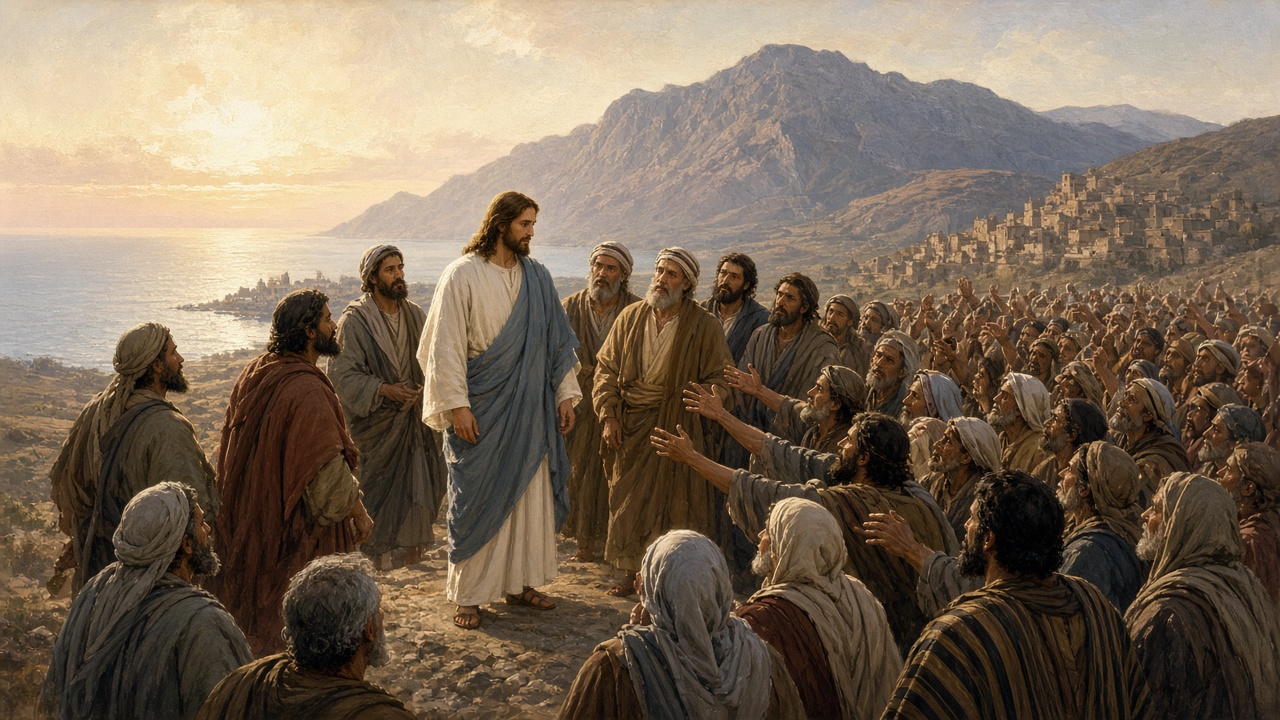
- Jesus came down with them and stood on a level place, where people from Judea, Jerusalem, and the sea coast of Tyre and Sidon had gathered to hear him and to be healed. Tyre and Sidon were ancient Phoenician cities on the Mediterranean; Sidon, the older city, lay about twenty-five miles north of Tyre. A chronology dates this teaching to AD 28 and titles it the Sermon on the Mount, though the narrative places Jesus on level ground after he came down from the mountain.Sources: the Bible text itself · Tyre · Sidon · Sermon on the Mount
Notes written with AI assistance from open sources (Theographic Bible Metadata, CC BY-SA 4.0; Easton’s Bible Dictionary, public domain) and reviewed before publishing.
Places in this chapter
- Jerusalem · 31.777, 35.234 · verse 17
- Judea · Today: Judea 1 · 31.777, 35.234 · verse 17
- Sidon · Today: Sandikli archaeological site in Sidon · 33.561, 35.372 · verse 17
- Tyre · 33.271, 35.196 · verse 17
Only places identified with high confidence are shown (90% or more according to the scholarly sources compiled by OpenBible). Period map: DARE (Digital Atlas of the Roman Empire), CC BY 4.0; modern map: © OpenStreetMap contributors; places: OpenBible.info (CC BY 4.0).
Credits and license for this translation
Abureni NT Portions
Abureni: Abureni NT Portions (New Testament)
copyright © 2022 Luke Initiative for Scripture Translationand The Seed Company
Language: (Abureni)
Contributor: The Seed Company
This translation is made available to you under the terms of the
Creative Commons Attribution Share-Alike license 4.0.
You have permission to share and redistribute this Bible translation in any format and to make reasonable revisions and adaptations of this translation, provided that:
You include the above copyright and source information.
If you make any changes to the text, you must indicate that you did so in a way that makes it clear that the original licensor is not necessarily endorsing your changes.
If you redistribute this text, you must distribute your contributions under the same license as the original.
Pictures included with Scriptures and other documents on this site are licensed just for use with those Scriptures and documents.
For other uses, please contact the respective copyright owners.
Note that in addition to the rules above, revising and adapting God's Word involves a great responsibility to be true to God's Word. See Revelation 22:18-19.
2025-07-02
Source: http://ebible.org/mgj/ · eBible.org